01
What is black beard algae?
Black beard algae, also called BBA or black brush algae, is not a true green alga. It is a red alga (Rhodophyta), usually identified as a species of Audouinella, and its red pigments are why it looks dark gray, black or olive in the tank and turns pink or red when it dies. It is common in both planted and low-tech tanks.
BBA grows in tight tufts or short, brushy strands, usually 0.2–0.8 inches (0.5–2 cm) long. It anchors itself very firmly, so rubbing with a finger does almost nothing. It favors places with steady water movement and slow growth: leaf edges of Anubias and Java fern, driftwood, rock tops, filter intakes, outflow pipes and heater cables.
It is harmless to fish and shrimp, but it smothers slow plants, blocks their light and is one of the hardest algae to get rid of once it is established. The good news: a combination of spot treatment and a fix to the root cause works reliably.
02
How to identify BBA
Several algae and growths look dark or hairy. Check the table before you treat, because each needs a different approach. For the soft brown film common in new tanks, see our guide to brown algae in a fish tank.
| Growth | Appearance | Texture | Typical cause |
|---|---|---|---|
| Black beard algae | Dark gray to black tufts, 0.5–2 cm | Firm, clings tightly, will not wipe off | Unstable or low CO2, organics, high flow over slow plants |
| Staghorn algae | Gray-green, branched like antlers | Stiff, wiry | Similar to BBA, CO2 and nutrient imbalance |
| Brown algae (diatoms) | Brown dusty film | Soft, wipes off easily | New tank, silicates |
| Hair or thread algae | Long green strands | Soft, can be pulled out | Excess light with nutrient imbalance |
| Cyanobacteria | Blue-green or dark red slimy sheets | Slimy, peels off in sheets, smells musty | Low flow, high organics |
Quick test: put a drop of liquid carbon or hydrogen peroxide on a suspect tuft. If it turns pink or reddish within a day or two, it is a red alga such as BBA or staghorn.
03
What causes black beard algae?
BBA rarely appears for a single reason. It takes advantage of a tank where plants are not growing well enough to outcompete it. The most common triggers are:
- Fluctuating CO2. In tanks with injected CO2, levels that rise and fall during the photoperiod, or that come on too late in the day, are the classic trigger. See our guide to aquarium CO2.
- Too much light for the CO2 available. Strong lighting without enough carbon pushes plants into stress while algae keep growing.
- Organic waste. Overfeeding, a dirty filter, skipped water changes and mulm in the substrate all feed BBA.
- Strong flow over slow plants. BBA loves filter outlets and leaf edges in the current, where nutrients reach it constantly.
- New hitchhikers. It often arrives on plants, wood or rocks bought from another tank.
04
How to remove black beard algae step by step
Removal works best when you attack existing growth and fix the cause at the same time. Killing the algae without changing the conditions only buys you a few weeks.
- Trim and discard heavily covered leaves. On slow plants such as Anubias, a leaf covered in BBA is rarely worth saving.
- Take out decor and equipment you can remove (rocks, ornaments, intake strainers) and scrub them with a stiff brush outside the tank. Wood can be soaked in hot water or treated with peroxide outside the aquarium, then rinsed well.
- For growth left in the tank, turn off the filter and pumps for 10–15 minutes and use a syringe to apply liquid carbon such as Seachem Flourish Excel, or 3% hydrogen peroxide, directly onto the tufts. Keep the total amount within the label directions for your tank volume.
- Turn the flow back on. Over the next 2–5 days the BBA should turn pink, red or white. Repeat once if needed, never exceeding the label dose.
- Let grazers finish the job. Dead, softened BBA is eaten much more readily than live tufts.
- Do a 30–50% water change a day or two after spot treatment, and vacuum debris from the substrate.
Liquid carbon (glutaraldehyde) can melt Vallisneria, Egeria (Anacharis) and some mosses, and an overdose can harm shrimp and fish. Hydrogen peroxide can burn delicate plants and gills if overused. Treat small areas, follow the label and watch your livestock closely.
05
Fish and invertebrates that eat BBA
Grazers help, but none of them will clear an established outbreak in a tank that still has the conditions BBA loves. Think of them as maintenance, not a cure.
- Siamese algae eater (Crossocheilus oblongus): one of the few fish known to eat BBA, especially when young. It reaches about 6 inches (15 cm), is active and likes a group, so it needs a tank of at least 30–40 gallons (110–150 L). Many look-alikes sold under this name do not eat BBA.
- Florida flagfish (Jordanella floridae): grazes on tough algae, but can nip fins and prefers cooler water, so check compatibility.
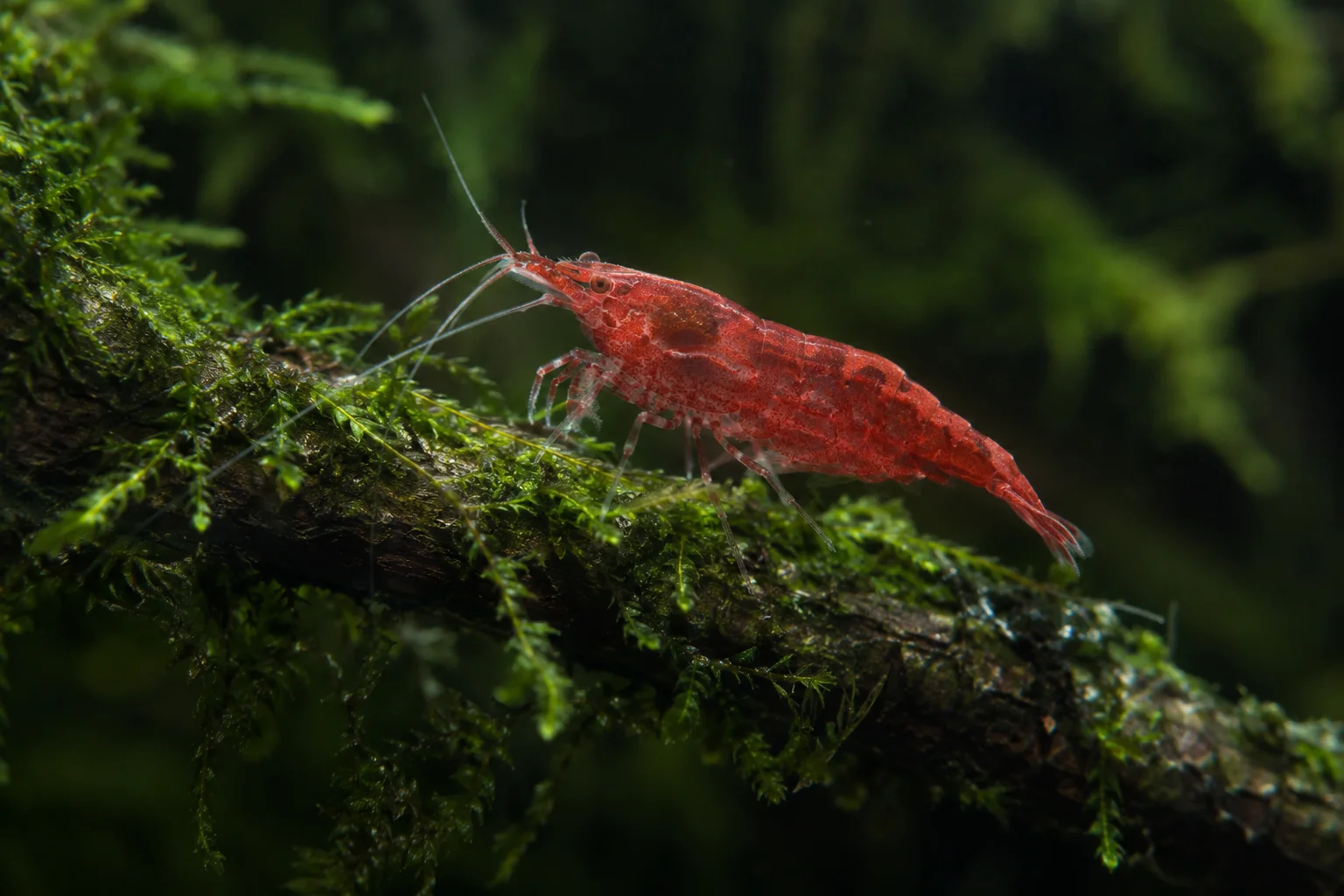
- Amano shrimp: will pick at BBA, mostly after it has been weakened by treatment.
- Most snails ignore live BBA. For other algae, see our list of the best snails for algae.
06
How to prevent black beard algae
Prevention is about giving plants the upper hand and removing the instability BBA exploits.
- In CO2-injected tanks, start the CO2 about 1–2 hours before the lights so levels are stable at lights-on, and use a drop checker to keep it consistent. A reliable regulator from our CO2 system guide helps avoid swings.
- Match light to your setup: 6–8 hours a day is enough for most tanks. If you are upgrading, choose a dimmable fixture from our aquarium light reviews.
- Keep up weekly water changes and rinse filter media in tank water before it clogs.
- Feed only what fish eat in about two minutes, and remove dying leaves.
- Dose aquarium fertilizer consistently so fast plants keep growing and absorbing nutrients.
- Inspect and, if needed, treat new plants and hardscape before they go in.
07
When to stop and rethink
If BBA keeps coming back despite treatment, stop dosing more chemicals. Repeated high doses stress fish and plants more than the algae. Instead, test your water with a reliable test kit, check filter maintenance and review your CO2 and lighting schedule. A tank with healthy, fast-growing plants and steady conditions is the long-term cure.
If fish gasp at the surface, shrimp die or plants melt after a treatment, do a large water change right away and pause any further spot treatment. For other algae and water problems, visit our aquarium troubleshooting hub.
Frequently asked questions
Frequently asked questions
What kills black beard algae fastest?
Spot treatment is the fastest method. With the filter off for 10–15 minutes, apply liquid carbon (glutaraldehyde) or 3% hydrogen peroxide directly onto the tufts with a syringe, staying within the label dose for your tank volume. Treated BBA usually turns pink or white within two to five days. It will return unless you also stabilize CO2, light and maintenance.
Is BBA algae harmful to fish?
No. Black beard algae does not harm fish or shrimp directly. The problem is that it covers slow-growing plants, blocks their light and looks unsightly on hardscape. The treatments used against it, liquid carbon and hydrogen peroxide, are the bigger risk to livestock if they are overdosed, so always follow the label.
Why does black beard algae grow on my driftwood and filter?
BBA prefers hard surfaces in steady flow, where nutrients and carbon reach it constantly. Filter outlets, intakes and the top of driftwood fit that perfectly. Unstable CO2 and organic waste make it worse. Scrub removable parts outside the tank, spot-treat wood and fix the underlying cause.
Do Siamese algae eaters really eat black beard algae?
True Siamese algae eaters (Crossocheilus oblongus) are among the few fish that graze on BBA, mostly when young. They grow to about 6 inches (15 cm) and need a group in a tank of 30–40 gallons or more. Look-alike species sold under the same name often ignore BBA.
Will black beard algae go away on its own?
Rarely. Once established, BBA is very persistent. It can stop spreading when CO2, light and nutrients are balanced and plants grow strongly, but existing tufts usually need to be trimmed or spot-treated.
Sources and references
Written and reviewed by the handsoffmyhobby editorial team according to our editorial policy.