01
Discus tank mates: the rules that matter
Discus (Symphysodon spp.) reach 6–8 inches (15–20 cm) and are kept in groups of at least five or six. They are not aggressive toward other species, but they are slow, timid eaters and react badly to stress, poor water and new diseases. Good discus tank mates must therefore pass four tests. Our discus care guide explains the needs of the main fish in more depth.
- Heat: thrive for years at 82–86 °F (28–30 °C), not just survive a few months
- Water: accept soft, slightly acidic water (pH 6.0–7.0, GH 1–8 °dH)
- Temperament: calm, no fin nipping, no competition at feeding time
- Size: too large to be eaten by adult discus, small enough not to dominate them
- Health: sourced from clean stock and quarantined, because discus are sensitive to imported parasites
02
Discus compatibility chart
This table covers the species most often suggested for a discus community tank, including fish without their own page on handsoffmyhobby. Verdicts assume a mature tank of at least 55 gallons (210 L) kept at about 84 °F (29 °C).
| Tank mate | Verdict | Why |
|---|---|---|
| Cardinal tetra | Good | Same soft Amazon water, tolerates 82–86 °F; school of 15+ |
| Rummy-nose tetra | Good | Heat-tolerant, peaceful, tight schooling behavior |
| Sterbai corydoras | Good | One of the few corydoras comfortable at discus temperatures |
| Bristlenose pleco | Good | Small, heat-tolerant algae eater that leaves discus alone |
| Kuhli loach | Good | Peaceful bottom fish, tolerates warm soft water; needs sand |
| Marbled hatchetfish | With caution | Peaceful surface fish, but jumps and is often sold in poor condition |
| German blue ram | With caution | Same water, but territorial when spawning; best in 75+ gallons |
| Apistogramma | With caution | Similar needs; pairs claim the bottom and may chase young discus |
| Angelfish | With caution | Faster, bolder eater that often outcompetes discus; disease risk |
| Neon tetra | With caution | Prefers 72–79 °F; tends to live shorter at discus temperatures |
| Harlequin rasbora | With caution | Peaceful, but the upper limit of its range is around 82 °F |
| Otocinclus | With caution | Gentle, but prefers cooler water than discus |
| Cherry shrimp | With caution | Shorter life in high heat; small shrimp get eaten |
| Bronze or peppered corydoras | Avoid | Coolwater species that struggle long-term at 84 °F |
| Clown loach | Avoid | Grows to 8–12 in, boisterous feeder, very prone to ich |
| Tiger barbs and other fin nippers | Avoid | Harass slow discus and damage fins |
| Common pleco, sailfin pleco | Avoid | Grow huge and may latch onto discus' slime coat at night |
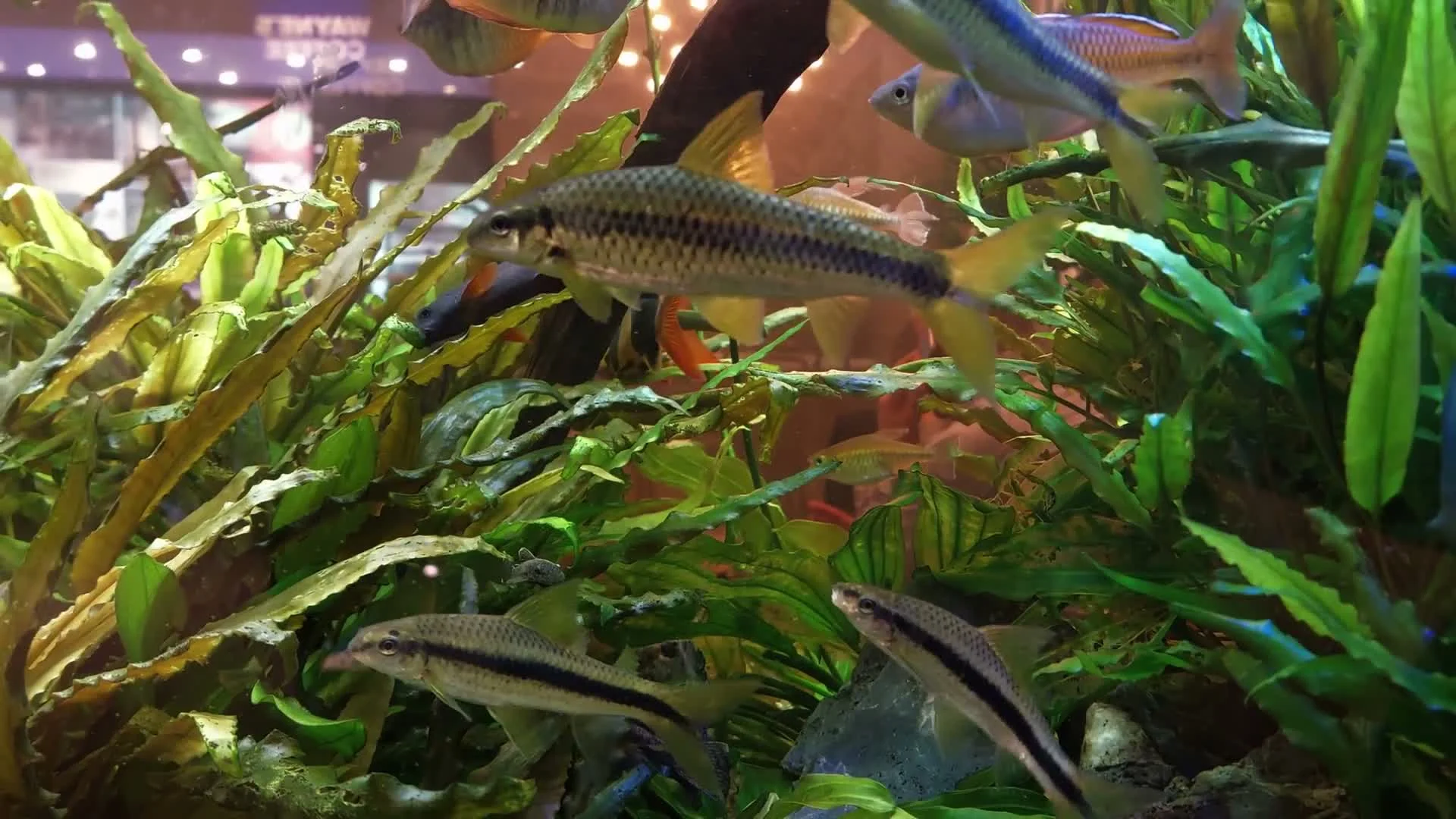
| Chinese algae eater | Avoid | Known to attach to flat-bodied fish |
| Oscars, African cichlids, convicts | Avoid | Aggressive, different water, discus get bullied |
| Guppies and other livebearers | Avoid | Prefer harder water; fast eaters at feeding time |
| Goldfish | Avoid | Coldwater fish; temperature gap is impossible to bridge |
Discus fish care guide: water parameters, tank size and tank mates
Start with the full discus care sheet: group size, tank size, water parameters, feeding and health.
Fish speciesCardinal tetra care guide: tank, water, tank mates and neon comparison
The classic discus companion: comes from the same soft, warm Amazon waters and tolerates discus temperatures.
Fish speciesRummy nose tetra care guide: tank size, water, diet and tank mates
Tight, active schooler that handles heat well. Its red nose fades when water quality drops, a useful early warning.
Fish speciesCorydoras catfish care guide: tank, water, diet and popular species
Choose Corydoras sterbai: one of the few corydoras that copes with water around 82 °F (28 °C).
Fish speciesBristlenose pleco care guide: size, tank, diet, lifespan and breeding
A compact algae eater that tolerates heat and, unlike larger plecos, rarely bothers discus.
Fish speciesKuhli loach care guide: size, tank, water and tank mates
Peaceful, nocturnal bottom fish that tolerates warm, soft water and stays out of the discus' way.
Fish speciesGerman blue ram care guide: tank, water, tank mates and breeding
Shares the discus' love of heat and soft water, but it is a cichlid too, so add it only to larger tanks.
03
The best tank mates for discus in detail
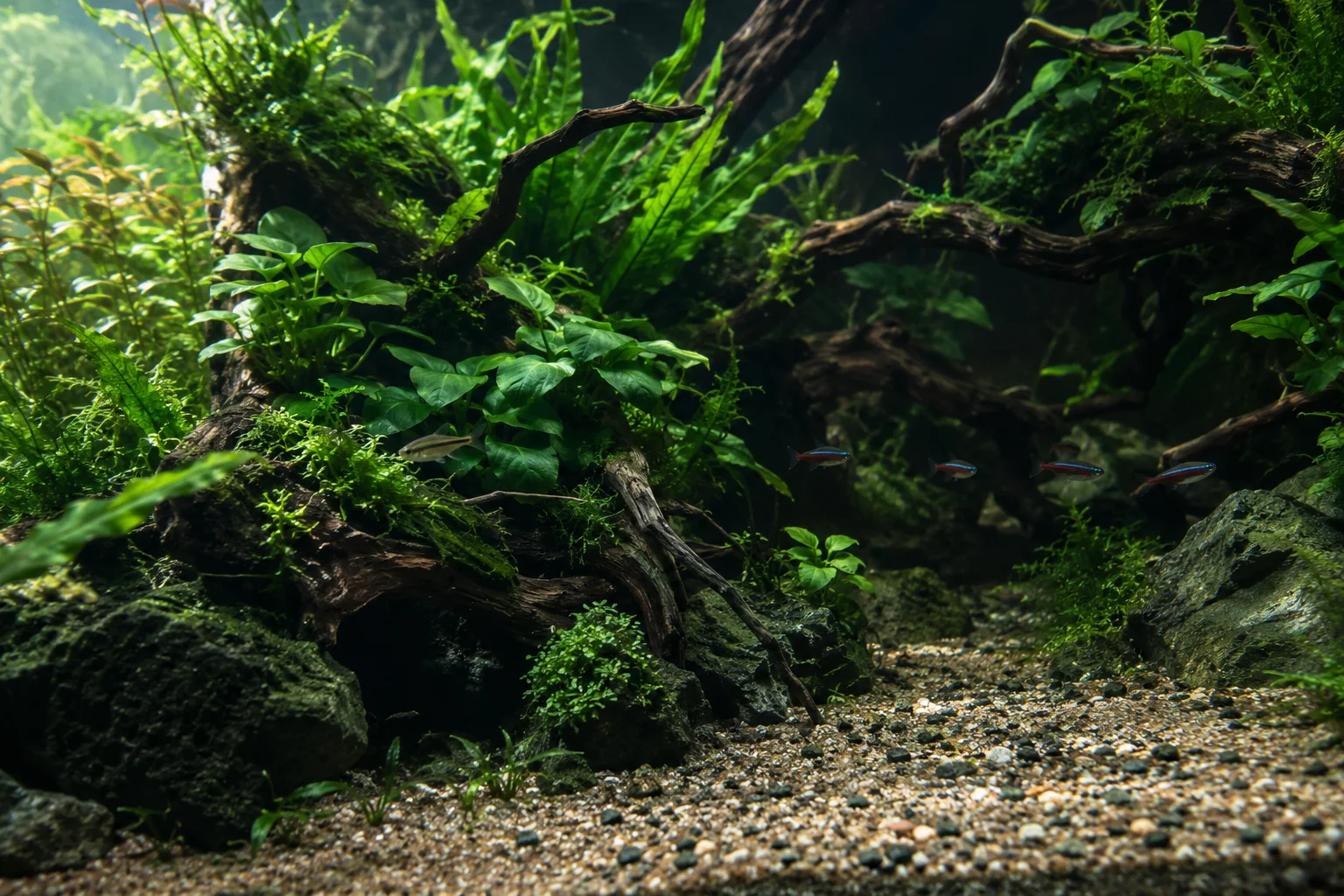
Cardinal and rummy-nose tetras. These are the go-to schooling fish for a discus community tank. Cardinal tetras come from the same blackwater rivers and stay colorful in warm, soft water. Rummy-nose tetras hold a tight school in mid-water, which helps shy discus feel safe. A large school of 15–25 also acts as dither fish: when the tetras swim calmly in the open, discus come out more.
Bottom dwellers. Choose Corydoras sterbai rather than bronze or peppered corydoras, which come from cooler waters. Add one bristlenose pleco for algae, and a group of kuhli loaches if you have a sandy substrate. Feed sinking wafers after lights out so the discus are not disturbed.
Dwarf cichlids and angelfish. A pair of German blue rams can work in a large, well-structured tank, but expect squabbles when they spawn. Angelfish and discus are often kept together because both are South American, but angelfish eat faster and can carry diseases that hit discus hard. If you want them, see our angelfish tank mates guide and quarantine carefully.
Many experienced keepers start with a discus-only tank for the first months, then add tank mates once the discus are eating well and the water routine is stable.
04
Sample discus community tanks
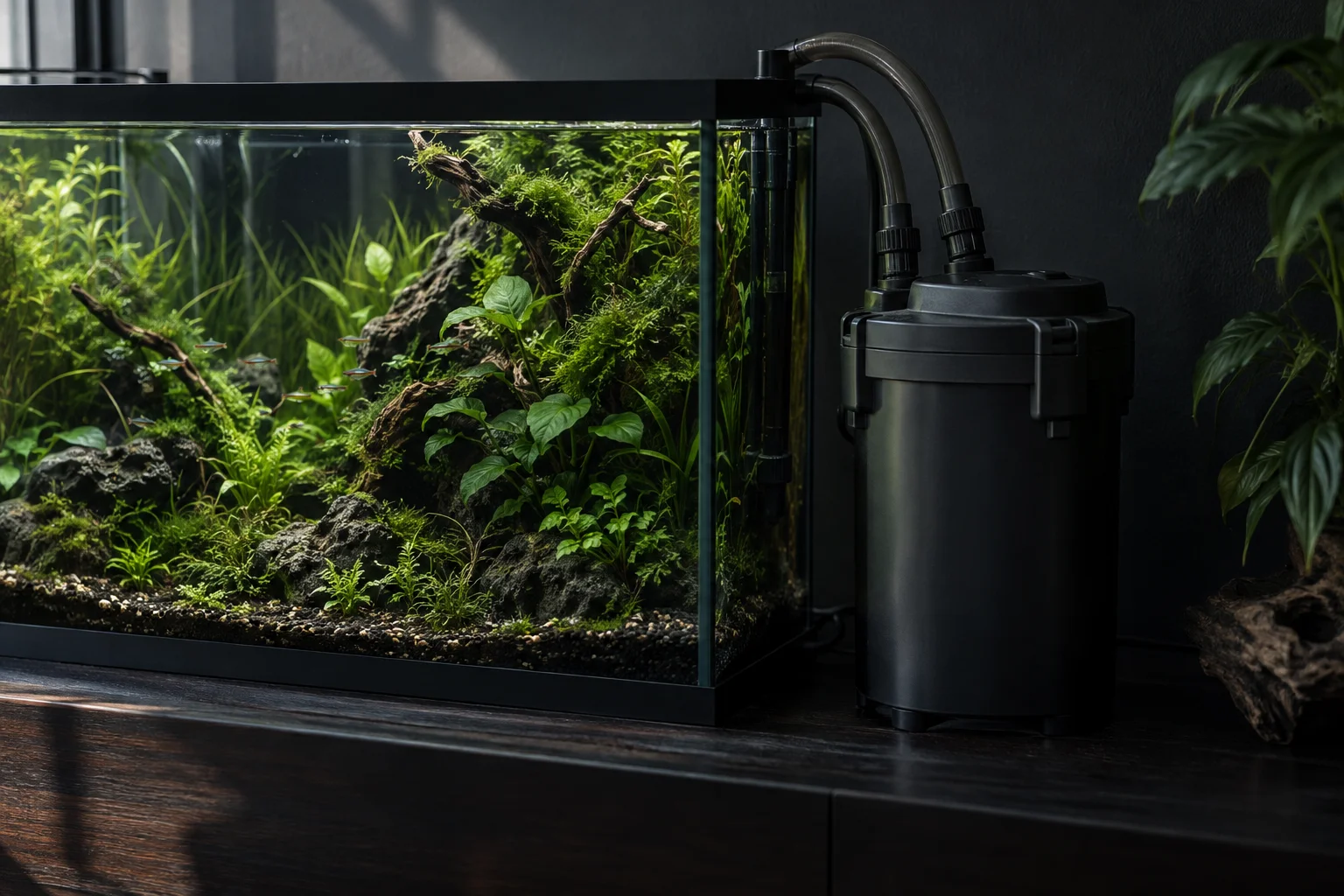
A common guideline is about 10 gallons (38 L) per adult discus, in a tank at least 18–20 inches (45–50 cm) tall. Discus produce a lot of waste for their size, so plan strong filtration, such as a canister filter, and large weekly water changes of 30–50%. A 55-gallon aquarium is the practical starting point.
- 55 gallons (210 L): 5 discus, 15 cardinal tetras, 6 sterbai corydoras
- 75 gallons (285 L): 6 discus, 20 cardinal tetras, 8 sterbai corydoras, 1 bristlenose pleco
- 125 gallons (475 L): 8–10 discus, 25 rummy-nose tetras, 10 sterbai corydoras, 1–2 bristlenose plecos, 1 pair of German blue rams
05
Fish to avoid with discus
Temperature rules out most popular community fish. Neon tetras, most corydoras, platies, zebra danios and goldfish prefer water several degrees cooler than discus need. Keeping them at 84 °F (29 °C) speeds up their metabolism and shortens their life, while lowering the heat for them stresses the discus. A precise aquarium heater and our guide on fish tank temperature help you hold the right range.
Aggressive and large fish are the other problem. Discus are cichlids, but they are no match for oscars, Africans or convicts; our cichlid tank mates guide shows which cichlids belong together. Large plecos and Chinese algae eaters can latch onto the flat flanks of discus at night, leaving wounds that quickly become infected.
06
Adding tank mates safely
Discus are particularly vulnerable to parasites brought in by new fish, especially gill flukes and intestinal flagellates. Quarantine every new tank mate for at least 4 weeks at discus temperature, then acclimate it slowly. Watch the discus for dark coloring, hiding or loss of appetite in the following days, and contact an aquatic vet if symptoms persist.
Keep the water soft and stable rather than chasing a perfect number. Monitor pH, nitrate and hardness with a reliable test kit, and if your tap water is hard, our guide on how to lower pH explains RO water and other safe approaches.
Frequently asked questions
Frequently asked questions
What fish are compatible with discus?
Fish that tolerate 82–86 °F and soft, acidic water: cardinal tetras, rummy-nose tetras, Corydoras sterbai, bristlenose plecos and kuhli loaches are the safest choices. German blue rams, apistogrammas and angelfish can work with caution in larger tanks. All tank mates should be calm eaters and quarantined before joining the discus.
Can discus live with angelfish?
They can, but it is not ideal. Both come from South America and like soft water, yet angelfish prefer slightly cooler water, eat faster and are bolder, so discus may go hungry. Angelfish can also carry diseases that affect discus. If you mix them, use a large tank of 75 gallons or more, buy from clean stock and quarantine both species.
Can discus live with neon tetras?
Neon tetras survive in a discus tank, but they prefer 72–79 °F (22–26 °C) and tend to live shorter lives at 84 °F. Cardinal tetras look similar, come from the same waters as discus and handle the heat much better, so they are the better choice for a discus community tank.
What is a good discus community tank setup?
Start with at least 55 gallons for five discus, with soft water at about 84 °F and a canister or strong sponge filtration. Add a school of 15 or more cardinal or rummy-nose tetras, a group of Corydoras sterbai and a bristlenose pleco. Keep decor simple, with driftwood and hardy plants, so you can clean easily.
Can discus live with shrimp?
Adult cherry or Amano shrimp may survive with discus, but discus eat small shrimp and the high temperature shortens shrimp lifespan. Shrimp are best seen as an occasional snack rather than a stable colony in a discus tank. If you want a shrimp colony, keep it in a separate, cooler aquarium.
Sources and references
Written and reviewed by the handsoffmyhobby editorial team according to our editorial policy.