Fact sheet
- Common names
- Discus, blue discus, green discus, Heckel discus
- Family
- Cichlidae (cichlids)
- Origin
- Amazon basin (Brazil, Peru, Colombia), including the Rio Negro
- Adult size
- 6–8 in (15–20 cm) in diameter
- Lifespan
- 10–15 years
- Minimum tank
- 55 gallons (208 L) for 5–6 fish, 75 gallons (284 L) recommended
- Temperature
- 82–86 °F (28–30 °C)
- pH
- 6.0–7.0 (tank-raised), 5.0–6.5 (wild)
- Hardness
- GH 1–8 °dH, KH 0–4 °dH
- Diet
- Carnivore leaning omnivore (insect larvae, small crustaceans, plant matter)
- Temperament
- Peaceful but shy, social, hierarchy within the group
- Care level
- Advanced
01
Discus fish care: what you are signing up for
Discus are round, flat South American cichlids, and the colorful strains in stores (Blue Diamond, Pigeon Blood, Red Turquoise, Leopard and many more) come from decades of selective breeding in Asia and Europe. Most discus sold in the US today are tank-raised, which makes them more tolerant than wild fish, but they still need far more consistent conditions than a typical community tank.
Three things define discus keeping: heat, clean water and a group. Discus are kept warmer than most tropical fish, they react badly to dissolved waste, and a single discus or a pair in a big tank is usually shy and stressed. Start only once the tank is fully cycled, and buy all your fish at once from the same source if you can.
- Group: 5–6 discus or more, of similar size
- Tank: 55 gallons minimum, 75 gallons or more recommended, at least 18–20 in (45–50 cm) tall
- Heat: 82–86 °F (28–30 °C), stable day and night
- Water changes: 30–50% at least weekly, more often for juveniles
- Quiet location: away from doors and heavy foot traffic
02
Origin and natural habitat
Wild discus come from the Amazon basin in Brazil, Peru and Colombia. Scientists currently recognize three species: Symphysodon discus (the Heckel discus, mainly in the Rio Negro area), S. aequifasciatus and S. tarzoo, though the taxonomy is still debated. Most aquarium strains descend from crosses of these forms.
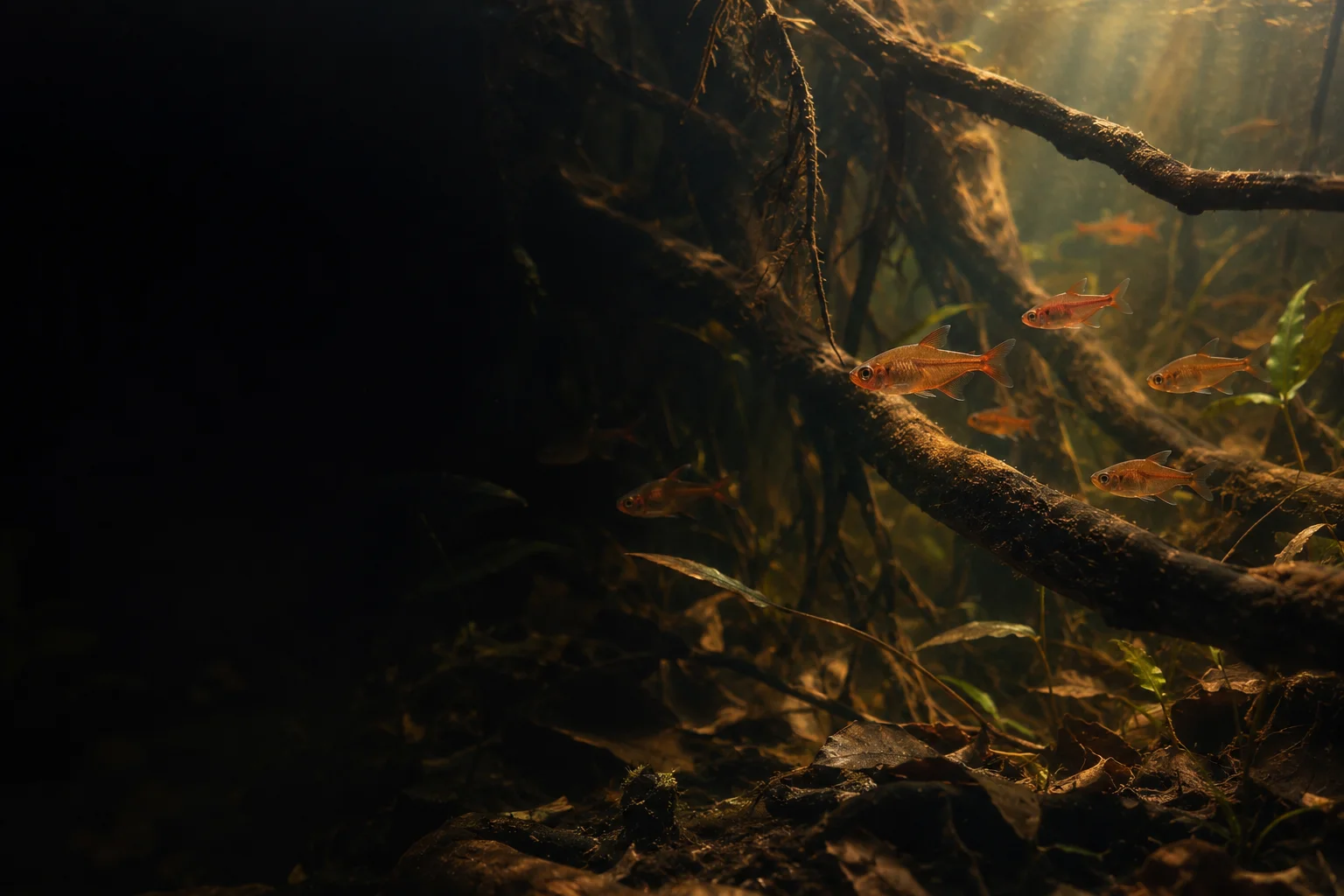
In the wild, discus live in slow lakes and flooded forest connected to rivers, sheltering among fallen trees and roots. The water is warm, very soft, acidic and often stained brown by tannins, with very low mineral content. This is why wild discus need soft, acidic water, while tank-raised fish have adapted to a wider but still soft-leaning range.
03
Adult size and lifespan
Adult discus reach 6–8 inches (15–20 cm) in diameter, and large, well-grown fish can exceed that. Size depends heavily on how the fish was raised: stunted juveniles kept in poor conditions never reach full size, which is one reason to buy from a reputable breeder.
With good care, discus live 10–15 years. Like the angelfish, they are a long-term commitment, and the effort put into their first year (growth phase) shapes the rest of their life.
04
Discus tank size
Plan about 10 gallons (38 L) per adult discus as a rough rule. A group of 5–6 adults needs at least 55 gallons (208 L), and 75 gallons (284 L) or more is easier to keep stable and leaves space for a few tank mates. Height matters because discus are tall: aim for at least 18–20 inches (45–50 cm) of water. If you are choosing a tank, see our guide to the best 55-gallon aquarium.
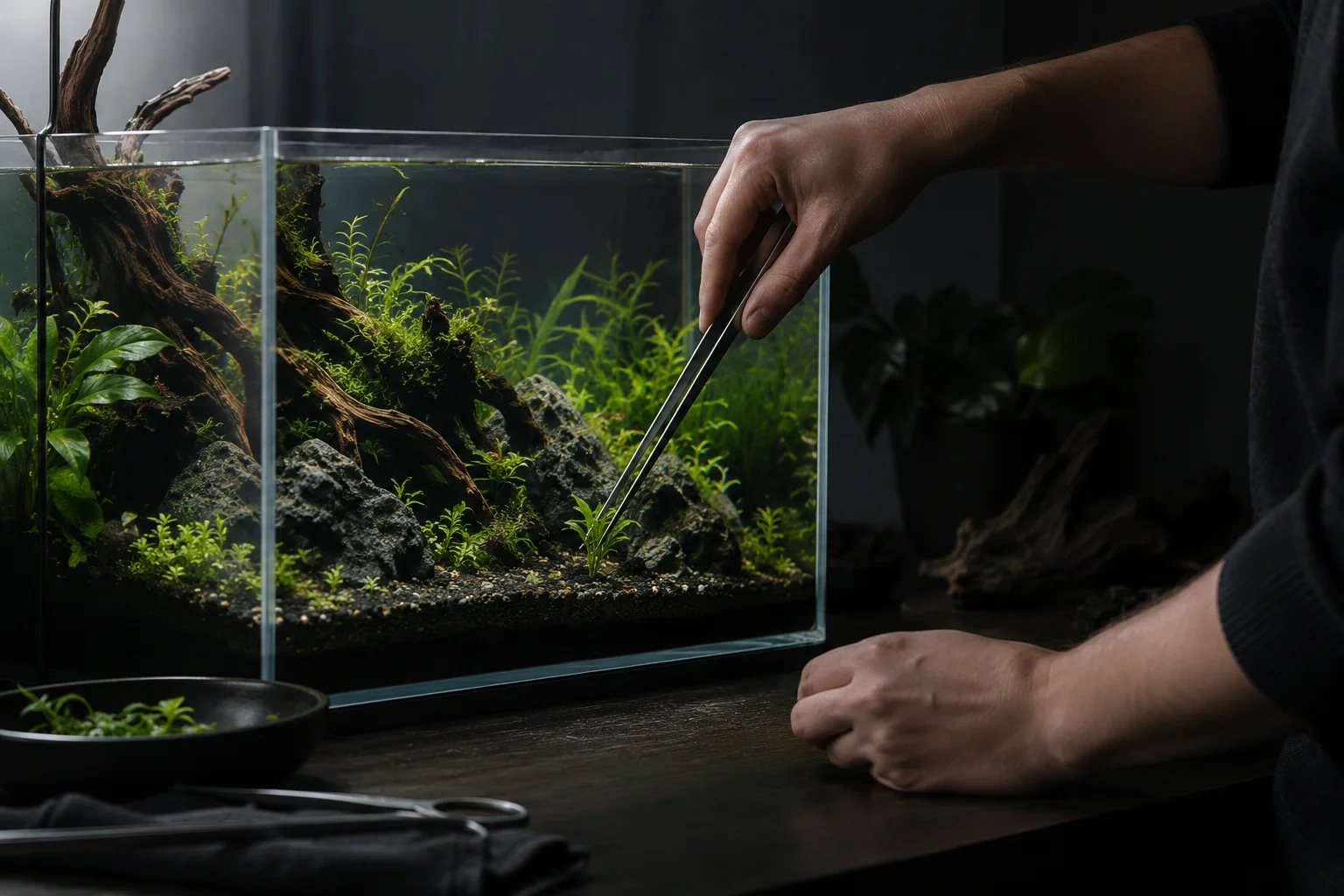
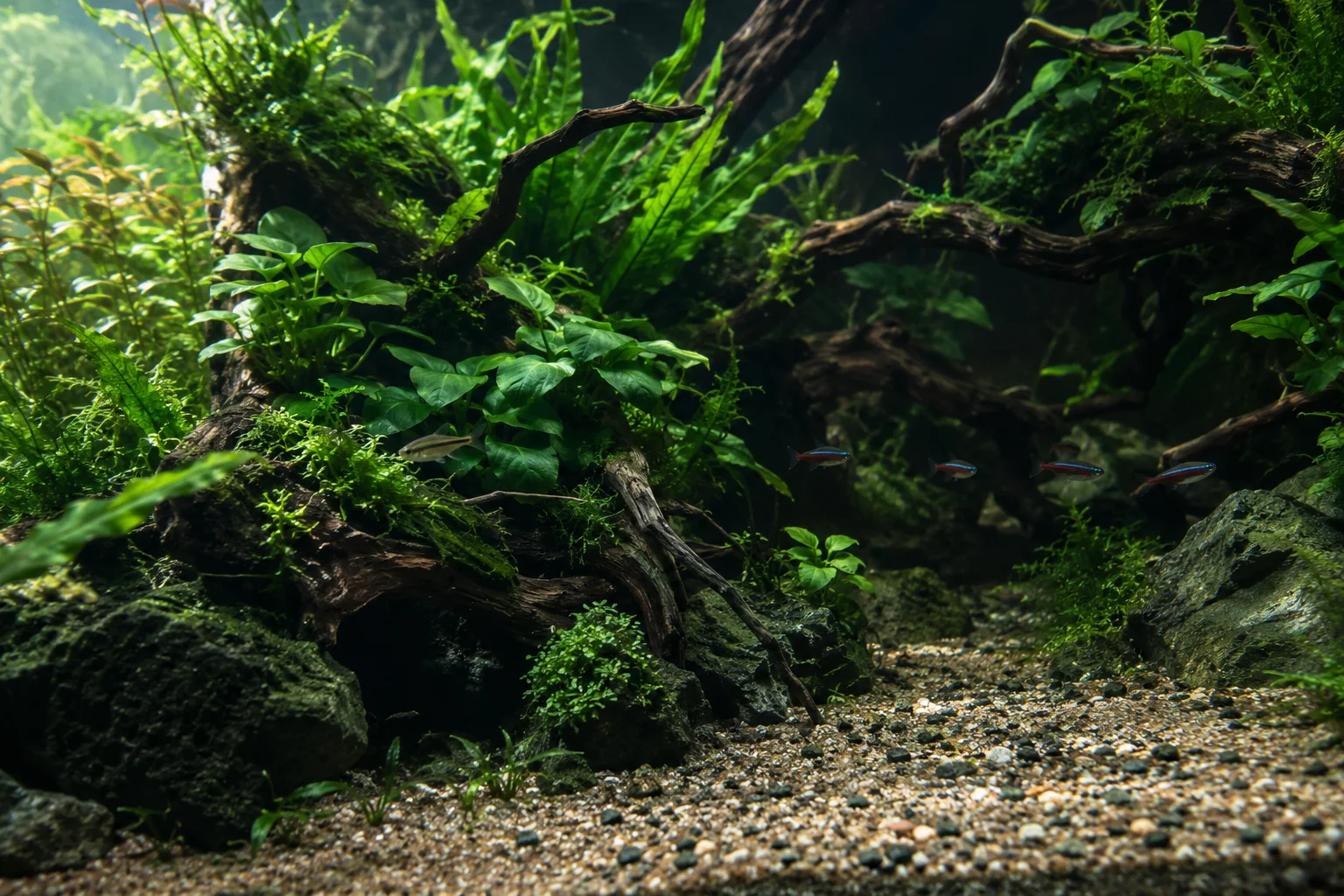
Many breeders keep discus in bare-bottom tanks because they are easier to clean. In a display tank, a thin layer of sand, driftwood and heat-tolerant plants such as Amazon swords, java fern and anubias look natural and work well, as long as you keep up with siphoning.
Buy juveniles only if you can feed them several times a day and change water very often during their first year. If not, start with sub-adults of about 3–4 in (8–10 cm).
05
Discus water parameters
Tank-raised discus do well in soft to moderately soft water with a pH between 6.0 and 7.0. Wild discus and breeding pairs need softer, more acidic water, often prepared with a reverse osmosis unit. Stability is the real priority: a constant pH of 7.0 is better than a pH that swings between 6.0 and 7.0. Our guide on how to lower pH explains safe methods, and the aquarium water parameters guide covers how to test.
The most important parameter is nitrate, and dissolved organics in general. Discus are sensitive to accumulated waste, which is why serious keepers do large, frequent water changes with aged or conditioned water matched for temperature.
| Parameter | Target range |
|---|---|
| Temperature | 82–86 °F (28–30 °C) |
| pH | 6.0–7.0 (tank-raised), 5.0–6.5 (wild or breeding) |
| GH (general hardness) | 1–8 °dH (20–140 ppm) |
| KH (carbonate hardness) | 0–4 °dH (0–70 ppm) |
| Ammonia / nitrite | 0 ppm |
| Nitrate | Below 10–20 ppm |
06
Diet and feeding
Wild discus graze on insect larvae, small crustaceans, worms and some plant matter. In captivity, a quality discus granule or pellet (for example Hikari Discus Bio-Gold, Tetra or Sera discus foods) makes a good staple. Add frozen bloodworms, brine shrimp and mysis several times a week. Homemade beef heart mixes are a traditional discus food that many breeders still use, but they foul water quickly, so use them sparingly in display tanks.
Feed adults 2–3 small meals a day, and juveniles 4–6 times a day to support growth. Remove leftovers after a few minutes. Discus are slow, deliberate eaters, so fast and greedy tank mates can leave them hungry; our guide on how often to feed aquarium fish has more on portioning.
07
Behavior and discus tank mates
Discus are peaceful, social fish that live in a pecking order. Some chasing at feeding time is normal; a fish that hides in a corner, darkens and stops eating is a warning sign. Sudden movement, loud tanks and bright, bare setups make them nervous, so give them cover and a calm spot in the room.
Tank mates must tolerate high temperatures, stay peaceful and not compete aggressively for food. The classic choices are a large school of cardinal tetras or rummy nose tetras, heat-tolerant corydoras such as Corydoras sterbai, and a bristlenose pleco. Our guide to discus tank mates goes through every option.
- Usually compatible: cardinal tetras, rummy nose tetras, Corydoras sterbai, bristlenose pleco, hatchetfish
- Risky: German blue rams and Apistogramma (need space and caves), angelfish (often discouraged for disease and competition)
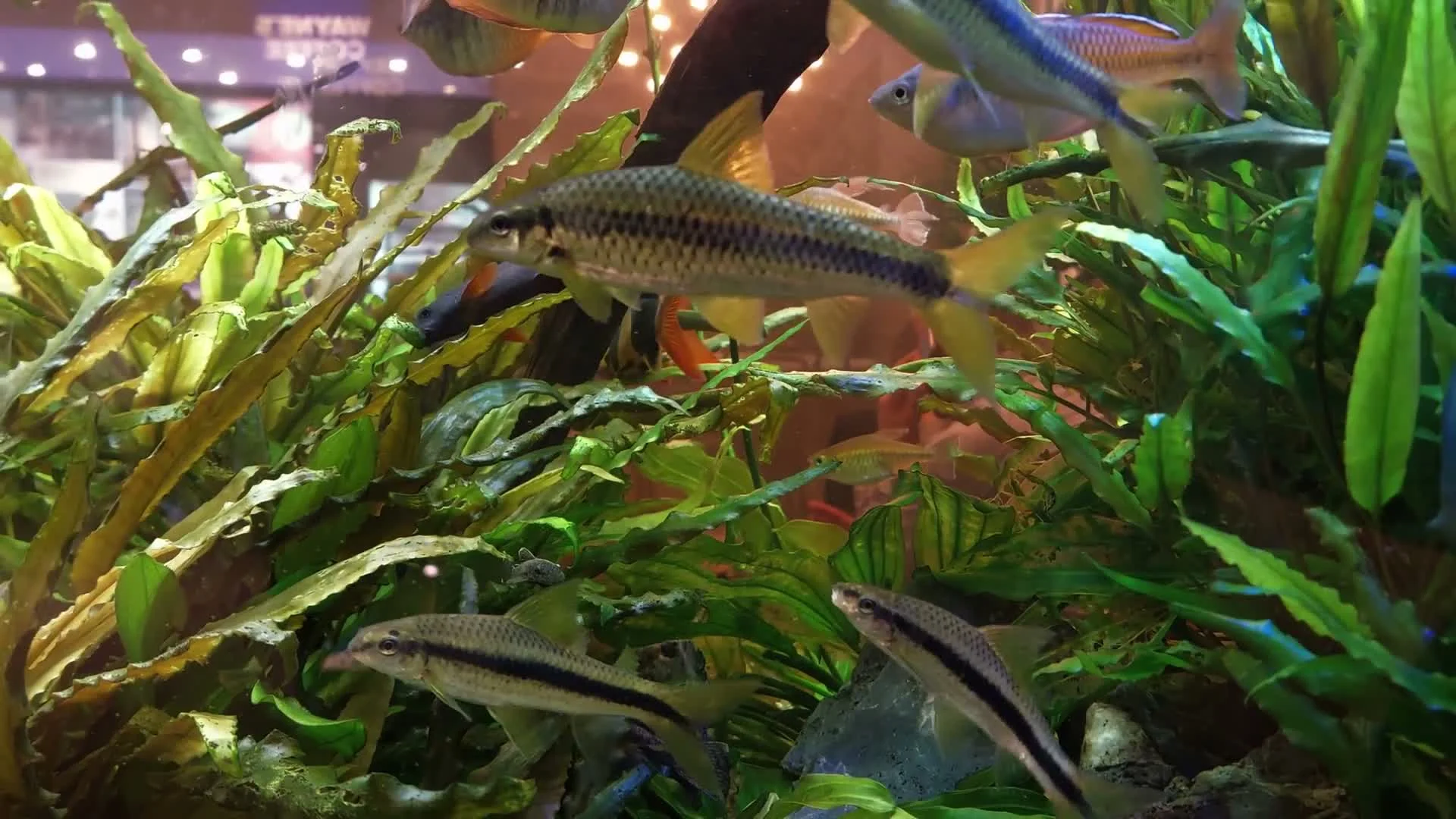
- Avoid: fin nippers such as tiger barbs, boisterous fish, Chinese algae eaters, any species that needs cooler water
08
Breeding discus
Discus form pairs within a group. A pair cleans a vertical surface (often a breeding cone) and lays 100–400 eggs. Both parents fan the eggs, which hatch in about 2–3 days at breeding temperatures, and the fry become free-swimming a few days later.
What makes discus unique is parental feeding: for the first one to two weeks, the fry eat a protective mucus produced on the parents' skin. Breeders usually add baby brine shrimp after about a week. Successful breeding generally needs very soft, acidic water, a dedicated bare tank and excellent hygiene. It is a project for experienced keepers, not a beginner side effect.
09
Common discus diseases
Most discus illnesses are linked to stress, poor water quality or new fish introduced without quarantine. Quarantine every newcomer for 4–6 weeks and acclimate slowly. For any serious case, especially several sick fish at once, consult an aquatic veterinarian.
| Problem | Typical signs | Where to start |
|---|---|---|
| Gill flukes | Fast breathing, one gill held closed, darkening | See gill flukes, treat per medication label |
| Hexamita / hole in the head | White stringy feces, pits on the head, weight loss | Improve water quality, ask a vet about suitable treatment |
| Internal worms | Thin body despite eating, stringy feces | Vet diagnosis, dewormer per label |
| Discus plague | Heavy slime, dark color, refusal to eat, spread after new fish | Isolate, no new fish, contact a vet |
| Ich | White spots (less common at discus temperatures) | See ich in fish |
10
Recommended gear
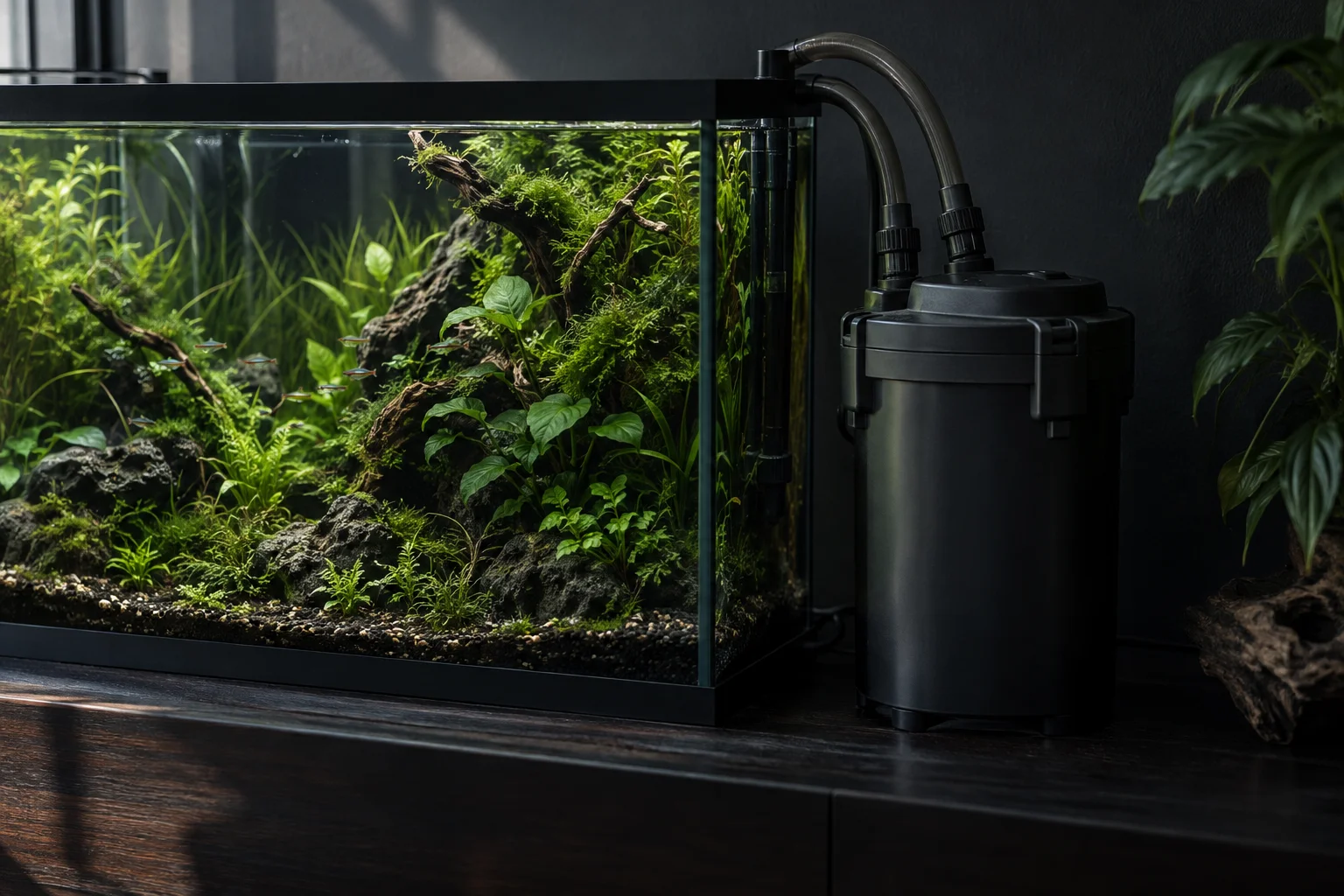
Reliable heating is essential. A 75-gallon discus tank usually needs 250–300 W of heating, ideally split between two heaters so one failure does not crash the temperature; see our best aquarium heater picks and the guide to fish tank temperature. For filtration, a canister filter or large sponge filters with gentle return flow work well; compare models in our best canister filter guide.
Add a liquid test kit, a good gravel vacuum or siphon for frequent water changes, and a water conditioner. A TDS meter and a reverse osmosis unit become useful if your tap water is hard or if you plan to breed.
Frequently asked questions
Frequently asked questions
What are the ideal discus water parameters?
Keep discus at 82–86 °F (28–30 °C) with a pH of 6.0–7.0, GH of 1–8 °dH and KH of 0–4 °dH. Ammonia and nitrite must stay at zero, and nitrate below 10–20 ppm. Wild-caught and breeding discus prefer softer, more acidic water than tank-raised fish. Above all, keep conditions stable.
What size tank do discus need?
A group of 5–6 discus needs at least 55 gallons (208 L), and 75 gallons (284 L) or more is recommended. A rough rule is 10 gallons per adult. Choose a tank at least 18–20 inches tall, since adult discus are as tall as they are long.
Can discus live alone or in a pair?
It is not recommended. Discus are social and usually become shy and stressed alone, and two non-breeding fish often bully each other. Keep a group of five or more of similar size, which spreads out aggression. Breeding pairs are the exception and are usually moved to their own tank.
How often should you change water for discus?
Change 30–50% of the water at least once a week for adult discus in a well-filtered tank. Many keepers do two or more changes a week, and juveniles in grow-out tanks often get daily changes. Match the new water’s temperature and pH closely to avoid stressing the fish.
Are discus good for beginners?
Discus are better as a second or third project. They need warm, very clean and stable water, frequent large water changes and careful quarantine. A motivated beginner can succeed with healthy tank-raised sub-adults, a large cycled tank and a strict routine, but they leave far less room for mistakes than angelfish.
Sources and references
Written and reviewed by the handsoffmyhobby editorial team according to our editorial policy.