Fact sheet
- Common names
- Cherry shrimp, red cherry shrimp, RCS, fire red shrimp
- Family
- Atyidae
- Origin
- East Asia (Taiwan, mainland China); color forms are captive-bred
- Adult size
- 0.8–1.2 in (2–3 cm), females larger
- Lifespan
- 1–2 years
- Minimum tank
- 5 gallons (19 L), 10 gallons (38 L) recommended
- Temperature
- 68–78 °F (20–26 °C), tolerates 64–82 °F (18–28 °C)
- pH
- 6.5–8.0
- Hardness
- GH 6–12 °dH, KH 2–8 °dH, TDS about 150–300 ppm
- Diet
- Omnivore: biofilm, algae, detritus, shrimp food
- Temperament
- Peaceful, best in groups of 10+
- Care level
- Easy
01
Cherry shrimp at a glance
The red cherry shrimp is the most popular freshwater aquarium shrimp in the US, and for good reason. It accepts a wide range of tap water, eats almost anything, stays small and, unlike many invertebrates, breeds without any special setup. A group of ten in a planted tank can become a colony of hundreds within a year.
Cherry shrimp are also a useful clean-up crew. They graze constantly on biofilm, soft algae, leftover food and decaying plant matter. They will not wipe out an algae outbreak on their own, but they keep surfaces, moss and plant leaves noticeably cleaner. If heavy-duty algae control is your priority, compare them with amano shrimp, which are larger and eat tougher algae.
- Tank: 5 gallons minimum, 10 gallons is more stable
- Filter: sponge filter or a filter with a sponge on the intake
- Plants: moss, java fern, anubias, floating plants
- Group: start with 10 or more shrimp
- Lid: recommended, especially in new or unstable tanks
02
Origin and color grades
Wild Neocaridina davidi live in streams, ponds and rice paddies in Taiwan and mainland China. Wild shrimp are mostly clear, brown or greenish, a camouflage that protects them from predators. All the vivid colors sold today, including red, yellow, orange, blue, green and black, are the result of selective breeding in captivity. The species was long sold as Neocaridina heteropoda, a name you will still see on older labels.
Red cherry shrimp are sold by grade, from pale "cherry" through "sakura" and "fire red" to fully opaque "painted fire red". Higher grades cost more but need exactly the same care. If you mix color varieties, the offspring revert over a few generations to dull, wild-type brown shrimp, so keep one color per tank if you want to preserve it.
03
Size, lifespan and males vs females
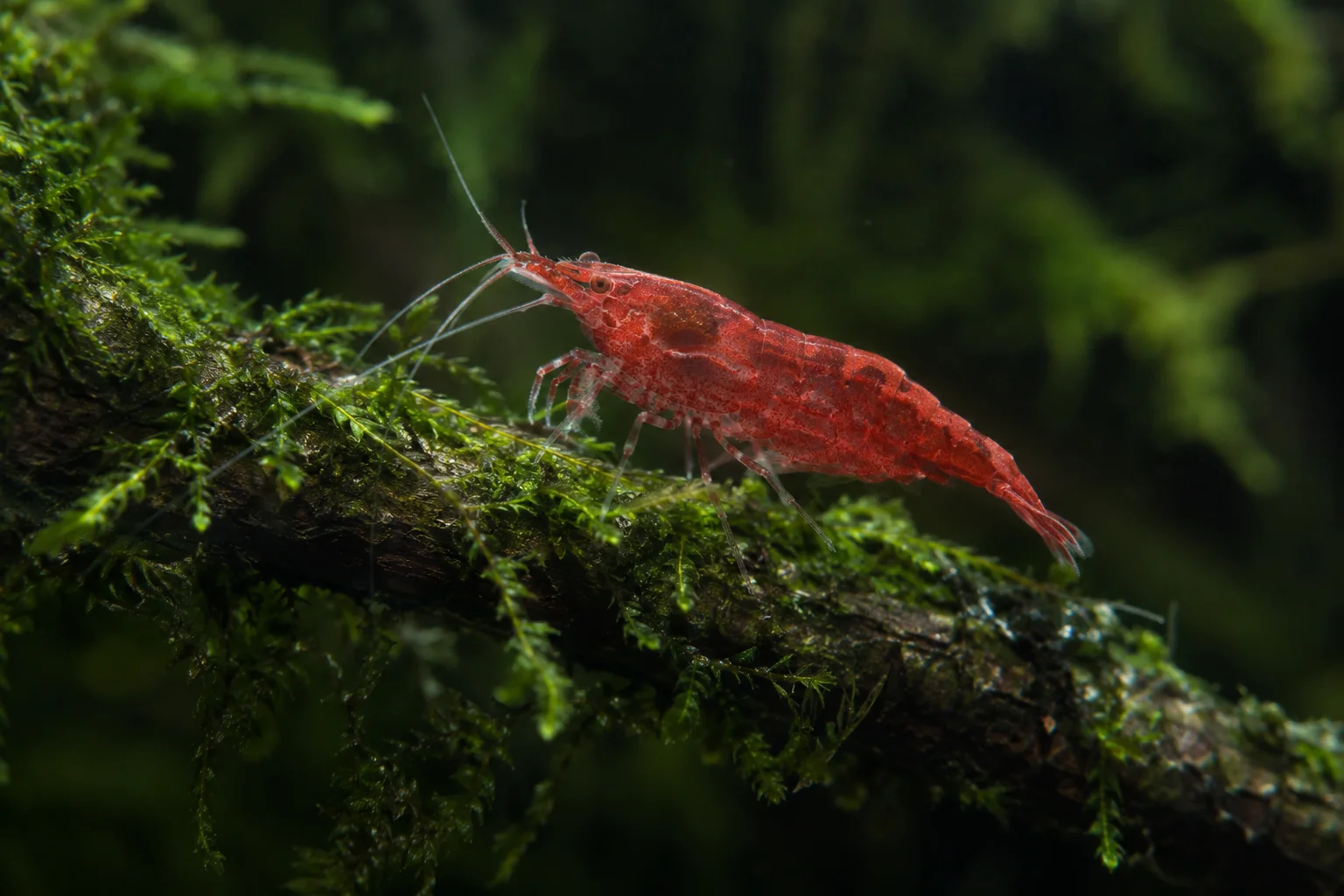
Adult cherry shrimp reach about 0.8–1.2 inches (2–3 cm). Females are larger, have a deeper, rounder abdomen and usually show stronger color. Males are smaller, slimmer and often more transparent. A mature female often shows a yellow or green "saddle" behind her head: these are developing eggs in her ovaries.
Cherry shrimp live about 1–2 years. That sounds short, but a breeding colony replaces itself continuously, so a well-kept tank never feels empty.
04
Cherry shrimp tank size and setup
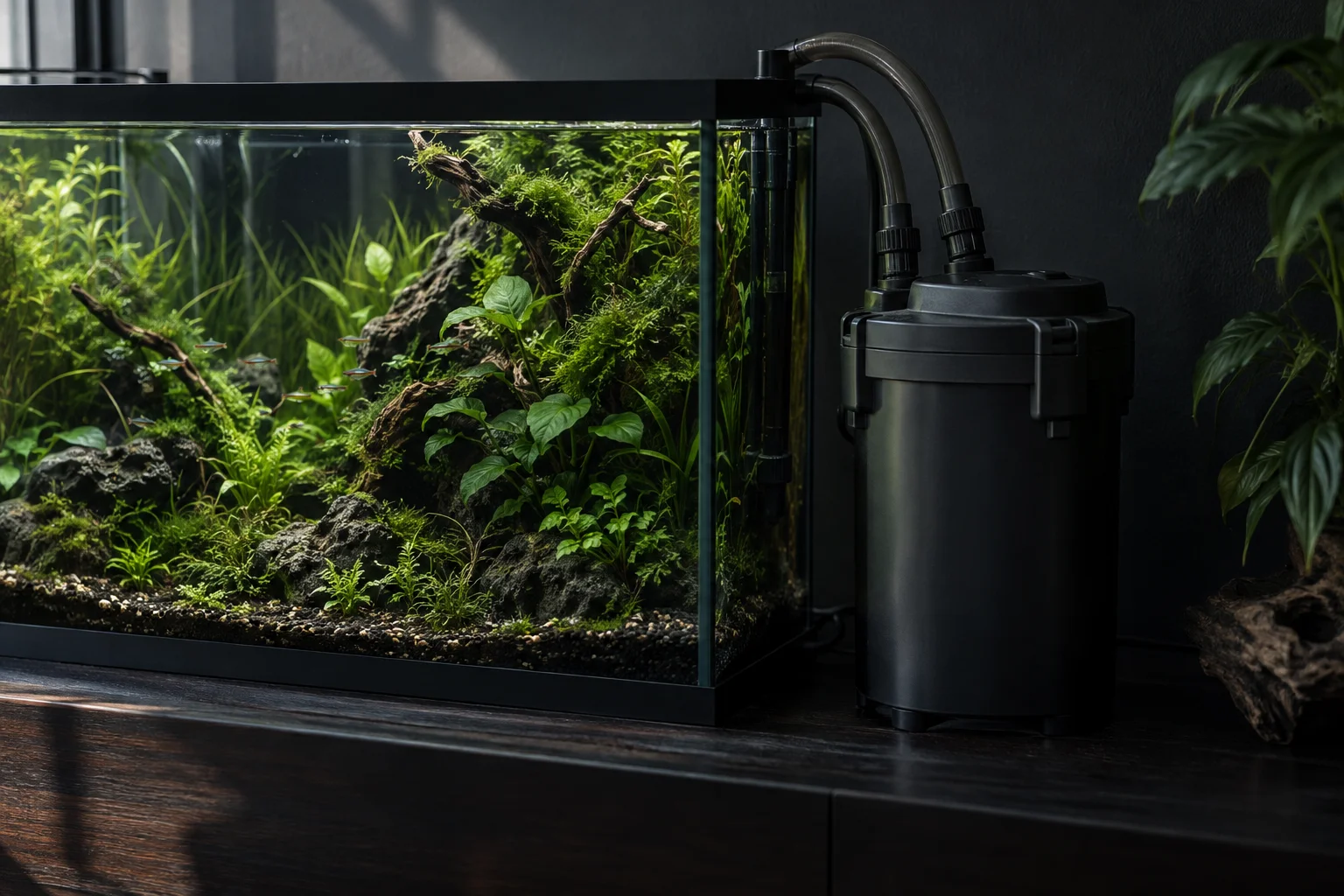
A 5-gallon (19 L) tank is enough for a starter colony, but a 10-gallon (38 L) tank holds water quality and temperature more steadily and gives the colony room to grow. Shrimp produce very little waste, so a common rule of thumb is up to about 10 shrimp per gallon in an established, planted tank. Our best 10-gallon aquarium guide compares kits that suit a shrimp tank well.
Add shrimp only to a fully cycled tank, and ideally wait until it has run for 4–6 weeks so biofilm and algae have formed. Use a gentle sponge filter or cover any filter intake with a fine sponge, since baby shrimp are easily sucked in. A heater is optional in most heated homes, but if your room drops below about 65 °F (18 °C) in winter, add one to keep the temperature stable.
For substrate, plain inert gravel or sand works for cherry shrimp. Active soils lower pH and suit Caridina shrimp more than Neocaridina, though cherries often adapt. See our guide to the best aquarium substrate for options.
05
Cherry shrimp water parameters
Stability matters more than any exact number. Cherry shrimp adapt to most US tap water once chlorine and chloramine are removed with a water conditioner. What kills them is sudden change: a large water change with colder or very different water can trigger mass molting and deaths. Change 10–20% weekly rather than 50% at once, and match the temperature.
Use our guide to aquarium water parameters to interpret your tests. GH is the value shrimp keepers watch most, because shrimp need dissolved minerals to build each new shell.
| Parameter | Target range |
|---|---|
| Temperature | 68–78 °F (20–26 °C) |
| pH | 6.5–8.0 |
| GH (general hardness) | 6–12 °dH (about 100–200 ppm) |
| KH (carbonate hardness) | 2–8 °dH (about 35–140 ppm) |
| TDS | About 150–300 ppm |
| Ammonia / nitrite | 0 ppm |
| Nitrate | Below 20 ppm |
Copper is toxic to shrimp. Check the ingredients of every medication, algaecide and plant fertilizer, and avoid copper pipes or decor in a shrimp tank.
06
Diet and feeding
In a mature tank, cherry shrimp find most of their food themselves: biofilm, soft algae, microorganisms and decaying leaves. Supplement with a quality shrimp pellet or granule, algae wafers, blanched vegetables such as zucchini or spinach, and occasionally a protein food. Catappa or oak leaves give an extra surface for biofilm to grow on.
Feed a small amount every day or every other day, only what the shrimp clear in about 2 hours, and remove leftovers. Overfeeding is the most common mistake: uneaten food fouls the water and encourages planaria and detritus worms. Our guide on how often to feed aquarium fish explains the same portion logic.
07
Behavior and tank mates
Cherry shrimp are completely peaceful and spend their days grazing. They are more active and show better color in groups and in tanks with plenty of cover, while shrimp kept with predatory fish tend to hide and fade. Newly molted shrimp are especially vulnerable and hide for a day or two.
Almost any fish will eat baby shrimp, and many will eat adults. The safest companions are tiny, peaceful fish and other invertebrates. A betta is a gamble: some ignore shrimp, others hunt them. Our full guide to shrimp tank mates details compatible species and stocking ideas.
- Generally safe: otocinclus, nerite snails, mystery snails, amano shrimp
- Usually fine in planted tanks (some shrimplets lost): ember tetras, celestial pearl danios, chili rasboras, pygmy corydoras
- Avoid: cichlids including angelfish, goldfish, larger barbs, most loaches, large gouramis
08
How to breed cherry shrimp
Breeding cherry shrimp is mostly about not getting in the way. With stable water, males and females in the group and enough food, females become "berried": they carry 20–30 eggs, sometimes more, under the tail and fan them to keep them oxygenated. After about 3–4 weeks, fully formed miniature shrimp hatch. There is no larval stage, so no salt water or special food is needed.
Shrimplets graze on biofilm right away. Moss, fine-leaved plants and a sponge filter give them food and shelter, and powdered baby shrimp food helps in very clean tanks. Young shrimp mature in about 3–4 months, so a colony grows quickly. For a deeper, step-by-step walkthrough, read our article on how to breed cherry shrimp.
09
Molting and common health problems
Shrimp grow by shedding their exoskeleton. A clear, empty shell on the substrate is a normal molt, not a dead shrimp; leave it, as shrimp eat it to recover minerals. Problems start when a shrimp cannot finish a molt. A pale band between the head and body, often called the "white ring of death", usually points to unsuitable GH, sudden parameter swings or poor nutrition.
Most cherry shrimp deaths trace back to water quality. If several shrimp die in a short time, test ammonia and nitrite immediately; the symptoms and fixes in our guide to ammonia poisoning apply to shrimp as well.
| Problem | Typical signs | Where to start |
|---|---|---|
| Failed molt | White ring behind the head, shrimp stuck in old shell | Check GH and KH, smaller water changes, varied diet |
| Ammonia or nitrite | Several deaths, shrimp lethargic or swimming erratically | Test, partial water change, check cycling |
| Copper or toxins | Sudden mass deaths after dosing or adding decor | Large water change, activated carbon, remove the source |
| Planaria | Flat white worms on glass, missing shrimplets | Reduce feeding, see planaria worms |
| External parasites | White threads on the head (Scutariella) or fuzz on the shell (Vorticella) | Improve water quality, quarantine new shrimp, use shrimp-safe treatments |
10
Recommended gear
A shrimp tank is inexpensive to equip. The essentials are a sponge filter with a small air pump, a conditioner that handles chloramine, and a liquid test kit plus GH/KH test. Acclimate new shrimp slowly using the drip method in our guide on how to acclimate fish, which works the same way for invertebrates.
Add a lid, some moss or java fern and a few leaves, and the tank is ready. If you need to stabilize temperature, a small adjustable heater from our best aquarium heater guide is enough for a 5–10 gallon shrimp tank.
Frequently asked questions
Frequently asked questions
How many cherry shrimp should I start with?
Start with 10 or more. A group of this size almost always includes both males and females, which gives you a breeding colony, and shrimp in larger groups are bolder and more visible. In a 5-gallon tank, 10 shrimp is a good starting point; in a 10-gallon tank, 10–20 works well and the colony will grow by itself.
Do cherry shrimp need a heater?
Not always. Cherry shrimp do well at 68–78 °F (20–26 °C), which many homes reach without a heater. Add one if your room drops below about 65 °F (18 °C) or swings a lot between day and night, since stable temperature matters more than warmth. Warmer water speeds up breeding but shortens lifespan slightly.
How do you breed cherry shrimp?
Keep a mixed group of 10 or more in a mature, stable, planted tank and feed them well. Females carry eggs under the tail for about 3–4 weeks, then tiny shrimp hatch, fully formed. Protect them with moss, a sponge filter and no predatory fish. No brackish water or special food is needed.
Can cherry shrimp live with a betta?
Sometimes. Many bettas eat shrimplets and some hunt adult shrimp too, while others ignore them. If you try it, use a 10-gallon tank or larger with dense moss and plants, add the shrimp first so they settle, and be ready to separate them. Amano shrimp, being larger, are a safer choice with bettas.
Why are my cherry shrimp dying?
Common causes are an uncycled or young tank, ammonia or nitrite, copper from medications or fertilizers, untreated tap water, fast acclimation and large water changes. Failed molts point to unsuitable GH or sudden parameter swings. Test the water, change only 10–20% at a time and drip-acclimate new shrimp over 1–2 hours.
Sources and references
Written and reviewed by the handsoffmyhobby editorial team according to our editorial policy.