Fact sheet
- Common names
- Harlequin rasbora, red rasbora
- Family
- Danionidae
- Origin
- Southern Thailand, Malaysia, Singapore, Sumatra
- Adult size
- 1.6–2 in (4–5 cm)
- Lifespan
- 5–8 years
- Minimum tank
- 10 gallons (38 L), 15–20 gallons (57–75 L) recommended
- Group size
- 8 minimum, 10 or more ideal
- Temperature
- 72–81 °F (22–27 °C)
- pH
- 6.0–7.5
- Hardness
- GH 2–12 °dH, KH 1–6 °dH
- Temperament
- Peaceful, schooling, mid-water
- Care level
- Easy
01
Harlequin rasbora care at a glance
The harlequin rasbora (Trigonostigma heteromorpha) is a small, deep-bodied fish with a warm copper to orange-pink color and a black triangle, the "wedge", on the rear half of the body. It has been a hobby staple for decades because it is hardy, peaceful and adaptable, which puts it on most lists of the best beginner fish.
Harlequins school loosely in open water and tighten up when something startles them. In a well-planted tank with a dark substrate, a group of 10 or more looks far more striking than the few fish you see in a store tank. As always, cycle the tank before adding them.
- Tank: 10 gallons minimum, 15–20 gallons for a proper school
- Group: at least 8, more is better
- Water: tropical, soft to medium hard, slightly acidic to neutral
- Decor: dense plants with broad leaves, open swimming space, soft light
- Temperament: peaceful with almost any small community fish
02
Origin and natural habitat
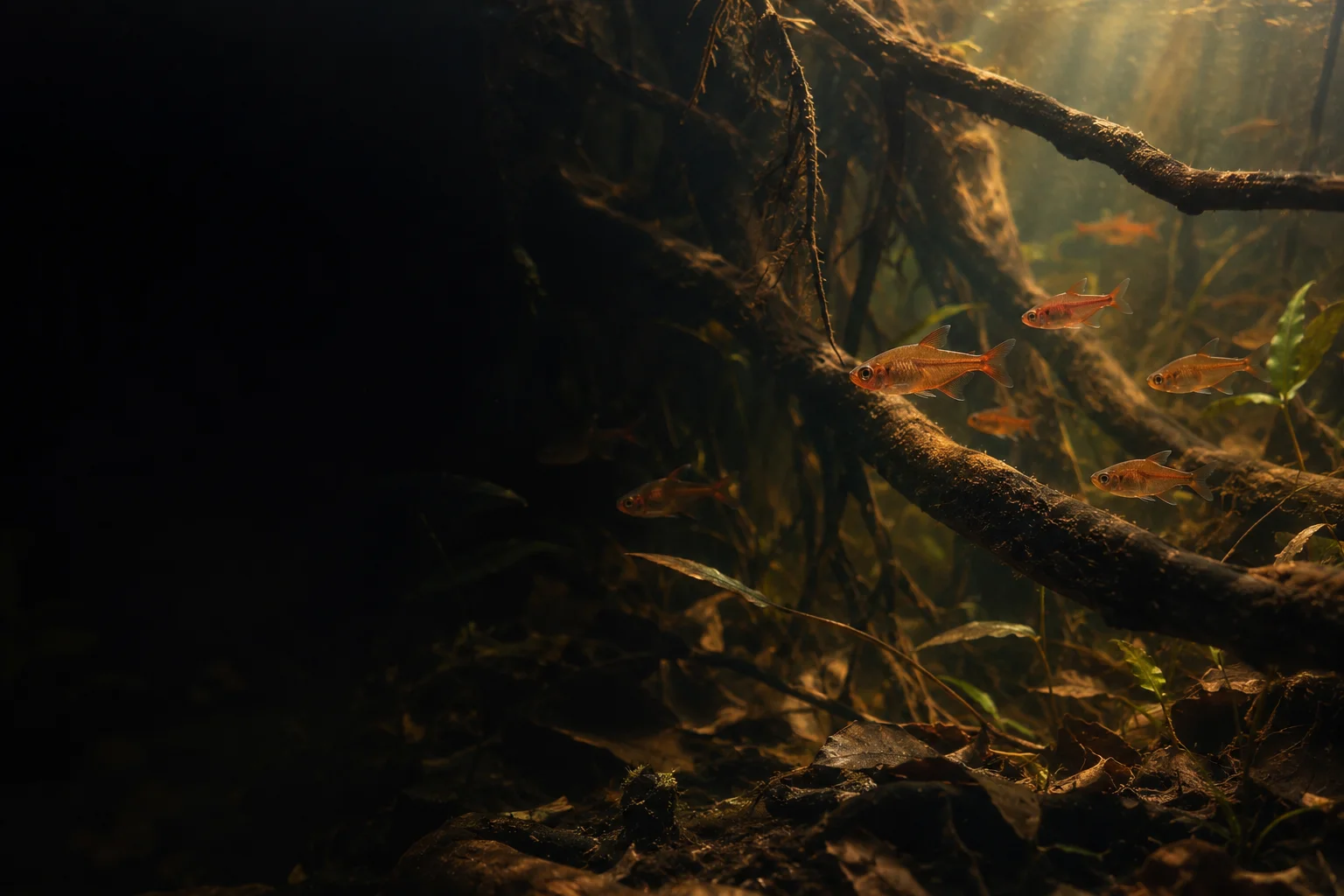
Wild harlequins come from the Malay Peninsula (southern Thailand, Malaysia and Singapore) and from Sumatra. They live in slow streams and peat swamp forests, often in blackwater: soft, acidic water stained brown by tannins, with leaf litter and dense marginal vegetation.
Two close relatives are sometimes confused with it. The lambchop rasbora (Trigonostigma espei) is slimmer, with a thinner "lambchop" shaped marking, and Trigonostigma hengeli is smaller still, with a narrow wedge and a glowing orange line above it. All three have similar care, but the harlequin is the largest and the most robust.
03
Adult size, lifespan and sexing
Adult harlequin rasboras reach 1.6–2 inches (4–5 cm). With stable water and a varied diet, a lifespan of 5–8 years is realistic.
Sexing takes a careful look. In males, the front lower corner of the black wedge usually ends in a sharper, slightly extended point, and the body is a little slimmer with a more intense color. Females are rounder, and the front edge of their wedge tends to be straighter.
04
Harlequin rasbora tank size
A 10-gallon (38 L) tank, at least 20 inches (50 cm) long, can house a small group of 6–8 harlequins as the main school. See our list of the best fish for a 10-gallon tank for companions that fit that volume. For a group of 10–12 plus other species, plan for 15–20 gallons (57–75 L); our guide to the best fish for a 20-gallon tank shows several stocking ideas built around rasboras.
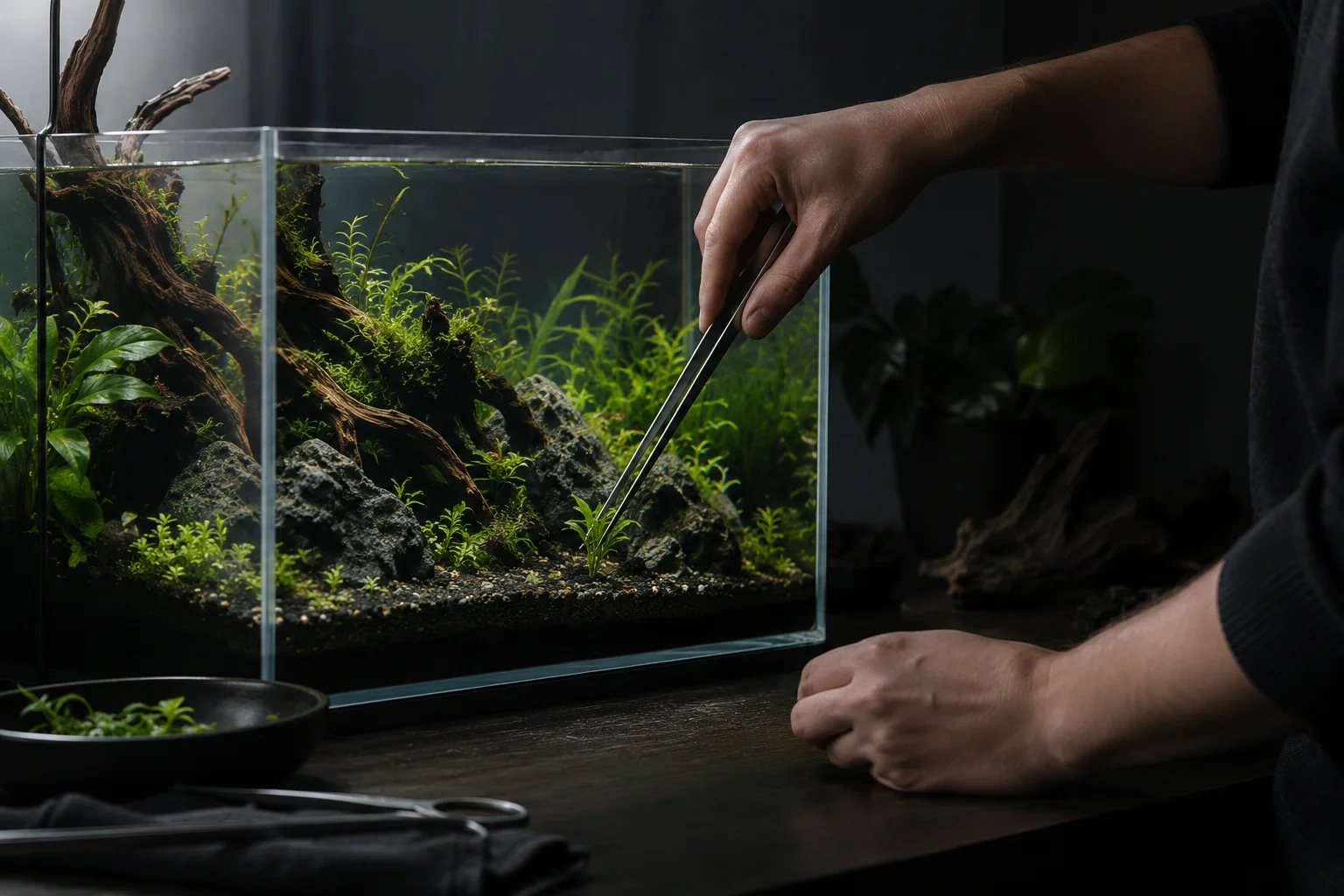
Plant the back and sides densely and leave the front and middle open. Broad-leaved plants such as cryptocorynes and anubias are useful twice: they give cover and they are where harlequins lay their eggs. Floating plants soften the light and help the fish show their best color.
05
Water parameters
Captive-bred harlequins adapt to most tap water, as long as it is treated with a water conditioner and kept clean and stable. Soft, slightly acidic water brings out the deepest color and is needed for breeding, but you do not need to chase blackwater values for a healthy community tank.
Change 20–30% of the water weekly and test regularly, especially in the first months. Our guide to aquarium water parameters explains how to read ammonia, nitrite, nitrate, pH and hardness results.
| Parameter | Target range |
|---|---|
| Temperature | 72–81 °F (22–27 °C) |
| pH | 6.0–7.5 |
| GH (general hardness) | 2–12 °dH (35–215 ppm) |
| KH (carbonate hardness) | 1–6 °dH (18–107 ppm) |
| Ammonia / nitrite | 0 ppm |
| Nitrate | Below 20 ppm |
06
Diet and feeding
In the wild, harlequins feed mainly on small insects, worms, zooplankton and some plant matter. In the aquarium they accept almost everything small enough for their mouths: quality flakes, micro pellets and crushed granules as a staple, plus frozen or live daphnia, brine shrimp, cyclops and bloodworms a few times a week.
Feed once or twice a day, only what the group finishes in about two minutes. A varied diet with some live or frozen food improves color and is the best way to condition fish for breeding.
07
Behavior and harlequin rasbora tank mates
Harlequins are peaceful, never nip fins and stay in the middle of the water column, so they mix well with most small community fish. Their main need is a group large enough to feel secure; a lone pair or trio stays shy and pale.
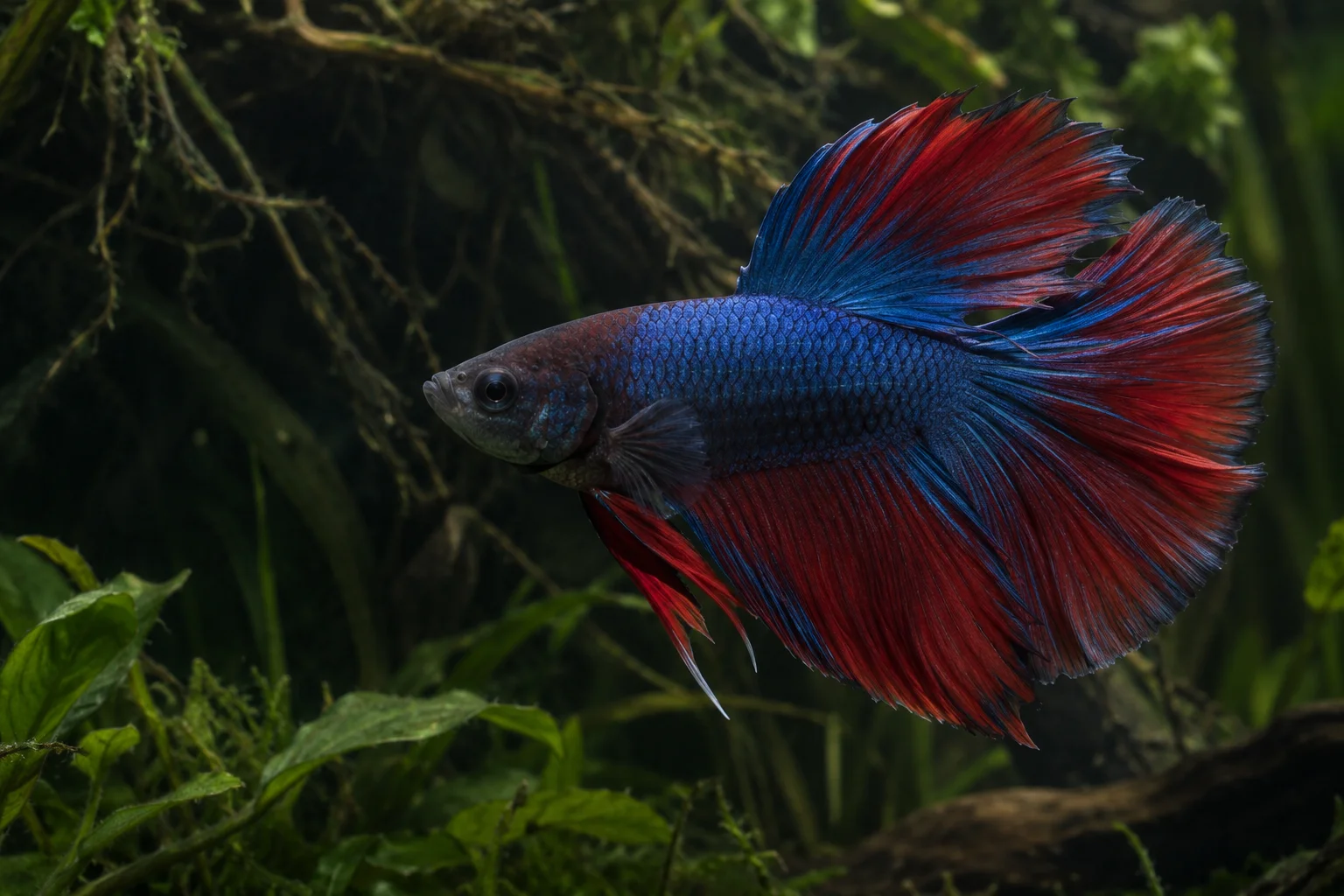
They are one of the classic betta tank mates: calm, short-finned and fast enough to avoid a curious betta, and both prefer similar water. In nano and planted setups they also pair well with celestial pearl danios, ember tetras, corydoras and otocinclus. Adult cherry shrimp are usually safe, though harlequins will eat very small shrimplets.
- Good matches: bettas (one male), ember, neon and cardinal tetras, celestial pearl danios, chili rasboras, corydoras, otocinclus, kuhli loaches, dwarf and pearl gouramis, nerite snails
- Usually fine: adult cherry and amano shrimp, angelfish in large tanks if the rasboras are full grown
- Avoid: fin nippers and boisterous fish such as tiger barbs, large cichlids, and any predator that can swallow a 2 in fish
08
Breeding harlequin rasboras
Harlequins are unusual egg layers: instead of scattering eggs, a pair swims upside down beneath a broad leaf and sticks the eggs to its underside. Breeding works best in soft, acidic water (GH under 5 °dH, pH around 6.0–6.5) at the warm end of their range, about 79–81 °F (26–27 °C).
Set up a small breeding tank with a sponge filter, dim light and a few cryptocoryne or anubias plants. Add a well-conditioned group or a ratio of one or two females to two males. After spawning, remove the adults, because they will eat the eggs. Eggs hatch in roughly one to two days, and the fry become free-swimming a few days later. Start them on infusoria or a liquid fry food, then move to baby brine shrimp after about a week.
09
Common harlequin rasbora diseases
Harlequins are among the most disease-resistant small fish, and most problems trace back to poor water quality, sudden temperature drops or new fish brought in without quarantine. Stress shows first as faded color and a scattered school. For serious or unclear cases, consult an aquatic veterinarian.
| Problem | Typical signs | Where to start |
|---|---|---|
| Ich | White salt-like spots, flashing on decor | See ich in fish |
| Fin rot | Frayed or whitish fin edges | Water quality first, then fin rot treatment |
| Ammonia stress | Gasping, clamped fins, losses in a new tank | Test, change water, see ammonia poisoning |
| Columnaris | White cottony patches on mouth or body, fast progression | Isolate, lower temperature slightly, ask a vet |
10
Recommended gear
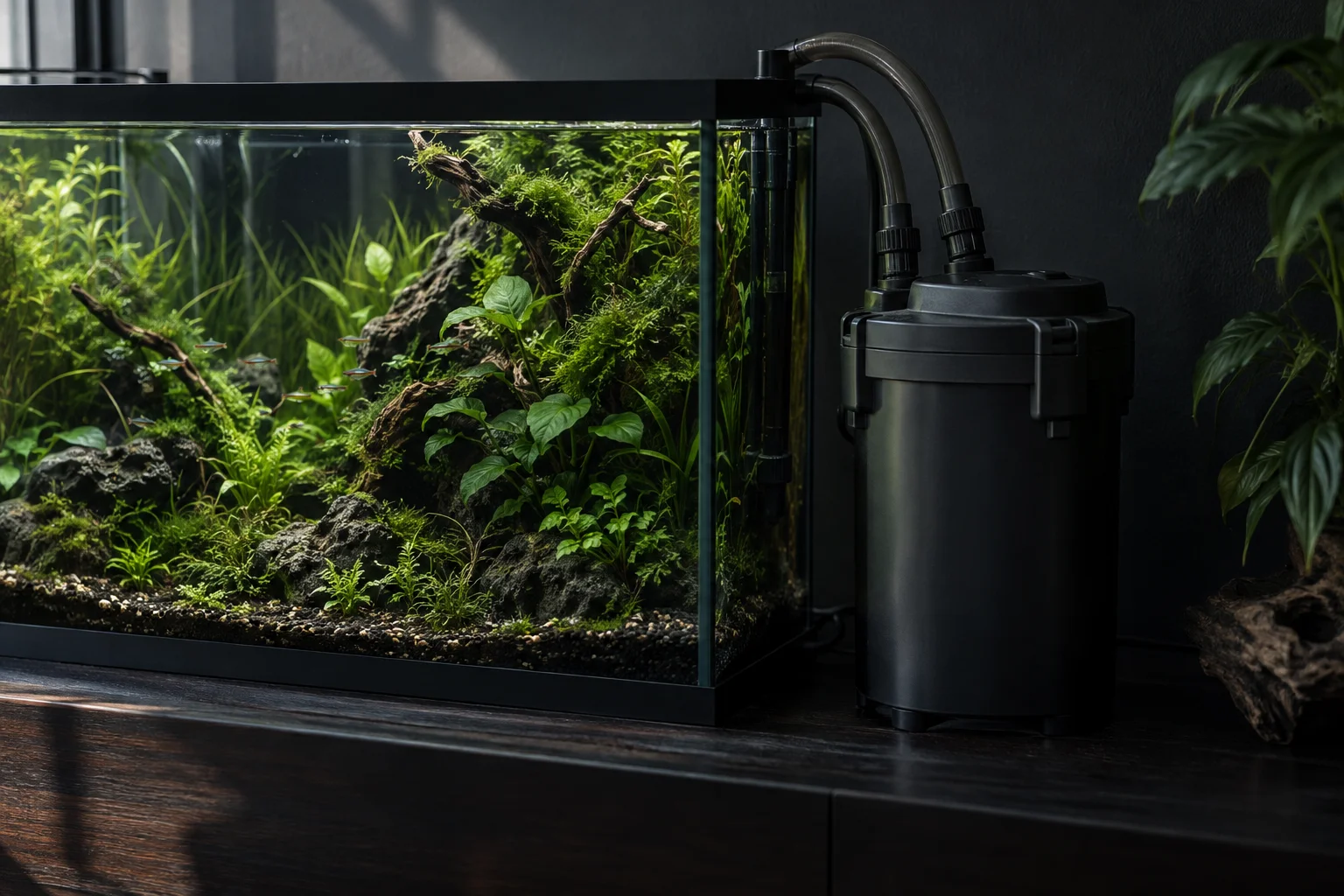
For a 10–20 gallon rasbora tank, a gentle filter and a stable heater matter most. A sponge filter is cheap, safe for fry and shrimp and provides good biological filtration; a hang-on-back or small canister also works if the flow is moderate. Pick an adjustable heater sized for your tank from our best aquarium heater guide.
Add a liquid test kit, a lid, a dark substrate and plenty of plants. If you are building a full community around harlequins, our list of peaceful community fish will help you choose the rest of the stocking.
Frequently asked questions
Frequently asked questions
How many harlequin rasboras should be kept together?
Keep at least 8 harlequin rasboras, and 10 or more if the tank allows. In small groups they become shy and lose color. A 10-gallon tank suits a group of 6–8 as the main school, while 15–20 gallons gives room for 10–12 fish plus a few bottom dwellers or a betta.
Can harlequin rasboras live with a betta?
Yes, they are one of the best betta tank mates. They are peaceful, short-finned and quick, and they like the same warm, soft water. Use at least a 10-gallon tank, ideally more, with plenty of plants, and watch the first days, since some bettas are aggressive toward any fish.
What is the minimum harlequin rasbora tank size?
The practical minimum is 10 gallons (38 L) with a length of about 20 inches (50 cm) for a group of 6–8. A 15–20 gallon tank is better, because it holds a larger school and stays more stable. Avoid nano tanks of 5 gallons for this species: they are too short for an active school.
Are harlequin rasboras good for beginners?
Yes. They are hardy, peaceful, eat almost any small food and tolerate a wide range of tap water once it is conditioned. They still need a cycled, heated tank and regular water changes, but they forgive the small mistakes that more delicate fish do not.
Will harlequin rasboras eat shrimp?
Adult cherry and amano shrimp are usually safe with harlequins. Newborn shrimplets are small enough to be eaten, so in a shrimp breeding tank, dense moss and plants are needed to protect them, or keep the two in separate tanks.
Sources and references
Written and reviewed by the handsoffmyhobby editorial team according to our editorial policy.