01
What aquarium salt is, and what it is not
Aquarium salt is sodium chloride with no iodine and no anti-caking agents, usually sold in coarse crystals. It is not the same as marine salt mix (which builds full seawater chemistry), Epsom salt (magnesium sulfate, used for different problems), or cichlid salts and GH boosters (which add calcium, magnesium and buffers). It does not raise GH or KH and it does not evaporate: the only way salt leaves your tank is through water changes.
Freshwater fish constantly absorb water through their gills and lose salts to it. A small amount of dissolved salt narrows that gap, which lowers the energy a stressed or injured fish spends on osmoregulation. That is the main reason aquarium salt for freshwater fish can help in the short term. The same effect is also why it should not stay in a healthy tank forever: most freshwater species are adapted to low-mineral water, and many plants and invertebrates react badly to chloride.
02
When aquarium salt is useful
Salt has a few well-documented, legitimate uses. Outside these, it rarely adds anything.
| Situation | Why salt helps | Typical approach |
|---|---|---|
| Nitrite spike | Chloride competes with nitrite at the gills and reduces its uptake | Low label dose while you do water changes and fix the cycle |
| Stress after shipping, injury or handling | Reduces osmotic workload and supports the slime coat | Low label dose in a hospital tank for a few days |
| Ich and some external parasites in tolerant fish | Can support treatment; parasites tolerate salt less well than many fish | Label disease dose, combined with proper treatment |
| Short salt bath | Stronger dose for minutes, aimed at external parasites | Hardy fish only, ideally on an aquatic vet’s advice |
| Routine "tonic" in a healthy tank | No proven benefit | Not recommended |
Nitrite in the first place means the tank is not fully cycled or the biofilter was damaged. Salt buys time; it does not fix the cause. See our guides on new tank syndrome and ammonia poisoning.
03
Fish, plants and invertebrates that do not tolerate salt
Salt tolerance varies a lot. As a rule, scaleless and soft-water species, bottom dwellers with sensitive skin, invertebrates and most plants should not be exposed to salt in the main aquarium. If you need salt for one fish, move it to a hospital tank.
| Group | Tolerance | Notes |
|---|---|---|
| Mollies, guppies, platies, swordtails | Good | Naturally tolerate some salt |
| Goldfish | Good | Tolerate low doses well; see our goldfish care sheet |
| Most barbs, danios, cichlids, gouramis | Moderate | Short-term low doses only |
| Soft-water tetras and rasboras | Low to moderate | Keep doses low and brief, increase slowly |
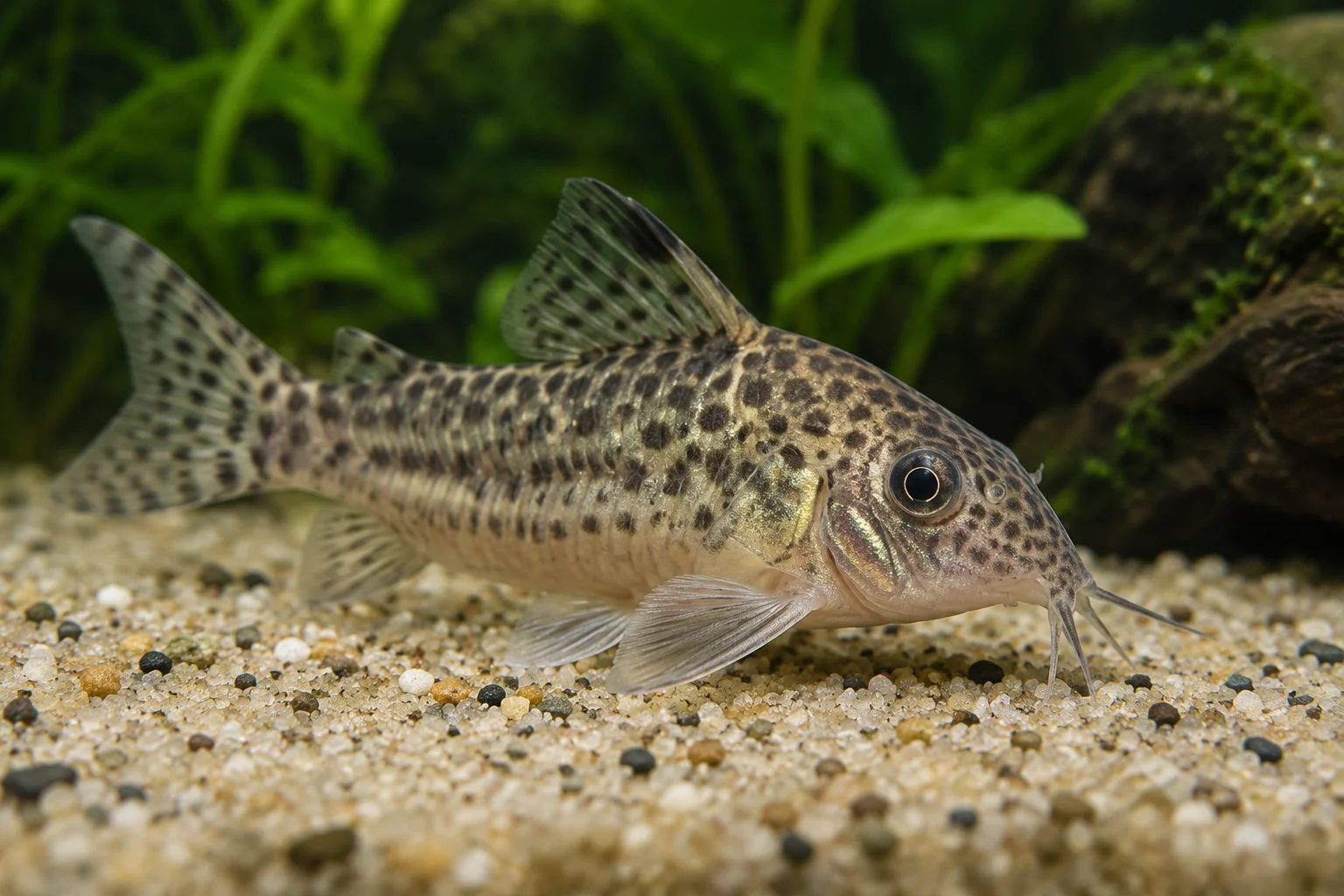
| Corydoras, plecos, otocinclus | Low | Sensitive; use alternatives or a separate tank |
| Loaches and scaleless catfish | Low | Kuhli and clown loaches are particularly sensitive |
| Shrimp and snails | Very low | Remove them before any salt treatment |
| Live plants | Low | Many show damage with prolonged salt; treat fish elsewhere |
04
How to dose aquarium salt step by step
Always follow the dose on your product’s label, since crystal size and strength differ between brands. Common labels, such as API Aquarium Salt, give a general dose of about 1 rounded tablespoon per 5 gallons and a higher dose for disease treatment. The steps below apply to a hospital tank or a tank stocked only with tolerant fish.
- Test ammonia, nitrite and nitrate first with a reliable kit from our best aquarium test kit guide, and note the results.
- Calculate your real water volume: subtract roughly 10–20% from the tank’s nominal size for substrate and decor.
- Remove shrimp, snails and sensitive fish, and move fish to a hospital tank if the main tank has live plants.
- Dissolve the measured salt completely in a cup of tank water. Never drop crystals directly onto fish or the substrate.
- Add the solution slowly near the filter outflow. For higher doses, split it into two or three additions 12 hours apart.
- Keep the dose for the period on the label, usually 7–14 days, while watching the fish for gasping or loss of balance.
- During treatment, only add salt for the water you remove in a water change. Top off evaporation with fresh water only.
- When finished, dilute the salt out with partial water changes of 25–30% over about a week.
Do not stack salt with other treatments without checking both labels, and never exceed the label dose. If a fish breathes faster, rolls or lies on the bottom after you add salt, do a water change straight away.
05
How an aquarium salt bath works
An aquarium salt bath (or dip) uses a much stronger solution for a short time, in a separate container. Dips are typically in the 10–30 g per liter range for a few minutes at most, and they are aimed at external parasites such as gill flukes or as a support for anchor worm removal. They are only for hardy, scaled fish and are best done with guidance from an aquatic vet.
Prepare the bath with dechlorinated tank water at the same temperature, aerate it, and stay with the fish the whole time. Return it to its tank immediately if it loses balance or rolls onto its side. Never dip corydoras, loaches, plecos or invertebrates.
06
Common mistakes with aquarium salt
Most salt problems come from treating it as harmless.
- Adding salt to every water change "for health" and slowly building up the concentration.
- Using iodized table salt or salt with anti-caking additives.
- Salting a planted community tank with corydoras or cherry shrimp.
- Using salt instead of fixing water quality, the real cause of most fin rot and stress.
- Treating ich in a tank with kuhli loaches or bristlenose plecos with salt instead of a gentler method.
07
When to stop and get help
Stop salt treatment and do a water change if fish look worse after 24–48 hours, or if the problem spreads. Salt supports recovery but it is not a medication for bacterial infections, internal parasites or most viral problems. Persistent symptoms, ulcers, bloating or several deaths call for an accurate diagnosis, ideally from an aquatic veterinarian.
For everyday health, the basics matter more than any additive: a cycled tank, a good dechlorinator from our best water conditioner review, careful fish acclimation and regular maintenance. If you want a gentler natural option for soft-water species, read about Indian almond leaves.
Frequently asked questions
Frequently asked questions
Is aquarium salt good for freshwater fish?
Only in specific situations. Aquarium salt for freshwater fish is useful against nitrite toxicity, after transport or injury, and as support against some external parasites in tolerant species. It brings no proven benefit as a permanent additive, and it harms scaleless fish, many bottom dwellers, invertebrates and plants. Use it short-term and then dilute it out.
How much aquarium salt per gallon?
Follow the label of your product. A common general dose is around 1 rounded tablespoon per 5 gallons, roughly 1 g per liter, with a higher dose for disease treatment printed on the same label. Measure your real water volume, dissolve the salt before adding it, and never exceed the stated maximum.
Can I use table salt instead of aquarium salt?
Avoid iodized table salt and salt with anti-caking agents or added minerals. Plain sodium chloride with no additives is chemically similar to aquarium salt, but labels can be unclear, so a product made for aquariums is the safer choice. Never use marine salt mix or Epsom salt as a substitute; they are different products.
Is aquarium salt safe for shrimp and corydoras?
No. Shrimp, snails, corydoras, plecos and loaches are sensitive to salt, even at doses that tolerant fish handle well. Remove invertebrates before any salt treatment and treat sensitive fish in a separate hospital tank, or choose a treatment that does not rely on salt.
How do I remove salt from my aquarium?
Salt does not evaporate or get filtered out. Remove it with partial water changes of 25–30%, using fresh dechlorinated water without salt, spread over about a week. Testing is not necessary for low label doses, but avoid one huge water change that would change the conditions too abruptly.
Sources and references
Written and reviewed by the handsoffmyhobby editorial team according to our editorial policy.