Fact sheet
- Common names
- Apistogramma, apisto, dwarf cichlid
- Family
- Cichlidae (Geophaginae)
- Origin
- Tropical South America: Amazon, Orinoco and Paraguay basins
- Adult size
- Males 2.75–3.25 in (7–8 cm), females 1.5–2 in (4–5 cm), species dependent
- Lifespan
- 3–5 years
- Minimum tank
- 20 gallons (75 L) for a pair or trio
- Temperature
- 75–84 °F (24–29 °C)
- pH
- 5.5–7.0 (A. cacatuoides and A. borellii tolerate up to 7.5)
- Hardness
- GH 1–10 °dH, KH 0–4 °dH
- Diet
- Micropredator: small invertebrates, frozen and live foods
- Temperament
- Peaceful toward other fish, territorial near the bottom
- Care level
- Intermediate (cacatuoides and borellii are easiest)
01
What are Apistogramma dwarf cichlids?
Apistogramma is a large genus of dwarf cichlids, with more than 90 described species and many more undescribed forms traded under codes. They live near the bottom, rarely dig destructively, leave plants alone and show behavior that bigger cichlids reserve for big tanks: courtship displays, territories, caves and careful brood care, all in a footprint that fits a 20-gallon tank.
Males are larger and more colorful, with extended fins; females are smaller, mostly yellow-brown, and turn bright yellow with black markings when guarding fry. Good Apistogramma care starts with a mature, fully cycled tank and stable water, because like most dwarf cichlids they react badly to ammonia, nitrite and rising nitrate.
- Tank: 20 gallons (75 L) minimum, a 20 long is ideal
- Heater: adjustable, set to about 78–80 °F (25.5–27 °C)
- Filter: gentle flow, sponge filter or small canister
- Substrate: fine sand or smooth fine gravel
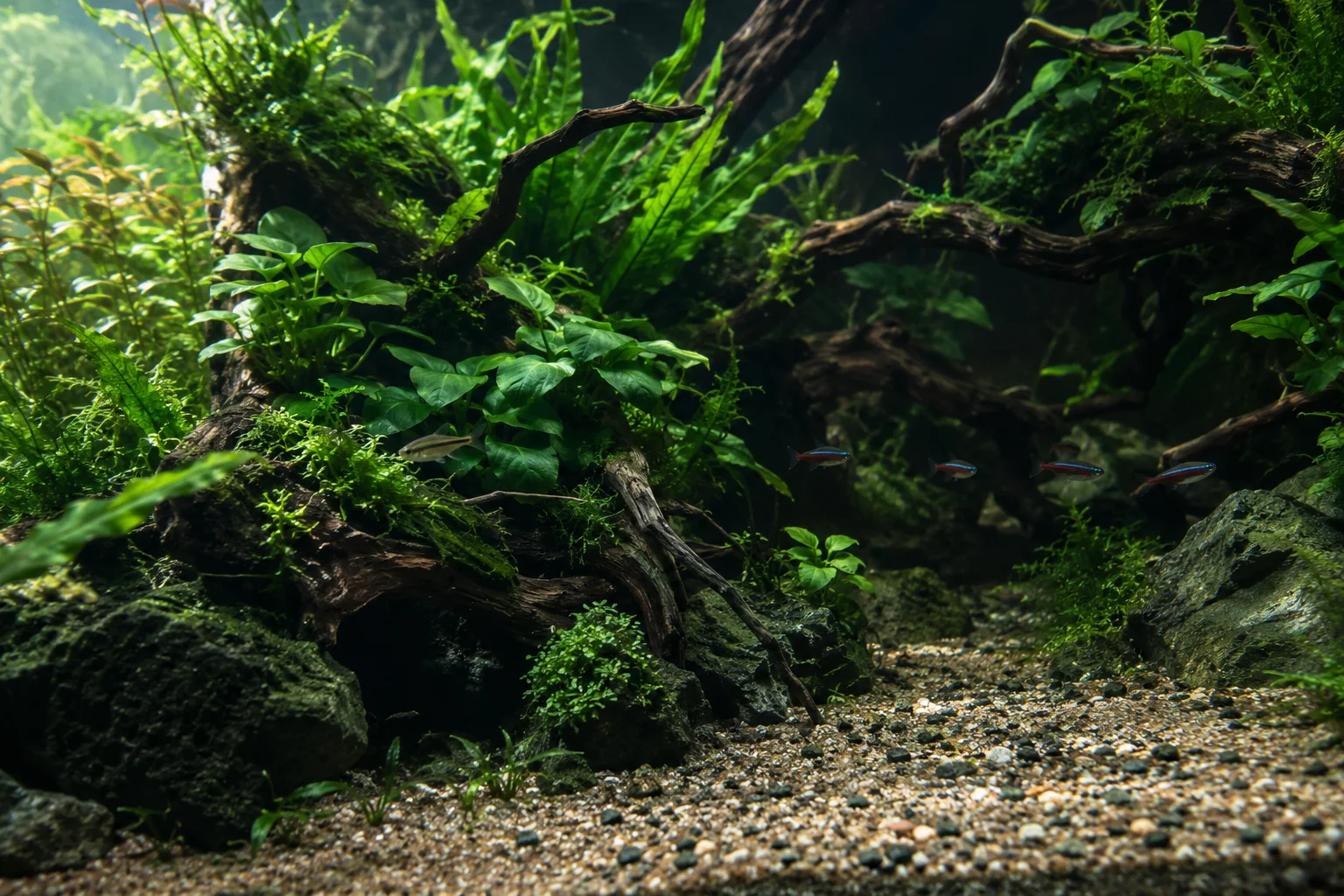
- Decor: caves (coconut shells, small clay caves), driftwood, plants, leaf litter
02
Popular Apistogramma species
Species differ in color, size and, above all, water requirements. If this is your first Apistogramma, choose a tank-bred Apistogramma cacatuoides or A. borellii: both tolerate harder, more neutral water and are widely available. Wild-caught fish and blackwater species such as A. agassizii or A. nijsseni need soft, acidic water and more experience.
| Species | Male size | pH range | Notes |
|---|---|---|---|
| A. cacatuoides (cockatoo dwarf cichlid) | 3–3.5 in (8–9 cm) | 6.0–7.5 | Hardiest, many color strains such as double red and orange flag |
| A. borellii (umbrella dwarf cichlid) | 2.75 in (7 cm) | 6.0–7.5 | Small and peaceful, tolerates cooler water around 75 °F |
| A. agassizii (Agassiz’s dwarf cichlid) | 3 in (8 cm) | 5.0–7.0 | Spade-shaped tail, likes soft water, many color forms |
| A. macmasteri | 3 in (8 cm) | 5.5–7.0 | Red-orange tail, moderately easy |
| A. trifasciata | 2.5 in (6 cm) | 5.5–7.0 | Tall dorsal fin, three dark lines, prefers warm water |
| A. nijsseni (panda dwarf cichlid) | 2.75 in (7 cm) | 4.5–6.5 | Blackwater species, for experienced keepers |
03
Origin and natural habitat
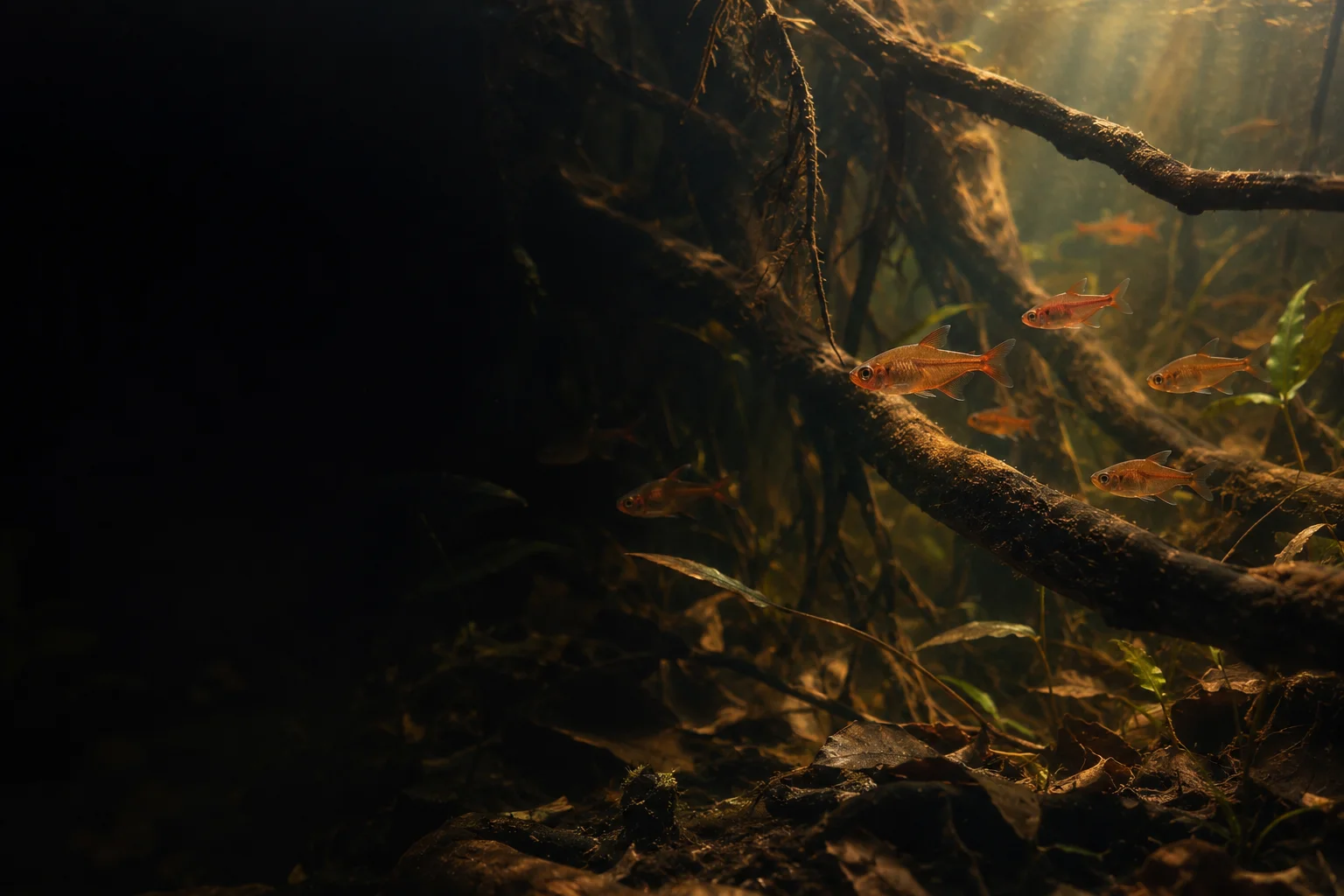
Apistogramma are found across tropical South America east of the Andes, mainly in the Amazon and Orinoco basins, with a few species such as A. borellii reaching the Paraguay basin. Most live in shallow, slow-flowing margins of streams and floodplains, among leaf litter, roots and branches, often in very soft water.
Many habitats are blackwater: tea-colored, acidic and poor in minerals because of tannins released by decaying leaves. That is why leaf litter, driftwood and Indian almond leaves work so well in an Apistogramma tank: they recreate cover and slightly lower the pH.
04
Adult size and lifespan
Males of most common species reach about 2.75–3.25 inches (7–8 cm), with A. cacatuoides slightly larger. Females stay at 1.5–2 inches (4–5 cm). Lifespan is typically 3–5 years, a little longer at the cooler end of the temperature range and with a varied diet.
05
Tank size and setup
A pair or a trio (one male, two females) fits in a 20-gallon (75 L) tank, ideally with a long footprint of about 30 x 12 inches (76 x 30 cm). Each female claims a cave and a small territory, so for a harem of one male and three females, 30 gallons (115 L) or more works better. Our best 20-gallon aquarium picks are a good starting point.
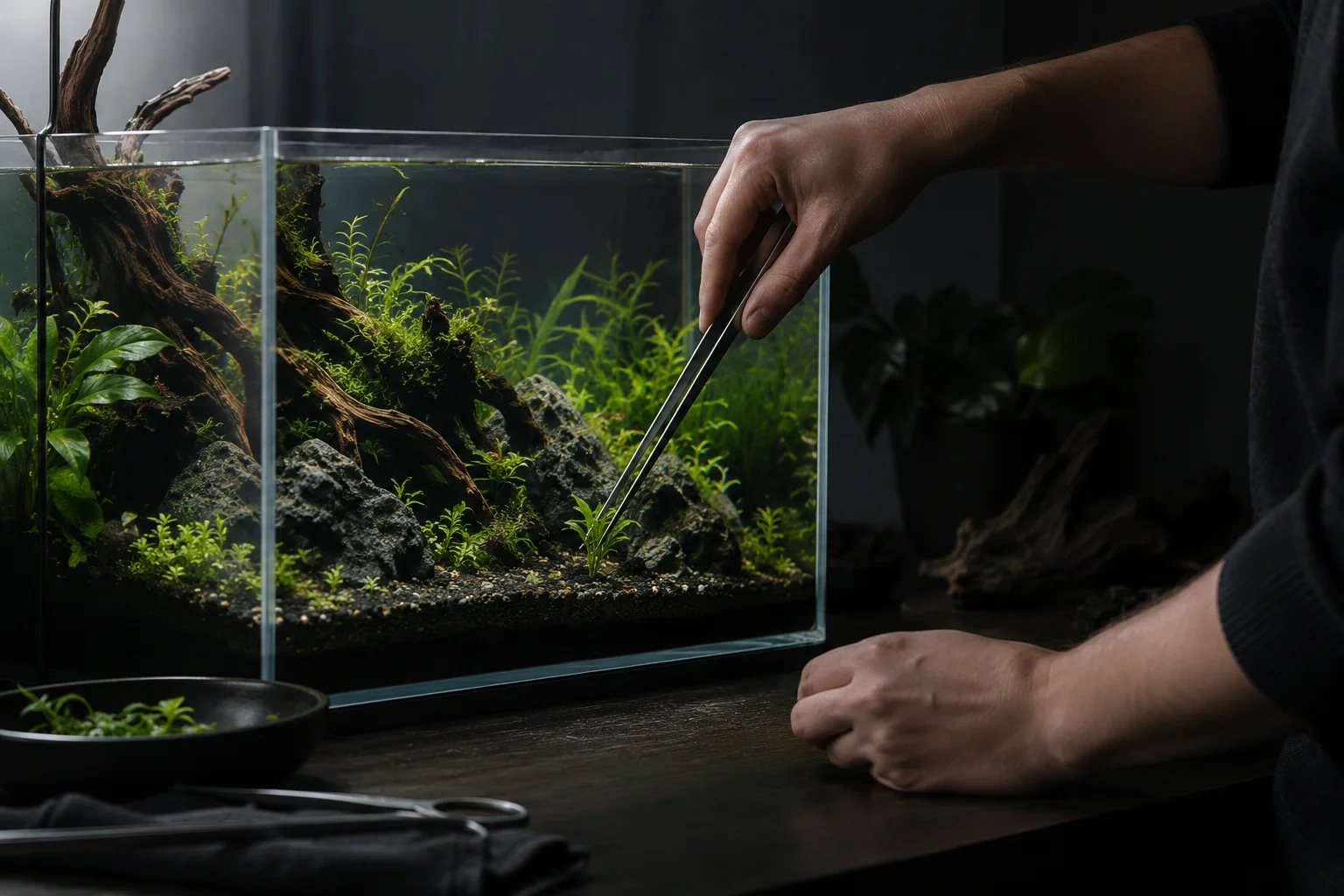
Provide one cave per female, plus a spare, and break lines of sight with driftwood and plants. Fine sand and leaf litter on the bottom allow natural foraging. Floating plants soften the light and help shy fish come out. Keep the current gentle: a sponge filter is the classic choice for dwarf cichlids.
06
Water parameters
Tank-bred cacatuoides and borellii adapt to a pH of about 7.0–7.5 and moderate hardness, but most Apistogramma show their best colors and breed more successfully in soft, slightly acidic water. Read our guide to aquarium water parameters and, if you need to soften your water, our guide on how to lower pH in an aquarium. Test weekly with a liquid kit; our best aquarium test kit guide compares options.
| Parameter | Target range |
|---|---|
| Temperature | 75–84 °F (24–29 °C), species dependent |
| pH | 5.5–7.0 (up to 7.5 for cacatuoides and borellii) |
| GH (general hardness) | 1–10 °dH (20–180 ppm) |
| KH (carbonate hardness) | 0–4 °dH (0–70 ppm) |
| Ammonia / nitrite | 0 ppm |
| Nitrate | Below 20 ppm |
In Apistogramma, temperature and pH during egg development influence the sex ratio of the fry: warmer water tends to produce more males, cooler and more acidic water more females. Breeders use this to avoid batches of almost all males.
07
Diet and feeding
Apistogramma are micropredators that pick small insects, larvae and crustaceans from the leaf litter. Offer a varied diet: frozen bloodworms, brine shrimp, daphnia, cyclops and mysis, live foods when you can, and a quality sinking micro-pellet or granule. Some individuals refuse dry food at first and learn to accept it when kept with active feeders.
Feed small portions once or twice a day, and make sure fast midwater fish do not take everything. Remove leftovers, since uneaten food in a soft-water tank quickly affects water quality.
08
Behavior and Apistogramma tank mates
Apistogramma are peaceful toward fish that stay in the middle and upper water layers. They defend a bottom territory, especially around caves, and a breeding female will chase anything that comes too close to her fry. Keep only one male per tank unless the tank is large and well structured; two males of different species in a small tank usually fight.
The best tank mates are small, calm schooling fish that act as dithers and make the cichlids bolder. Avoid other bottom-dwelling cichlids in small tanks and anything large or boisterous.
- Good tank mates: ember tetras, cardinal tetras, rummy-nose tetras, harlequin rasboras, pencilfish, hatchetfish, otocinclus
- With care: corydoras and kuhli loaches (fine in larger tanks, but may eat eggs), other dwarf cichlids in 40+ gallon tanks
- Avoid: cherry shrimp if you want a shrimp colony (shrimplets are eaten), larger cichlids, fin nippers, fast or greedy feeders
09
Breeding Apistogramma
Most Apistogramma are cave spawners with a harem-type system: one male mates with several females, each of which guards her own cave. A ready female turns bright yellow, courts the male and lays roughly 40–150 eggs on the cave ceiling, depending on species. She then guards the eggs alone and drives the male away.
Eggs hatch in about 2–3 days at 79–82 °F (26–28 °C), and the fry become free-swimming around 5–7 days later. The female leads them around the tank in a tight group. Feed baby brine shrimp or microworms from the first day of free swimming. In a community tank, some fry usually survive if there is plenty of cover; for larger batches, remove other fish or use a dedicated breeding tank.
10
Common diseases
Apistogramma are fairly robust in clean water, but wild-caught fish may carry parasites, and all species react to rising ammonia and nitrate. If a fish hides, stops eating or clamps its fins, test the water first. Quarantine new arrivals for a few weeks, and see an aquatic vet for serious or spreading cases, always following medication labels.
| Problem | Typical signs | Where to start |
|---|---|---|
| Ich | White salt-like spots, scratching | See ich in fish |
| Ammonia stress | Gasping, dark color, lethargy | Test and change water, see ammonia poisoning |
| Gill flukes | Fast breathing, rubbing, flared gills | See gill flukes |
| Internal parasites | Weight loss, white stringy feces | Quarantine and ask a vet |
| Bacterial infections | Cloudy eyes, frayed fins, red marks | Improve water, medicate per label |
11
Recommended gear
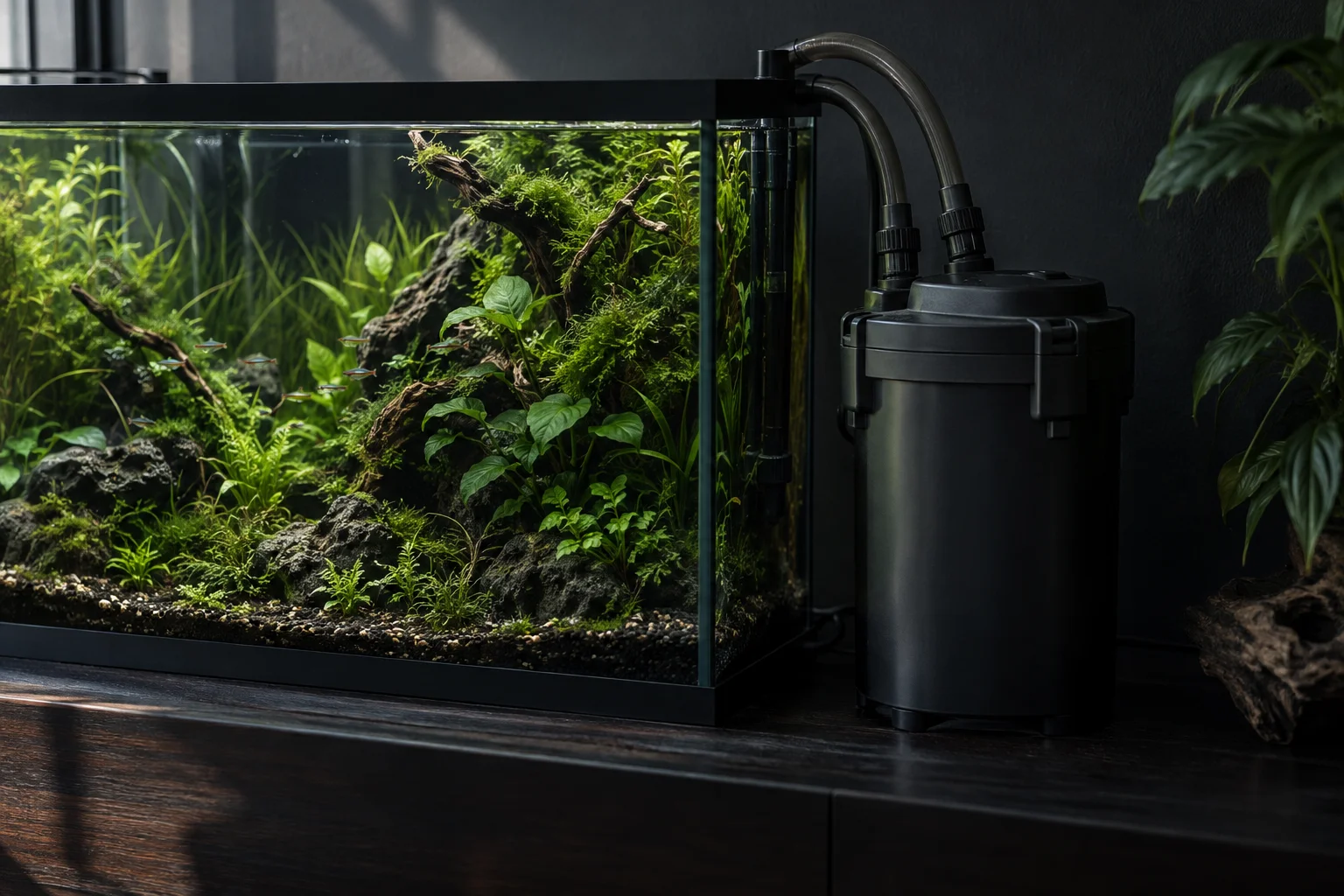
An Apistogramma tank needs little equipment, but it must be reliable. Use a gentle filter, ideally a sponge filter run by a small air pump (see our best sponge filter guide), and an adjustable heater of about 50–100 W for a 20-gallon tank; our best aquarium heater guide covers dependable models.
A fine sand substrate (see our best aquarium substrate guide), a liquid test kit, a water conditioner, a few small caves and a supply of dried leaves complete the setup.
Frequently asked questions
Frequently asked questions
Which Apistogramma is best for beginners?
Apistogramma cacatuoides is the most common recommendation, followed by A. borellii. Tank-bred cacatuoides tolerate a pH up to about 7.5 and moderate hardness, are widely available in colorful strains and breed readily. Start with one male and one or two females in a planted 20-gallon tank with caves.
What size tank do Apistogramma need?
A pair or trio needs at least 20 gallons (75 L), ideally a long tank with a lot of floor space. For a male with three females, or for a community with a school of tetras, choose 30 gallons (115 L) or more. Provide one cave per female plus a spare.
What are good Apistogramma tank mates?
Small, peaceful schooling fish that swim above the bottom: ember tetras, cardinal tetras, rummy-nose tetras, harlequin rasboras, pencilfish and hatchetfish. Otocinclus work well too. Corydoras and kuhli loaches are fine in larger tanks. Avoid larger cichlids, fin nippers and, if you want a colony, shrimp.
Can you keep two male Apistogramma together?
Only in a large, densely structured tank, usually 40 gallons (150 L) or more, with separate territories and plenty of caves. In smaller tanks, two males fight constantly and the weaker one stops eating. One male with one to three females is the most reliable setup.
How long do Apistogramma live?
Most Apistogramma live 3–5 years in the aquarium. Lifespan depends on species, water quality, diet and temperature: fish kept at the warmest end of their range tend to age faster. Clean, stable water and a varied diet help them reach the upper end.
Sources and references
Written and reviewed by the handsoffmyhobby editorial team according to our editorial policy.