Fact sheet
- Common names
- Betta fish, Siamese fighting fish
- Origin
- Thailand, Cambodia, Laos, Vietnam (Mekong and Chao Phraya basins)
- Adult size
- 2.4–2.8 in (6–7 cm)
- Lifespan
- 3–5 years
- Minimum tank
- 5 gallons (19 L), 10 gallons (38 L) recommended
- Temperature
- 76–82 °F (24–28 °C)
- pH
- 6.5–7.5
- Hardness
- GH 3–12 °dH, KH 2–8 °dH
- Diet
- Carnivore (insects and larvae in the wild)
- Temperament
- Males territorial, best kept singly
- Care level
- Easy, once the tank is set up correctly
01
Betta fish care at a glance
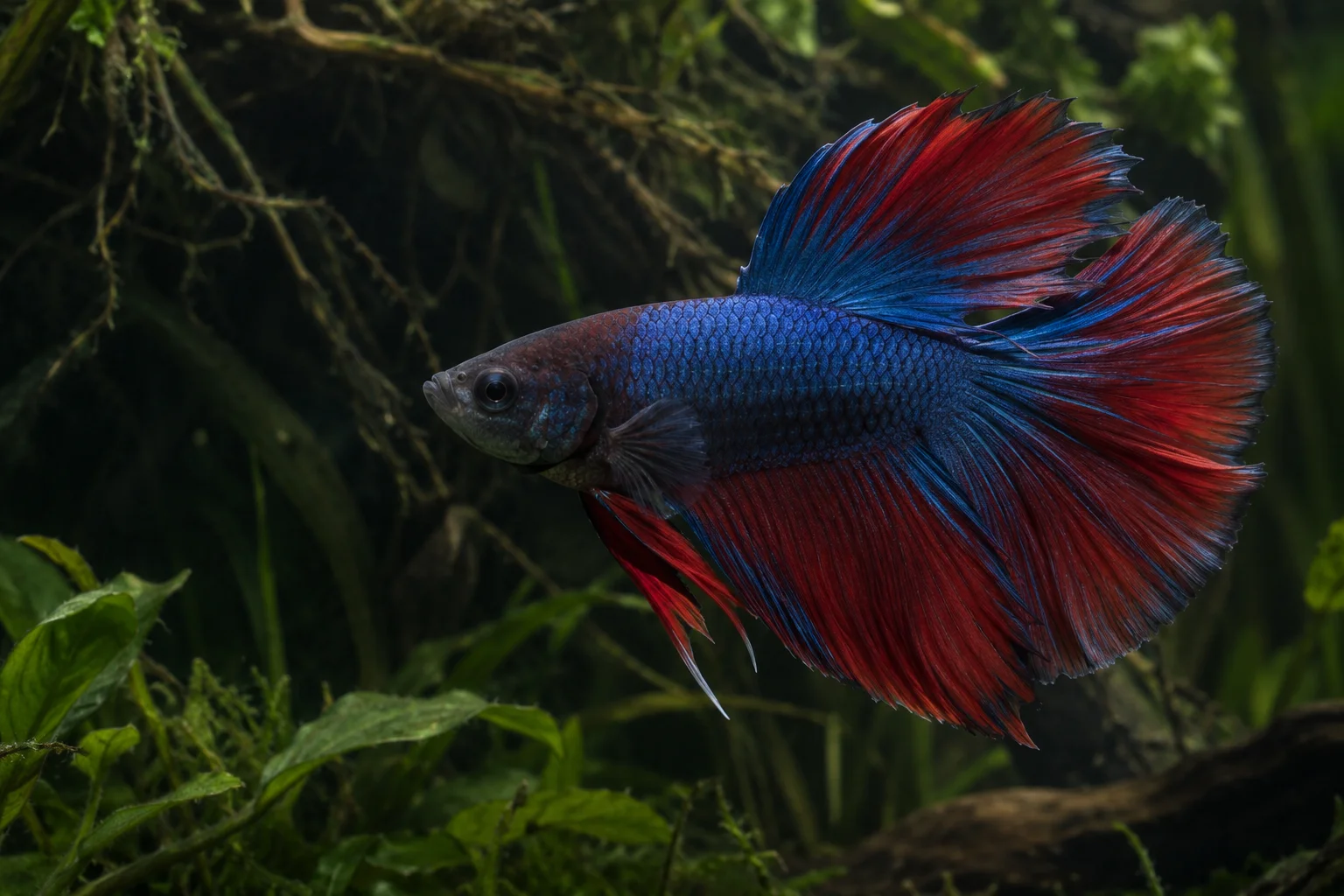
The betta, or Siamese fighting fish, is one of the most popular freshwater fish in the US, mostly because of the long-finned, brightly colored males sold in cups at pet stores. Those cups are a shipping container, not a home. A betta kept in a heated, filtered tank is more active, shows better color and lives years longer than one kept in an unheated bowl.
Bettas are labyrinth fish: a special organ lets them gulp air from the surface, which is why they survive poor conditions for a while. That ability is not a reason to skip filtration or water changes. Ammonia from waste still builds up, and it still burns gills and fins. Before you add a betta, cycle the tank so beneficial bacteria can process that waste.
- Tank: 5 gallons minimum, 10 gallons if you have the room
- Heater: adjustable, set to about 78 °F (25.5 °C)
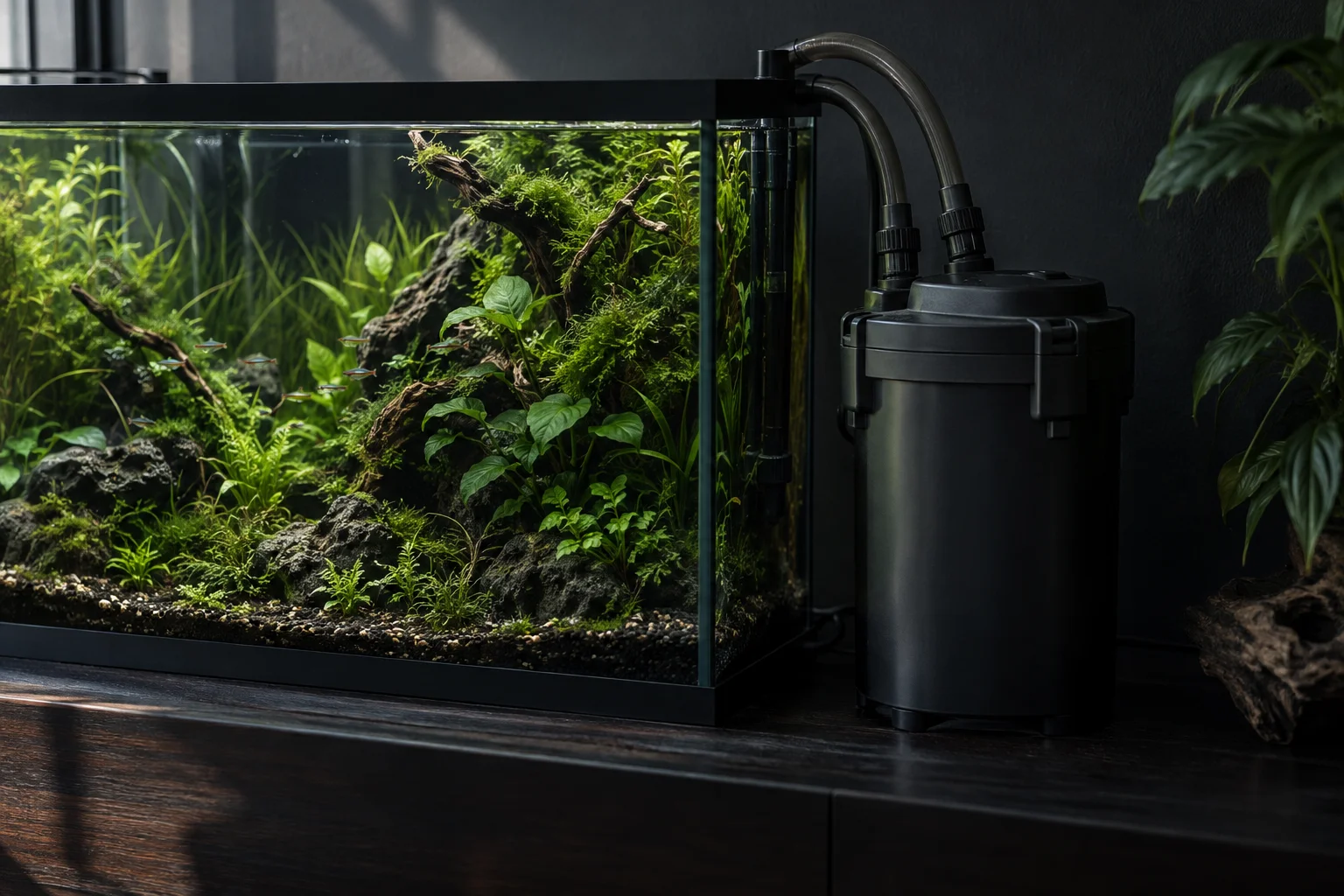
- Filter: gentle flow, sponge filter or baffled hang-on-back
- Lid: bettas can jump, and the warm humid air above the water helps their labyrinth organ
- Decor: silk or live plants, a cave, and a leaf or floating plant to rest near the surface
02
Origin and natural habitat
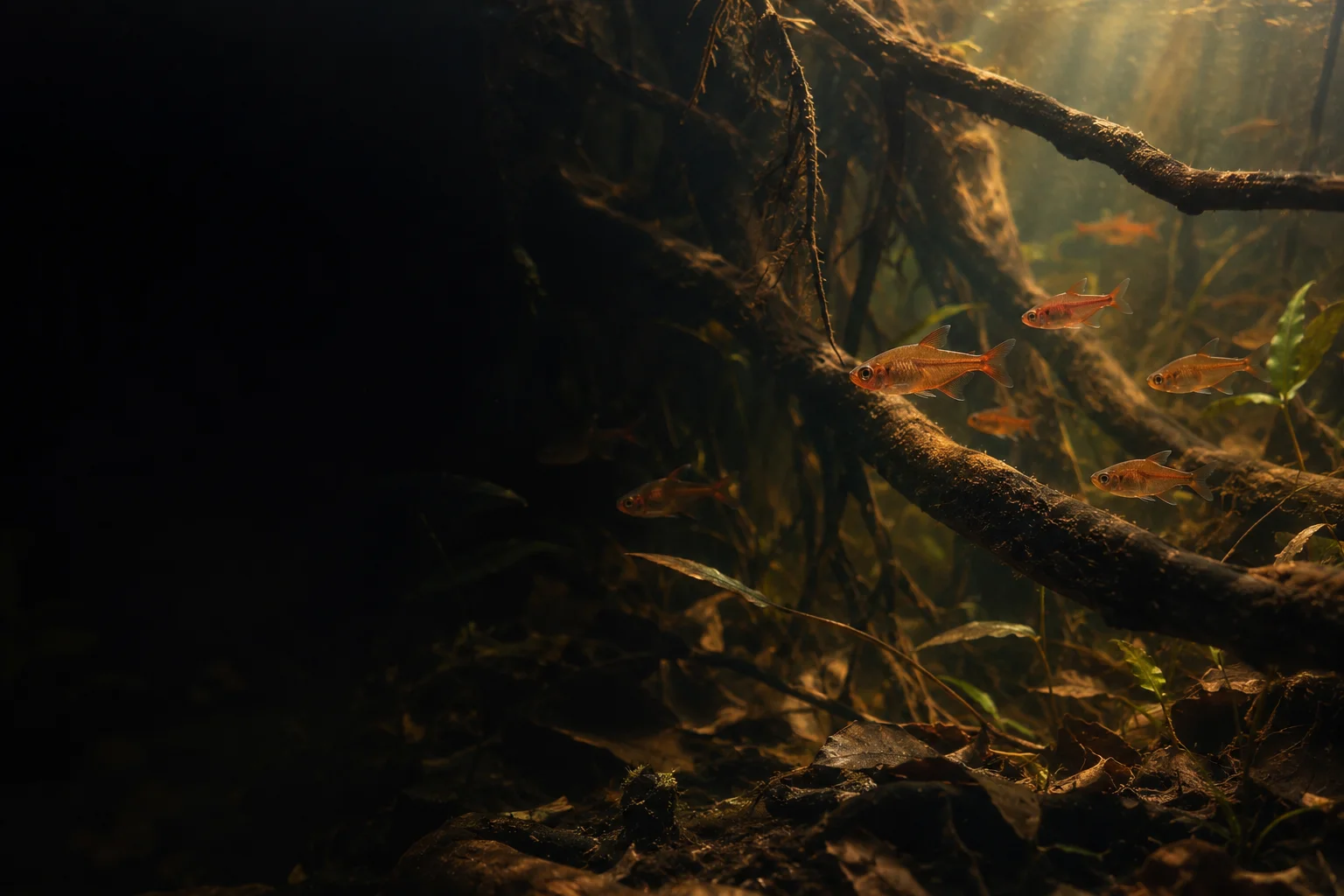
Wild Betta splendens come from the lowlands of Thailand and neighboring parts of Cambodia, Laos and Vietnam. They live in rice paddies, marshes, floodplains and slow ditches: shallow, warm, heavily vegetated water with a soft to moderately hard chemistry and very little current.
Wild fish are short-finned and far less colorful than the pet strains. Centuries of selective breeding in Thailand produced the veiltail, halfmoon, crowntail, plakat and double-tail forms sold today. The long fins of modern males are heavy, which is the main reason they prefer calm water and resting spots close to the surface.
03
Adult size and lifespan
Adult bettas reach about 2.4–2.8 inches (6–7 cm) in body length, plus fins. Females are slightly smaller with shorter fins, though some females of long-finned lines also carry visible finnage. Giant betta strains exist and can reach around 3 inches (7–8 cm) of body length.
Most bettas live 3–5 years with good care. Pet-store males are usually 6 months to a year old when sold, so a lifespan of 2–4 years in your tank is typical. For a deeper look at what shortens or extends that number, read our article on how long betta fish live.
04
Betta fish tank size
The practical minimum betta fish tank size is 5 gallons (19 L). In anything smaller, temperature swings faster, waste concentrates quickly and a heater is hard to fit safely. A 10-gallon (38 L) tank is easier to keep stable and gives room for plants and, if you want, a few compatible tank mates. If you are shopping for one, see our picks for the best 10-gallon aquarium.
Long tanks beat tall ones. Bettas spend a lot of time near the surface and need to reach it easily to breathe, so a footprint of about 16 x 8 inches (40 x 20 cm) or more works better than a narrow column. Leave an inch or two of air between the water and the lid.
Bowls, vases and 1-gallon "betta kits" without a heater are the most common cause of short betta lives. Room temperature in most homes is too cold for a tropical fish.
05
Water parameters
Bettas are adaptable to most US tap water once it is treated with a water conditioner that neutralizes chlorine and chloramine. Stability matters more than chasing an exact pH. Test weekly while the tank is new and use our guide to aquarium water parameters to interpret the results.
| Parameter | Target range |
|---|---|
| Temperature | 76–82 °F (24–28 °C) |
| pH | 6.5–7.5 |
| GH (general hardness) | 3–12 °dH (50–200 ppm) |
| KH (carbonate hardness) | 2–8 °dH (35–140 ppm) |
| Ammonia / nitrite | 0 ppm |
| Nitrate | Below 20 ppm |
06
Do betta fish need a filter?
Yes. A betta can survive without a filter longer than most fish, but a filter is where beneficial bacteria live, and those bacteria turn toxic ammonia into much less harmful nitrate. Without one, you would need very large, very frequent water changes to keep ammonia at zero.
The key is gentle flow. Long fins act like sails, and a strong current exhausts a betta quickly. A sponge filter driven by a small air pump is ideal; you can compare models in our best sponge filter guide. A hang-on-back filter also works if you choose a low-flow model or baffle the outflow with a piece of sponge.
07
Diet and feeding
In the wild, bettas eat insects, mosquito larvae and small crustaceans. In the aquarium, build the diet around a high-protein betta pellet or micro-pellet, then add frozen or live foods two or three times a week: bloodworms, brine shrimp, daphnia and mosquito larvae.
Feed 2–3 pellets once or twice a day, roughly what your betta can eat in a minute or two. A betta’s stomach is about the size of its eye, and overfeeding is the main trigger of bloating and swim bladder problems. Many keepers skip feeding one day a week to help digestion. Remove uneaten food after a few minutes.
08
Behavior and tank mates
Male bettas are territorial toward other males and will fight, often to serious injury, which is where the "fighting fish" name comes from. Keep only one male per tank, and do not house males in divided tanks where they see each other all day, as constant flaring is stressful. Females are less aggressive, but female groups ("sororities") are tricky and need a large, heavily planted tank and an experienced keeper.
Temperament varies a lot between individuals. Some males ignore everything; others attack any fish with long fins or bright colors. In a 10-gallon tank or larger, peaceful bottom dwellers and invertebrates are the safest bet. Our full guide to betta tank mates lists what works, what to avoid and how to introduce them.
- Usually compatible: nerite snails, mystery snails, small corydoras (in 10+ gallons), kuhli loaches, ember tetras in a planted tank
- Risky: cherry shrimp (may be eaten), small rasboras with a nippy betta
- Avoid: other male bettas, guppies and fancy long-finned fish, fin nippers such as tiger barbs, large or fast cichlids
09
Breeding bettas
Bettas are bubble-nest builders. A healthy, well-fed male blows a raft of bubbles at the surface, often under a leaf. When a ready female (showing vertical bars and a visible white egg spot) is introduced, the pair spawns under the nest in an embrace, and the male collects the eggs and places them in the bubbles.
Remove the female right after spawning, because the male becomes very protective. Eggs hatch in about 24–48 hours, and the fry become free-swimming after roughly 3 days, at which point the male should also be removed. Fry need infusoria or vinegar eels first, then baby brine shrimp. Breeding is rewarding but produces dozens to hundreds of fry, and young males must eventually be separated, so plan space before you start.
10
Common betta diseases
Most betta health problems trace back to water quality or temperature. Check ammonia, nitrite and temperature first whenever your fish looks off.
Very soft, acidic, tannin-rich water can help a stressed betta. Some keepers add Indian almond leaves to release tannins, though they are a supportive measure, not a medicine. For any serious or worsening case, contact an aquatic veterinarian.
| Problem | Typical signs | Where to start |
|---|---|---|
| Fin rot | Ragged, shrinking or dark-edged fins | Water quality, then fin rot treatment |
| Swim bladder disorder | Floating, sinking or swimming sideways | Fasting for 1–2 days, then smaller meals |
| Ich | White salt-like spots, scratching | Temperature and medication, see ich in fish |
| Velvet | Gold or rust dust on the body, clamped fins | Dim lights, medicate per label |
| Dropsy | Swollen belly, scales sticking out like a pinecone | Isolate, ask a vet; outlook is often poor |
11
Recommended gear
A betta setup does not need to be expensive, but three items are non-negotiable: a reliable heater, a gentle filter and a water conditioner. For a 5–10 gallon tank, a 25–50 W adjustable heater is usually enough; our best aquarium heater guide covers models with accurate thermostats and safety shut-off.
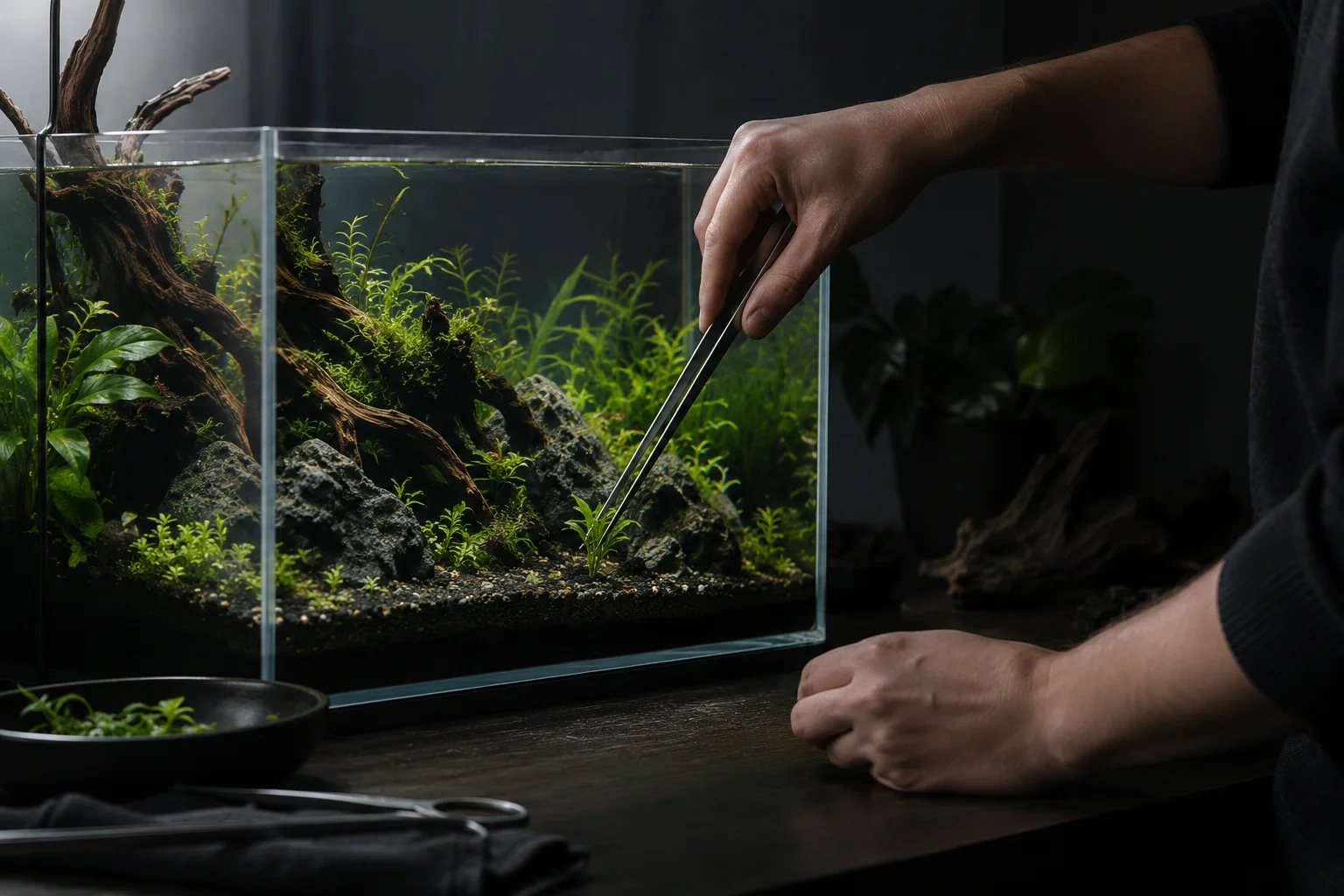
Add a liquid test kit to monitor ammonia and nitrite, a lid, and soft decor without sharp edges. A simple test: if a decoration snags pantyhose, it can tear betta fins. Live plants such as anubias, java fern and floating plants make bettas feel secure and help keep nitrate down.
Frequently asked questions
Frequently asked questions
How do you care for a betta fish as a beginner?
Set up a tank of at least 5 gallons with a heater, a gentle filter and a lid, and cycle it before adding the fish. Keep the water at 76–82 °F, treat tap water with a conditioner, change 20–30% each week and feed 2–3 pellets once or twice a day. Watch fins and appetite daily, since early signs of trouble are easy to fix.
Do betta fish need a filter?
Yes. A filter hosts the bacteria that convert ammonia from waste into less harmful nitrate. Bettas can breathe air, so they survive longer without one, but ammonia still damages their gills and fins. Choose a gentle model such as a sponge filter, or baffle a hang-on-back filter so the current does not push the fish around.
What is the best betta fish tank size?
A 5-gallon tank (19 L) is the practical minimum, and a 10-gallon tank (38 L) is better. Larger volumes stay more stable in temperature and water quality, give room for plants and allow a few peaceful tank mates. Choose a long, low tank so your betta can easily reach the surface to breathe.
Can two betta fish live together?
Two males should never share a tank, because they fight and can injure or kill each other. A male and a female should only be together briefly for breeding. Groups of females can work in large, densely planted tanks, but aggression is common and requires close monitoring and a backup tank.
How often should I feed my betta?
Feed once or twice a day, giving only what your betta eats in one to two minutes, usually 2–3 pellets per meal. Offer frozen foods like bloodworms or brine shrimp a few times a week for variety. One fasting day each week helps prevent bloating and constipation.
Sources and references
Written and reviewed by the handsoffmyhobby editorial team according to our editorial policy.