Fact sheet
- Common names
- Cardinal tetra, cardinal
- Family
- Characidae (tetras)
- Origin
- Upper Rio Negro and Orinoco basins: Brazil, Colombia, Venezuela
- Adult size
- 1.2–2 in (3–5 cm)
- Lifespan
- About 4–5 years in the aquarium
- Minimum tank
- 20 gallons (75 L)
- Temperature
- 75–82 °F (24–28 °C)
- pH
- 5.0–7.0
- Hardness
- GH 1–8 °dH, KH 0–4 °dH
- Diet
- Omnivore, micro-predator
- Group size
- 8–10 or more
- Care level
- Moderate: needs stable, soft water
01
Cardinal tetra at a glance
The cardinal tetra is a small South American schooling fish with an iridescent blue-green stripe over a deep red band that covers the whole lower body. In a planted tank with soft light, a group of cardinals moves like one shimmering ribbon, which is why aquascapers and discus keepers have favored them for decades.
Cardinals are not hard to keep, but they are less forgiving than farmed neon tetras. Many are still collected in the wild, so they arrive stressed and used to very soft, acidic water. Add them only to a fully cycled tank that has been running for at least a month or two, and take your time with acclimation, ideally with a slow drip if your water is harder than the store’s.
- Tank: 20 gallons (75 L) minimum, a long footprint is best
- School size: 8–10 minimum, 15 or more looks spectacular
- Heater: set to about 77–79 °F (25–26 °C)
- Filter: moderate, even flow, mature biological media
- Decor: dense planting, driftwood, leaf litter, dark substrate, floating plants
02
Cardinal tetra vs neon tetra
The quickest way to tell them apart: on a neon tetra, the red only covers the rear half of the body, below the tail end of the blue stripe. On a cardinal tetra, the red runs from the head almost to the tail along the whole lower body. Cardinals also grow a little larger and look deeper-bodied as adults.
The care differences matter more than the looks. Cardinals prefer warmer water, which makes them one of the few small schooling fish suited to a discus tank, and they want softer, more acidic water than farmed neons. Neons are usually cheaper and hardier for a first tank; cardinals reward a stable, planted setup.
| Trait | Cardinal tetra | Neon tetra |
|---|---|---|
| Red coloration | Full length of the lower body | Rear half only |
| Adult size | 1.2–2 in (3–5 cm) | 1.2–1.5 in (3–4 cm) |
| Temperature | 75–82 °F (24–28 °C) | 72–78 °F (22–26 °C) |
| pH | 5.0–7.0 | 6.0–7.5 |
| Main source | Mostly wild-caught | Mostly farm-raised |
| Hardiness | Moderate | Easy once settled |
| Discus tank | Good match | Too warm long term |
03
Origin and natural habitat
Wild Paracheirodon axelrodi live in the upper Rio Negro and Orinoco basins in Brazil, Colombia and Venezuela. These are classic blackwater habitats: very soft, acidic water stained the color of tea by tannins, with almost no dissolved minerals. During the rainy season the fish spread into flooded forest, among roots and leaf litter.
Most cardinals in the trade are still collected around the middle Rio Negro, where the ornamental fishery is an important income for local communities. Initiatives such as Project Piaba promote this fishery as a reason to protect the forest rather than clear it. Captive-bred cardinals exist and are becoming more common; they are often a little easier to acclimate to tap water.
04
Adult size and lifespan
Adult cardinal tetras usually reach about 1.2–2 inches (3–5 cm) in total length. Females are slightly larger and fuller in the belly, especially when carrying eggs; males are slimmer. Sexing them is easiest when you compare several adults side by side.
In a stable aquarium, cardinals commonly live around 4–5 years. Heavy losses in the first weeks usually trace back to collection and shipping stress, sudden water changes or disease, not to the species itself.
05
Cardinal tetra tank size and setup
A 20-gallon (75 L) tank is a sensible minimum for a school of 8–10 cardinals, and our guide to the best fish for a 20-gallon tank shows how to build a community around them. If you need a tank, see our picks for the best 20-gallon aquarium. Larger schools in 30–55 gallons show off their group behavior best.
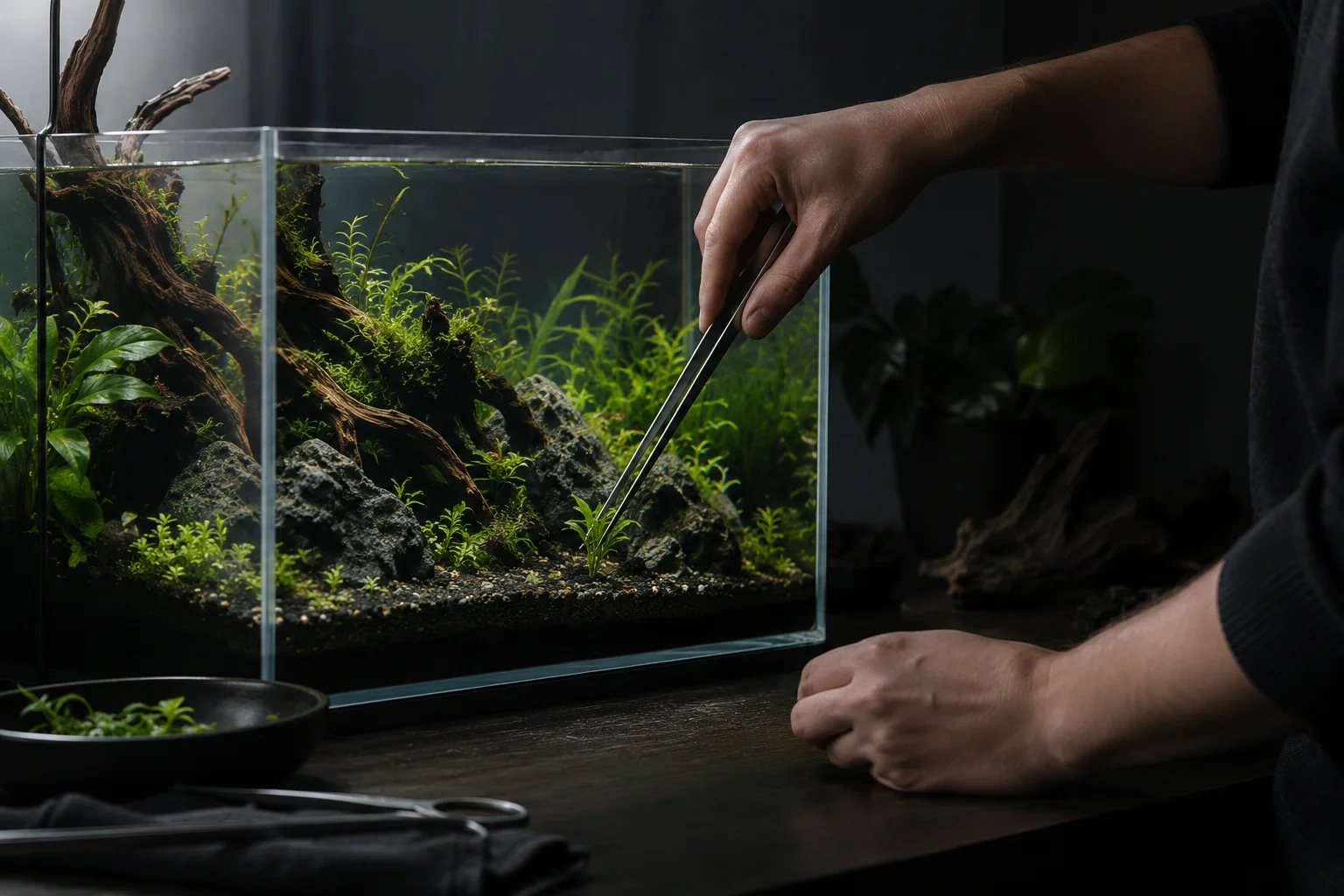
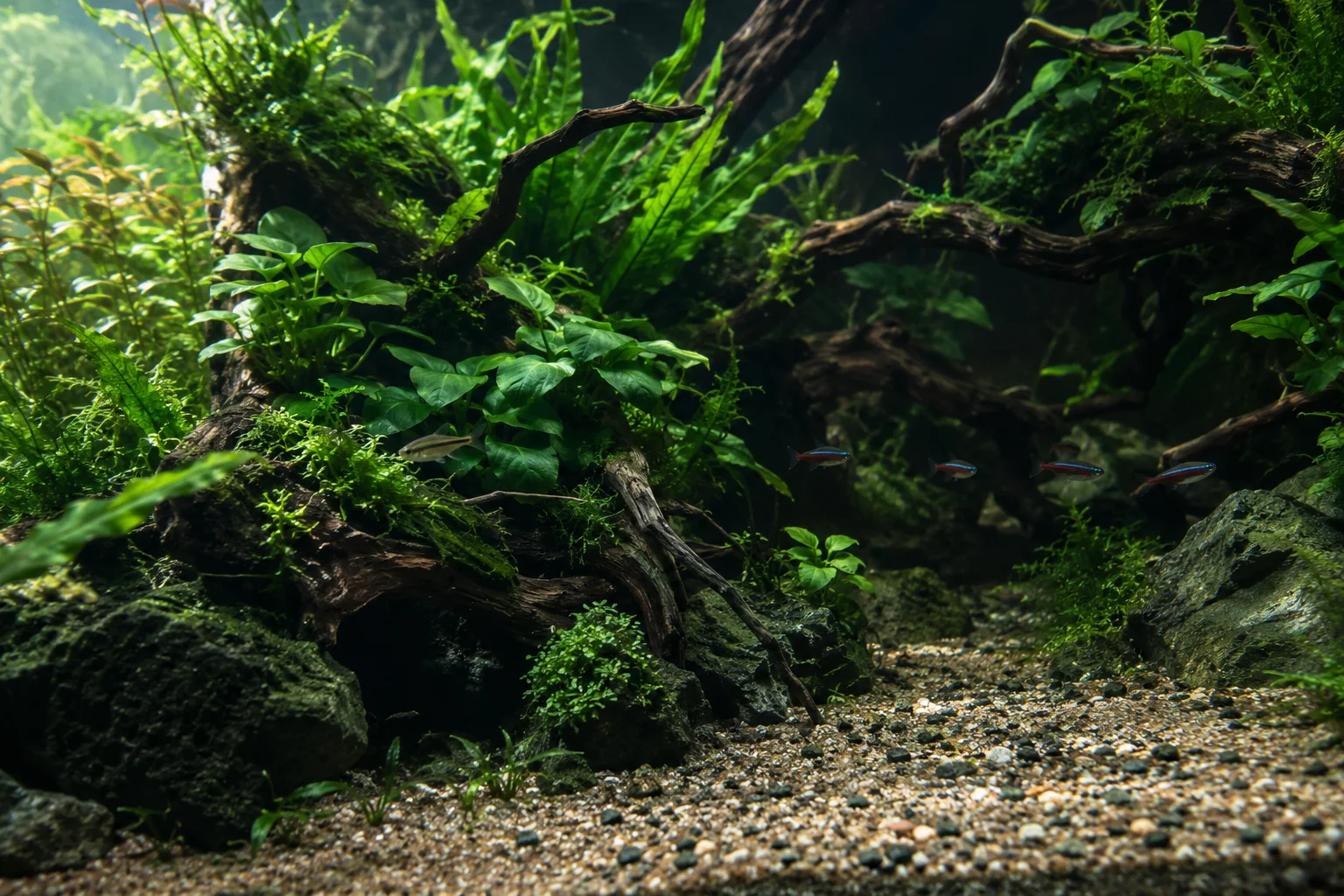
Cardinals swim in the middle and lower water column and feel secure under cover. Plant the back and sides densely, add driftwood, keep the light moderate or shade it with floating plants, and use a dark substrate. Leaf litter, such as Indian almond leaves, adds gentle tannins and mimics their natural habitat.
06
Water parameters
Soft water is where cardinals shine. They can live in moderately hard tap water, especially captive-bred fish, but colors and long-term health are better below about 8 °dH GH and under pH 7. Lower pH gradually, with peat, leaf litter or by mixing RO water, as explained in our guide on how to lower pH in an aquarium. Stability matters more than any target number.
Treat tap water with a conditioner and test regularly with a liquid kit; see the best aquarium test kit guide and our overview of aquarium water parameters.
| Parameter | Target range |
|---|---|
| Temperature | 75–82 °F (24–28 °C) |
| pH | 5.0–7.0 |
| GH (general hardness) | 1–8 °dH (20–140 ppm) |
| KH (carbonate hardness) | 0–4 °dH (0–70 ppm) |
| Ammonia / nitrite | 0 ppm |
| Nitrate | Below 20 ppm |
07
Diet and feeding
Cardinals are micro-predators that feed on tiny insects, larvae and small crustaceans in the wild. In the aquarium, a quality micro-pellet or fine flake works as a staple. Add frozen or live foods several times a week: baby brine shrimp, daphnia, cyclops and finely chopped bloodworms bring out the reds and help newly imported fish regain condition.
Feed once or twice a day, only what the school finishes in two minutes. Newly arrived wild fish can be shy eaters, so offer small live or frozen foods for the first days, and keep the lights dim during feeding if they hesitate.
08
Behavior and tank mates
Cardinal tetras are peaceful and strongly social. In groups smaller than 8 they hide and lose color; in larger schools they swim openly and are far more confident. They never bother other fish, but anything with a mouth big enough will eat them.
Good tank mates share their love of warm, soft water. Classic choices include discus, German blue rams, apistogramma, corydoras, otocinclus, hatchetfish, pencilfish and other small tetras. For larger centerpiece fish, our discus tank mates page explains which combinations work. More ideas are in our list of schooling fish.
- Good tank mates: discus, rams, apistogramma, corydoras, otocinclus, hatchetfish, pencilfish, rasboras
- Use caution: angelfish (adults may eat cardinals unless raised together and well fed), bettas
- Avoid: large cichlids, oscars, fin nippers such as tiger barbs, goldfish and other cold-water fish
09
Breeding cardinal tetras
Cardinals are egg scatterers and are considered more difficult to breed than neons. Success depends on extremely soft, acidic water: pH around 5.0–6.0 and hardness close to zero, which usually means RO water. Use a small, bare or moss-lined breeding tank, a sponge filter, very dim light and fine-leaved plants or spawning mops.
Condition a pair or small group with live and frozen foods, then move them to the breeding tank. Remove the adults after spawning, since they eat the eggs. Keep the tank dark: the eggs and young fry are very light-sensitive. Fry hatch after about a day and need infusoria first, then newly hatched brine shrimp.
10
Common diseases
Wild-caught cardinals can carry parasites and arrive weakened, so quarantine of 2–4 weeks is strongly recommended. The most frequent issues are ich and other parasites after import, bacterial infections when water quality slips, and, less commonly, the same microsporidian infection behind neon tetra disease.
Start with the basics whenever cardinals look off: test ammonia and nitrite, check temperature and look for sudden pH swings. For persistent or spreading problems, ask an aquatic veterinarian.
| Problem | Typical signs | Where to start |
|---|---|---|
| Ich | White salt-like spots, flashing | See our guide to ich in fish |
| Bacterial infection | Gray patches, frayed fins, red marks | Water quality, medicate per label |
| Neon tetra disease | Faded patches, pale muscle, bent spine | Remove affected fish, quarantine newcomers |
| pH or hardness shock | Fading, gasping, sudden deaths after arrival | Slow drip acclimation, stable water |
11
Recommended gear
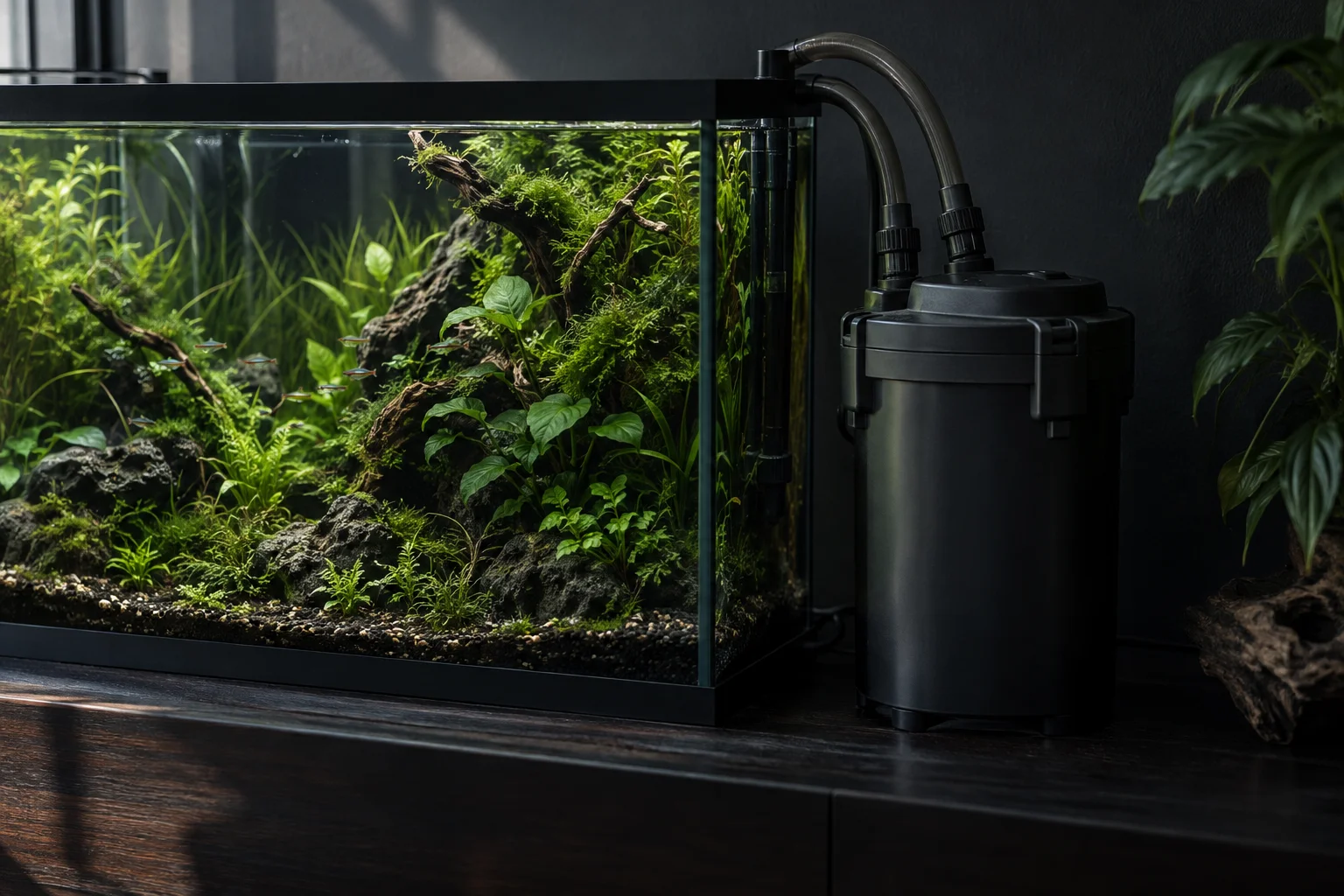
Because cardinals need warmer water than many community fish, an accurate, adjustable heater is essential; see our guide to the best aquarium heater. A canister or hang-on-back filter with moderate flow and mature media keeps water stable, and our best canister filter guide covers quiet options for planted tanks.
A liquid test kit, a lid and plenty of plants complete the setup. If your tap water is very hard, consider a small RO unit to blend softer water consistently.
Frequently asked questions
Frequently asked questions
What is the difference between a cardinal tetra and a neon tetra?
On a cardinal tetra, the red band runs along the whole lower body from head to tail; on a neon tetra it covers only the rear half. Cardinals also grow slightly larger, prefer warmer and softer water, and are mostly wild-caught, while neons are mostly farm-raised and a little hardier.
How many cardinal tetras should I keep?
Keep at least 8–10 cardinal tetras, and more if your tank allows. They are strongly social, and small groups stay hidden and pale. A school of 15 or more in a planted tank shows their natural behavior and color at its best.
Are cardinal tetras good for beginners?
They can be, if the tank is fully cycled and stable before they arrive. Cardinals are less forgiving than neons because many are wild-caught and sensitive to sudden changes. Beginners usually have more success adding them to an established, planted tank after a few months.
Can cardinal tetras live with discus?
Yes, they are one of the classic discus companions. Cardinals tolerate the warm, soft water discus prefer and stay too quick to be bothered. Keep the temperature within their comfortable range, around 82 °F (28 °C), and add them as a large school so they stay confident.
Why are my cardinal tetras losing color?
Pale cardinals are usually stressed. Common causes are a group that is too small, bright light with little cover, a recent move or water change, or poor water quality. Test ammonia and nitrite, check temperature and pH, add plants and shade, and grow the school. Fish normally fade at night as well.
Sources and references
Written and reviewed by the handsoffmyhobby editorial team according to our editorial policy.