01
20 gallon tank stocking: how to choose fish
Twenty gallons (about 76 liters) is enough water to keep conditions stable, but it is still a small footprint. Most stocking mistakes come from buying fish based on their size in the store rather than their adult size, and from counting fish instead of thinking about how much waste they produce and how much space they need to swim.
Use these criteria before you buy anything, and check them against the tank you actually own. A standard 20 high measures about 24 x 12 x 16 inches (61 x 30 x 41 cm). A 20 long is about 30 x 12 x 12 inches (76 x 30 x 30 cm). The long version gives schooling fish and bottom dwellers a lot more usable space, which is why most experienced keepers prefer it. If you are still choosing a tank, compare options in our best 20 gallon aquarium review.
- Adult size: stay under about 3 inches (8 cm) for most fish, and under 2 inches (5 cm) for schooling species.
- Group size: schooling fish need 8–12 of the same species to feel secure and show natural behavior.
- Levels: combine one mid-water school, one bottom group and at most one centerpiece fish.
- Water: choose species with overlapping temperature and pH ranges instead of forcing a compromise.
- Temperament: avoid fin nippers next to long-finned fish, and only one territorial fish per tank.
02
Best fish for a 20 gallon tank compared
The table below compares every species mentioned in this guide, including a few good options that do not have their own page on handsoffmyhobby yet. Temperatures are the comfortable range for each fish. When you mix species, aim for the overlap, which for most of this list is 75–79 °F (24–26 °C).
| Fish | Adult size | Group size | Temperature | Role |
|---|---|---|---|---|
| Harlequin rasbora | 1.8 in (4.5 cm) | 8–12 | 72–80 °F (22–27 °C) | Mid-water school |
| Ember tetra | 0.8 in (2 cm) | 10–15 | 73–82 °F (23–28 °C) | Mid-water school |
| Neon tetra | 1.2–1.5 in (3–4 cm) | 10–12 | 72–79 °F (22–26 °C) | Mid-water school |
| Celestial pearl danio | 0.8–1 in (2–2.5 cm) | 8–12 | 72–78 °F (22–26 °C) | Small school, planted tanks |
| Panda or pygmy corydoras | 1–2 in (2.5–5 cm) | 6–8 | 72–79 °F (22–26 °C) | Bottom group |
| Kuhli loach | 3–4 in (8–10 cm) | 5–6 | 75–82 °F (24–28 °C) | Bottom, nocturnal |
| Otocinclus | 1.5–2 in (4–5 cm) | 5–6 | 72–79 °F (22–26 °C) | Algae grazer |
| Male guppies | 1.2–1.4 in (3–3.5 cm) | 3–6 | 72–82 °F (22–28 °C) | Top and mid-water |
| Dwarf gourami | 3–3.5 in (8–9 cm) | 1 male | 77–82 °F (25–28 °C) | Centerpiece |
| Honey gourami | 2 in (5 cm) | 1–3 | 72–82 °F (22–28 °C) | Centerpiece |
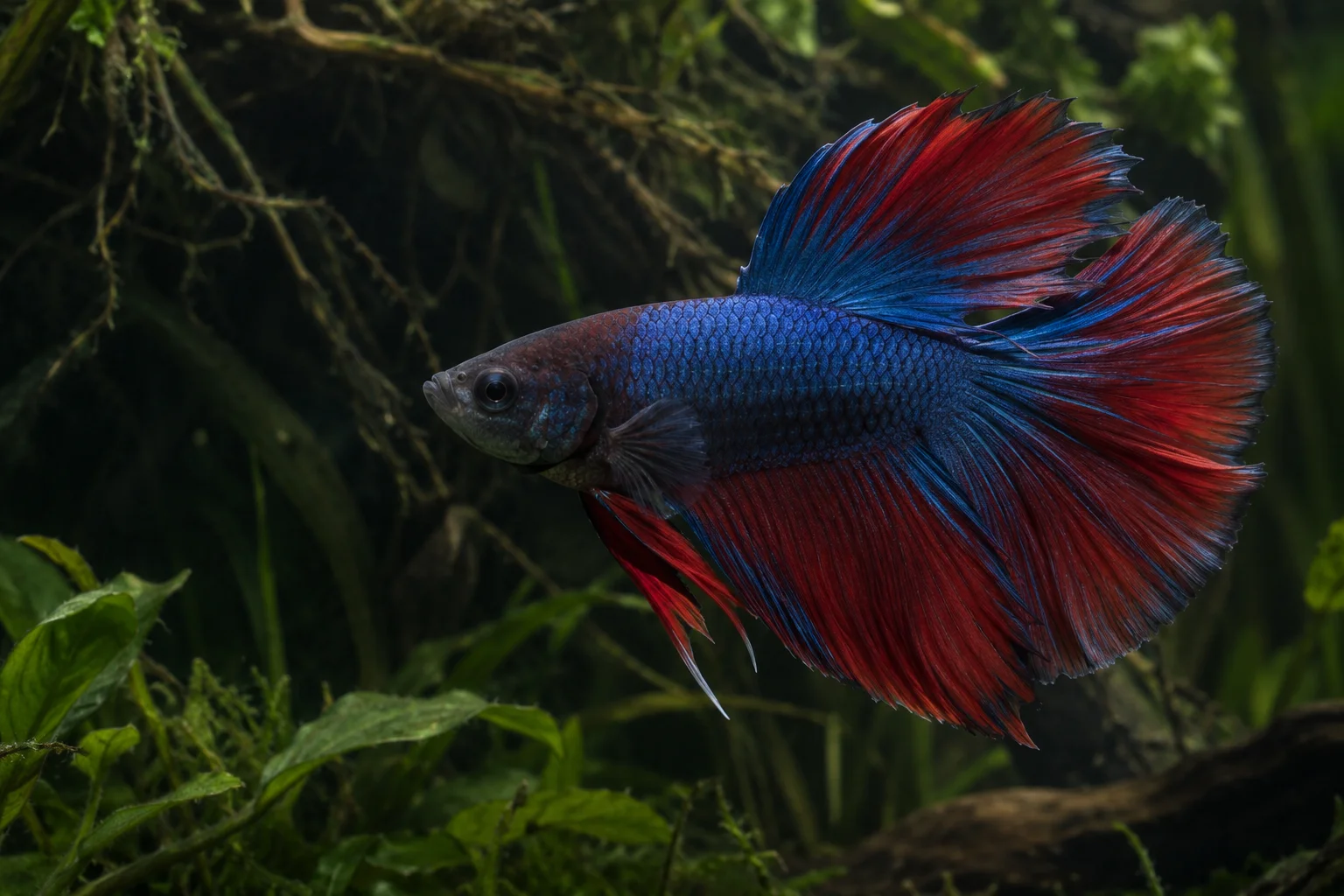
| Betta (male) | 2.4–2.8 in (6–7 cm) | 1 | 76–82 °F (24–28 °C) | Centerpiece |
| Apistogramma cacatuoides | 2–3.5 in (5–9 cm) | 1 pair | 75–82 °F (24–28 °C) | Centerpiece, 20 long |
| Cherry shrimp | 1 in (2.5 cm) | 10+ | 68–78 °F (20–26 °C) | Clean-up crew |
| Nerite snail | 1 in (2.5 cm) | 1–3 | 72–79 °F (22–26 °C) | Algae control |
Harlequin rasbora care guide: tank size, water, diet and tank mates
Hardy, peaceful schooler for the middle of the tank. Eight to twelve of them fill a 20-gallon without crowding it.
Fish speciesEmber tetra care guide: tank, water, school and tank mates
Tiny orange tetra that schools in the open water and stays safe with shrimp. A group of 10–12 is easy in 20 gallons.
Fish speciesNeon tetra care guide: tank, water, school size and tank mates
Classic choice for a mature, stable tank. Add them once the tank has run for a few months and keep 10 or more.
Fish speciesCorydoras catfish care guide: tank, water, diet and popular species
Pick a small species such as panda, pygmy or habrosus corys. Keep 6 of one species over soft sand.
Fish speciesKuhli loach care guide: size, tank, water and tank mates
Eel-like bottom dweller that adds little to the bioload. Needs a group of 5–6 and fine substrate to burrow.
Fish speciesOtocinclus care guide: tank, diet, water and tank mates
Gentle algae grazer for planted 20s. Only add a group once the tank is mature and has biofilm to feed on.
Fish speciesDwarf gourami care guide: tank size, water, tank mates and disease
A colorful single centerpiece. Buy from a healthy source and keep only one male per tank.
Fish speciesBetta fish care guide: tank size, water, diet and tank mates
A male betta can be the centerpiece of a calm 20-gallon if tank mates are peaceful and not fin nippers.
Fish speciesGuppy care guide: tank, water, tank mates and breeding
Males only, in a group of 3–6, if you want livebearer color without a population explosion.
Fish speciesApistogramma care guide: the best dwarf cichlids for a planted tank
A dwarf cichlid pair for a 20 long with caves and leaf litter. Best as the only cichlid in the tank.
Shrimp & snailsCherry shrimp care guide: tank, water, food and breeding
Adds a clean-up crew and color. Works best with tiny, peaceful fish like ember tetras or pygmy corydoras.
03
Three sample 20 gallon communities
These are starting points, not quotas. Each one assumes a cycled tank, a filter rated for at least 20–30 gallons and a weekly water change of 25–30%. Add fish in two or three batches a couple of weeks apart so the bacteria can keep up, and acclimate each new group slowly.
1. Classic planted community (20 high or long): 10 harlequin rasboras, 6 panda corydoras, 1 honey gourami or 1 dwarf gourami, 2 nerite snails. Easy, colorful and forgiving of small mistakes.
2. Betta centerpiece (20 long preferred): 1 male betta, 6 kuhli loaches, 6 pygmy corydoras and a couple of nerite snails. Keep the flow gentle and the tank planted. Our betta tank mates guide covers what to do if your betta turns out to be aggressive.
3. Dwarf cichlid biotope (20 long): 1 pair of Apistogramma cacatuoides, 12 ember tetras and 5 otocinclus, with caves, leaf litter and soft, slightly acidic water. The tetras act as dither fish and encourage the cichlids to come out.
If you prefer a nano-style tank full of shrimp, skip the gourami and the cichlids: 12 ember tetras, 6 pygmy corydoras and a colony of cherry shrimp is a well-balanced alternative.
Stock the bottom group and the hardy school first, and the sensitive species (neon tetras, otocinclus, gouramis) last, once the tank has been running for a couple of months.
04
Fish to avoid in a 20 gallon tank
Many fish sold next to the small tetras grow far too large or too pushy for 20 gallons. Pet stores sell juveniles, so a 2-inch fish in the store is not proof that it will stay small.
- Goldfish: big waste producers that need cool water and far more volume. See our goldfish guide for the real requirements.
- Angelfish: they grow tall and eat small tetras once adult. Plan at least a 30–55 gallon tank instead.
- Common plecos: they can exceed 12 inches (30 cm). A bristlenose pleco is fine in a 20 long only if the tank has no other big waste producers.
- Tiger barbs: active fin nippers that need a large group, which a 20-gallon cannot hold alongside other fish.
- Red-tailed and rainbow sharks: territorial and fast-growing, they bully everything near the bottom.
- Clown loaches, bala sharks, silver dollars and oscars: all of them become large or very active fish that need 75 gallons or more.
05
Equipment and water for a well-stocked 20 gallon
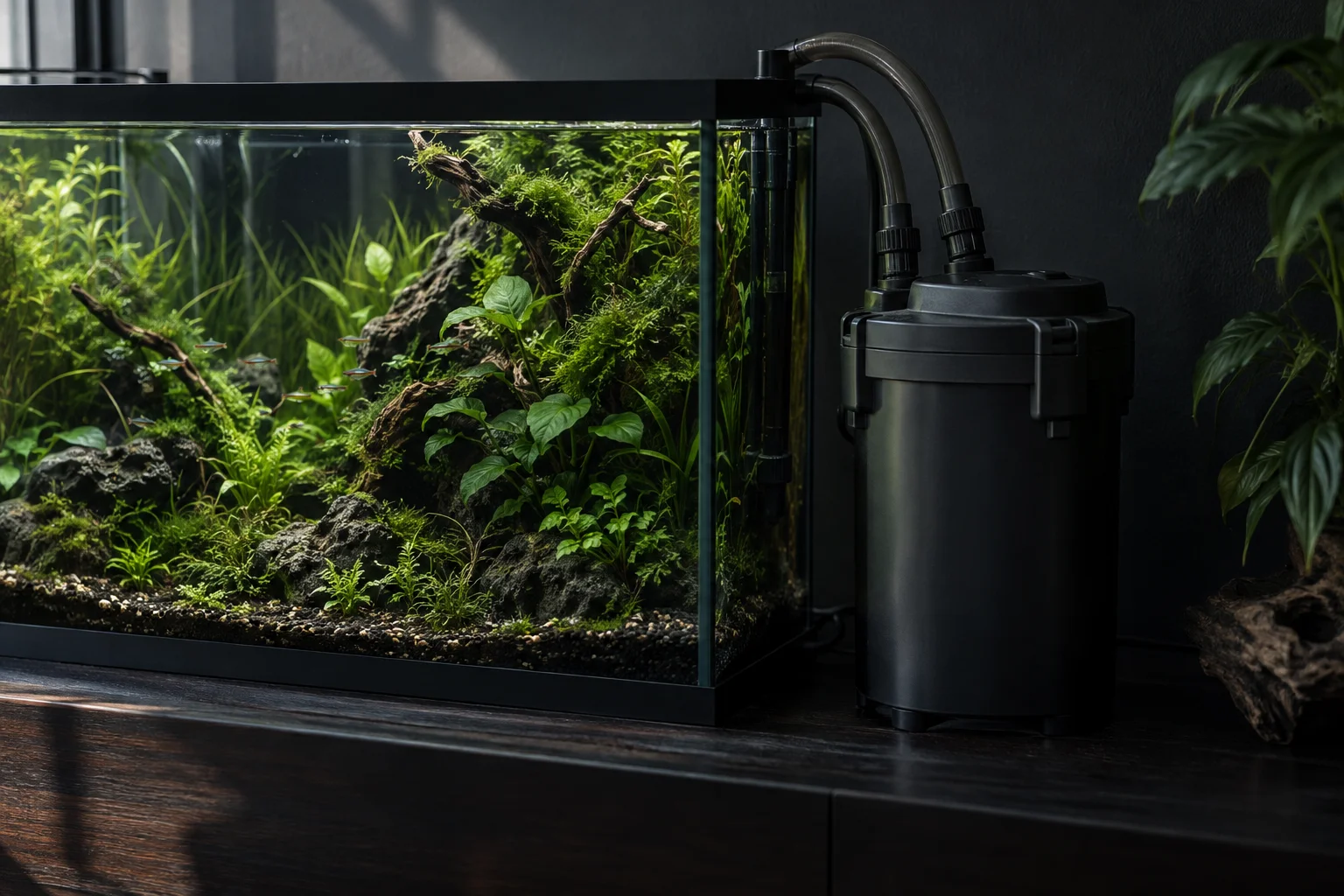
A fully stocked 20-gallon depends on good biological filtration. Choose a hang-on-back or canister filter rated for at least 20–30 gallons, or a large sponge filter for a gentle betta or shrimp setup. Our aquarium filter reviews explain flow rates and media capacity. Add an adjustable 75–100 W heater (see the best aquarium heater picks) and keep a thermometer on the glass.
Before any fish go in, cycle the tank until ammonia and nitrite read zero. After that, test nitrate weekly: if it climbs above about 20–40 ppm between water changes, the tank is overstocked or overfed. Our guide to aquarium water parameters explains the safe ranges, and the beginner aquarium guide walks through the full setup.
Frequently asked questions
Frequently asked questions
How many fish can go in a 20 gallon tank?
Most 20-gallon tanks comfortably hold 15–25 small fish, depending on species. A typical balanced stock is one school of 8–12 fish around 1–2 inches long, a bottom group of 6 and one centerpiece. Count adult size and waste, not just numbers: one goldfish produces more waste than a dozen ember tetras. Watch nitrate to know if you went too far.
Is the inch-per-gallon rule reliable for 20 gallon tank stocking?
Only as a rough ceiling for slim fish under about 2 inches. It ignores body mass, activity and behavior, so it would wrongly allow a single 20-inch fish or a group of fin nippers. Use it to sanity-check numbers, then decide based on adult size, group needs, filtration and how nitrate behaves between your weekly water changes.
Can a betta live with other fish in a 20 gallon?
Often yes. A 20-gallon gives a male betta enough room to coexist with calm bottom dwellers such as kuhli loaches or pygmy corydoras and with small, non-nipping schoolers. Avoid fin nippers, other labyrinth fish and fast fish that steal food. Some bettas stay aggressive whatever you do, so keep a backup plan.
Is a 20 long better than a 20 high for stocking?
For most community fish, yes. The 20 long has a 30-inch footprint versus 24 inches, which gives schooling fish more horizontal swimming room and bottom dwellers more floor space. It also suits dwarf cichlids that claim territories. A 20 high is fine for a planted tank with a small school and a centerpiece, but stock it a little lighter.
How fast can I add fish to a new 20 gallon tank?
Only after the tank is fully cycled. Then add the stock in two or three batches about two weeks apart, starting with hardy species such as harlequin rasboras or corydoras. Test ammonia and nitrite a few days after each addition. Sensitive fish like neon tetras and otocinclus should go in last, once the tank is a few months old.
Sources and references
Written and reviewed by the handsoffmyhobby editorial team according to our editorial policy.