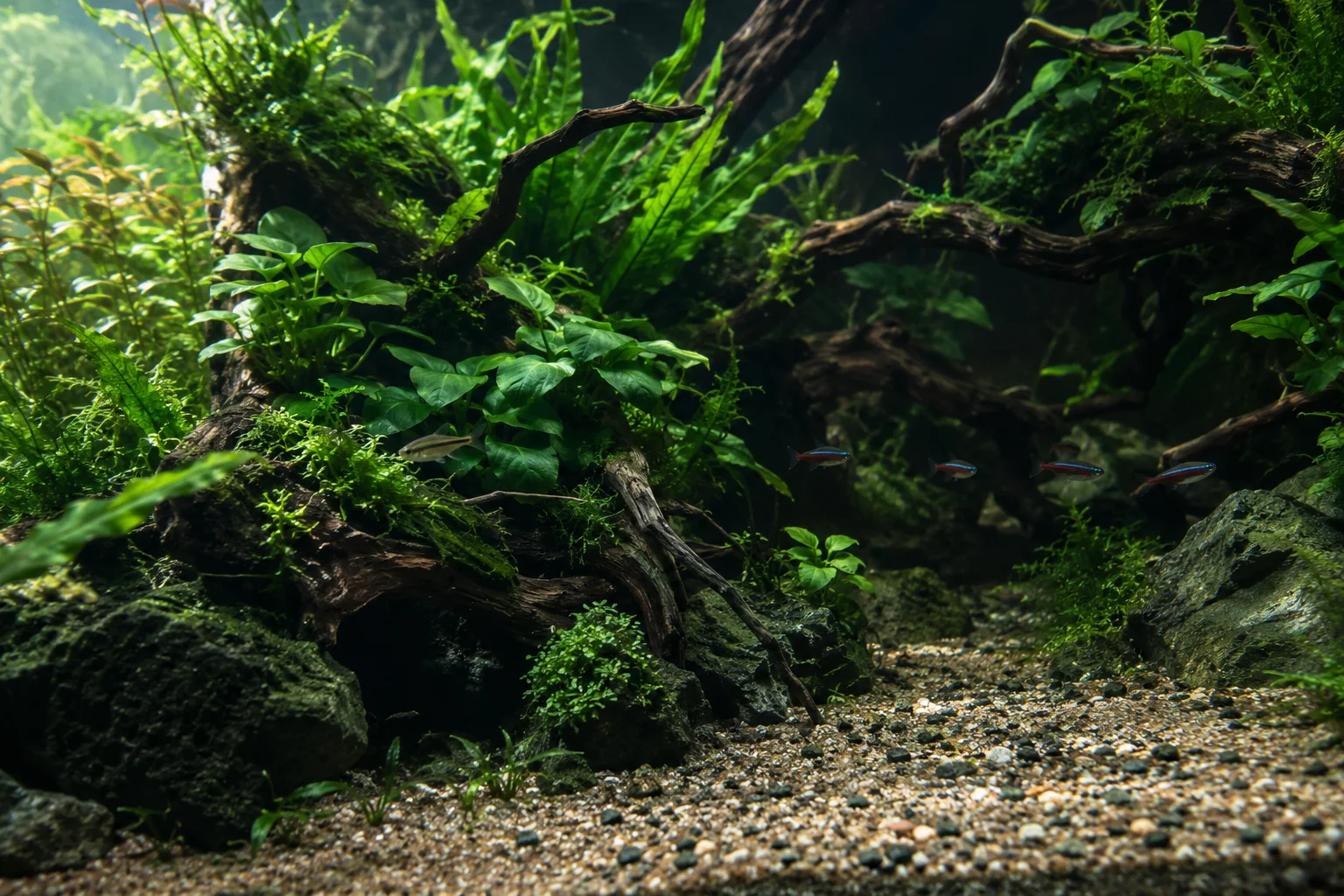
Fact sheet
- Common names
- Celestial pearl danio, galaxy rasbora, CPD
- Synonym
- Celestichthys margaritatus
- Origin
- Shan Plateau, Myanmar (discovered 2006)
- Adult size
- 0.8–1 in (2–2.5 cm)
- Lifespan
- 3–5 years
- Minimum tank
- 10 gallons (38 L) for a group
- Group size
- 8 minimum, 10–15 ideal
- Temperature
- 72–78 °F (22–26 °C)
- pH
- 6.5–7.5
- Hardness
- GH 4–12 °dH, KH 2–8 °dH
- Temperament
- Peaceful but shy, males spar with each other
- Care level
- Easy to moderate (feeding is the main challenge)
01
Celestial pearl danio care at a glance
The celestial pearl danio, or CPD, caused a sensation when it appeared in the hobby in 2006. Few fish this small show so much color: a steel-blue body covered in golden "pearls", fins striped black and red, and, in males, a bright orange-red belly. It quickly became one of the most popular nano fish for planted tanks.
CPDs are hardy in terms of water chemistry but have two specific needs: dense cover, because they are shy, and small, frequent meals, because their mouths are tiny. Set up and cycle the tank first, let plants grow in, then add the fish.
- Tank: 10 gallons (38 L) minimum, long rather than tall
- Group: at least 8, with more females than males if you can tell them apart
- Water: slightly cooler than most tropicals, 72–78 °F (22–26 °C)
- Decor: dense plants, moss, floating cover, gentle flow
- Food: tiny frozen, live and dry foods, several small meals a day
02
Origin and natural habitat
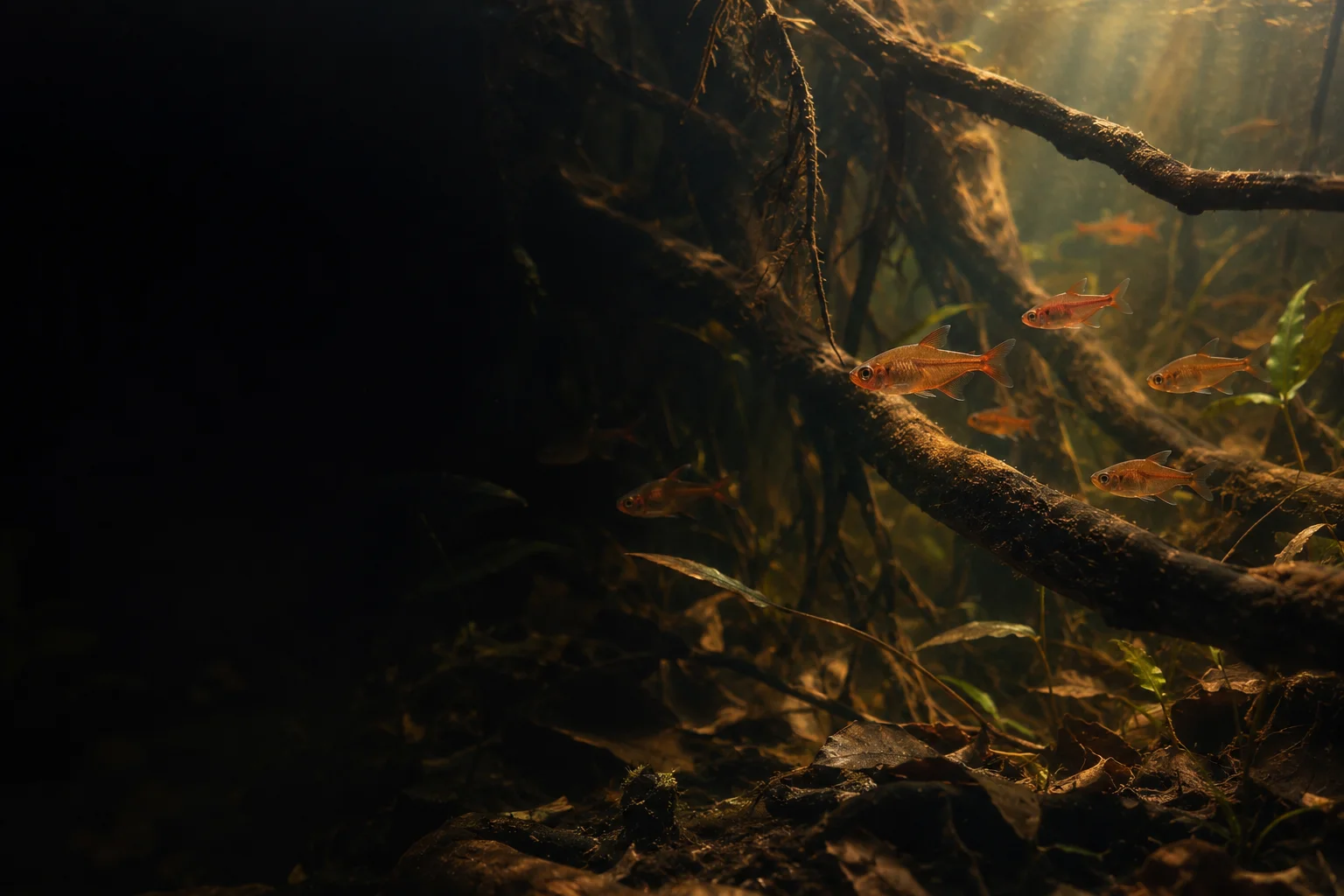
The species was discovered in 2006 on the Shan Plateau in Myanmar, near the town of Hopong east of Inle Lake, at roughly 1,000 m (3,300 ft) above sea level. It was first described as Celestichthys margaritatus in 2007 and later moved to the genus Danio, which is why both names are still in use. Despite the trade name "galaxy rasbora", it is a danio, not a rasbora.
Its home waters are small, shallow ponds and marshes fed by springs, very clear and densely overgrown with grasses and aquatic plants. Heavy collecting in the first years worried scientists, but almost all CPDs sold today are captive-bred, which is the more responsible choice for the hobby.
03
Adult size, lifespan and sexing
Adults reach only 0.8–1 inch (2–2.5 cm). Expect a lifespan of about 3–5 years with stable water and good food.
Males are slimmer, with a more intense blue body, bright red-orange belly and fins with strong red and black stripes. Females are rounder, more olive or gray-blue, and their fins are paler orange. Many keepers find a group with more females than males calmer, since males spend a lot of time sparring.
04
Celestial pearl danio tank size
A 10-gallon (38 L) tank is the realistic minimum for a group of 8–10 CPDs, and our picks for the best 10-gallon aquarium are a good starting point. A densely planted 5-gallon tank can hold a small group of 5–6 for an experienced keeper, but it leaves little margin for error; see our list of fish for a 5-gallon tank for better options at that size. With 15–20 gallons, you can keep 15 or more and add other nano species.
Footprint matters more than height. CPDs stay mostly in the lower and middle levels, close to plants, and a long tank gives males room to set up small territories. For stocking ideas, our guide to the best fish for a 10-gallon tank includes CPD-based communities.
05
Water parameters
Coming from a spring-fed plateau, CPDs prefer water a little cooler than many tropical fish, and they handle a fairly wide range of pH and hardness. Treat tap water with a water conditioner, keep the flow gentle, and do 20–30% weekly water changes. If you are unsure how to read your test results, see our guide to aquarium water parameters.
| Parameter | Target range |
|---|---|
| Temperature | 72–78 °F (22–26 °C) |
| pH | 6.5–7.5 |
| GH (general hardness) | 4–12 °dH (70–215 ppm) |
| KH (carbonate hardness) | 2–8 °dH (35–140 ppm) |
| Ammonia / nitrite | 0 ppm |
| Nitrate | Below 20 ppm |
Running CPDs at 82 °F (28 °C) or higher with warm-water species like discus is not a good match. Pick tank mates that are happy in the low to mid 70s °F.
06
Diet and feeding
In the wild, CPDs pick tiny invertebrates, algae and zooplankton from plants. Their mouths are very small, so food size is the key to good condition. Offer crushed flakes, micro pellets or powdered foods as a base, plus frozen or live cyclops, daphnia, baby brine shrimp and finely chopped bloodworms several times a week.
Newly imported fish are often thin and timid, and may ignore dry food at first. Start with small live or frozen foods and feed 2–3 small meals a day until they fill out. Avoid leaving uneaten food to rot: in a small tank, overfeeding quickly spoils the water. Our guide on how often to feed aquarium fish explains how to judge portions.
07
Behavior and CPD tank mates
CPDs are peaceful toward other species but shy. In open tanks they hide constantly; in dense planting they come out, forage and display. Males spar with each other, flaring fins and circling, which looks dramatic but rarely causes injuries if there is enough cover. They do not school tightly like rummy noses; they form a loose group spread through the plants.
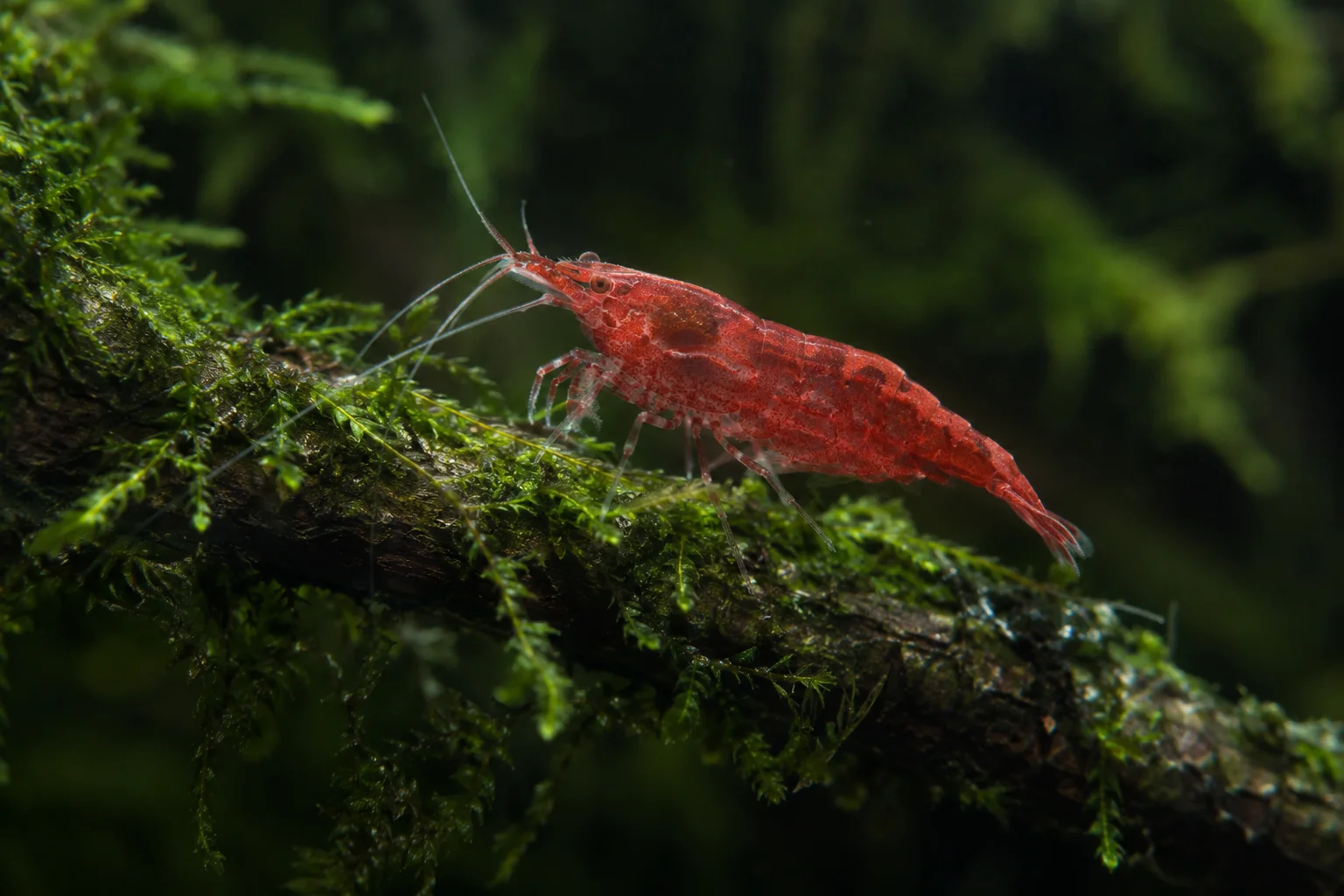
Pick tank mates that are small, calm and happy in slightly cooler water. Cherry shrimp are a classic match, though CPDs will pick off some newborn shrimplets; our shrimp tank mates guide covers the details. Harlequin rasboras work in tanks of 15 gallons or more, and otocinclus help with algae.
- Good matches: cherry and amano shrimp, nerite snails, otocinclus, pygmy corydoras, chili rasboras, ember tetras, kuhli loaches
- With care: harlequin rasboras (15+ gallons), a calm betta in a large, heavily planted tank (some bettas will hunt them)
- Avoid: fast, boisterous fish such as zebra danios or tiger barbs, gouramis and cichlids large enough to eat 1 in fish, warm-water species like discus
08
Breeding celestial pearl danios
CPDs breed readily in a mature, planted tank. Males court females with fin displays, and the pair scatters a few eggs at a time into fine moss or plants near the bottom, often every few days. The adults do eat eggs and fry, so a few fry surviving in a dense, moss-filled community tank is common, but for more fry you need to collect eggs.
Place a clump of moss or a spawning mop in the tank, move it to a separate small tank with water from the main tank every few days, and add an air-driven sponge filter. At around 75 °F (24 °C), eggs usually hatch after about 3 days. Fry are tiny and stay hidden at first; feed infusoria or a liquid fry food, then baby brine shrimp or microworms once they grow. Growth is slow, and full adult coloring takes a few months.
09
Common celestial pearl danio diseases
Most losses happen in the first weeks: fish that arrive underfed and stressed, then meet a strange tank and competition for food. Quarantine new arrivals in a small planted tank, acclimate them slowly, and feed generously with tiny foods. For serious or unexplained problems, contact an aquatic veterinarian.
| Problem | Typical signs | Where to start |
|---|---|---|
| Wasting / starvation | Hollow belly, thin body, fish never comes out to eat | Smaller, live or frozen foods, fewer competitors |
| Ich | White salt-like spots, flashing | See ich in fish |
| Fin rot | Ragged fins, often after male sparring in bare tanks | More cover, cleaner water, see fin rot treatment |
| Ammonia stress | Gasping, clamped fins, sudden losses | Test, water change, see ammonia poisoning |
10
Recommended gear
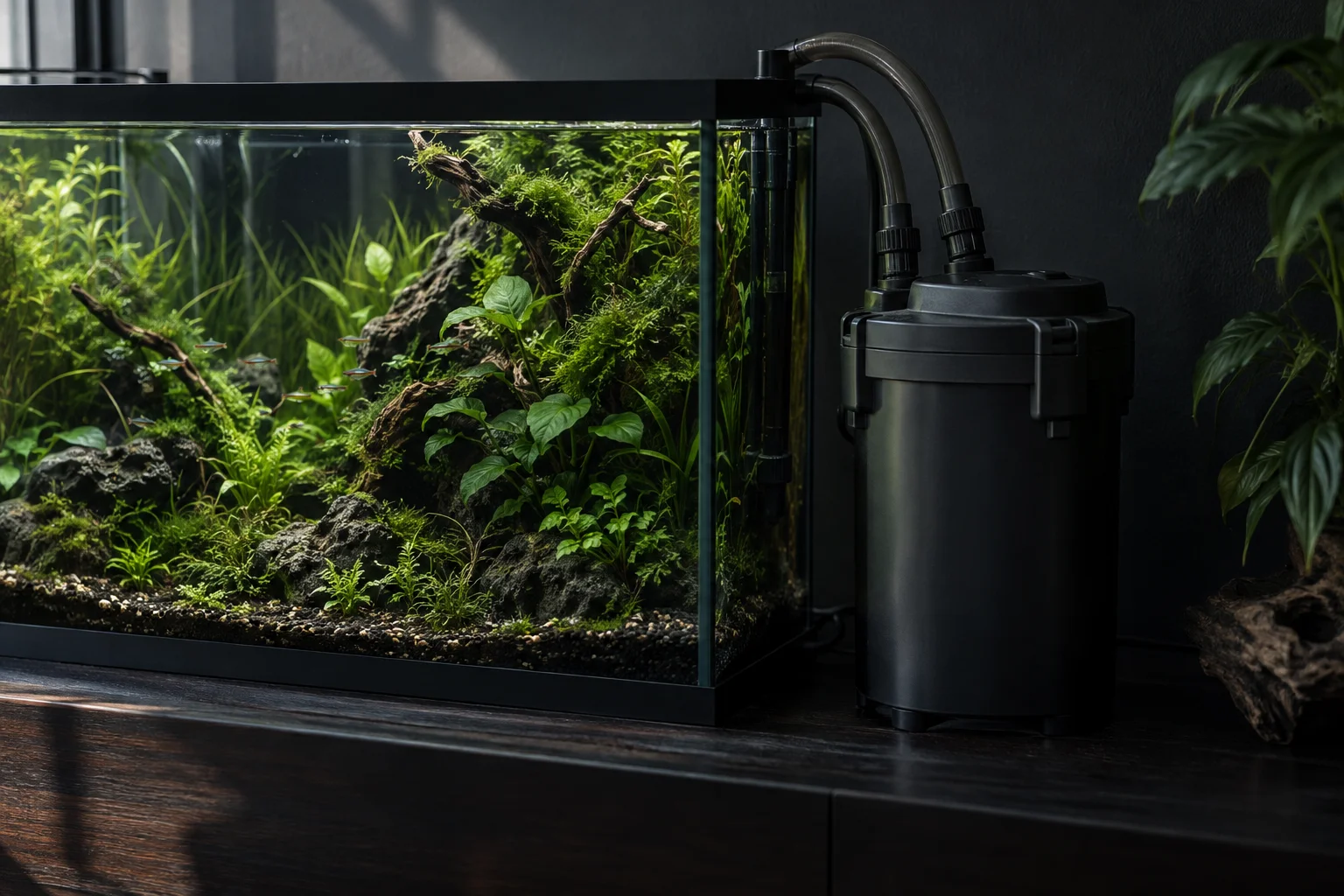
A nano CPD tank needs gentle filtration and a reliable small heater. A sponge filter is ideal: soft flow, no risk for fry or shrimp, and a large surface for beneficial bacteria. In many homes a small adjustable heater is still needed to stay in the 72–78 °F range; see our best aquarium heater guide.
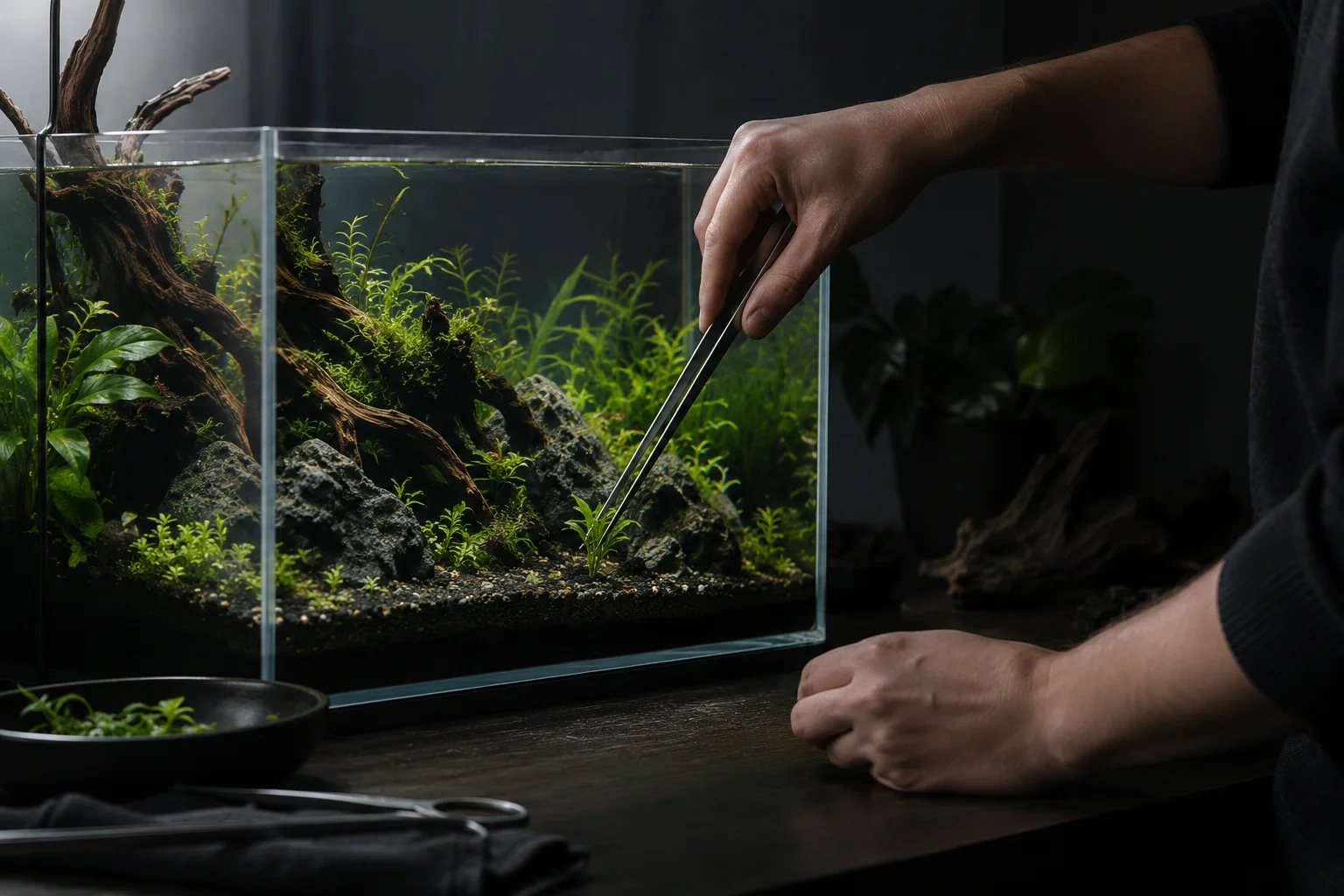
Plants are the most important part of the setup. Easy species such as java fern, mosses and floating plants give CPDs cover and calm them down. A moderate aquarium light is enough; very bright light without floating cover makes them hide more.
Frequently asked questions
Frequently asked questions
What is the minimum celestial pearl danio tank size?
A 10-gallon (38 L) tank is the realistic minimum for a group of 8–10 celestial pearl danios. A densely planted 5-gallon tank can house a small group of 5–6 for an experienced keeper, but water quality swings faster and there is little room for sparring males. Larger tanks of 15–20 gallons allow bigger groups and more tank mates.
Is a galaxy rasbora the same as a celestial pearl danio?
Yes. Galaxy rasbora is a trade name for the celestial pearl danio, Danio margaritatus, also sold under its older scientific name Celestichthys margaritatus. Despite the name, it is not a rasbora but a close relative of the zebra danio. Both names refer to the same fish with the same care.
How many celestial pearl danios should be kept together?
Keep at least 8, and 10–15 if your tank allows. Larger groups spread male sparring across more fish, help shy individuals come out, and look more natural. If you can sex them, aim for more females than males, which reduces stress on females during courtship.
What do celestial pearl danios eat?
They eat tiny foods: crushed flakes, micro pellets, frozen cyclops, daphnia, baby brine shrimp and chopped bloodworms. New fish often refuse dry food at first, so start with live or frozen foods. Feed small portions two or three times a day and remove leftovers.
Can celestial pearl danios live with cherry shrimp?
Yes, they are one of the best fish for a shrimp tank. CPDs ignore adult cherry shrimp but will eat some newborn shrimplets. Thick moss and plants give baby shrimp enough cover that a colony usually keeps growing alongside a group of CPDs.
Sources and references
Written and reviewed by the handsoffmyhobby editorial team according to our editorial policy.