01
What high nitrates in a fish tank mean
Nitrate (NO3) is the end product of the nitrogen cycle. Beneficial bacteria turn toxic ammonia into nitrite, then into nitrate, which is far less harmful. Unlike ammonia and nitrite, nitrate is not removed by the filter: it builds up steadily until you take it out with water changes or plants use it.
That makes the nitrate reading a useful health check for the whole tank. A steadily rising number means waste is going in faster than you remove it. Some nitrate is normal and even feeds plants, but long-term high levels are linked to stress, weaker immunity, stunted growth in young fish, poor breeding and algae outbreaks.
| Nitrate (ppm) | Status | What to do |
|---|---|---|
| 0–20 | Ideal | Keep your routine; ideal for shrimp, fry and sensitive fish |
| 20–40 | Acceptable | Fine for most community fish; do not let it climb |
| 40–80 | High | Increase water changes and find the source |
| Above 80 | Too high | Several water changes over a few days, review stocking and feeding |
Shrimp, discus, wild-caught fish and fry are more sensitive. For them, aim for under 10–20 ppm. Goldfish and large cichlids produce so much waste that their tanks need extra attention.
02
Why nitrates get high: the usual causes
Always test your tap water. In some farming regions it contains 10–40 ppm or more, still within drinking water limits but enough to make water changes far less effective. If that is your case, the fix is different, see the section on nitrate removers below.
- Infrequent or small water changes
- Overfeeding: uneaten food breaks down into ammonia and then nitrate
- Overstocking or large, messy fish such as goldfish and oscars
- Dirty substrate full of trapped waste and debris
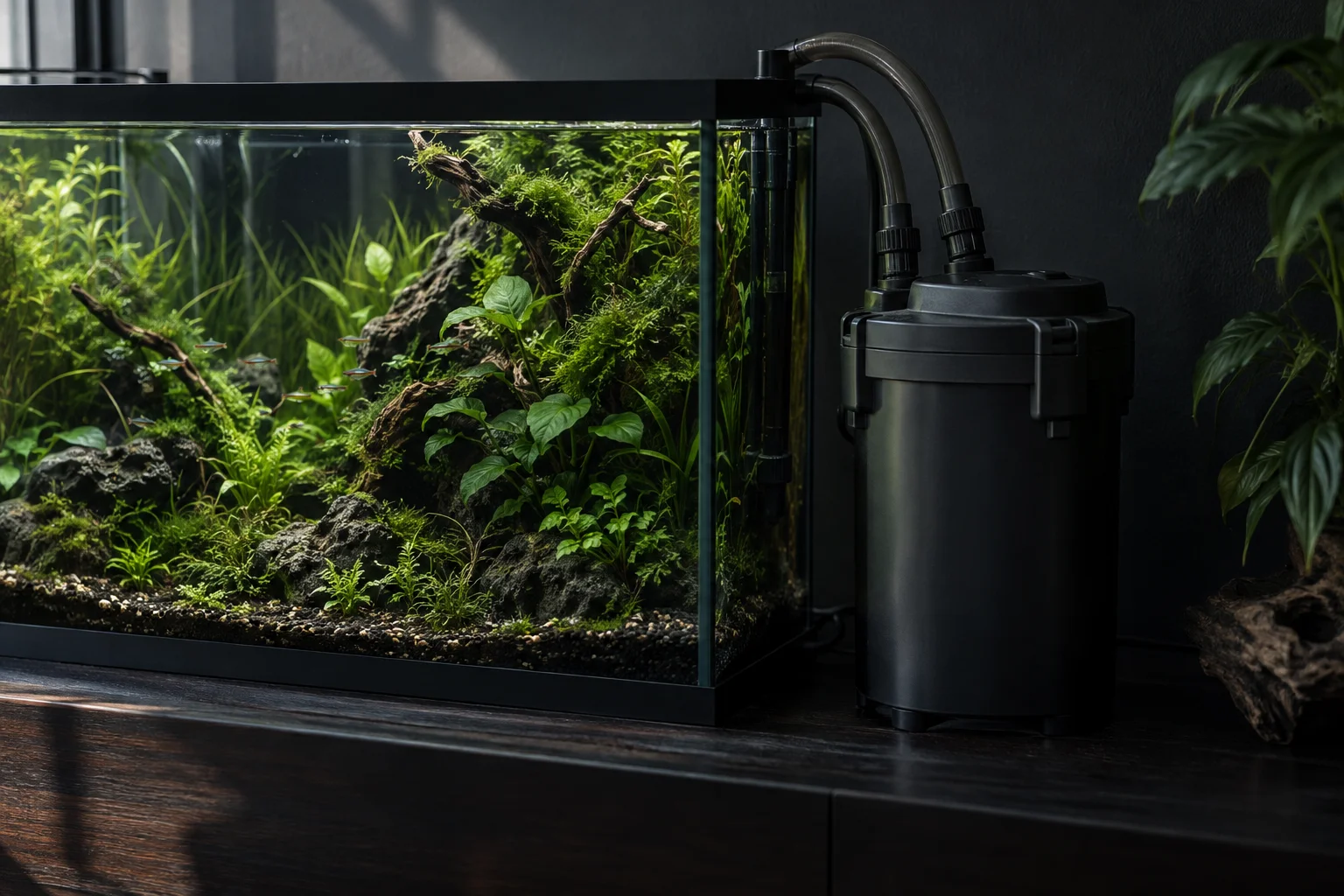
- Filter sponges or cartridges clogged with sludge, especially canister filters left for months
- Dead fish, snails or rotting plant leaves hidden in the decor
- Tap water that already contains nitrate
03
How to lower nitrates step by step
This routine brings nitrate down safely without shocking fish that have slowly adapted to poor water.
- Test nitrate in the tank and in your tap water with a liquid kit. Write both numbers down.
- Do a 30% water change with conditioned, temperature-matched water. A water change lowers nitrate roughly in proportion: 30% fresh water removes about 30% of the nitrate.
- If nitrate was above 80 ppm, repeat every 2–3 days rather than doing one 80% change. Fish used to very high nitrate can be stressed by a sudden swing.
- Vacuum the gravel during each change, focusing on open areas and under decor where waste collects.
- Rinse the filter’s mechanical sponges in removed tank water until most sludge is gone. Never clean all media at once and never use tap water on biological media.
- Remove any dead leaves, uneaten food or dead animals.
- Cut feeding to what the fish eat in about a minute, once or twice a day.
- Re-test after 48 hours. Once nitrate is under 20–40 ppm, settle into a weekly routine of 25–30% water changes and test every week or two.
In a long-neglected tank, pH may also have drifted. Large, fast water changes can shift pH and nitrate at the same time. Test pH too and make changes gradually.
04
Use live plants to absorb nitrate naturally
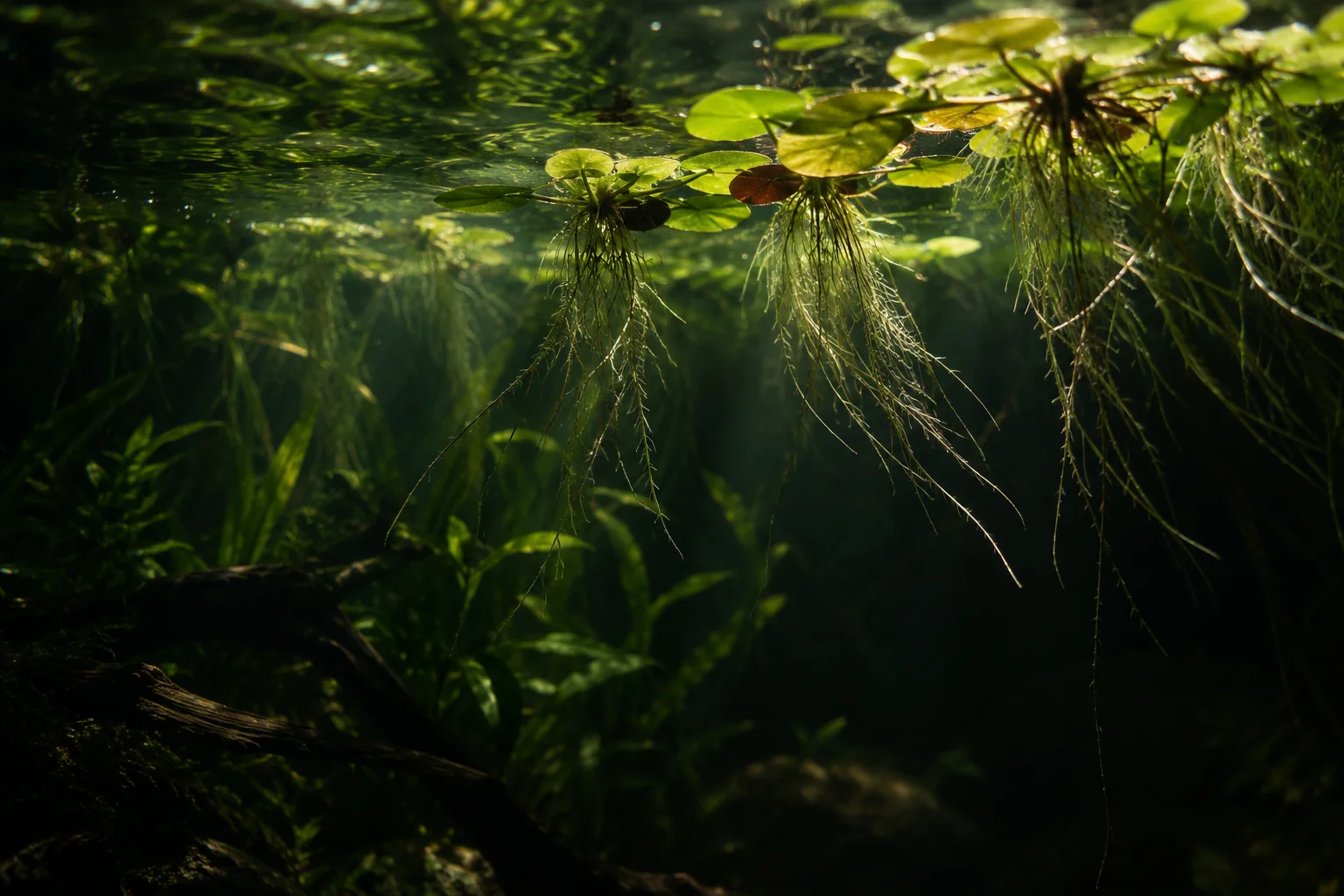
Plants take up nitrogen as a nutrient, so a well-planted tank naturally keeps nitrate lower. Fast growers do the most work. Floating aquarium plants such as frogbit, salvinia, red root floaters and water lettuce are the champions, because their leaves reach the air and they grow quickly under almost any light. Stem plants like hornwort, water sprite and Limnophila are next. Slow growers like java fern and anubias help only a little.
Some keepers grow pothos with its roots hanging in the water from the back of the tank. It is a popular trick for high-nitrate tanks like goldfish setups, but keep the leaves out of the water. Our list of beginner aquarium plants suggests easy, fast-growing species to start with. Remember to trim and remove growth: nitrogen leaves the tank only when you take plant mass out.
05
Nitrate removers and filter media
Nitrate remover products fall into three families. Resins such as API Nitra-Zorb or JBL NitratEx absorb nitrate directly and can be recharged with salt water; they are most useful when tap water contains nitrate. Denitrifying media such as Seachem De*Nitrate host bacteria that convert nitrate into nitrogen gas, but only in very slow water flow, so they need a dedicated low-flow setup. Organic adsorbers like Seachem Purigen remove dissolved waste before bacteria turn it into nitrate.
None of these replaces water changes, which also restore minerals and dilute other waste. Treat them as support when nitrate stays high despite good maintenance. For tap water with high nitrate, mixing in RO water is often simpler, as long as you remineralize it.
06
Common mistakes
Algae often follows high nitrate together with excess light and phosphate. If you are fighting green water or brown algae, lowering nitrate is part of the solution.
- Relying on a nitrate-removing product instead of fixing overfeeding or overstocking
- Never testing tap water and wondering why water changes do not help
- Replacing all filter media at once to "clean" the tank, which crashes the biofilter
- Doing one huge water change in a tank that has gone months without maintenance
- Leaving filter sponges clogged, so waste sits and rots in the flow path
- Adding plants and never trimming them
07
When to escalate and what to buy
Act right away if nitrate is above 80–100 ppm and fish are lethargic, breathing fast, losing color, or if fry and shrimp keep dying. Lower it over several days with repeated partial changes, and check ammonia and nitrite at the same time. If fish do not recover once the water is stable, consult an aquatic veterinarian.
Three purchases make nitrate control much easier. A liquid test kit with nitrate, see our best aquarium test kit guide. A siphon from our best gravel vacuum picks speeds up every water change. And a filter with sponges you can rinse easily keeps waste from rotting in the flow. Our guides to aquarium water changes and how to clean a fish tank turn all of this into a simple weekly routine.
Frequently asked questions
Frequently asked questions
How can I lower nitrates in my aquarium fast?
The fastest way is a water change with conditioned water that contains less nitrate than the tank. A 50% change cuts nitrate roughly in half. If levels are very high, do 30% changes every two or three days instead of one massive change, so fish are not shocked by sudden shifts in water chemistry.
What level of nitrate is too high in a fish tank?
For most freshwater fish, keep nitrate below 40 ppm, ideally under 20 ppm. Above 80 ppm, fish become stressed and algae thrives. Shrimp, fry, discus and wild-caught fish do best below 10–20 ppm. High nitrate rarely kills quickly, but it weakens fish over time.
Do nitrate remover products work?
Yes, within limits. Resins like API Nitra-Zorb absorb nitrate and are useful when tap water contains it. Denitrifying media need slow flow to work. These products support maintenance but do not replace water changes or fix overfeeding, which are usually the real cause of high nitrates in a fish tank.
Which plants are best for lowering nitrates?
Fast-growing floating plants like frogbit, salvinia, red root floaters and water lettuce absorb the most, followed by stem plants such as hornwort and water sprite. Pothos with roots in the water also works well. Remove extra growth regularly, because nitrogen only leaves the tank when you take plant mass out.
Why are my nitrates high even after a water change?
Check your tap water first: if it contains nitrate, each change refills the tank with it. Otherwise the tank produces nitrate faster than you remove it, usually because of overfeeding, too many fish, a dirty filter or substrate, or hidden decaying matter. Address the source, then increase water change volume or frequency.
Sources and references
Written and reviewed by the handsoffmyhobby editorial team according to our editorial policy.