Fact sheet
- Common names
- Electric blue acara, EBA, blue acara (wild form)
- Family
- Cichlidae
- Origin
- Captive-bred color form; wild blue acara from Trinidad, Venezuela and Colombia
- Adult size
- 6–7 in (15–18 cm), females smaller
- Lifespan
- 8–10 years
- Minimum tank
- 40 gallons (150 L) for one, 55 gallons (210 L) for a pair
- Temperature
- 75–82 °F (24–28 °C)
- pH
- 6.5–7.8
- Hardness
- GH 5–15 °dH, KH 3–10 °dH
- Diet
- Omnivore leaning carnivore
- Temperament
- Peaceful for a cichlid, protective when breeding
- Care level
- Easy to moderate
01
Electric blue acara care at a glance
The electric blue acara (often shortened to EBA) is a line-bred color form of the blue acara, Andinoacara pulcher. Instead of the gray-blue body of the wild fish, it shows a solid metallic blue with darker spangles and, in good specimens, an orange edge on the dorsal fin. Whether it is a pure A. pulcher strain or carries some hybrid ancestry is still debated, but its care matches that of the blue acara.
What sets it apart from many cichlids is temperament. An adult electric blue acara is calm, rarely bullies fish of similar size and does not tear up plants systematically. That makes it a popular centerpiece for a community tank of medium to large fish, as long as you accept one rule: small fish that fit in its mouth will eventually be eaten. Start with a fully cycled tank, because cichlids of this size produce a lot of waste.
- Tank: 40 gallons (150 L) for a single fish, 55 gallons (210 L) or more for a pair
- Heater: adjustable, set to about 78 °F (25.5 °C)
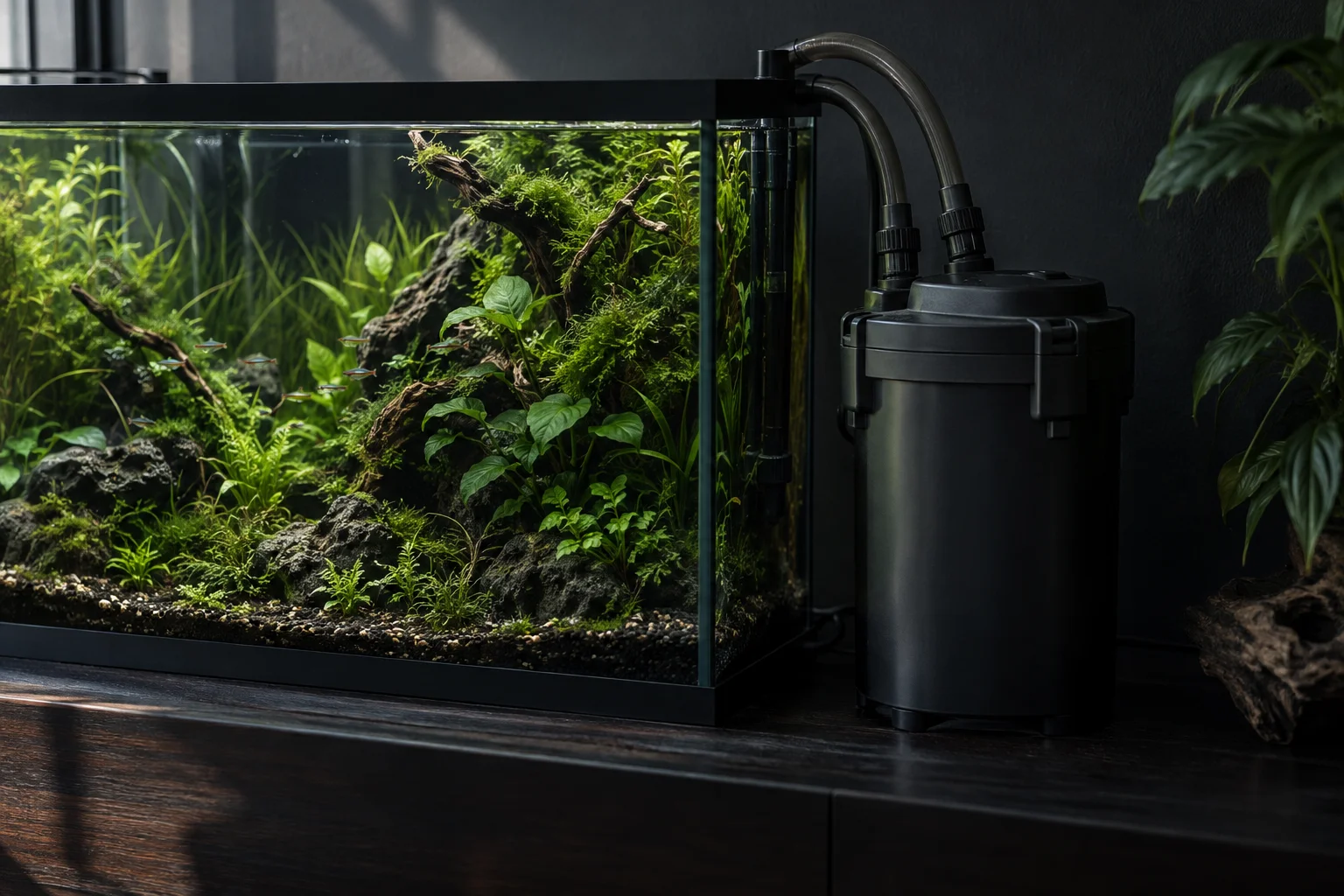
- Filter: strong biological filtration, canister or large hang-on-back
- Substrate: sand or smooth fine gravel, since acaras dig
- Decor: driftwood, rocks, caves, hardy plants attached to wood
02
Origin and natural habitat
The electric blue acara does not exist in the wild; it was developed in captivity. Its wild ancestor, the blue acara, lives in Trinidad and in coastal drainages of northern Venezuela and Colombia. It occupies slow rivers, creeks, ponds and ditches, often with muddy or sandy bottoms and plenty of vegetation and wood.
The species is adaptable in the wild, tolerating a fairly broad range of temperature and hardness. Captive-bred electric blue acaras inherit that flexibility, which is why they adapt well to most US tap water once it is dechlorinated. The older genus name Aequidens pulcher is still common on store labels.
03
Adult size and lifespan
Electric blue acaras usually reach 6–7 inches (15–18 cm), with males larger than females. Males often develop longer, more pointed dorsal and anal fins and, with age, a slight forehead bump. Females are smaller and rounder, and their color can be a little less intense. Many electric blue specimens stay slightly smaller than wild blue acaras.
With clean water and a varied diet, they commonly live 8–10 years. That is a long commitment, so plan the tank for the adult size from the start rather than for the 2-inch juvenile in the store.
04
Electric blue acara tank size
A single electric blue acara needs at least a 40-gallon (150 L) tank, preferably a 40 breeder with a large footprint of about 36 x 18 inches (91 x 46 cm). For a pair, or for one acara with a community of mid-sized fish, 55 gallons (210 L) is the realistic starting point and 75 gallons (285 L) gives more peace during breeding. See our best 55-gallon aquarium picks if you are choosing a tank.
Acaras dig, especially before spawning, so use sand or smooth fine gravel and anchor heavy rocks directly on the glass bottom before adding substrate. Plants such as java fern and anubias attached to wood survive best. Provide a few caves and flat stones, and leave open swimming space in front.
05
Water parameters
The electric blue acara is less demanding than most South American cichlids. It does well in soft to moderately hard water and a neutral to slightly alkaline pH. As with all cichlids, what matters most is low nitrate and zero ammonia and nitrite. Large fish produce a lot of waste, so test weekly (our best aquarium test kit guide compares liquid kits) and read our guide to aquarium water parameters to interpret your results.
| Parameter | Target range |
|---|---|
| Temperature | 75–82 °F (24–28 °C) |
| pH | 6.5–7.8 |
| GH (general hardness) | 5–15 °dH (90–270 ppm) |
| KH (carbonate hardness) | 3–10 °dH (50–180 ppm) |
| Ammonia / nitrite | 0 ppm |
| Nitrate | Below 20–30 ppm |
If nitrate climbs between water changes, increase the volume or frequency of changes, avoid overfeeding and add fast-growing plants. Our guide on how to lower nitrates lists every option.
06
Diet and feeding
In the wild, blue acaras eat insects, larvae, worms, small crustaceans, plant matter and the occasional small fish. In the aquarium, base the diet on a quality sinking cichlid pellet or stick, and add frozen foods two to three times a week: bloodworms, brine shrimp, mysis and krill. Some vegetable matter, such as pellets with spirulina or blanched peas, adds variety.
Feed adults once or twice a day, only what they finish in about two minutes. Juveniles grow faster with two to three small meals. Avoid feeding live feeder fish: they add little nutritional value and are a common way to bring diseases into the tank.
07
Behavior and tank mates
Electric blue acaras are among the most peaceful medium cichlids. Outside breeding, they mostly ignore fish of similar size. When a pair spawns, they defend a territory around the eggs and fry and can chase other fish quite firmly, which is why space matters. Individual temperament varies: some males stay gentle for life, others become pushy as they mature.
Choose tank mates that are too big to swallow and not aggressive enough to bully the acara. Our guide to cichlid tank mates covers more combinations. Avoid very aggressive Central American cichlids such as convicts or Jack Dempseys in average-sized tanks, and avoid aggressive African mbuna, which also need very different water.
- Good tank mates: angelfish (in a tall, spacious tank), bristlenose plecos, larger corydoras, pearl gouramis, severums, rainbowfish, silver dollars, Congo tetras
- Risky: German blue rams and other dwarf cichlids (may be bullied), large tetras such as black skirts
- Avoid: neon tetras, ember tetras, guppies and shrimp (eaten), aggressive cichlids, oscars and other large predators
08
Breeding electric blue acaras
Electric blue acaras are open-substrate spawners and form stable pairs. Buying a group of juveniles and letting a pair form is the most reliable approach. A pair cleans a flat stone or a piece of slate, and the female lays about 150–400 eggs. Both parents guard the clutch and fan it.
Eggs hatch in about 3 days at 78–80 °F (25.5–26.5 °C); the parents often move the wrigglers to pits dug in the sand, and the fry swim freely after about another 4–5 days. Feed them baby brine shrimp and crushed fry food. Pairs are protective, so move other fish out or use a larger tank. Note that some electric blue strains are reported to have weaker fry and lower fertility than wild-type blue acaras.
09
Common electric blue acara diseases
Acaras are hardy, but long-term poor water quality and rising nitrate cause most of their problems. Hole-in-the-head disease, which appears as pits on the head and lateral line, is strongly associated with poor water and diet in cichlids. Test the water first whenever your fish looks unwell.
Quarantine new fish for 2–4 weeks if you can. For any serious or spreading case, contact an aquatic veterinarian and follow the medication label.
| Problem | Typical signs | Where to start |
|---|---|---|
| Ich | White salt-like spots, scratching | Raise temperature gradually and medicate, see ich in fish |
| Hole-in-the-head | Small pits on head and lateral line | Lower nitrate, improve diet, ask a vet for treatment |
| Ammonia poisoning | Gasping, red gills, lethargy | Test and change water, see ammonia poisoning |
| Fin rot | Frayed, shrinking fins | Water quality first, see fin rot treatment |
| Bloat or internal infection | Swollen belly, loss of appetite | Isolate and consult a vet |
10
Recommended gear
A 55-gallon acara tank needs filtration rated for at least that volume, ideally more. A canister filter is the most common choice, and our best canister filter guide compares reliable models from Fluval, Eheim and others. Pair it with an adjustable heater of about 200 W for 55 gallons; our best aquarium heater guide explains how to size and choose one.
Add a gravel vacuum to make weekly water changes quick, a water conditioner that neutralizes chlorine and chloramine, a liquid test kit, and a tight lid, because acaras can jump when startled.
Frequently asked questions
Frequently asked questions
Is electric blue acara care easy for beginners?
It is one of the easiest cichlids, provided you can offer a tank of 40 gallons or more with strong filtration. The fish adapts to most tap water, eats readily and is calm for a cichlid. The main challenges are its adult size of 6–7 inches and the large amount of waste it produces, which call for weekly water changes.
What size tank does an electric blue acara need?
One fish needs at least 40 gallons (150 L), and a pair or a community with other mid-sized fish needs 55 gallons (210 L) or more. A wide footprint is better than a tall tank. Plan for the adult size from the beginning, since juveniles grow quickly in their first year.
What are good electric blue acara tank mates?
Choose peaceful fish too large to be swallowed: angelfish, severums, pearl gouramis, rainbowfish, silver dollars, Congo tetras, bristlenose plecos and larger corydoras. Avoid small fish such as neon tetras or guppies, shrimp, and aggressive cichlids that would bully the acara.
Are electric blue acaras aggressive?
Not usually. They are among the calmest medium-sized cichlids and mostly ignore similar-sized fish. They become territorial when breeding and will eat small fish that fit in their mouth. Individual temperament varies, so watch new combinations closely and keep a backup plan.
How big do electric blue acaras get?
Most reach 6–7 inches (15–18 cm) as adults, with males larger than females. Growth is fast in the first year when they are well fed and kept in clean, warm water. Many electric blue specimens stay slightly smaller than wild blue acaras.
Sources and references
Written and reviewed by the handsoffmyhobby editorial team according to our editorial policy.