01
What is the Walstad method?
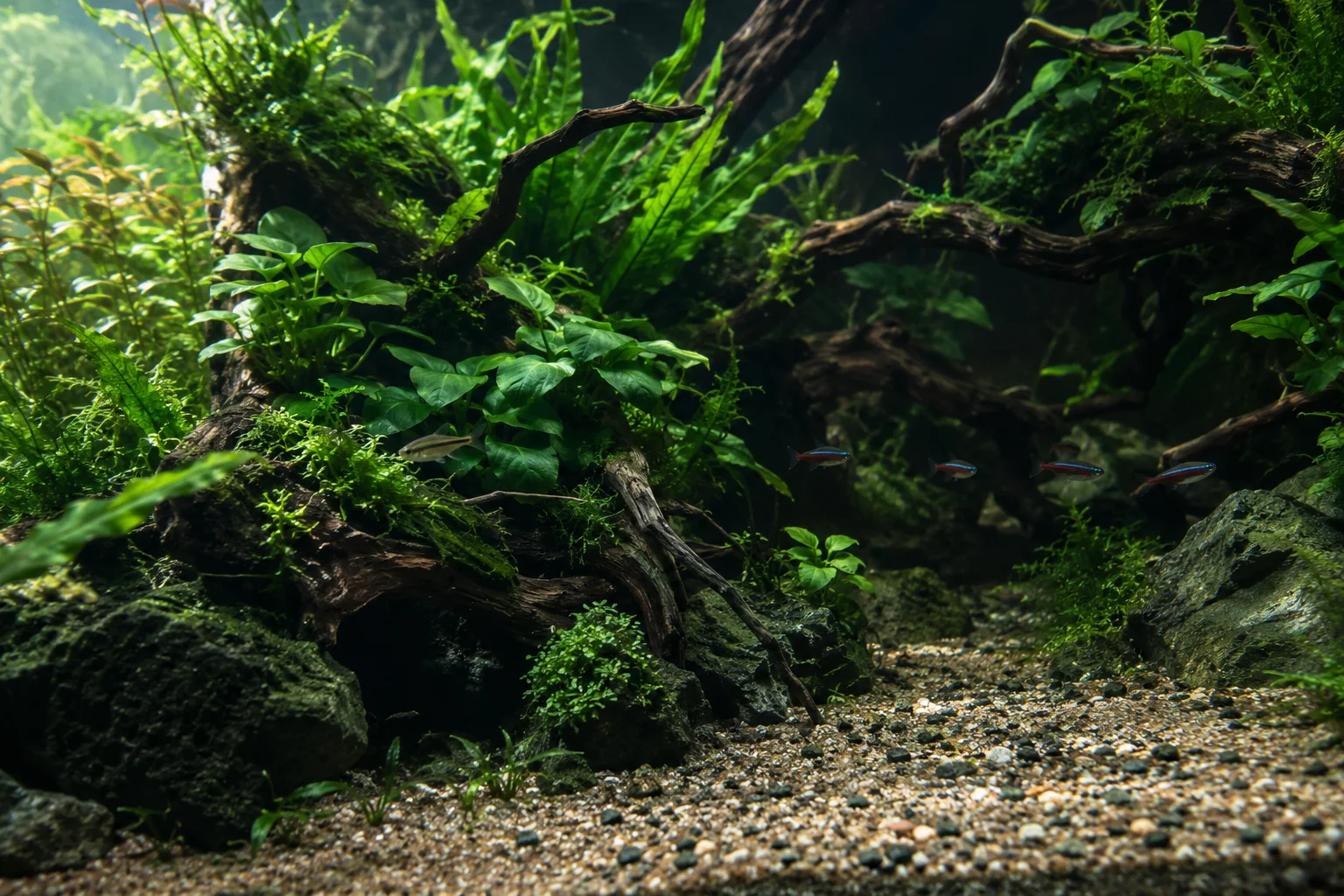
Diana Walstad is a microbiologist and planted-tank hobbyist whose book Ecology of the Planted Aquarium, first published in 1999, describes how to run an aquarium as a small ecosystem rather than as a filtered glass box. Her approach, now known as the Walstad method or the dirted tank, has become the reference for the low tech planted tank.
The idea is simple. Soil feeds plants and slowly releases CO2 as it decomposes. Plants, especially fast growers and floaters, take up ammonia and other wastes directly, often faster than filter bacteria convert them. Fish food becomes the main nutrient input. With enough plants, the tank stays clean without CO2 injection, fertilizer dosing or frequent water changes.
02
Walstad method principles
These principles work together. Remove one, such as heavy planting, and the balance tips toward algae or ammonia.
- Soil substrate: plain organic potting soil under a gravel or sand cap
- Heavy planting from the start, with many species so the best-adapted ones can take over
- Floating plants that use atmospheric CO2 and strong light at the surface
- No CO2 injection and little or no fertilizer
- Gentle circulation; filtration optional
- Moderate light, not high-tech intensity
- Light fish stocking and modest feeding
- Few water changes once the tank is balanced
03
Choosing soil, cap and plants
Use ordinary organic potting soil without added fertilizers, wetting agents or large chunks of bark. Avoid mixes advertised as "moisture control" or with slow-release fertilizer, which can release too many nutrients into the water. Sift out sticks and lumps. Some keepers add a little clay or mineralize the soil first by soaking and drying it several times; both are optional refinements, not requirements.
The cap should be fine gravel (1–3 mm) or coarse sand. Very fine sand compacts and can trap gas; coarse gravel lets soil escape into the water.
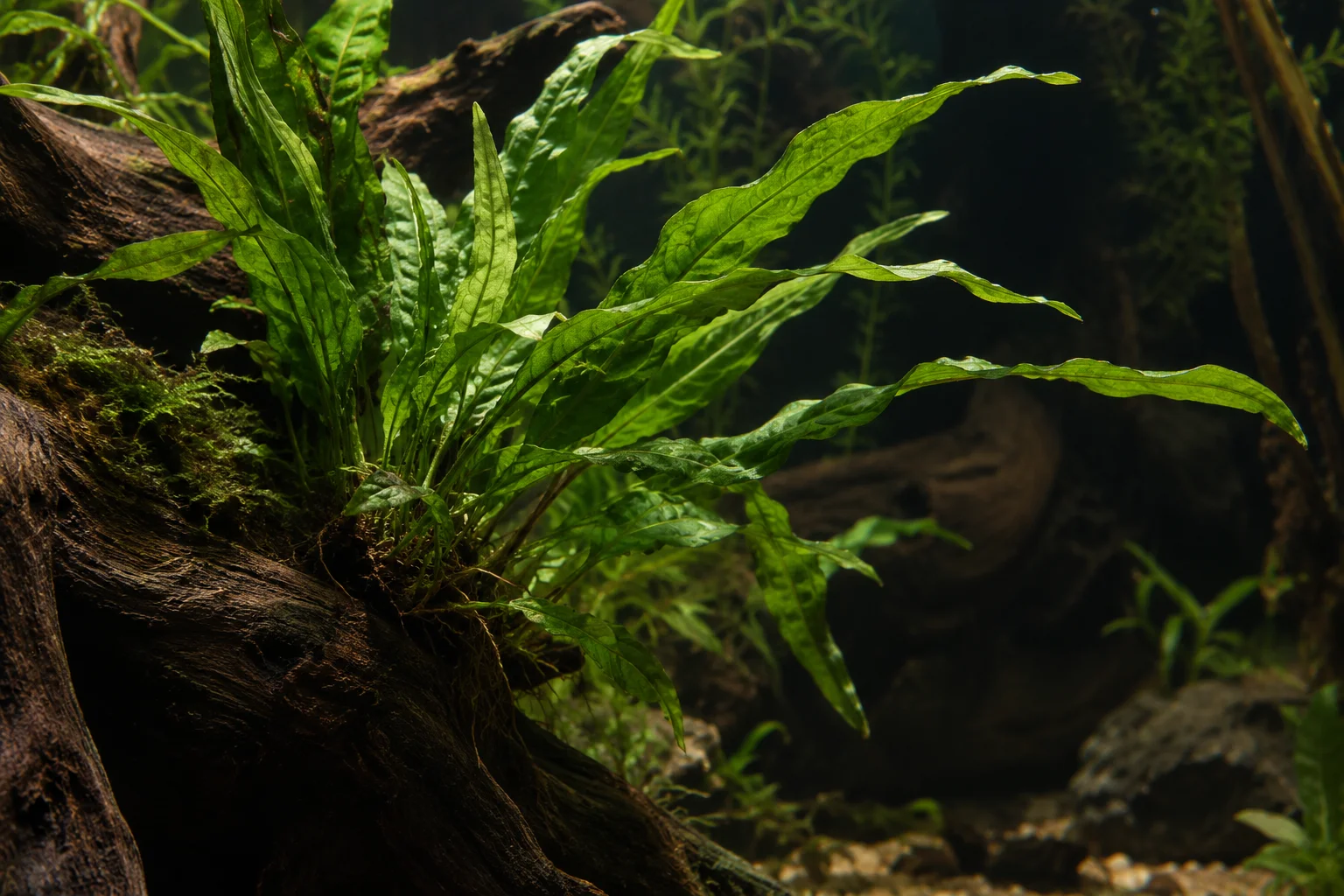
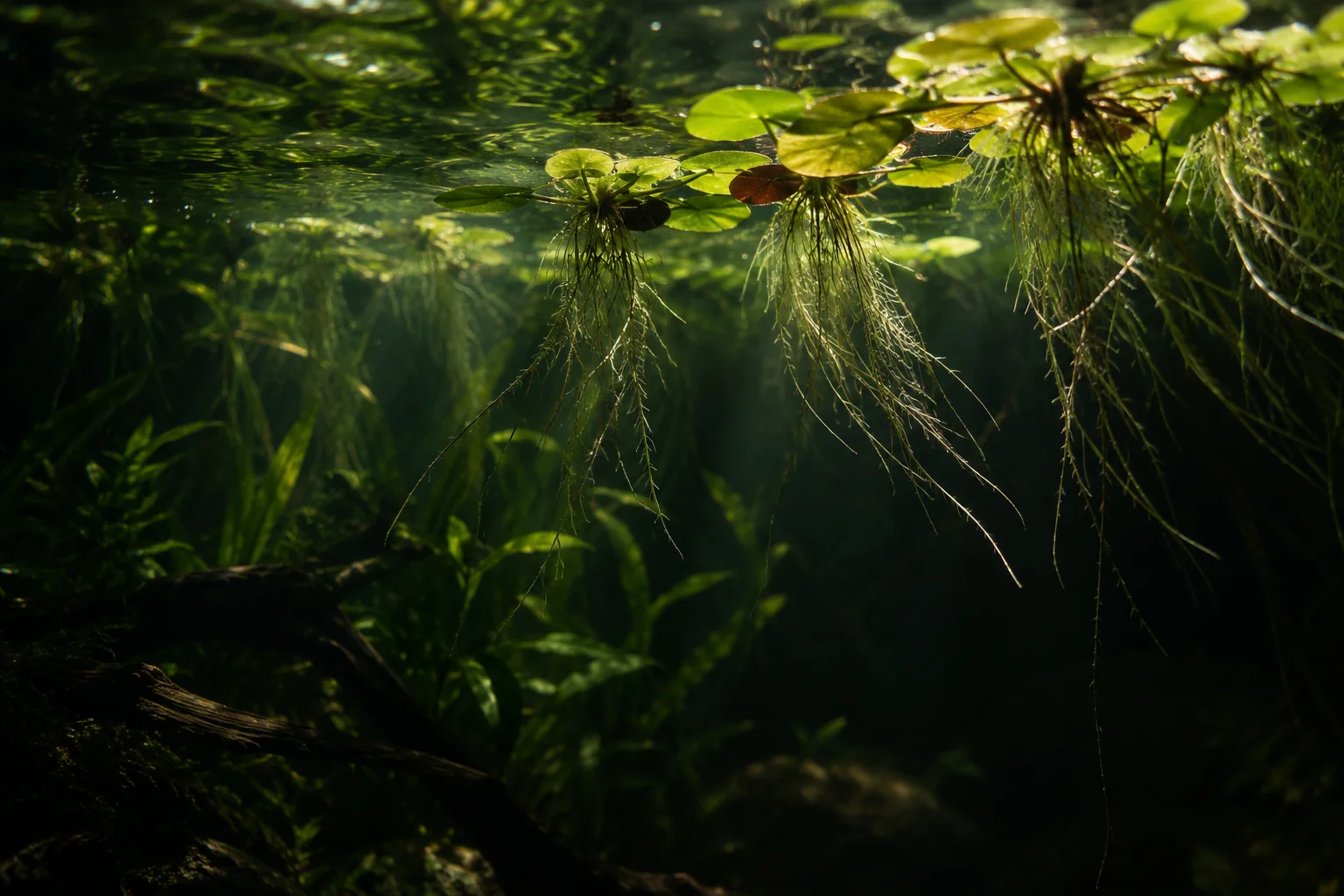
For plants, mix fast growers and hardy rooted species. Good choices include floating plants such as Amazon frogbit, salvinia and water lettuce, stem plants such as Hygrophila, Ludwigia and hornwort, rooted plants such as cryptocorynes, vallisneria and Amazon swords, and epiphytes such as Java fern tied to wood. Our list of low light aquarium plants is a good shopping list.
Never use garden soil, manure-based compost or soil with added fertilizer or pesticides. They can release toxic levels of ammonia or chemicals into the tank.
04
Equipment for a Walstad tank
Part of the appeal is how little gear you need. A 10–30 gallon (40–110 L) tank is a comfortable size; very small tanks are harder to balance.
- Light: a basic planted-tank LED on a 6–8 hour timer; you do not need a high-output model, see our aquarium light reviews for modest options
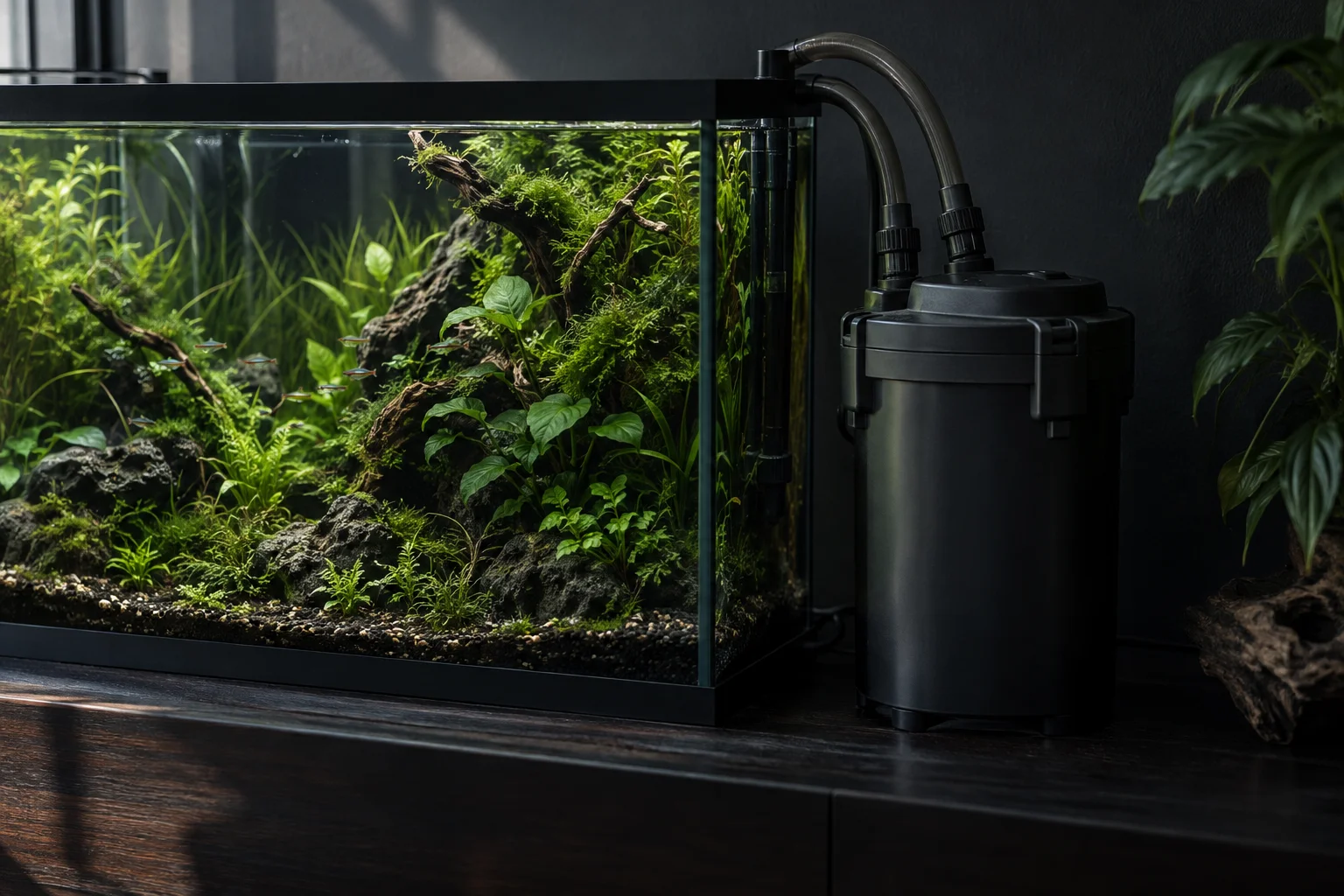
- Circulation: a small sponge filter or low-flow filter, mostly to move water gently and prevent surface film
- Heater: only if your fish are tropical
- Test kit: an aquarium test kit for ammonia, nitrite and nitrate during the first months
- Water conditioner for top-offs and water changes, from our water conditioner guide
05
How to set up a Walstad tank step by step
Expect some cloudiness and possibly an algae bloom in the first weeks as the soil settles and plants adapt. A few partial water changes during this phase are normal and helpful.
- Spread about 1 in (2.5 cm) of moistened, sifted potting soil over the bottom, keeping it 1 in back from the front glass if you want a clean side view
- Cap with 1–1.5 in (2.5–4 cm) of fine gravel or sand, slightly deeper at the back
- Fill the tank with only a few inches of water, then plant through the cap with long tweezers so roots reach the soil
- Plant densely: aim to cover at least half the substrate from day one
- Fill slowly, pouring onto a plate or bag to avoid stirring the soil, then add floating plants
- Run the light 6–8 hours a day and keep circulation gentle
- Wait several weeks and test the water: add fish only when ammonia and nitrite stay at zero and plants are visibly growing
- Stock lightly and feed modestly; the fish food is now your fertilizer
06
Fish and invertebrates for a Walstad tank
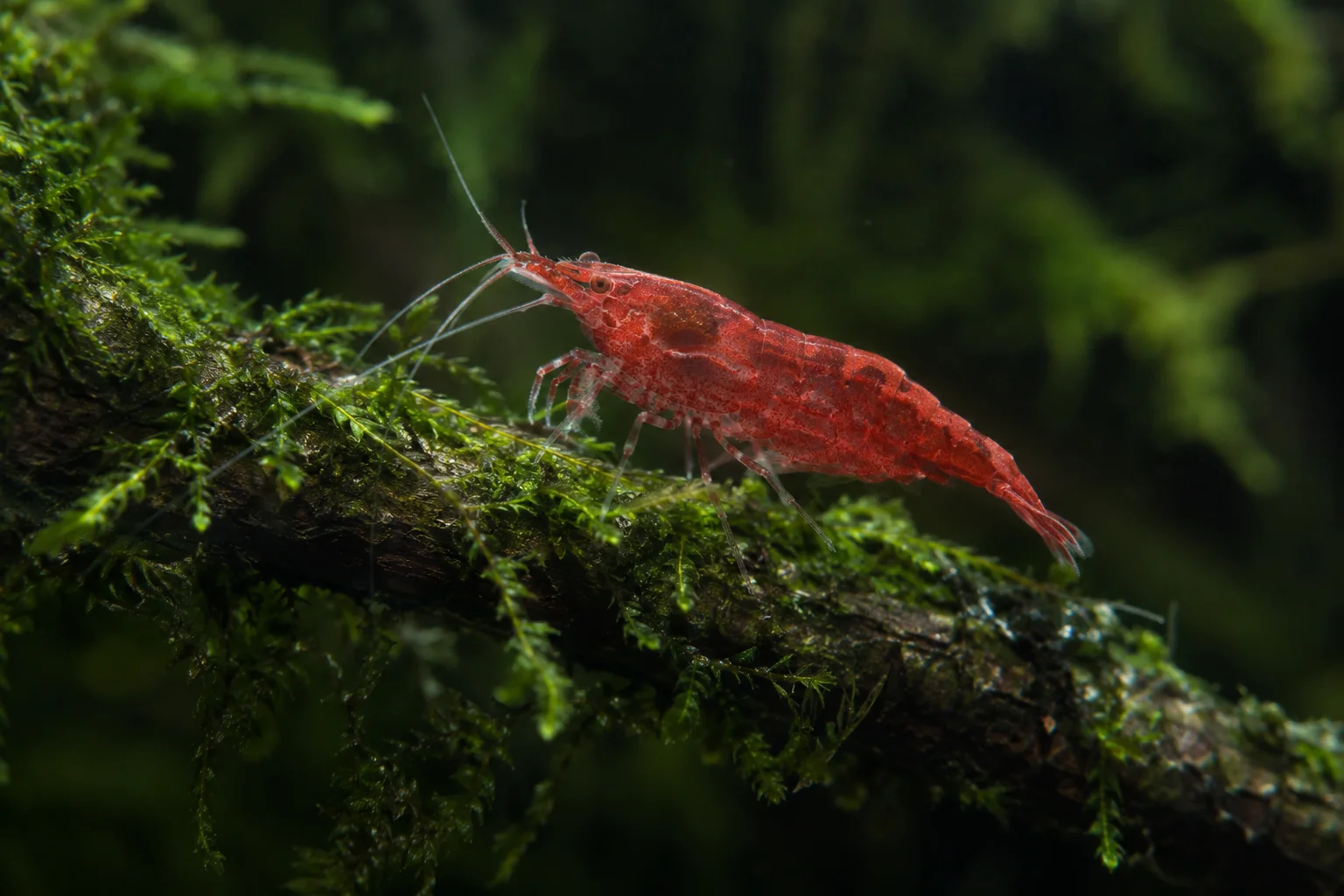
Small, peaceful fish that do not dig are ideal: a single betta, small tetras, rasboras, livebearers or a group of cherry shrimp, which thrive in the stable, biofilm-rich conditions. Snails such as Malaysian trumpet snails help turn over the top layer of the cap. Avoid goldfish, large cichlids and other diggers that would pull soil into the water.
07
Maintenance
Walstad tanks are low maintenance, not no maintenance. Top up evaporation with conditioned water, thin out floating plants when they cover more than about half the surface, trim stems and remove dead leaves. Walstad herself recommends infrequent water changes; many keepers settle on a partial change every few weeks or when nitrate rises. If nitrate climbs, see our guide on how to lower nitrates.
Avoid uprooting large plants: it releases soil and nutrients into the water. Cut old plants at the base instead and let the roots decompose in place.
08
Common Walstad method mistakes
Most problems appear in the first two months and trace back to too few plants or too much soil disturbance.
- Too few plants at the start, leading to green water or algae
- Too much soil (over 1–1.5 in) or soil with added fertilizer
- Replanting and digging, which causes cloudy water
- Adding fish too early, before the soil has stopped releasing ammonia
- Overstocking or overfeeding, which overwhelms the plants
- Strong light or a long photoperiod in the first weeks
Frequently asked questions
Frequently asked questions
What is a dirted tank?
A dirted tank is an aquarium with a layer of soil under a gravel or sand cap. The soil feeds plant roots and releases CO2 as it breaks down. The Walstad method is the best-known dirted tank approach, combining a soil substrate with heavy planting, no CO2 injection and light stocking.
Does a Walstad tank need a filter?
Not strictly. Diana Walstad showed that heavily planted tanks can stay clean with little or no filtration because plants remove ammonia. Most keepers still run a small sponge filter or low-flow pump for gentle circulation, which keeps the surface clear and avoids stagnant spots.
How often do you change water in a Walstad tank?
Far less often than in a standard tank. Once the tank is balanced, Walstad recommends infrequent water changes. Many keepers do a partial change every few weeks or when nitrate rises, plus regular top-offs. During the first month, extra changes help with cloudiness and algae.
How long before adding fish to a Walstad tank?
Usually several weeks. Fresh soil can release ammonia, and plants need time to start growing. Test the water and add fish only when ammonia and nitrite stay at zero and plants show new growth, then stock lightly.
Sources and references
Written and reviewed by the handsoffmyhobby editorial team according to our editorial policy.