01
How cherry shrimp breed
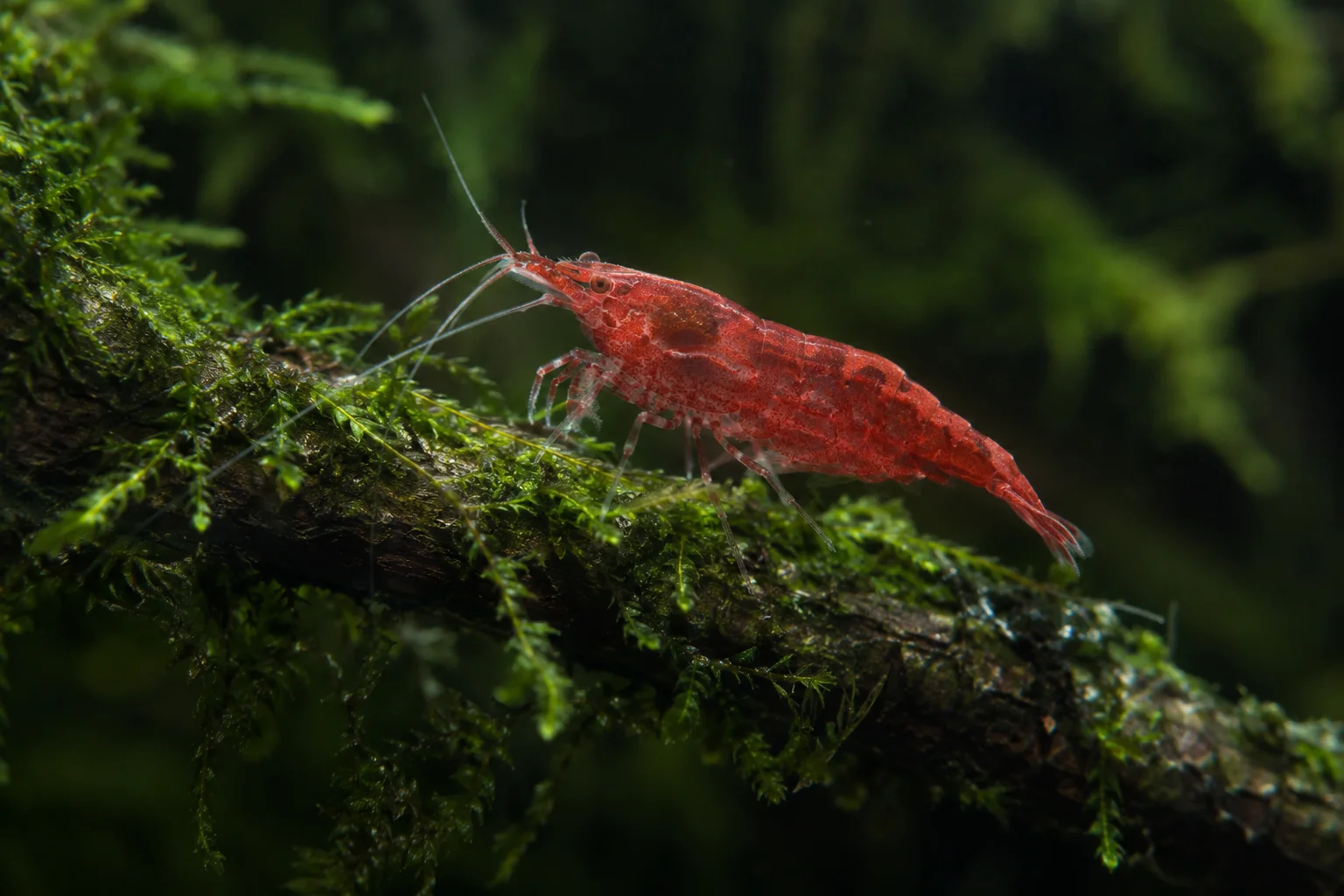
Cherry shrimp (Neocaridina davidi) are freshwater dwarf shrimp with a very simple life cycle, which is why they breed so easily. There is no larval stage: the eggs hatch directly into miniature shrimp that look like the adults, so there is no need to raise them in brackish water or feed special larval foods, as you would with Amano shrimp.
The cycle works like this. Eggs develop in the female’s ovaries, visible as a yellow or greenish patch behind the head called the saddle. When she molts, she releases pheromones into the water and males swim frantically around the tank looking for her. After mating, she moves the eggs under her tail, where she fans them with her swimmerets until they hatch. A female carrying eggs is called berried. For the full species profile, see our cherry shrimp care guide.
02
Setting up a cherry shrimp breeding tank
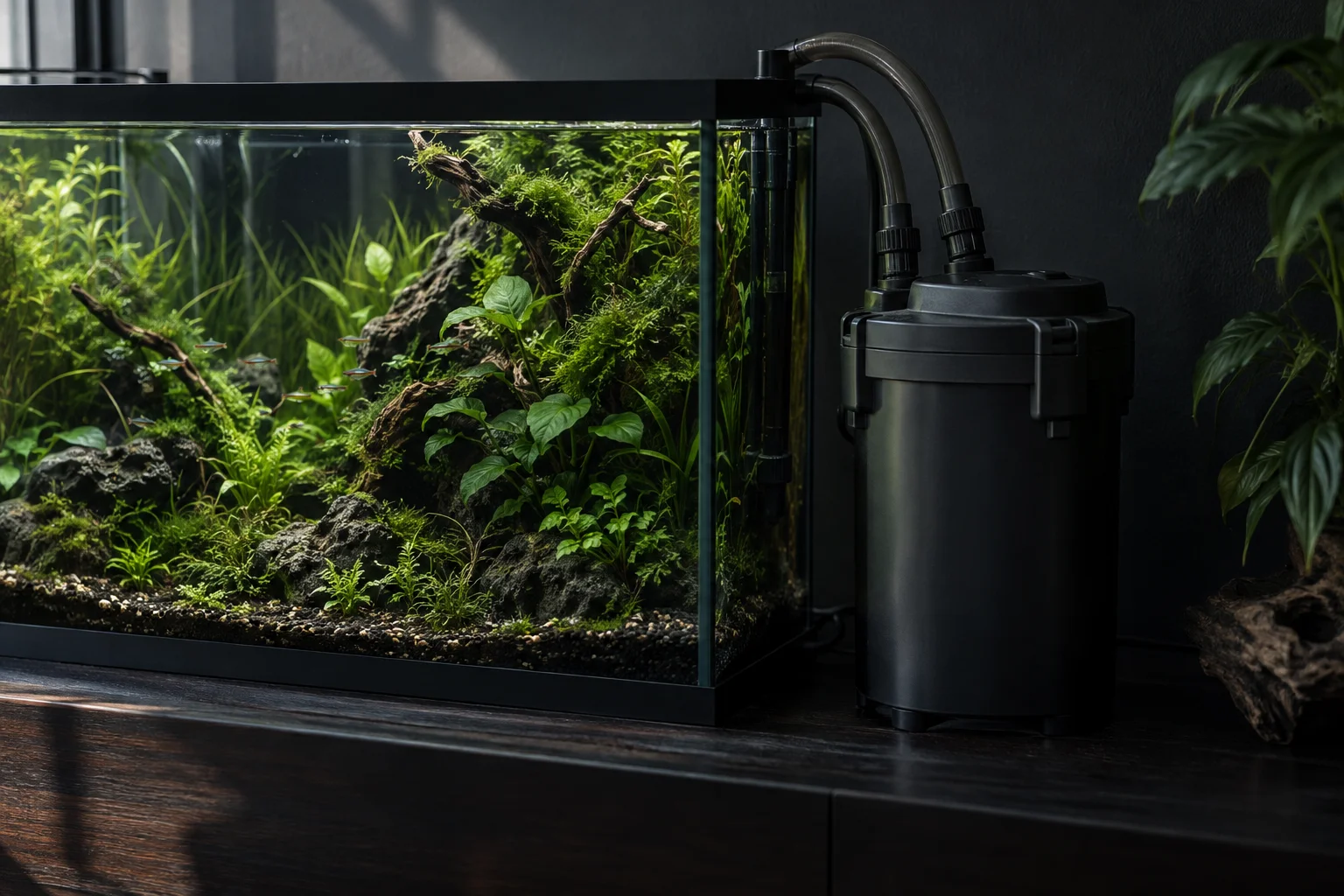
A 5-gallon (19 L) tank can work, but a 10-gallon (38 L) tank is more stable and lets the colony grow for longer before it gets crowded. The tank must be fully cycled, and ideally running for several weeks so surfaces are covered in biofilm, the shrimplets' first food.
- Filtration: a sponge filter is ideal. It is gentle, cannot suck up babies and gives adults and young a surface to graze. If you use a hang-on-back or canister, cover the intake with a fine sponge.
- Substrate: an inert sand or gravel, or a dedicated shrimp soil from our best aquarium substrate guide. Neocaridina do not need a buffering soil, but they do well on one.
- Plants and moss: java moss, Christmas moss, subwassertang and floating plants give cover to berried females and newborns, and trap food particles.
- Heater: optional in a warm room, but a heater keeps the temperature stable, which matters more than the exact number.
- Lid: shrimp can climb out, especially after a large water change or when something is wrong with the water.
03
Water parameters for breeding
Neocaridina are tolerant, but stable water is what triggers regular breeding and, above all, successful molting. Test your tap water first and read our guide to aquarium water parameters for how to measure GH, KH and TDS.
| Parameter | Range | Notes |
|---|---|---|
| Temperature | 72–78 °F (22–26 °C) | Breeds slower below 68 °F (20 °C); avoid going above 82 °F (28 °C) |
| pH | 6.5–8.0 | Stable is better than a perfect number |
| GH | 6–12 °dH | Provides the calcium and magnesium needed to molt |
| KH | 2–8 °dH | Buffers pH swings |
| TDS | about 150–300 ppm | Useful to track consistency between water changes |
| Ammonia, nitrite | 0 ppm | Shrimp are very sensitive to both |
| Nitrate | below 20 ppm | Lower is better |
Copper is toxic to shrimp. Check the label of any medication, fertilizer or plant food before using it in a shrimp tank, and never treat a shrimp tank with copper-based products.
04
Building your starter colony
Start with at least 10 shrimp, ideally 15–20, to be sure you get both sexes and enough genetic variety. Females are larger, more colorful and have a deeper, rounded underside; males are smaller, slimmer and paler. In a group bought from one source, the ratio is usually fine.
Acclimate new shrimp slowly. Drip acclimation over one to two hours helps them adjust to differences in GH and TDS, which can cause failed molts. Our guide on how to acclimate fish explains the drip method, which works the same way for shrimp.
05
Caring for berried females
A berried female carries about 20–30 eggs, sometimes more in large females. The eggs start yellow, green or orange depending on the color line, and darken as they develop. Just before hatching you can often see tiny eyes inside each egg. Incubation lasts roughly 30 days, slightly shorter in warm water and longer in cool water.
Do not move berried females unless you have to. Stress, sudden water changes or a fresh molt can make a female drop her eggs, especially if she is berried for the first time. Keep water changes small (10–20% weekly), match the temperature and pour new water in slowly. Our page on aquarium water changes explains how to keep them gentle.
06
Raising cherry shrimp babies
Newly hatched shrimplets are about 1–2 mm long and spend their first weeks hidden in moss and plants, grazing on biofilm. In a mature, planted tank they need very little extra help. They grow quickly and reach breeding age at around 3–4 months, with females becoming berried every month or so after that.
- Feed a high-quality shrimp food or powdered baby shrimp food sparingly, a pinch every day or two
- Add Indian almond leaves or other botanicals: they grow biofilm as they break down
- Blanched vegetables like spinach or zucchini once a week are eaten by adults and young alike
- Remove uneaten food after a few hours to avoid fouling the water
- Never clean the sponge filter all at once: rinse it gently in old tank water
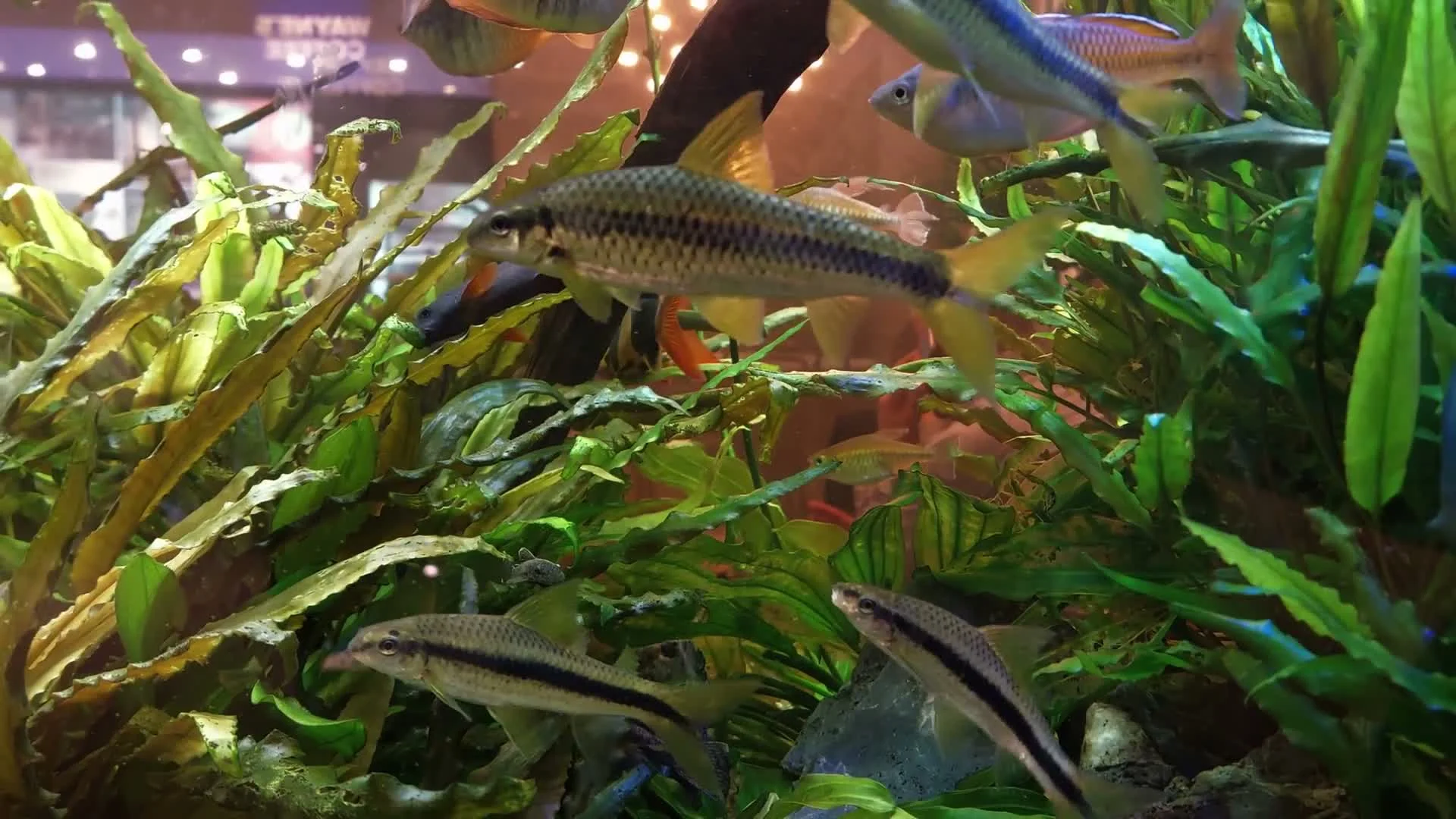
If babies disappear, check for predators first. Almost any fish larger than about 1 inch (2.5 cm) will eat shrimplets. Our shrimp tank mates guide lists safe companions.
07
Selective breeding and keeping the color red
Cherry shrimp come in grades, from pale "cherry" to deep "sakura", "fire red" and "painted fire red". Without selection, a colony slowly drifts toward weaker colors and more clear or brownish individuals, because the wild form is brownish and camouflaged.
To keep or improve color, remove the palest shrimp regularly (move them to another tank or rehome them) and let the best-colored animals breed. Never mix different Neocaridina color lines such as red, blue, yellow and green in one tank: they interbreed freely and after a few generations most offspring revert to dull, wild-type colors. Neocaridina and Caridina (crystal and bee shrimp) do not interbreed, but they prefer different water.
08
Common problems and how to fix them
Small white worms in a shrimp tank are usually harmless detritus worms, but flat worms with a triangular head may be planaria, which can attack shrimplets. See our guide to planaria worms to tell them apart and deal with them safely.
| Problem | Likely cause | What to do |
|---|---|---|
| No berried females | Tank too new, too cold, all one sex, poor food | Wait for maturity, warm to 72–76 °F (22–24 °C), add more shrimp |
| Females drop eggs | Stress, large water change, first-time mother | Smaller water changes, stable temperature |
| Babies vanish | Fish predators, filter intake | Remove predatory fish, cover intakes with sponge |
| Failed molts, white ring behind the head | GH too low or too high, sudden parameter shifts | Test GH and TDS, change water in small steps |
| Sudden deaths | Ammonia, copper, pesticides on new plants | Test water, rinse or quarantine new plants |
Frequently asked questions
Frequently asked questions
How long are cherry shrimp pregnant?
A berried cherry shrimp carries her eggs for roughly 30 days, typically 3–4 weeks depending on temperature. Warmer water around 76–78 °F (24–26 °C) shortens incubation, cooler water lengthens it. Females often become berried again shortly after the babies hatch, so a healthy colony can grow surprisingly quickly.
How many babies do cherry shrimp have?
A female usually carries about 20–30 eggs, with large, mature females sometimes carrying more. Not all hatch, and survival depends on water stability, food and the absence of predators. In a mature, planted tank with no fish, a large share of the shrimplets usually grows to adulthood.
Why are my cherry shrimp not breeding?
The most common reasons are a tank that is too new, water that is too cold, too few shrimp (or only one sex), and unstable parameters. Check that ammonia and nitrite are at zero, GH is around 6–12 °dH and the temperature stays near 72–78 °F (22–26 °C). Patience helps too: young shrimp need about 3–4 months to mature.
Do cherry shrimp eat their babies?
No, adult cherry shrimp do not hunt their young. They may pick at a dead or dying shrimplet, but healthy babies are safe with the adults. The real threats are fish, many of which eat shrimplets readily, and unprotected filter intakes.
How fast do cherry shrimp breed?
Once mature, a female can produce a new clutch roughly every month in warm, stable water. Starting from 10–20 shrimp, a well-kept colony often reaches over a hundred individuals within six months to a year, depending on tank size, food and how many shrimp you remove.
Sources and references
Written and reviewed by the handsoffmyhobby editorial team according to our editorial policy.