01
Do fish sleep? The short answer
Fish do sleep, in the sense biologists use for animals. They do not show the same brain waves as humans, so scientists describe their rest as sleep or a sleep-like state, based on behavior. A fish counts as sleeping when it shows these signs:
- Long periods of stillness or very slow movement, often in a favorite spot
- A typical resting posture, such as hovering, leaning against a plant or resting on the substrate
- Slower breathing and gill movement
- Weaker reaction to food, light or movement nearby
- Quick return to normal behavior when disturbed
- More rest afterwards if the fish was kept awake, a pattern known as sleep rebound
02
Why fish sleep with their eyes open
Bony fish, which include almost every aquarium species, have no eyelids. Their eyes are kept moist by the water around them, so they do not need to blink. A sleeping fish therefore looks awake at first glance. Watch the body instead: fins barely moving, a slight downward or upward tilt, and a fish that lets you approach the glass without reacting.
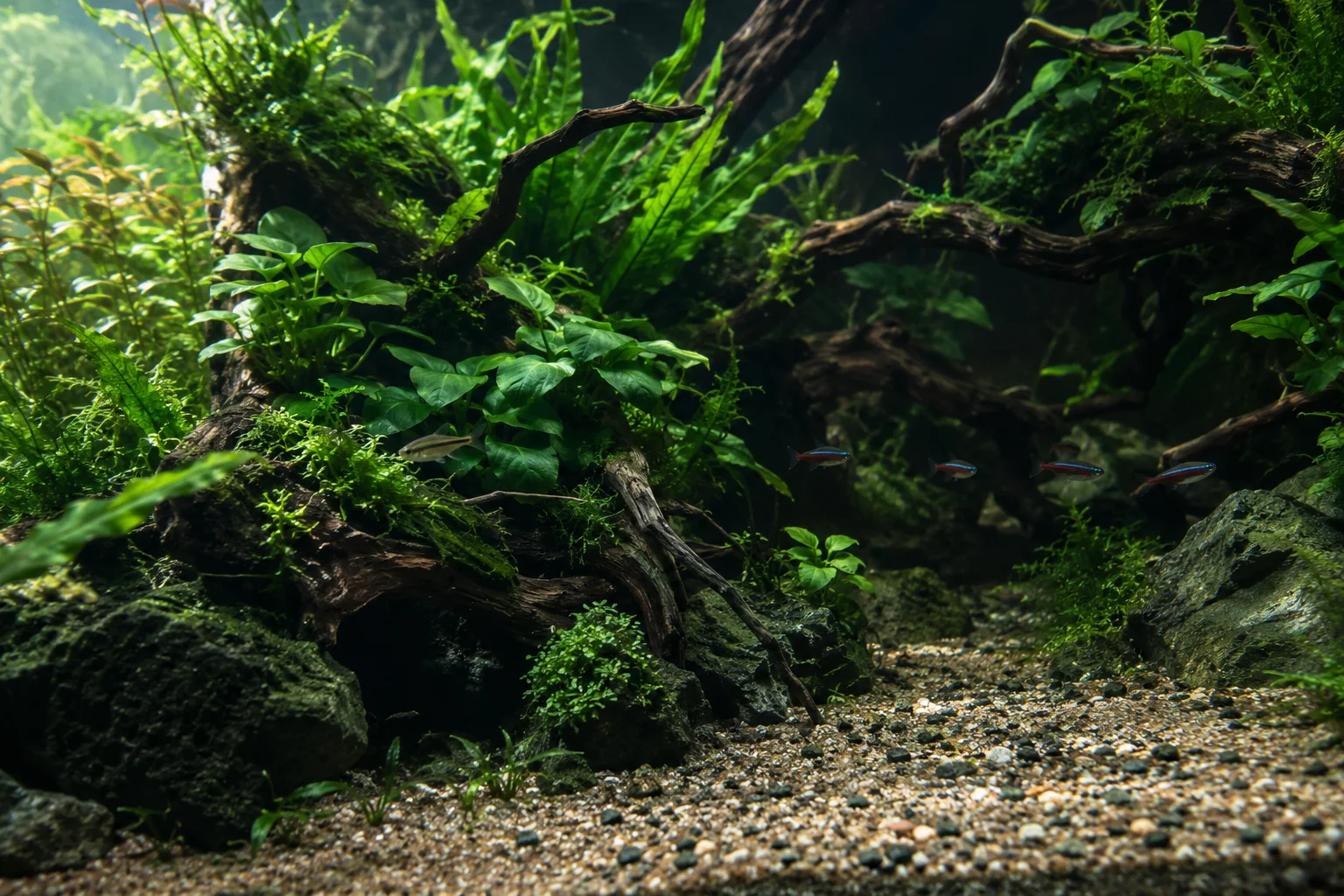
Many fish also change color at night. Neon tetras and cardinal tetras are a classic example: their blue and red stripes look much duller when the lights have been off for a while, then brighten again after they wake. This is normal and is not a sign of illness, as long as the color returns in the morning.
03
What science says about fish sleep
Much of what we know comes from zebrafish, a small freshwater danio widely used in research. Zebrafish rest mostly at night, become less responsive while resting and rest more after being deprived of it. Researchers have also described brain activity states in zebrafish that share features with the slow-wave and REM sleep of mammals, which suggests sleep appeared very early in the evolution of vertebrates.
Another well-known example is the Mexican blind cavefish. Studies found that cave populations, which live in permanent darkness with little food, sleep far less than their relatives from surface rivers. In other words, sleep in fish is real, and it adapts to the environment.
04
How common aquarium fish sleep
Each species has its own resting habits. Knowing them saves a lot of worry when you check the tank late in the evening.
| Fish | Active time | How it rests |
|---|---|---|
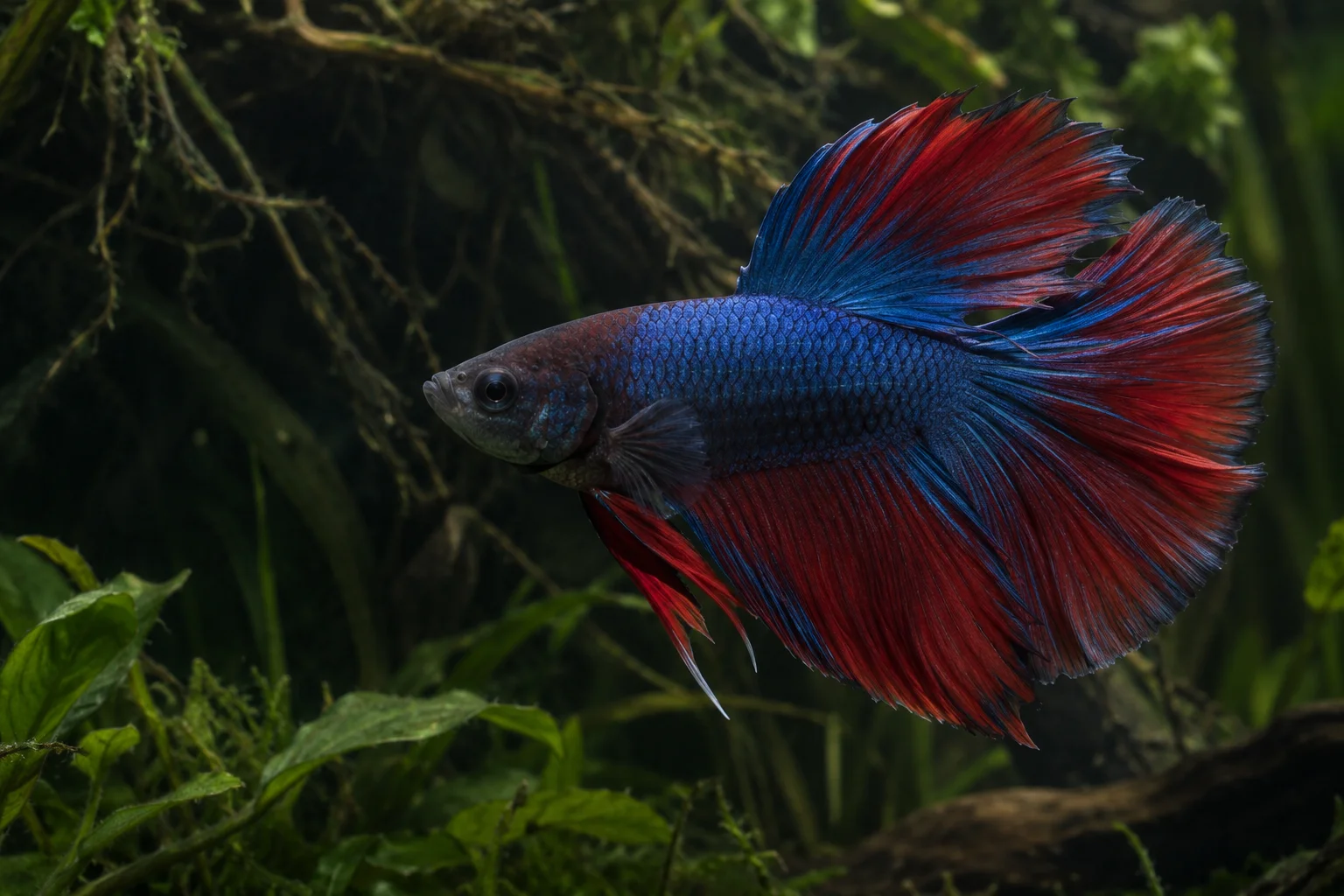
| Betta | Day | Lies on leaves, decor or the bottom near the surface; may look limp |
| Goldfish | Day | Hovers low in the water, fins mostly still, colors can look slightly paler |
| Neon and cardinal tetras | Day | Spreads out from the school, hangs near plants, colors fade |
| Corydoras | Day and dusk | Rests on the substrate, sometimes wedged between plants or stones |
| Bristlenose pleco | Night | Hides in caves or under driftwood during the day |
| Kuhli loach | Night | Buries itself or hides in tight gaps during the day |
| Angelfish and gouramis | Day | Hover quietly near plants or in a corner |
Bettas often sleep in odd positions, sideways on a leaf or resting on the substrate. If your betta wakes quickly when the light comes on and swims normally, it was just sleeping. See our betta fish care guide for resting spots that help.
05
Sleeping or sick? How to tell the difference
A sleeping fish wakes up. That is the simplest test. Turn on the room light, wait a minute, and watch: a resting fish starts moving, steadies its fins and swims normally. A sick fish stays listless, or shows other signs that have nothing to do with sleep:
- Gasping at the surface, especially with fast gill movement, which can point to ammonia poisoning or low oxygen
- Floating upside down, sinking or tilting even while trying to swim, often linked to swim bladder disease
- Clamped fins, refusal of food or rubbing against decor during the day
- Lying on its side on the bottom (except bettas, which often rest that way and right themselves quickly)
06
How to help your fish sleep well
Fish do not need a bedtime routine, but they do need a predictable day and night. A few simple habits make a difference, especially for shy and nocturnal species.
- Keep the light on for 8–10 hours a day. A plug-in timer or a light with a built-in schedule, like many in our best aquarium light guide, keeps it consistent.
- Let the tank go fully dark at night. Moonlight modes are fine for a short viewing window, but should not run all night.
- Give hiding places: caves for bristlenose plecos, dense plants for tetras, soft sand for kuhli loaches and corydoras.
- Feed nocturnal fish a sinking food shortly after lights out, following the portions in our guide on how often to feed aquarium fish.
- Avoid tapping the glass or switching lights on and off at night, which startles fish into the decor.
- Keep water quality stable. Stressed fish rest poorly, so check your water parameters regularly.
Frequently asked questions
Frequently asked questions
Do fish sleep at night?
Most aquarium fish sleep at night, when their rest state follows the light cycle. Nocturnal species are the exception: plecos, many loaches and some catfish rest during the day and become active after dark. In an aquarium, the light timer largely sets the rhythm, which is why a regular schedule matters.
How long do fish sleep?
There is no fixed number of hours. Day-active fish rest through much of the dark period, but in short phases and can wake quickly. With an 8–10 hour light period, most community fish spend a good part of the remaining dark hours in a rest state, while nocturnal species do the reverse.
Do fish need darkness to sleep?
Darkness helps. Fish rely on the light cycle to regulate their activity, and constant light disturbs their rest and also encourages algae. Turn the aquarium light off at night and avoid bright room light shining into the tank all evening. A dim room is fine, total darkness is not required.
Why is my fish lying at the bottom of the tank?
If it wakes and swims normally when the light comes on, it is probably resting; corydoras, bettas and many bottom dwellers do this. If it stays on the bottom during the day, breathes fast, clamps its fins or refuses food, test ammonia, nitrite and temperature first and check for signs of disease.
Can fish dream?
Nobody knows. Researchers have recorded sleep stages in zebrafish that resemble some features of REM sleep, which in humans is linked to dreaming. That does not show that fish dream, only that their sleep is more complex than once thought.
Sources and references
Written and reviewed by the handsoffmyhobby editorial team according to our editorial policy.