01
Guppy tank mates: what to look for
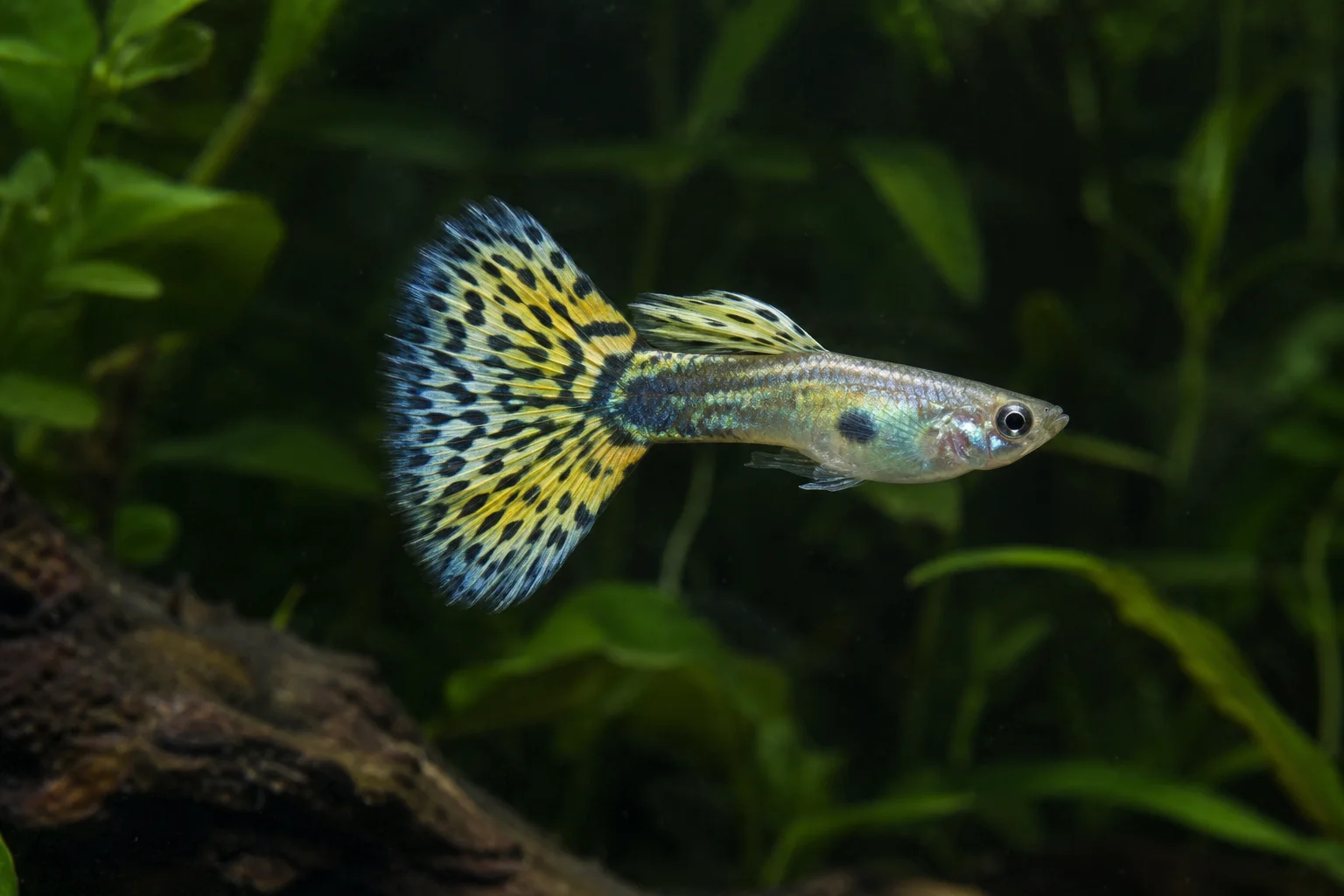
Guppies (Poecilia reticulata) are livebearers from northern South America and the Caribbean. Males reach about 1.2–1.4 inches (3–3.5 cm) with long, flowing tails; females grow to around 2–2.4 inches (5–6 cm). They prefer warm, medium-hard water and spend most of their time in the upper and middle layers of the tank. Good guppy community fish share those conditions and leave the fins alone. Our guppy care guide covers the basics in more detail.
Use these criteria to judge any fish you are considering:
- Water: comfortable at 72–82 °F (22–28 °C) and pH 7.0–8.0, ideally with moderate hardness
- Temperament: peaceful, with no habit of nipping long fins
- Size: small enough not to eat adult guppies (and accept that most fish will eat fry)
- Swimming zone: bottom dwellers and mid-water schoolers spread the tank and reduce competition
- Pace: not so fast and greedy that guppies lose every meal
02
Guppy compatibility chart
The table covers the fish and invertebrates most often suggested as guppy tank mates, including species without their own page on handsoffmyhobby. Verdicts assume a cycled tank of at least 10 gallons (38 L) with stable parameters.
| Tank mate | Verdict | Why |
|---|---|---|
| Corydoras (panda, pygmy, bronze, sterbai) | Good | Peaceful bottom dwellers in groups of 6+, same temperature range |
| Platies | Good | Fellow livebearers that like the same hard, warm water |
| Mollies | Good | Peaceful livebearers for hard water; need 20+ gallons |
| Harlequin rasbora | Good | Calm mid-water schooler that ignores long fins |
| Ember tetra | Good | Tiny and peaceful; keep 8+ in a planted tank |
| Otocinclus | Good | Gentle algae grazer; needs a mature tank with biofilm |
| Bristlenose pleco | Good | Small, peaceful algae eater that stays on the bottom |
| Kuhli loach | Good | Shy bottom fish, harmless to guppies; prefers sand |
| Cherry barb | Good | One of the few barbs that does not nip, if kept in a group |
| Nerite and mystery snails | Good | Algae and leftover food cleaners, no threat to fish |
| Cherry shrimp | Good | Adults safe; shrimplets and guppy fry are both eaten |
| Endler’s livebearer | With caution | Peaceful, but hybridizes with guppies |
| Swordtail | With caution | Larger; males can harass other fish in small tanks |
| Neon tetra | With caution | Peaceful, but prefers softer, cooler water than guppies |
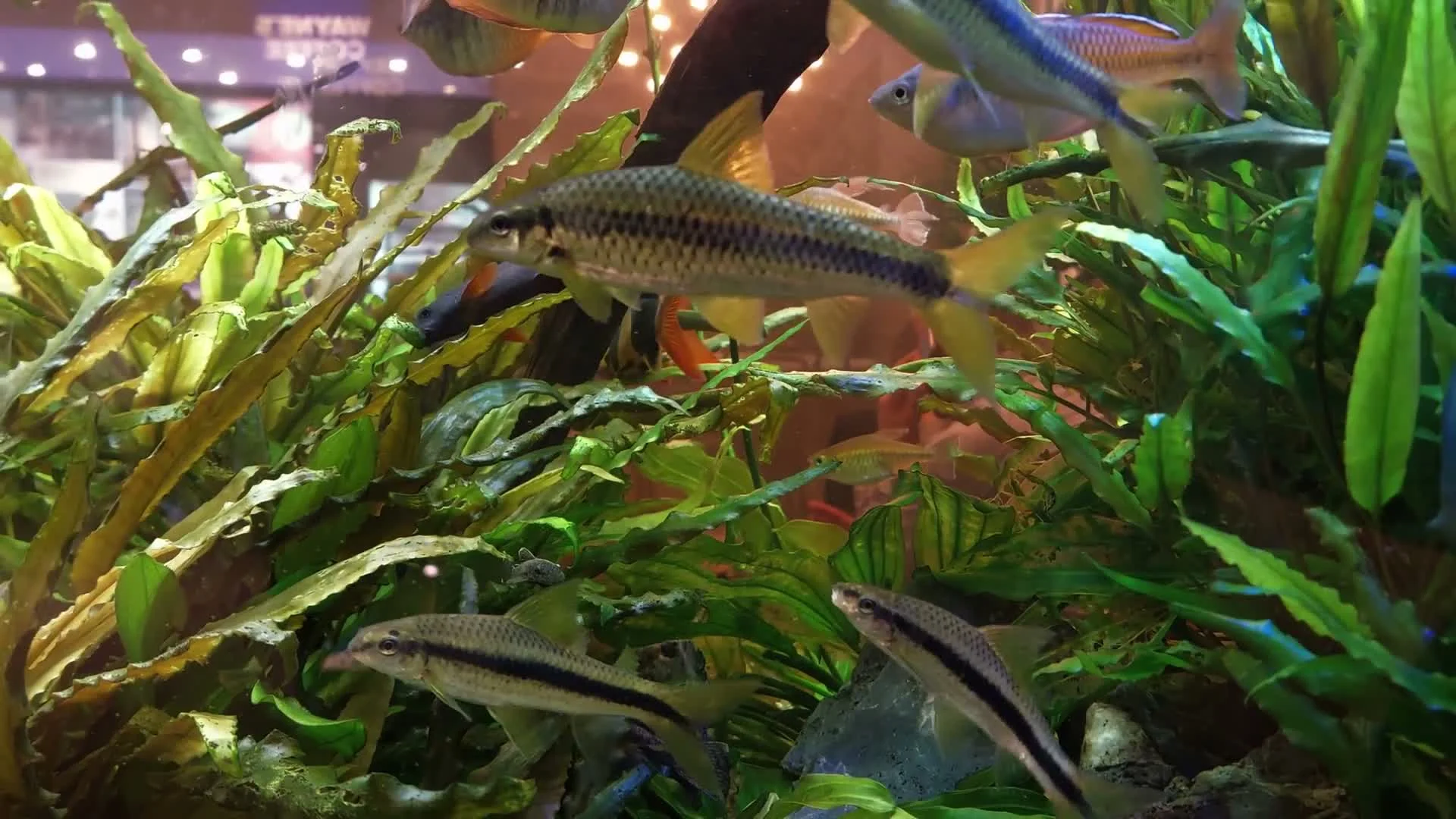
| Zebra danio | With caution | Fast and boisterous; may outcompete guppies for food |
| Dwarf gourami | With caution | Can turn territorial; prone to iridovirus |
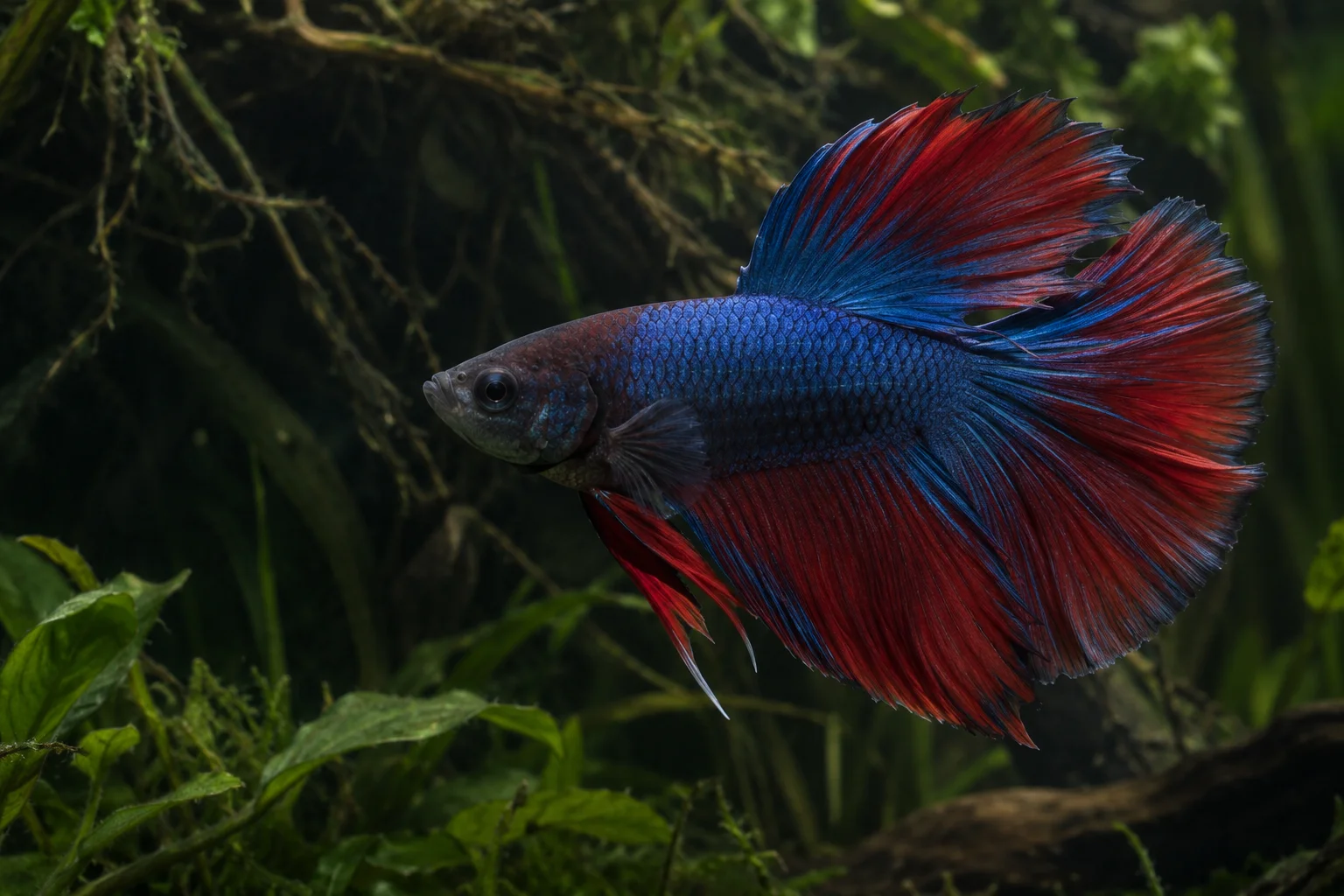
| Betta | With caution | May attack colorful male guppies; only with females in a large tank |
| Tiger barb, serpae tetra, black skirt tetra | Avoid | Known fin nippers that shred guppy tails |
| Angelfish | Avoid | Grows large enough to eat guppies |
| Cichlids (African, oscars, convicts) | Avoid | Aggressive and predatory, different water needs |
| Goldfish | Avoid | Coldwater fish, outgrows and may eat guppies |
| Red-tailed shark | Avoid | Territorial and chases smaller fish |
Guppy care guide: tank, water, tank mates and breeding
Full guppy care sheet: tank size, water, diet, male to female ratio and breeding basics.
Fish speciesCorydoras catfish care guide: tank, water, diet and popular species
The classic guppy companion: peaceful bottom dwellers that clean up food the guppies miss. Keep 6 or more.
Fish speciesHarlequin rasbora care guide: tank size, water, diet and tank mates
Calm mid-water schooler that never bothers long fins and handles a wide range of water.
Fish speciesEmber tetra care guide: tank, water, school and tank mates
Tiny, peaceful and orange: a group of 8–10 adds color below the guppies without any nipping.
Fish speciesOtocinclus care guide: tank, diet, water and tank mates
Gentle algae grazer for a mature, planted guppy tank. Keep a group of 5–6.
Fish speciesBristlenose pleco care guide: size, tank, diet, lifespan and breeding
A compact algae eater, about 4–5 in (10–13 cm), that ignores guppies and their fry.
Fish speciesKuhli loach care guide: size, tank, water and tank mates
Shy, eel-like bottom fish for sandy tanks. Active at dusk, completely harmless to guppies.
Shrimp & snailsCherry shrimp care guide: tank, water, food and breeding
Adults live peacefully with guppies; baby shrimp may be eaten, so add dense moss if you want a colony.
03
The best guppy tank mates explained
Bottom dwellers. Corydoras are the most popular choice for a reason: they are peaceful, active during the day and fill the bottom layer that guppies rarely use. Pygmy and panda corydoras suit 10–20 gallon tanks; bronze and sterbai need a bit more space. Kuhli loaches and bristlenose plecos add variety without competing with guppies at the surface.
Schooling fish. Harlequin rasboras and ember tetras are calm, never chase and look great beneath a group of colorful male guppies. Many keepers also add neon tetras; they generally get along with guppies, but they prefer softer water around 72–78 °F (22–26 °C), so they are a compromise rather than a perfect match.
Other livebearers. Platies and mollies share the guppy’s love of hard water. Be aware that all livebearers breed constantly, and adults eat most fry. If you want to raise guppy fry, read our guide on how to breed guppies.
Keep guppies at roughly one male to two or three females, or keep an all-male tank. Males chase females constantly, and a balanced ratio keeps the females from being worn out.
04
Sample guppy community tanks
These examples assume a planted, heated tank with gentle filtration and weekly water changes. A reliable aquarium heater matters, because guppies stay healthier at a stable 76–78 °F (24–26 °C). For more stocking ideas, see the best fish for a 10 gallon tank and the best fish for a 20 gallon tank.
- 10 gallons (38 L): 3 male guppies, 6 pygmy corydoras, a colony of cherry shrimp with plenty of moss, 1 nerite snail
- 20 gallons (75 L): 1 male and 3 female guppies (or 4 males), 6 panda corydoras, 8 harlequin rasboras, 2 nerite snails
- 29 gallons (110 L): 6 male guppies, 3 platies, 10 ember tetras, 6 bronze corydoras, 1 bristlenose pleco
05
Fish that cannot live with guppies
Fin nippers are the biggest threat. Tiger barbs, serpae tetras and black skirt tetras pick at long fins, and a male guppy’s tail is the easiest target in the tank. Torn fins invite infection and stress, so even mild nipping is a problem over time.
Larger fish are the second danger. Angelfish look peaceful in the store, but an adult will eat guppies; see our angelfish tank mates guide for better partners. Most cichlids are too aggressive, goldfish need cold water, and bettas often treat colorful male guppies as rivals. If you love both, our betta tank mates page explains why the pairing usually fails. For more calm options, browse our list of peaceful community fish.
06
Adding new tank mates without trouble
Guppies from mass breeding farms can carry parasites and bacterial infections, and new tank mates can bring their own. Quarantine every new fish for 3–4 weeks, acclimate it slowly, and add it with the lights off. Check that ammonia and nitrite stay at zero during the following week.
Keep an eye on the dwarf gourami if you choose one: many commercial fish carry iridovirus, described in our page on dwarf gourami disease. And test hardness occasionally with our guide to aquarium water parameters, since guppies and their livebearer cousins do poorly in very soft water.
Frequently asked questions
Frequently asked questions
What can live with guppies?
Small, peaceful fish that like warm, slightly hard water: corydoras, platies, mollies, harlequin rasboras, ember tetras, otocinclus, bristlenose plecos and kuhli loaches. Nerite snails, mystery snails and adult cherry shrimp are also safe. Avoid fin nippers like tiger barbs, predators like angelfish and cichlids, and coldwater fish like goldfish.
Can guppies live with bettas?
Sometimes, but it is risky. Male bettas often see colorful, long-finned male guppies as rivals and attack them, and some guppies nip betta fins. If you try it, use a large planted tank of 20 gallons or more, add only female guppies and have a backup tank ready. In most cases, separate tanks are the safer choice.
Can guppies live with neon tetras?
Yes, in most cases. Both are peaceful and similar in size. The compromise is water: neons prefer softer water and 72–78 °F, while guppies like harder water and can go warmer. Aim for about 76 °F (24 °C) and a neutral pH around 7.0–7.4, and both species usually do well.
What are the best guppy community fish for a small tank?
In a 10-gallon tank, keep 3 male guppies with 6 pygmy corydoras or a group of ember tetras, plus a nerite snail or cherry shrimp. Avoid adding many species: one bottom group and one school are enough. Larger fish such as mollies, swordtails and bristlenose plecos need 20 gallons or more.
Will tank mates eat guppy fry?
Almost always. Adult guppies, platies, tetras, rasboras and many other fish eat newborn fry, and shrimp and snails eat any that die. If you want some fry to survive, add dense plants such as java moss or floating plants, or move a pregnant female to a separate breeding tank.
Sources and references
Written and reviewed by the handsoffmyhobby editorial team according to our editorial policy.