Fact sheet
- Common names
- Bristlenose pleco, bushynose pleco, bristlenose catfish
- Family
- Loricariidae (armored suckermouth catfish)
- Origin
- South America, mainly the Amazon basin; aquarium fish are captive-bred
- Adult size
- 4–5 in (10–13 cm), rarely up to 6 in (15 cm)
- Lifespan
- 5–10 years, sometimes longer
- Minimum tank
- 20 gallons (76 L), 30 gallons (114 L) for a pair
- Temperature
- 72–80 °F (22–27 °C)
- pH
- 6.0–7.5
- Hardness
- GH 2–15 °dH, KH 1–10 °dH
- Diet
- Mainly herbivore (algae, biofilm, vegetables), some protein
- Temperament
- Peaceful; males territorial over caves
- Activity
- Mostly nocturnal and crepuscular, bottom and glass
- Care level
- Easy
01
Bristlenose pleco care at a glance
Bristlenose plecos are small armored catfish from the genus Ancistrus, named for the fleshy, branching tentacles (bristles) that grow on the snout of adult males. Females have only a short fringe of small bristles along the edge of the snout. Besides the standard brown-spotted form, stores sell albino, longfin, calico and super red varieties, all with the same care needs.
They spend the day under wood or in caves and come out at dusk to rasp algae and biofilm from glass, rocks and leaves with their suckermouth. Unlike the common pleco, they stay a manageable size, which makes them one of the best cleanup fish for community tanks from 20 gallons up. Add one only to a fully cycled tank with some algae and biofilm already growing.
- Tank: 20 gallons minimum, with a footprint of at least 24 x 12 in (60 x 30 cm)
- Filtration: strong enough for a messy fish, with good oxygenation
- Hardscape: driftwood plus one cave per pleco
- Substrate: sand or smooth, rounded gravel
- Food: algae wafers and vegetables, not just whatever algae is in the tank
02
Bristlenose vs common pleco
Many buyers end up with the wrong pleco. The "common pleco" sold as a small juvenile is usually a sailfin species such as Pterygoplichthys or Hypostomus, which can reach 12–18 inches (30–45 cm) and needs a very large tank. The bristlenose stays around 4–5 inches and fits a normal community aquarium.
Bristlenose plecos also produce less waste than the giant species, though still more than most fish their size. If you see a cute 2-inch pleco without a name, ask for the species before you buy.
| Feature | Bristlenose pleco | Common pleco |
|---|---|---|
| Adult size | 4–5 in (10–13 cm) | 12–18 in (30–45 cm) |
| Minimum tank | 20 gallons (76 L) | 125 gallons (475 L) or more |
| Waste output | Moderate | Very high |
| Breeding at home | Easy and common | Practically never |
03
Origin and natural habitat
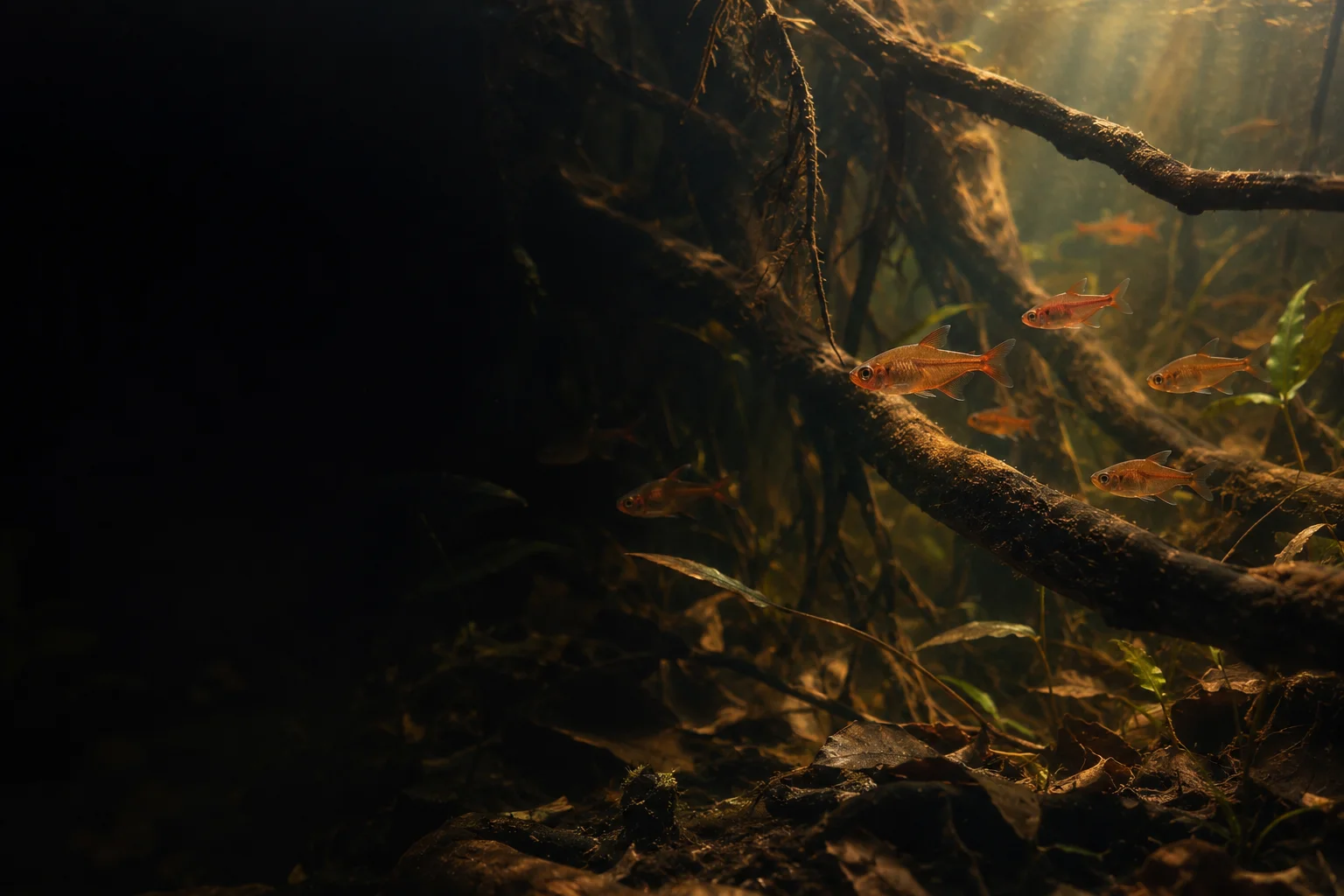
The genus Ancistrus contains dozens of species spread across tropical South America, many of them in the Amazon basin. They live in streams and rivers with moderate current, clear to tea-colored water and plenty of submerged wood, rocks and leaf litter, grazing on the biofilm that covers every surface.
The fish in stores are captive-bred, and their exact species is often unclear; they are usually sold as Ancistrus cirrhosus or A. dolichopterus. Decades of aquarium breeding have made them very adaptable to a wide range of tap water.
04
Bristlenose pleco size and lifespan
The typical bristlenose pleco size is 4–5 inches (10–13 cm) as an adult, with a few individuals reaching 6 inches (15 cm). Juveniles grow quickly in the first year and are usually sexable by about 3 inches, when males start growing visible bristles.
The bristlenose lifespan is commonly 5–10 years, and well-kept fish can live longer. That makes them one of the longest-lived fish in a typical community tank, so plan for the long term.
05
Tank size and setup
A single bristlenose pleco needs a tank of at least 20 gallons (76 L); see our best 20-gallon aquarium guide if you are shopping. For a pair, or more than one male, choose 30 gallons or more and give each male his own cave, since males defend caves from each other.
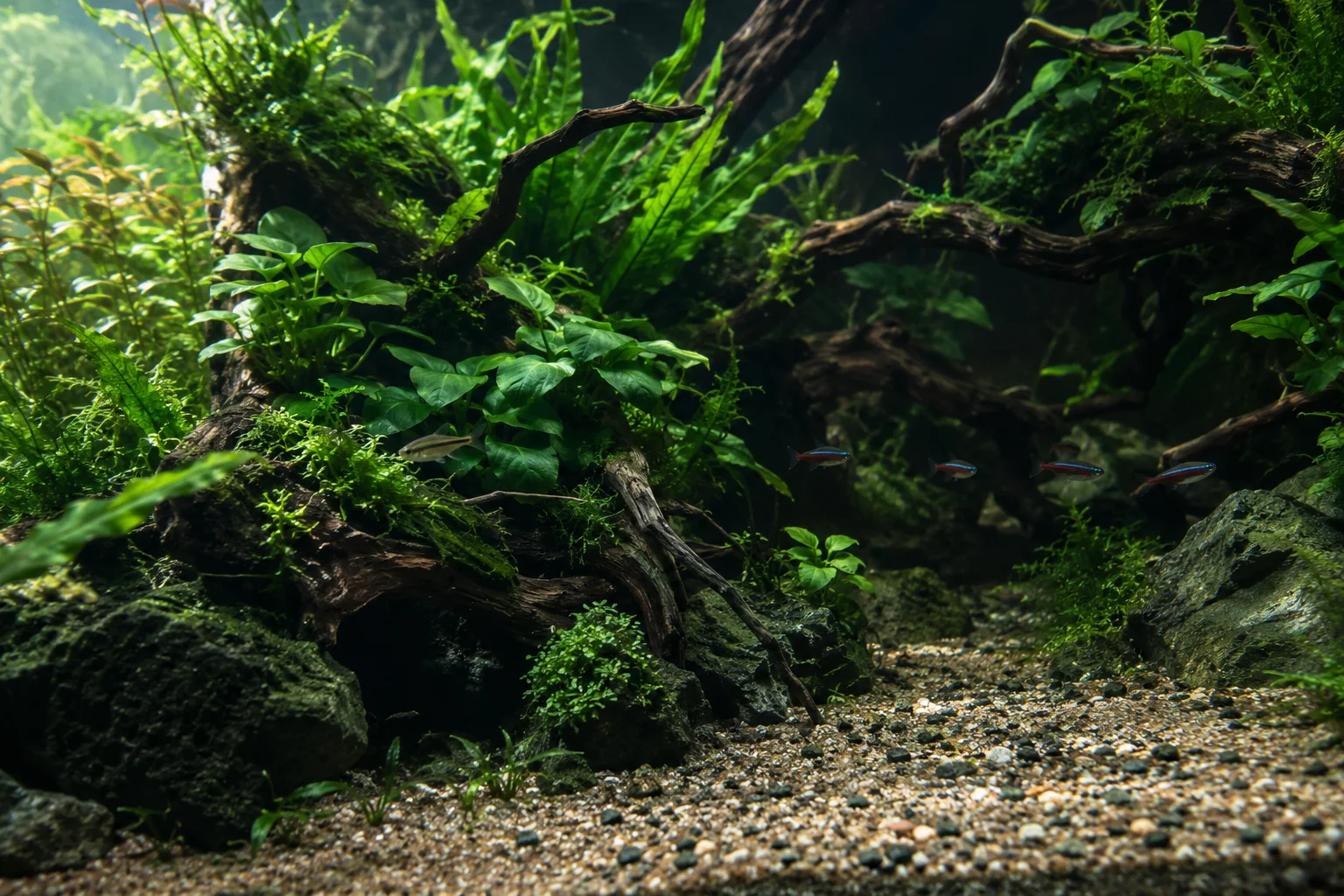
Driftwood is important. Bristlenose plecos rasp it constantly, and the wood carries biofilm that forms part of their natural diet. Add caves (clay or slate pleco caves, or coconut shells) and a sand or smooth gravel substrate so their bellies are not scratched. Plants are generally safe, though delicate leaves may be rasped; hardy species such as anubias and java fern work best.
06
Water parameters
Captive-bred bristlenose plecos tolerate soft to fairly hard water. What they do not tolerate well is poor oxygenation or rising waste. Treat new water with a water conditioner, keep ammonia and nitrite at zero, and follow a regular water change routine of 25–30% a week. Our guide to aquarium water parameters explains the numbers.
| Parameter | Target range |
|---|---|
| Temperature | 72–80 °F (22–27 °C) |
| pH | 6.0–7.5 |
| GH (general hardness) | 2–15 °dH (35–270 ppm) |
| KH (carbonate hardness) | 1–10 °dH (18–180 ppm) |
| Ammonia / nitrite | 0 ppm |
| Nitrate | Below 20–30 ppm |
07
Diet: what to feed a bristlenose pleco
The most common mistake is assuming a pleco will live on algae alone. In a clean tank there is never enough, and underfed plecos develop a sunken belly. Feed sinking algae wafers or spirulina-based tablets several times a week, ideally in the evening when they become active.
Add fresh vegetables two or three times a week: blanched zucchini, cucumber, shelled peas or spinach, weighed down with a fork or a vegetable clip. Remove leftovers after about 12 hours so they do not foul the water. A small amount of protein, such as sinking pellets or frozen bloodworms once a week, is welcome but should not be the main diet.
Bristlenose plecos eat soft green algae and brown diatoms well, so they help a lot with brown algae. They do little against black beard algae or long hair algae.
08
Behavior and tank mates
Bristlenose plecos are peaceful and ignore midwater fish. They are most active at night, so do not worry if you rarely see them during the day. Males can squabble over caves, but serious injuries are rare when each male has his own hiding place.
Good tank mates include tetras such as neon tetras, rasboras, gouramis such as the pearl gourami and dwarf gourami, angelfish, livebearers and corydoras. An otocinclus group complements them well, since otos graze on plant leaves while the bristlenose works the wood and glass.
- Usually compatible: tetras, rasboras, gouramis, angelfish, livebearers, corydoras, otocinclus, shrimp and snails
- Risky: other plecos in small tanks (competition for caves and food), slow, flat-bodied fish like discus (a pleco may occasionally graze on their slime coat)
- Avoid: goldfish (different temperature needs), large predatory cichlids that can swallow or harass them
09
Breeding bristlenose plecos
Bristlenose plecos are among the easiest catfish to breed at home. A mature pair in a tank with suitable caves often spawns without any special effort; a large, cool water change sometimes triggers spawning. The female lays a clutch of orange, sticky eggs inside the male’s cave, typically a few dozen and sometimes over 100.
The male guards and fans the eggs until they hatch, usually after about 4–7 days, and stays with the fry while they absorb their yolk sacs. Once free-swimming, the fry eat the same foods as the adults: crushed algae wafers, blanched vegetables and biofilm on wood. Plan ahead, because a productive pair can spawn every few weeks, and you will need homes for the young.
10
Common diseases
Bristlenose plecos are hardy, and most health problems come from underfeeding, low oxygen or poor water quality. Watch for a sunken belly (not enough food), heavy breathing or hanging at the surface (oxygen or ammonia problems), and white spots (ich).
Many medication labels give special warnings for catfish and other sensitive species, so read the instructions carefully before treating a tank with plecos, and consult an aquatic veterinarian for serious or unclear cases.
11
Recommended gear
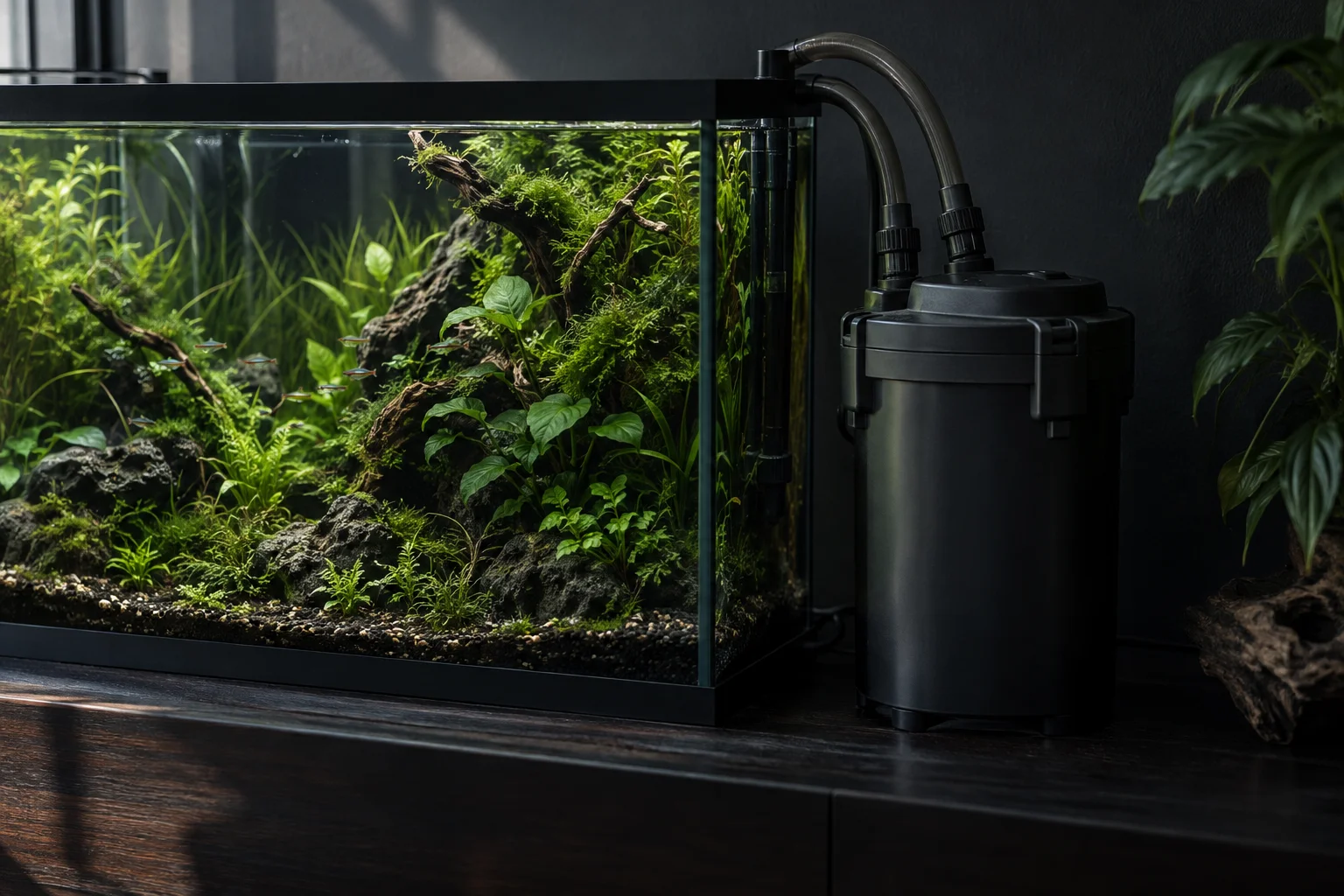
Because plecos produce a lot of waste and like oxygen-rich water, filtration matters more than with most small fish. A hang-on-back or canister filter rated for at least your tank volume works well; compare options in our best aquarium filter guide. A gravel vacuum helps you remove the droppings that collect around caves and wood.
Add a reliable heater, a piece of real aquarium driftwood and at least one cave per pleco. If your tank has a recurring algae issue, a bristlenose works best alongside good light control and, if needed, the best snails for algae.
Frequently asked questions
Frequently asked questions
How big do bristlenose plecos get?
Most bristlenose plecos reach 4–5 inches (10–13 cm) as adults, and a few grow to about 6 inches (15 cm). That is far smaller than the common pleco, which can exceed 12 inches, so a bristlenose fits tanks from 20 gallons up.
What is the bristlenose pleco lifespan?
With good care, bristlenose plecos usually live 5–10 years, and some live longer. Stable water, enough oxygen, a vegetable-based diet and driftwood in the tank all help them reach the upper end of that range.
Will a bristlenose pleco clean my tank?
It eats soft green algae, brown diatoms and biofilm, so it helps keep glass and wood clean. It does not eat fish waste, uneaten food or most stubborn algae, and it produces waste itself. You still need regular water changes and gravel vacuuming.
Do bristlenose plecos need driftwood?
Driftwood is strongly recommended. Bristlenose plecos rasp on it constantly, and the biofilm that grows on wood is part of their natural diet. Wood also provides hiding places that reduce stress during the day.
Can I keep two bristlenose plecos together?
Yes, in a tank of 30 gallons or more with one cave per fish. A male and female pair usually gets along and will often breed. Two males may squabble over caves, but plenty of hiding places usually prevents real fights.
Sources and references
Written and reviewed by the handsoffmyhobby editorial team according to our editorial policy.