01
Goldfish tank mates: how to choose
Most failed goldfish communities fail for the same three reasons: temperature, mouth size and waste. Goldfish are happiest at 65–75 °F (18–24 °C), cooler than the 76–80 °F (24–27 °C) that most tropical fish need. A fancy goldfish reaches 6–8 inches (15–20 cm), and a common or comet goldfish can pass 10 inches (25 cm), so any fish under about 2 inches is potential food. And goldfish are heavy eaters with a high bioload, which means fish that need pristine, soft water struggle alongside them.
Before you look for fish that can live with goldfish, make sure the goldfish themselves have room. A common guideline for fancy goldfish is about 20 gallons (75 L) for the first fish and 10 gallons (38 L) for each extra one. Single-tail goldfish are better suited to ponds or tanks of 75 gallons (285 L) and up. Our goldfish care guide covers these numbers in detail.
- Temperature: the tank mate must thrive between 65 and 75 °F (18–24 °C), not just survive
- Size: it should be too large to swallow and too small to bully the goldfish
- Speed: fancy goldfish are slow swimmers and lose every race for food against fast fish
- Temperament: no fin nippers, no fish that latch onto the slime coat
- Water: tolerant of neutral to slightly alkaline water (pH 7.0–8.0) and of the nitrate swings a goldfish tank produces
02
Goldfish compatibility chart
This table covers the cold water tank mates most often suggested online, including species without their own guide on handsoffmyhobby. Verdicts assume a properly sized, cycled tank with strong filtration.
| Tank mate | Verdict | Why |
|---|---|---|
| Fancy goldfish (with fancies) | Good | Same speed, same temperature, same diet; the natural choice |
| Common, comet, shubunkin (with each other) | Good | Fast single-tails match each other, but need a pond or 75+ gallons |
| Nerite snail | Good | Hard shell, eats algae, tolerates 65–80 °F; eggs do not hatch in freshwater |
| Mystery snail | With caution | Too big to eat, but goldfish may nibble its antennae |
| White Cloud Mountain minnow | With caution | Loves cool water, but adult goldfish can swallow a 1.5 in (4 cm) fish |
| Rosy barb | With caution | Hardy at 64–75 °F; may nip slow fancy goldfish, better with single-tails |
| Dojo (weather) loach | With caution | Peaceful coldwater bottom fish up to 6–8 in; banned or restricted in some regions |
| Zebra danio | With caution | Tolerates cool water but outcompetes fancies for food and may be eaten |
| Peppered or bronze corydoras | With caution | Cooler-water tolerant, but fin spines can lodge in a goldfish’s mouth |
| Bristlenose pleco | With caution | Small and peaceful; needs at least 72 °F (22 °C), the top of the goldfish range |
| Fancy goldfish with single-tails | Avoid | Single-tails eat first and fastest; fancies end up underfed and stressed |
| Common pleco | Avoid | Grows to 12–20 in and may rasp the slime coat of slow goldfish at night |
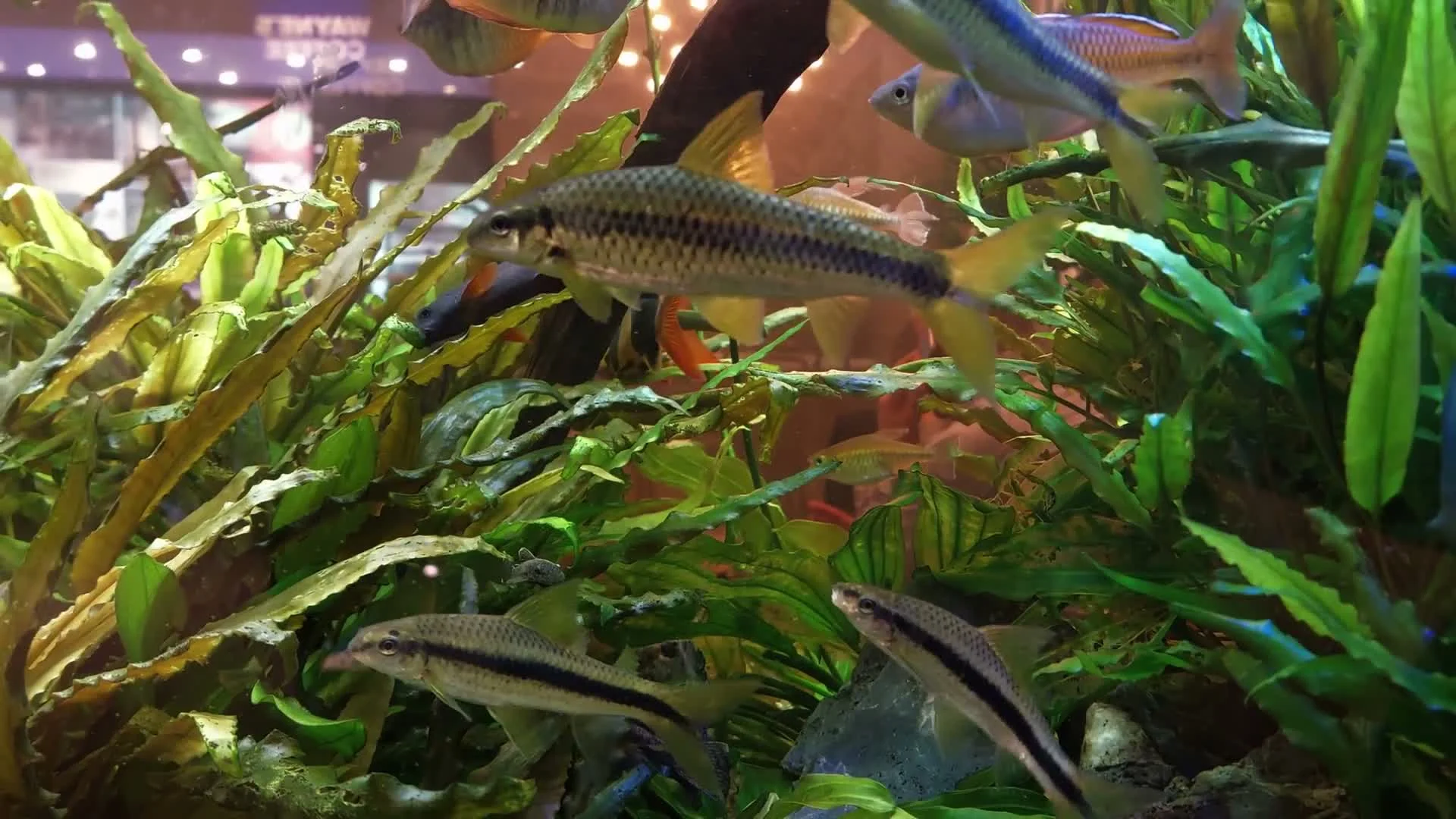
| Chinese algae eater | Avoid | Becomes territorial with age and latches onto other fish |
| Betta, guppies, neon tetras | Avoid | Tropical temperature needs, and small enough to be eaten |
| Tiger barbs | Avoid | Persistent fin nippers; flowing fancy fins are an easy target |
| Cichlids | Avoid | Tropical, territorial and often aggressive |
| Cherry and other dwarf shrimp | Avoid | Goldfish eat them, adults included |
| Koi | Avoid | Pond fish that reach 24 in (60 cm) or more; never an aquarium tank mate |
Goldfish care guide: tank size, water, food and lifespan
Start here: full care sheet with tank size, filtration, water parameters and the difference between fancy and single-tail goldfish.
Shrimp & snailsNerite snail care guide: algae eating, eggs, lifespan and tank setup
The safest invertebrate for a goldfish tank. Its hard shell resists nibbling and it grazes algae without breeding out of control in freshwater.
Shrimp & snailsMystery snail care guide: tank size, water, food and eggs
Large enough not to be eaten and happy in cooler water, but goldfish may pick at its antennae. Best with calm fancy goldfish.
Fish speciesCorydoras catfish care guide: tank, water, diet and popular species
Peppered and bronze corydoras tolerate cooler water, yet their spines and small size make them a with-caution choice only.
Fish speciesBristlenose pleco care guide: size, tank, diet, lifespan and breeding
A small pleco that stays around 4–5 in (10–13 cm). It needs the warm end of the goldfish range, so it suits fancy goldfish tanks kept near 72 °F (22 °C).
03
The best tank mates for goldfish, in detail
Other goldfish. The best companion for a goldfish is another goldfish of the same build. Orandas, ryukins, fantails, ranchus and black moors move at a similar pace and can share food fairly. Bubble-eye and celestial eye goldfish have delicate eyes or sacs, so keep them only with other slow, poor-sighted fancies and remove sharp decor. Comets, commons and shubunkins belong together, ideally in a pond.
Nerite snails. They handle cool water, clean algae from glass and decor, and their shells are too hard for goldfish to crush. Expect small white eggs on hard surfaces; they will not hatch in freshwater, so the population stays stable. Goldfish can occasionally flip a snail, so check that none is stuck upside down.
Mystery snails and dojo loaches. Both are good choices for experienced keepers with large tanks. Mystery snails are fine as long as your goldfish ignore them. Dojo loaches are calm, coldwater bottom dwellers that like soft sand, but they jump, need a tight lid, and are prohibited in some US states and other countries because of their invasive potential, so check local rules before buying.
Feed sinking foods near the bottom for loaches or corydoras after the goldfish have eaten. Goldfish are relentless foragers and will empty a tank of food in seconds. See our article on what goldfish eat for a balanced diet.
04
Sample goldfish communities by tank size
These stocking examples assume fancy goldfish, a filter rated for at least twice the tank volume and weekly water changes of 25–50%. Goldfish produce more waste than most fish of their size, so a strong aquarium filter and a gravel vacuum are the two most important tools you can buy.
- 40 gallons (150 L): 2 fancy goldfish (for example 2 orandas or 2 ryukins) and 3 nerite snails
- 55 gallons (210 L): 3 fancy goldfish of similar size, 2 mystery snails and 3–4 nerite snails
- 75 gallons (285 L): 4 fancy goldfish, 3 dojo loaches (where legal) on a sand bottom, and 4 nerite snails
- Pond: comets, commons and shubunkins together, with no fancy goldfish and no tropical species
05
Fish that cannot live with goldfish
The most common mistake is adding tropical community fish because they look peaceful in the store. Bettas, guppies, mollies, platies, neon tetras and most gouramis need 76 °F (24 °C) or more. Keep them at goldfish temperatures and their immune systems weaken; raise the heat for them and goldfish age faster and become more prone to disease. Small tropical fish also end up as snacks once the goldfish grow.
Plecos and Chinese algae eaters are another trap. They are sold as algae cleaners, but the common pleco grows huge and both species can attach to slow goldfish and rasp at their protective slime coat, leaving wounds that invite infection. If you want algae control, nerite snails, good lighting habits and regular water changes do the job better.
06
How to introduce new tank mates safely
Goldfish are robust, but they carry and catch diseases like any fish. Quarantine every newcomer for 3–4 weeks in a separate tank, watching for white spots, clamped fins or rubbing. Ich in fish is the most frequent problem after a new arrival. Then acclimate the fish slowly and add it with the lights off.
After any addition, test ammonia and nitrite for a week, because extra bioload can briefly overwhelm the filter. Treat every refill with a water conditioner, and watch fancy goldfish for floating or sinking after meals, which can point to swim bladder disease triggered by competition and gulping food at the surface.
Frequently asked questions
Frequently asked questions
What fish can live with goldfish?
Other goldfish of the same type are the best tank mates: fancy goldfish with fancies, and single-tails like comets with other single-tails. Nerite snails are also safe. In large tanks kept at 65–75 °F, White Cloud Mountain minnows, rosy barbs, dojo loaches and mystery snails can work with caution. Tropical fish, shrimp and plecos are poor choices.
Can goldfish live with tropical fish?
Generally no. Goldfish do best at 65–75 °F (18–24 °C), while most tropical fish need 76 °F (24 °C) or warmer, so one group is always outside its ideal range. Small tropical fish such as guppies or neon tetras also risk being eaten as the goldfish grow. A few hardy species overlap at the margins, but a dedicated coldwater tank is the healthier option.
Can a betta live with goldfish?
No. Bettas are tropical and need 76–82 °F (24–28 °C), which is too warm for goldfish over the long term. Goldfish are also messy and much larger, and they can outcompete or injure a betta, while a betta may nip at the flowing fins of fancy goldfish. Keep them in separate tanks.
Can fancy goldfish live with comet goldfish?
It is not recommended. Comets, commons and shubunkins are fast, streamlined swimmers that reach the food first and grow larger. Fancy goldfish, with their round bodies and long fins, end up underfed and stressed. Keep fancies with other fancies in an aquarium, and single-tails together in a pond or a very large tank.
Are snails good cold water tank mates for goldfish?
Some are. Nerite snails are the safest choice: they tolerate cooler water, eat algae and have shells goldfish cannot crack. Mystery snails also work if your goldfish leave them alone. Avoid small pest snails as a cleanup crew, since goldfish eat them, and never add snails without quarantine.
Sources and references
Written and reviewed by the handsoffmyhobby editorial team according to our editorial policy.