01
What makes a fish good for beginners
Every new tank goes through a learning phase: an overfed day, a missed water change, a heater that drifts by a couple of degrees. Easy fish to keep are the ones that ride out those small swings without getting sick. That is the main criterion behind this list, not price or popularity.
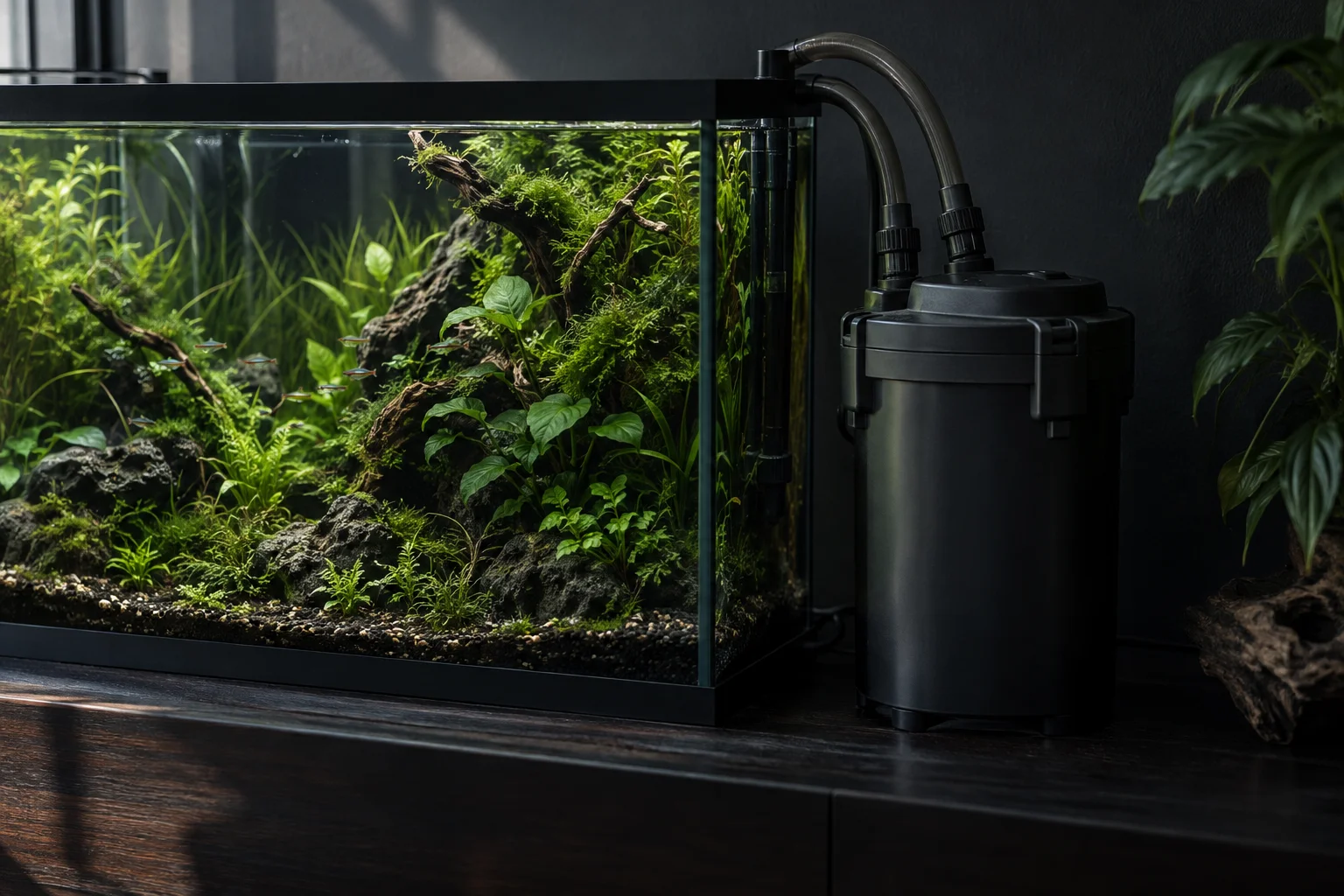
Before any fish goes in, the tank has to be cycled, which takes about 4 to 8 weeks without fish. Our guide on how to cycle a fish tank explains the process, and the beginner aquarium guide covers the equipment. Treat tap water with a water conditioner at every water change to neutralize chlorine and chloramine.
- Hardy: tolerates a broad pH and temperature range and minor water-quality lapses
- Small adult size: under 5 in (13 cm), so a 10 to 30 gallon tank is enough
- Peaceful: no fin-nipping, no territorial fights in a normal community
- Easy diet: accepts quality flakes, pellets or sinking wafers from day one
- Widely captive-bred: healthier, already used to aquarium conditions
02
Best aquarium fish for beginners compared
The table compares all 11 species discussed here, including platies, zebra danios, white cloud minnows and cherry barbs, which do not have their own guide yet. Temperatures are the comfortable range, not the survival limits. Minimum tank sizes assume a proper group where the species needs one.
| Species | Adult size | Minimum tank | Temperature | pH | Keep as |
|---|---|---|---|---|---|
| Platy (Xiphophorus maculatus) | 2–2.4 in (5–6 cm) | 10 gal (38 L) | 70–80 °F (21–27 °C) | 7.0–8.2 | Group of 3+, more females than males |
| Guppy (Poecilia reticulata) | 1.2–2.4 in (3–6 cm) | 10 gal (38 L) | 72–82 °F (22–28 °C) | 7.0–8.0 | Group of 3+ (males only is easiest) |
| Zebra danio (Danio rerio) | About 2 in (5 cm) | 20 gal long (75 L) | 65–77 °F (18–25 °C) | 6.5–8.0 | Group of 6+ |
| White cloud mountain minnow (Tanichthys albonubes) | 1.2–1.6 in (3–4 cm) | 10 gal (38 L) | 60–72 °F (16–22 °C) | 6.5–8.0 | Group of 6+, no heater needed indoors |
| Harlequin rasbora (Trigonostigma heteromorpha) | 1.6–2 in (4–5 cm) | 10 gal (38 L) | 72–81 °F (22–27 °C) | 6.0–7.5 | Group of 8+ |
| Ember tetra (Hyphessobrycon amandae) | About 0.8 in (2 cm) | 10 gal (38 L) | 73–84 °F (23–29 °C) | 5.5–7.5 | Group of 8+ |
| Cherry barb (Puntius titteya) | About 2 in (5 cm) | 20 gal (75 L) | 73–81 °F (23–27 °C) | 6.0–7.5 | Group of 6+ |
| Corydoras (bronze, peppered) | 2–2.8 in (5–7 cm) | 20 gal (75 L) | 72–78 °F (22–26 °C) | 6.5–7.8 | Group of 6+ |
| Bristlenose pleco (Ancistrus sp.) | 4–5 in (10–13 cm) | 20 gal (75 L) | 73–81 °F (23–27 °C) | 6.5–7.5 | Single or pair |
| Betta (Betta splendens) | 2.4–2.8 in (6–7 cm) | 5 gal (19 L) | 76–82 °F (24–28 °C) | 6.5–7.5 | One male per tank |
| Pearl gourami (Trichopodus leerii) | 4–4.7 in (10–12 cm) | 30 gal (115 L) | 77–82 °F (25–28 °C) | 6.0–7.5 | 1 male with 2 females, or a pair |
Match your fish to your tap water instead of chasing a different pH with chemicals. Hard, alkaline water suits platies and guppies; soft water suits embers, harlequins and pearl gouramis. Test pH, GH and KH with a liquid test kit before you shop.
Guppy care guide: tank, water, tank mates and breeding
Colorful, active and easy to feed. Keep males only if you do not want a steady stream of fry, and give them medium to hard water.
Fish speciesBetta fish care guide: tank size, water, diet and tank mates
A great single fish for a heated 5 to 10 gallon tank. One male per tank, and choose tank mates carefully.
Fish speciesCorydoras catfish care guide: tank, water, diet and popular species
Peaceful bottom-dwellers that clean up leftover food. Keep a group of 6 or more on sand or smooth gravel.
Fish speciesBristlenose pleco care guide: size, tank, diet, lifespan and breeding
The beginner-friendly pleco: stays around 4–5 in (10–13 cm), grazes algae and needs driftwood and sinking food.
Fish speciesHarlequin rasbora care guide: tank size, water, diet and tank mates
Calm, shimmering schooling fish that suit almost any peaceful community of 10 gallons and up.
Fish speciesEmber tetra care guide: tank, water, school and tank mates
A tiny, bright orange tetra that is hardier than the neon. Ideal for planted 10-gallon tanks in groups of 8 or more.
Fish speciesPearl gourami care guide: tank size, water, tank mates and breeding
A gentle centerpiece for a 30-gallon community, tougher and more peaceful than the dwarf gourami.
03
Hardy aquarium fish by role in the tank
A balanced community uses different levels of the tank. Livebearers such as the guppy and the platy cruise the upper and middle water and are always visible. Schooling fish like the harlequin rasbora and the ember tetra give the tank movement in the middle layer. On the bottom, a group of corydoras and a single bristlenose pleco handle leftovers and algae, though both still need their own sinking food.
Once the tank has been stable for a couple of months, a calm centerpiece like the pearl gourami adds a focal point. Fish like the neon tetra are popular first purchases, but they do noticeably better in a mature tank than in one that cycled last week, so we list them as a second-wave fish rather than a starter.
04
Sample beginner communities
These examples assume a cycled tank, a filter rated for the volume, a heater (except for the white cloud option) and a weekly 25% water change. Add fish in two or three batches, a week or two apart, so the bacteria can keep up. For more combinations, see our stocking guides for 10 gallon and 20 gallon tanks.
- 10 gallons (38 L), heated: 1 male betta + 1 nerite snail, or 5 male guppies + 2 nerite snails
- 10 gallons (38 L), unheated room-temperature tank: 8 white cloud mountain minnows
- 20 gallons (75 L): 8 harlequin rasboras + 6 bronze corydoras + 1 bristlenose pleco
- 20 gallons (75 L), hard water: 1 male and 3 female platies + 6 peppered corydoras + 1 bristlenose pleco
- 30 gallons (115 L): 1 male and 2 female pearl gouramis + 10 harlequin rasboras + 6 corydoras + 1 bristlenose pleco
05
Fish beginners should avoid
Some of the most common fish in stores are poor first choices because they grow too large, need very stable water or bully tank mates. A goldfish is hardy but produces a lot of waste and needs far more space than most starter kits offer.
- Common pleco: often sold at 2 inches, grows to 12–18 in (30–45 cm)
- Oscar and other large cichlids: need 75 gallons or more and heavy filtration
- Discus: needs very warm, soft and stable water and frequent large water changes
- Iridescent shark and red-tail shark: too large or too aggressive for community tanks
- Tiger barbs: hardy but nip the fins of slow, long-finned fish like bettas and guppies
- Otocinclus: a gentle algae eater, but it often starves in a new tank with little biofilm
06
Equipment that makes beginner fish easier
Most early losses come from unstable water, not from the fish themselves. A filter sized for your tank (see our aquarium filter guide), an adjustable aquarium heater and a test kit remove most of the guesswork. When new fish arrive, take 20 to 30 minutes to acclimate them to your water instead of dumping the bag.
Do not add a full tank of fish on the first day, even after cycling. A sudden jump in waste can overwhelm the bacteria and cause an ammonia spike, the classic new tank syndrome.
Frequently asked questions
Frequently asked questions
What is the easiest fish to keep for a beginner?
Platies are probably the easiest: they eat anything, tolerate a wide pH range, stay small and are peaceful. Guppies, zebra danios and white cloud minnows are close behind. For a single fish in a small tank, a betta in a heated, filtered 5 to 10 gallon tank is also very manageable.
What are the best aquarium fish for beginners in a 10 gallon tank?
In 10 gallons, choose small fish: a single betta, a few male guppies, a group of 8 ember tetras or harlequin rasboras, or 8 white cloud minnows in an unheated tank. Avoid bristlenose plecos, gouramis and zebra danios here; they need 20 gallons or more to be comfortable.
How many fish should a beginner start with?
Start with 3 to 6 small fish after the tank has cycled, then wait one to two weeks and test ammonia and nitrite before adding more. Building up stock in batches gives the beneficial bacteria time to grow with the waste load.
Are neon tetras good beginner fish?
Neon tetras are small and peaceful, but many store fish are weak and they are sensitive to the swings of a brand-new tank. They are a better second step: add a group of 8 or more once the tank has run stably for two to three months, in soft to neutral water.
Do beginner fish need a heater?
Most tropical beginner fish need 72–80 °F (22–27 °C), which means a heater in nearly every home. White cloud mountain minnows and, in a warm room, zebra danios are exceptions that do well at room temperature.
Sources and references
Written and reviewed by the handsoffmyhobby editorial team according to our editorial policy.