01
How to choose fish for a 5 gallon tank
Five gallons holds about 19 liters, and once you add substrate, plants and decor the real water volume is closer to 4 gallons. That little water dilutes waste slowly and changes temperature quickly. The right small tank stocking is therefore not about counting inches of fish, but about choosing species that stay tiny, swim slowly and accept a small territory.
Before buying anything, make sure the tank is fully cycled, with ammonia and nitrite at zero. A small tank does not cycle faster than a large one, and it crashes faster when overfed. If you have not bought the tank yet, a 10 gallon is noticeably easier to keep stable; see our list of the best fish for a 10 gallon tank to compare what the extra volume allows.
- Adult size under about 1.5 in (4 cm), or a single calm fish like a betta
- Low activity: no fast schooling fish that need length to swim
- One species of fish per tank, plus invertebrates if compatible
- Water needs that match your tap water, so you do not fight pH every week
02
5 gallon tank fish compared
This table includes every option discussed on this page. Chili rasboras, Endler’s livebearers, sparkling gouramis and scarlet badis do not have their own guide yet. Counts are maximums for one species alone in a planted 5 gallon tank.
| Species | Adult size | Temperature | pH | How many in 5 gal | Difficulty |
|---|---|---|---|---|---|
| Betta (Betta splendens) | 2.4–2.8 in (6–7 cm) | 76–82 °F (24–28 °C) | 6.5–7.5 | 1 | Easy |
| Chili rasbora (Boraras brigittae) | 0.6–0.8 in (1.5–2 cm) | 75–82 °F (24–28 °C) | 5.0–7.0 | 6 to 8 | Moderate |
| Endler’s livebearer (Poecilia wingei), males | About 1 in (2.5 cm) | 75–82 °F (24–28 °C) | 7.0–8.0 | 3 to 4 males | Easy |
| Sparkling gourami (Trichopsis pumila) | 1.4–1.6 in (3.5–4 cm) | 76–82 °F (24–28 °C) | 6.0–7.5 | 2 | Moderate |
| Scarlet badis (Dario dario) | About 0.8 in (2 cm) | 73–80 °F (23–27 °C) | 6.5–7.5 | 1 male + 1 or 2 females | Advanced (live or frozen food) |
| Cherry shrimp (Neocaridina davidi) | About 1.2 in (3 cm) | 68–78 °F (20–26 °C) | 6.5–8.0 | Colony of 10+ | Easy |
| Amano shrimp (Caridina multidentata) | 1.6–2 in (4–5 cm) | 68–80 °F (20–27 °C) | 6.5–7.5 | 2 to 3 | Easy |
| Nerite snail (Neritina spp.) | About 1 in (2.5 cm) | 72–80 °F (22–27 °C) | 7.0–8.0 | 1 to 2 | Easy |
Betta fish care guide: tank size, water, diet and tank mates
The classic 5 gallon fish: one male betta, gentle filter, steady heat. The easiest way to get a lot of color from a small tank.
Shrimp & snailsCherry shrimp care guide: tank, water, food and breeding
The best partner for chili rasboras or Endlers. A colony breeds happily in 5 gallons and cleans up leftover food and biofilm.
Shrimp & snailsNerite snail care guide: algae eating, eggs, lifespan and tank setup
One or two graze algae from glass and leaves without overrunning the tank, because their eggs do not hatch in fresh water.
Shrimp & snailsAmano shrimp care guide: size, diet, tank mates and algae control
A strong algae eater. Two or three are enough in 5 gallons and they usually live peacefully with a calm betta.
Fish speciesNano fish: 10 tiny freshwater fish for small tanks
Our wider guide to tiny freshwater fish, if you want to compare more species before choosing.
03
Best single fish: the betta
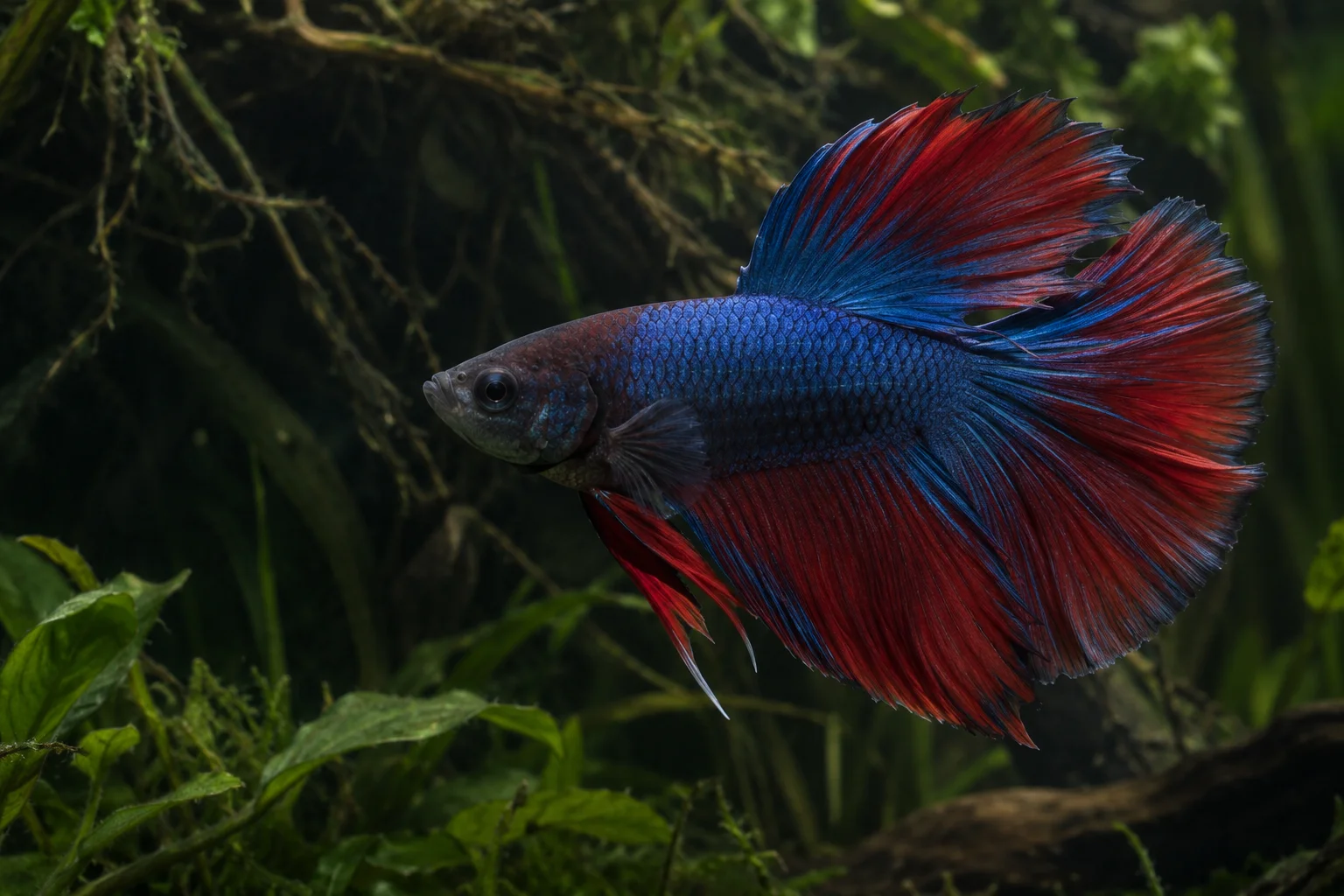
A male betta is the most popular choice for 5 gallons, and for good reason. It is colorful, interactive, breathes air at the surface and is happy without a group. Give it a heater set around 78 °F (26 °C), a lid, floating plants or a leaf hammock for resting, and a gentle filter so its long fins are not pushed around. A small sponge filter is ideal.
If you want company for a betta in 5 gallons, stick to invertebrates: a nerite snail, or two or three Amano shrimp in a planted tank. Fish tank mates are possible only in larger tanks; our betta tank mates guide explains which ones work and from what size.
04
Best tiny schools and pairs
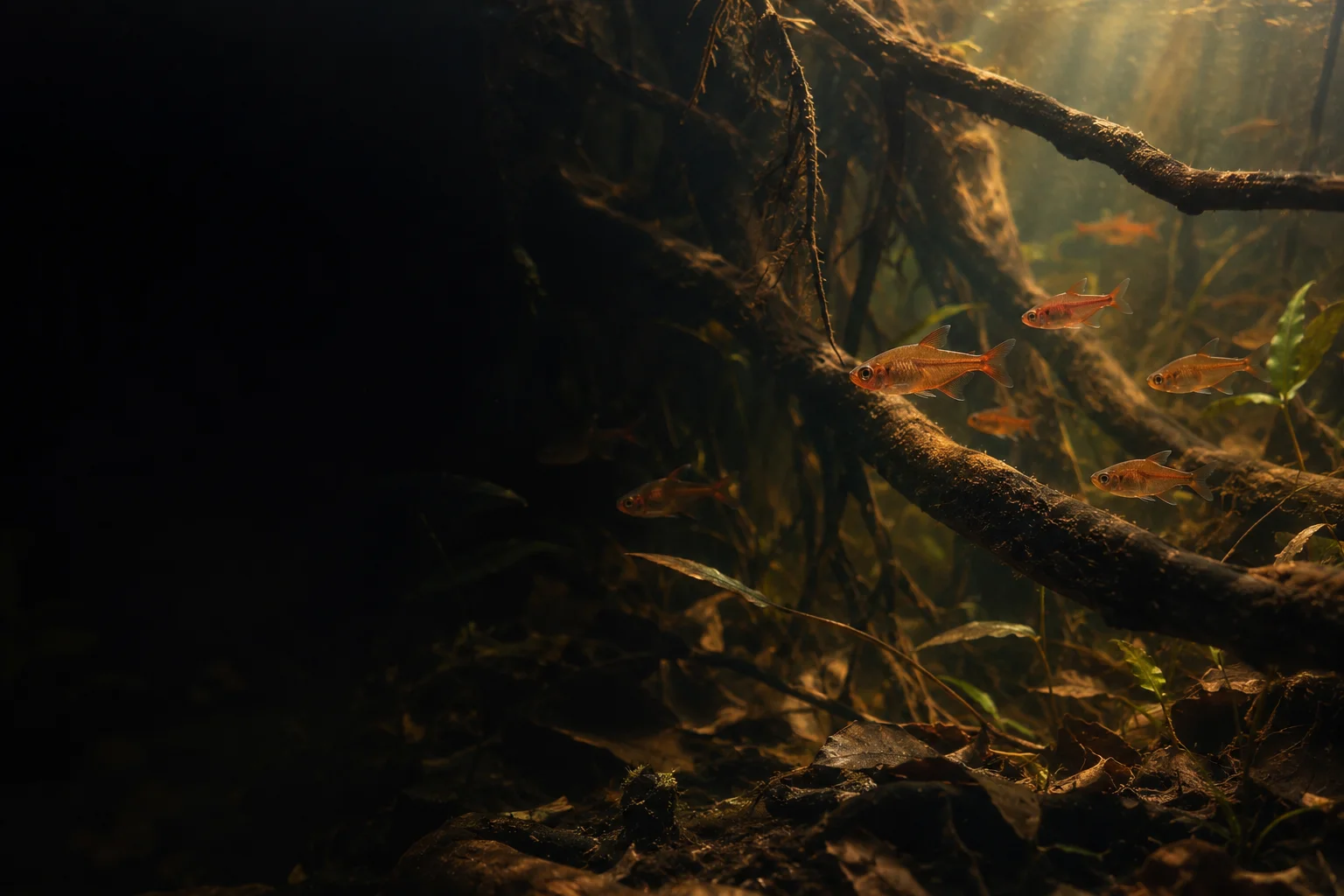
If you prefer movement over one showpiece, choose a single small species. Chili rasboras are the classic nano school: bright red, under an inch long, and calm in a densely planted tank with soft to neutral water. Feed very small foods such as crushed flakes, micro-pellets or baby brine shrimp. Male Endler’s livebearers suit harder, alkaline tap water; keeping males only avoids the population explosion that females would cause.
A pair of sparkling gouramis is a quieter option: they make faint croaking sounds and use the upper layer of the tank. Scarlet badis are stunning but usually refuse flakes, so plan on live or frozen food. All of these fish are covered in more depth in our guide to nano fish.
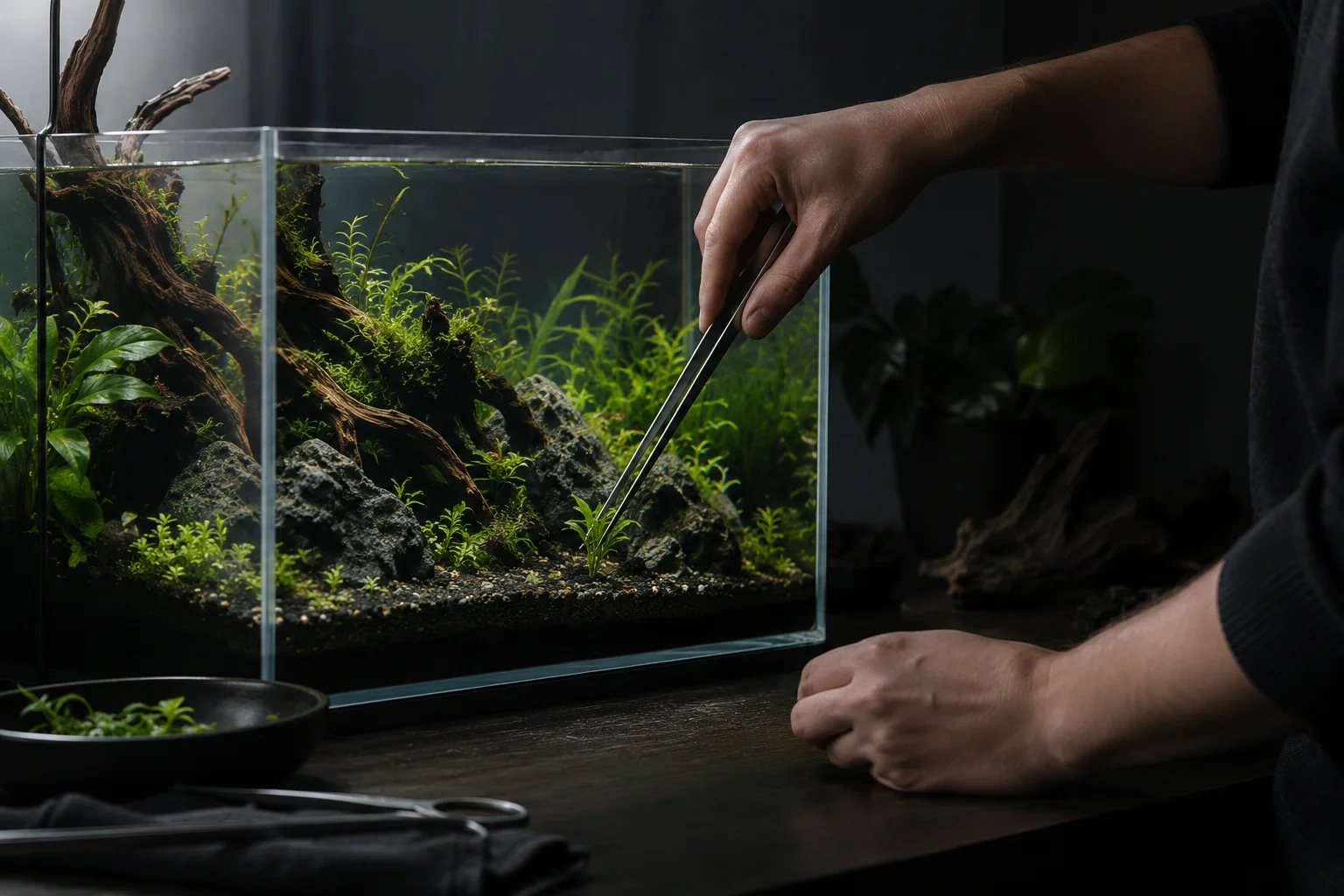
Plants matter more in 5 gallons than in any other tank. Easy stem plants and floaters absorb nitrate between water changes and give small fish the cover that makes them show their colors.
05
5 gallon stocking ideas
These sample communities assume a cycled, heated, planted tank with a gentle filter and a 25% weekly water change. Add the fish first, then shrimp and snails a few weeks later once the tank is stable.
- Betta tank: 1 male betta + 1 nerite snail (+ 2 Amano shrimp if the betta is calm)
- Red nano school: 8 chili rasboras + a cherry shrimp colony
- Hard water tank: 4 male Endler’s livebearers + 1 nerite snail
- Quiet pair: 2 sparkling gouramis + 2 Amano shrimp
- Shrimp only: a cherry shrimp colony + 1 nerite snail, no fish at all
06
Equipment a 5 gallon tank needs
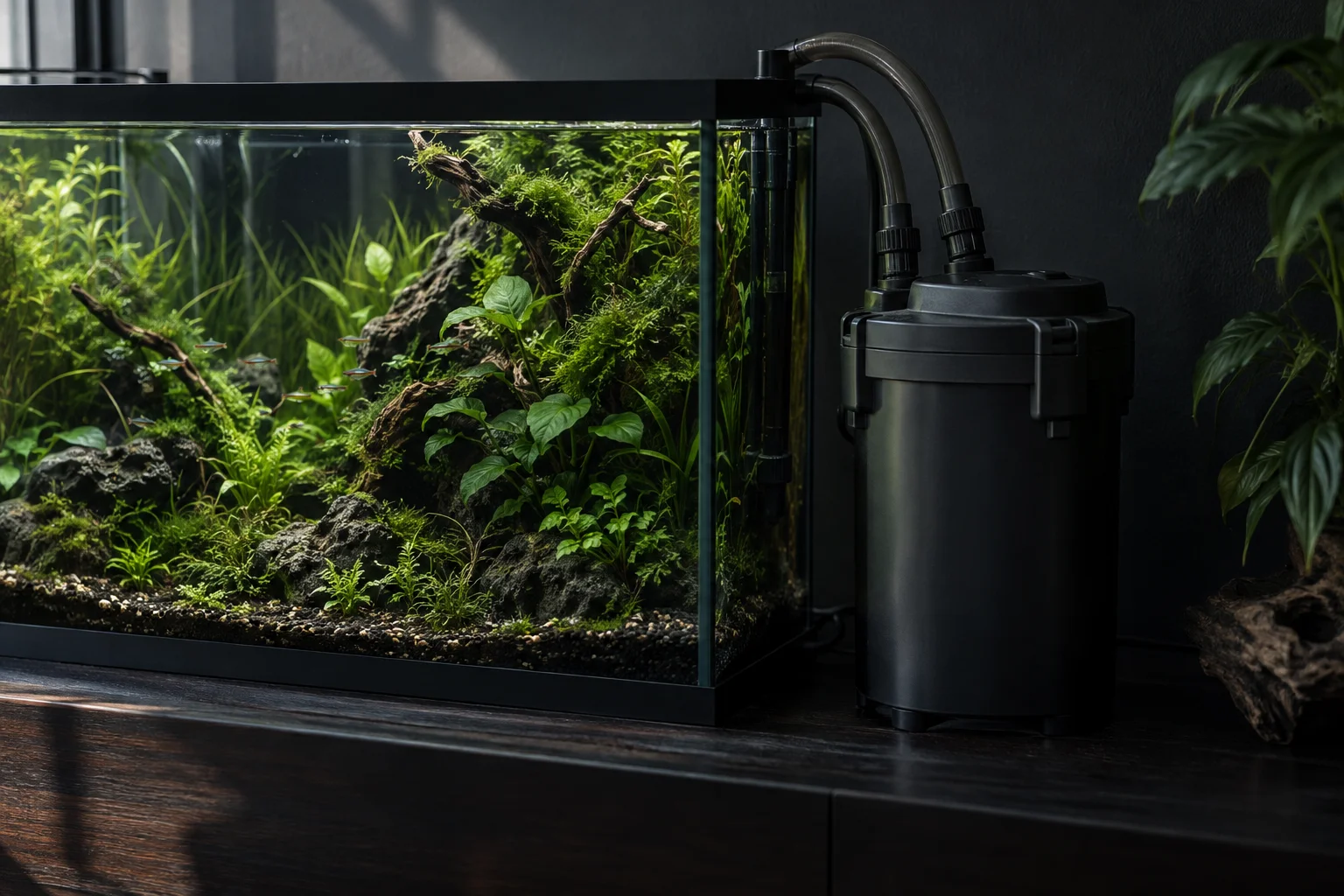
Every fish on this page is tropical, so a heater is not optional. Small tanks lose heat quickly overnight; a 25 W adjustable model is the usual size, and our aquarium heater guide compares reliable options. Pair it with a gentle filter, a lid (bettas and Endlers can jump) and a simple light for plants.
Treat tap water with a conditioner at every water change and keep a liquid test kit at hand. Many 5 gallon kits are sold with weak filters or no heater, which is one reason we suggest looking at the best 10 gallon aquarium kits if you are still choosing.
07
Fish to avoid in a 5 gallon tank
Many fish sold as small are juveniles or active swimmers. These are common mistakes in 5 gallons:
- Goldfish: they grow large and produce far too much waste; see our goldfish guide for proper tank sizes
- Neon tetras, zebra danios and white clouds: small, but they need a long tank and a bigger school
- Guppy groups with females: constant breeding quickly overstocks 5 gallons
- Corydoras, even pygmy cories: they need a group of 6 or more and more floor space
- Dwarf gouramis, plecos and any cichlid: too large or too territorial
- Several bettas, or a betta with fin-nipping fish such as tiger barbs
Frequently asked questions
Frequently asked questions
How many fish can you put in a 5 gallon tank?
One betta, or one small group of a tiny species: 6 to 8 chili rasboras, 3 to 4 male Endler’s livebearers or 2 sparkling gouramis. Do not mix several fish species. You can add invertebrates such as a nerite snail or shrimp, because their waste load is small. The old one inch per gallon rule overestimates what a 5 gallon tank can support.
Can a betta live in a 5 gallon tank?
Yes. Five gallons (19 L) is the widely recommended minimum for one betta, provided the tank is cycled, heated to 76–82 °F (24–28 °C) and gently filtered. A 10 gallon gives more stable water and room for a few tank mates, but a well-kept 5 gallon is a good home for a single betta.
Can I keep guppies in a 5 gallon tank?
It is not ideal. Guppies are active and females give birth every month, so a mixed group overstocks 5 gallons quickly. If you love livebearers, choose 3 to 4 male Endler’s livebearers instead, or move up to a 10 gallon tank for a small male guppy group.
Do fish in a 5 gallon tank need a filter and heater?
Yes. A filter keeps the beneficial bacteria that process ammonia, and a heater is essential because every fish on this list is tropical. Small tanks swing in temperature quickly, so choose a reliable adjustable heater of about 25 W and a gentle sponge or small internal filter.
What is the easiest fish for a 5 gallon tank?
For most beginners, a single male betta. It tolerates a range of water conditions, eats standard pellets, does not need a group and is easy to observe for signs of illness. Male Endler’s livebearers are a close second in hard, alkaline water.
Sources and references
Written and reviewed by the handsoffmyhobby editorial team according to our editorial policy.