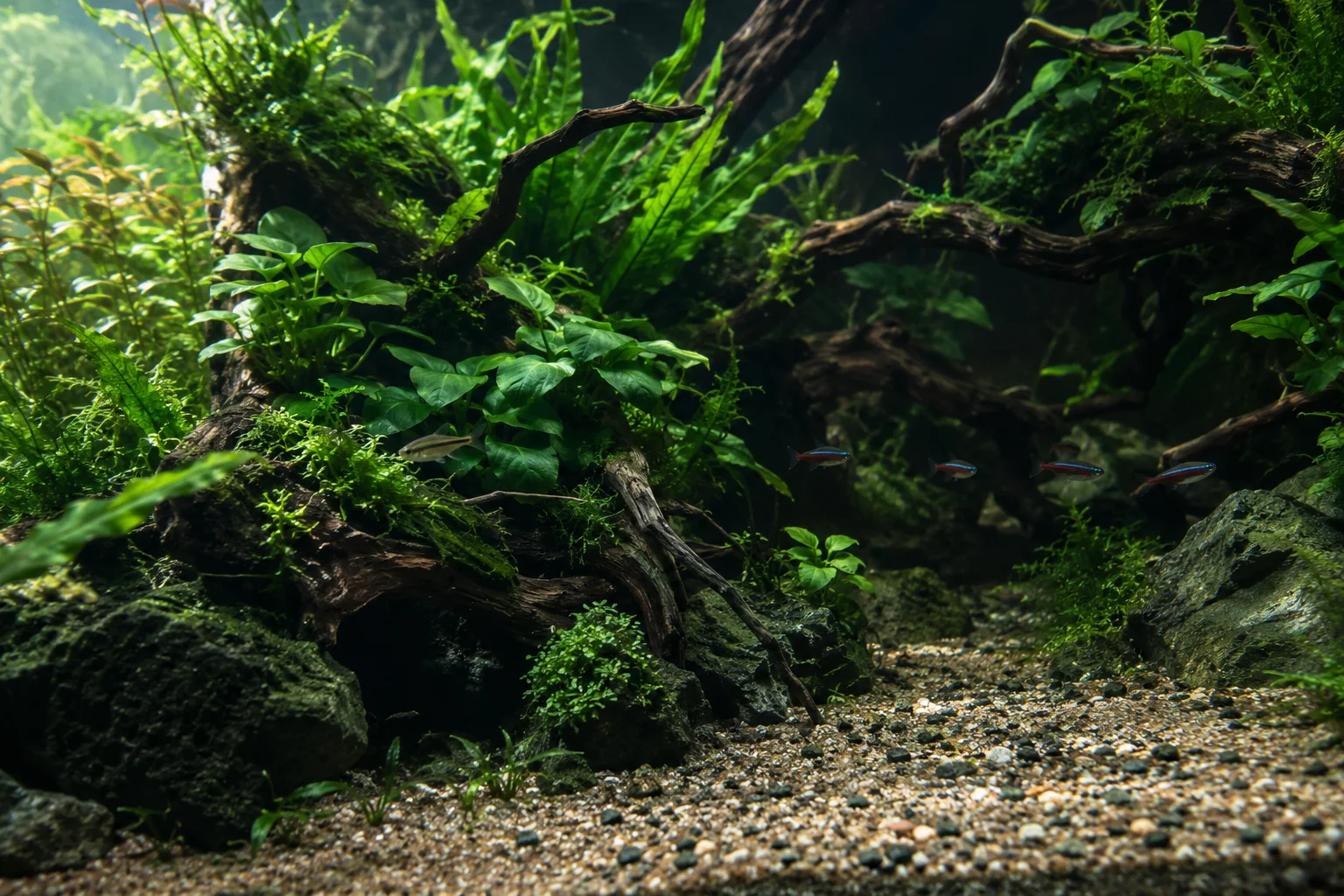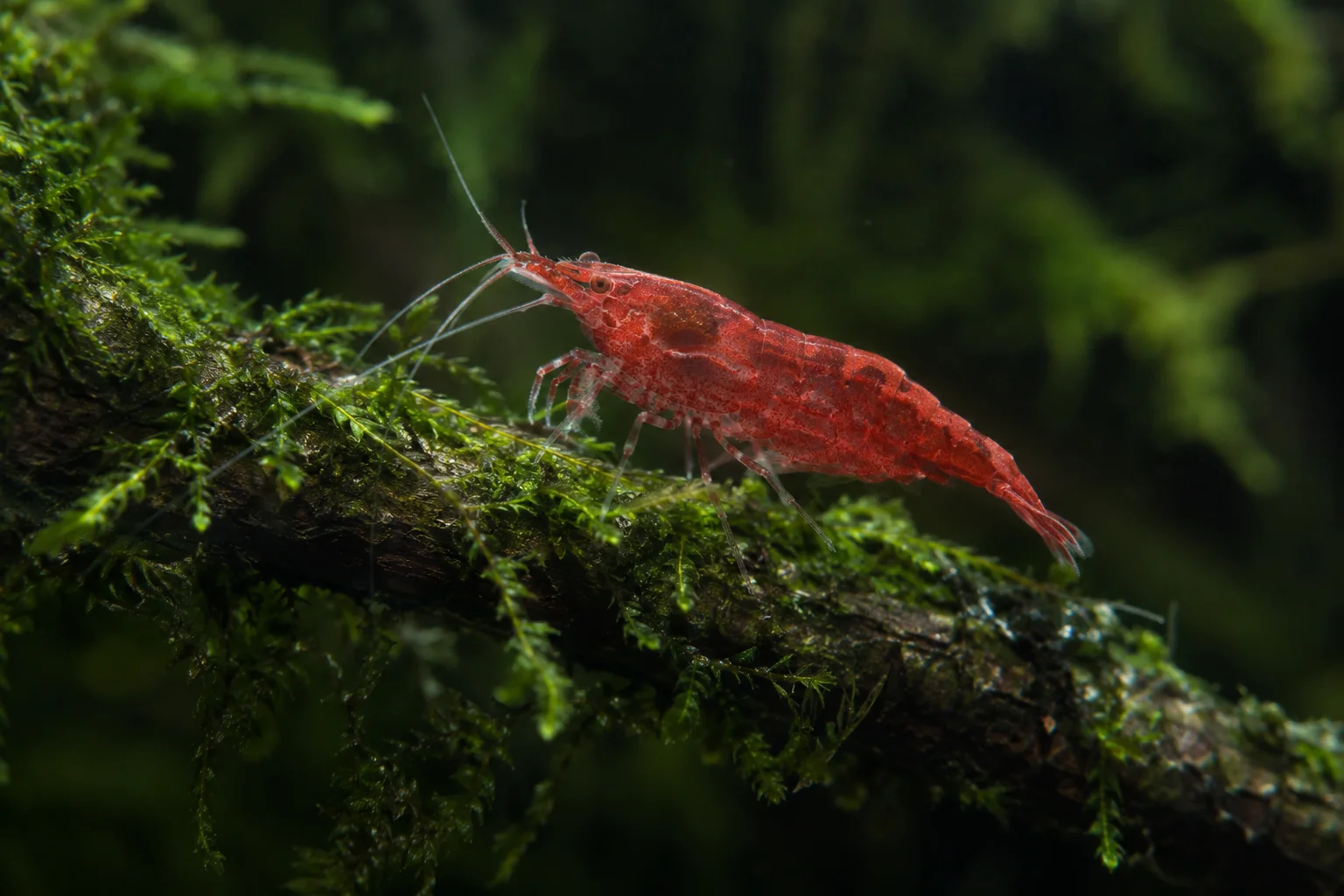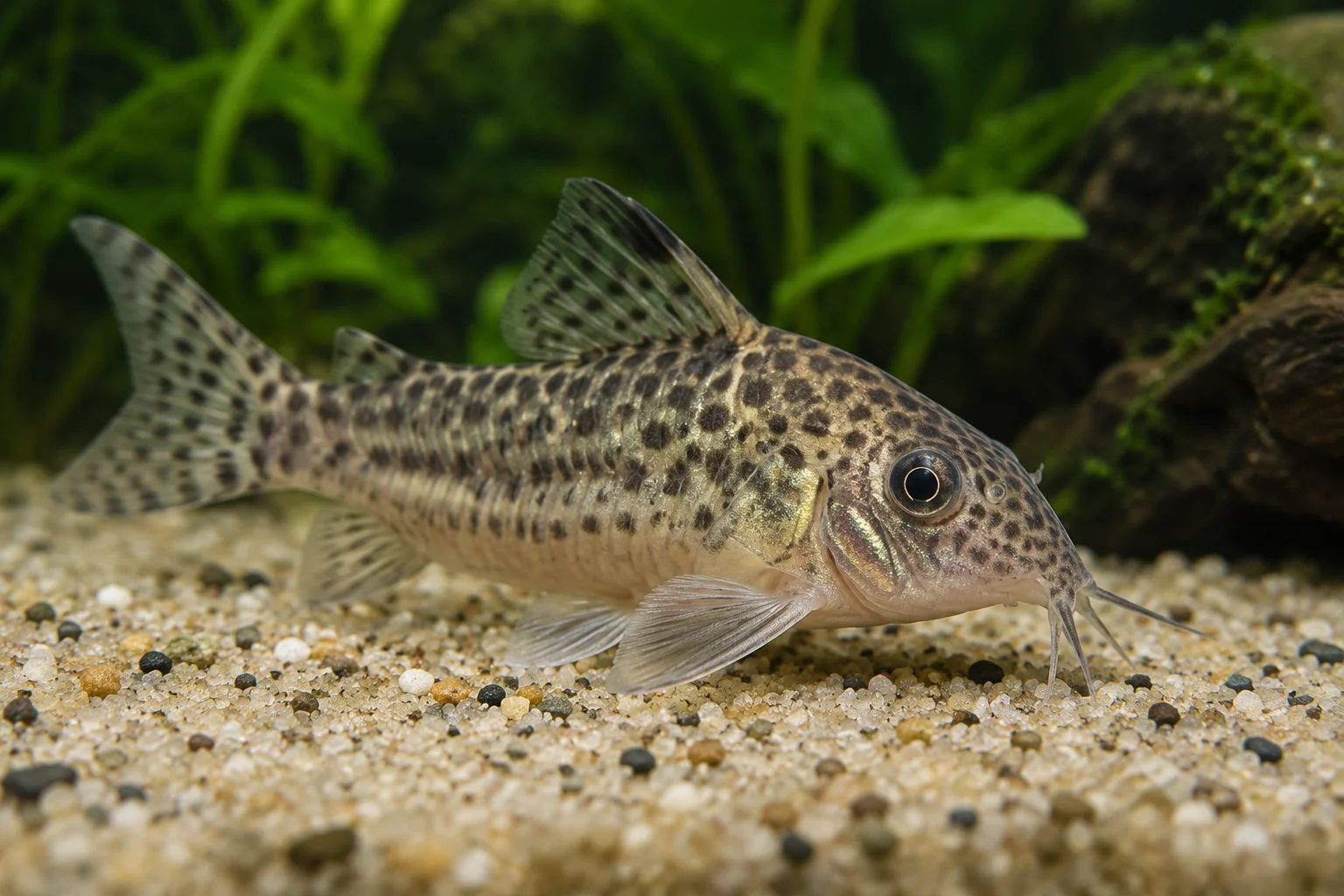
Our picks at a glance
- Best overall for planted tanksADA Aqua Soil Amazonia
The reference aquasoil: rich in nutrients, lowers pH and hardness, and grows carpets and stem plants very well.
- Best for shrimpFluval Stratum
Light volcanic soil that softens water and buffers pH slightly acidic, a popular base for Caridina and Neocaridina tanks.
- Best long-lasting planted gravelCaribSea Eco-Complete Planted
Does not break down or alter pH, so it suits long-term tanks and hard-water fish.
- Best sand for bottom dwellersCaribSea Super Naturals
Smooth, inert sand that is safe for the barbels of corydoras and for sand-sifting fish.
01
How to pick the best aquarium substrate
There are three big families of substrate. Active aquasoils (Amazonia, Stratum, Controsoil) are baked soil granules that feed plants and soften water. Inert planted gravels (Eco-Complete, Flourite) are porous minerals that root well but do not change water chemistry. Plain aquarium gravel and sand are decorative and inert, fine for fish-only tanks and bottom dwellers.
The best aquarium substrate depends on what you want to grow and keep. Demanding carpets such as dwarf hairgrass and Monte Carlo do best in aquasoil. Epiphytes such as java fern and anubias do not need any substrate at all, since they grow on wood and rock. Corydoras and kuhli loaches need smooth sand to forage safely.
Aquasoils change your water: they lower pH and hardness. That is ideal for shrimp and soft-water fish, but not for livebearers or African cichlids that need hard, alkaline water.
02
Comparison table
Aquasoils feed plants and soften water but wear out. Gravels and sand last indefinitely but need root tabs for heavy feeders.
| Substrate | Type | Effect on pH | Nutrients | Price |
|---|---|---|---|---|
| ADA Aqua Soil Amazonia | Aquasoil | Lowers | High | $$$ |
| Fluval Stratum | Aquasoil | Slightly lowers | Moderate | $$ |
| UNS Controsoil | Aquasoil | Lowers | Moderate | $$ |
| CaribSea Eco-Complete | Planted gravel | None | Minerals | $$ |
| Seachem Flourite | Clay gravel | None | Iron-rich clay | $$ |
| CaribSea Super Naturals | Sand | None | None | $ |
ADA (Aqua Design Amano) · Active nutrient aquasoil
ADA Aqua Soil Amazonia
Best for: High-tech planted tanks and aquascapes with carpets
Amazonia is the aquasoil that defined modern aquascaping. It is made from baked natural soil granules, rich in organic nutrients, and actively lowers pH and carbonate hardness, which most plants and many soft-water fish appreciate. The flip side is that fresh Amazonia releases a lot of ammonia for the first weeks, so the tank needs a full cycle with frequent water changes before you add animals. Granules slowly break down over one to several years, after which the tank may need a reset or extra fertilization. It is the benchmark, at a premium price.
Pros
- Excellent plant growth, especially carpets
- Lowers pH and KH toward soft water
- Natural dark color
- Granules hold shape for planting
Cons
- Strong ammonia release at start
- Expensive
- Breaks down over time
- Can cloud water if disturbed
- Type
- Active aquasoil
- Effect on water
- Lowers pH and KH
- Nutrients
- High at start
- Lifespan
- About 1–3 years before it depletes
Fluval · Volcanic plant and shrimp soil
Fluval Stratum
Best for: Shrimp tanks and planted tanks on a moderate budget
Stratum is made from nutrient-rich volcanic soil and is one of the easiest aquasoils to find in US stores. It promotes a neutral to slightly acidic pH, which is ideal for most shrimp and soft-water fish, and its porous granules give bacteria plenty of surface. It releases far less ammonia than Amazonia, which makes setup easier. It is very light, so it floats a little when you first fill the tank, and small granules can be disturbed by digging fish. Expect it to soften over time like any soil.
Pros
- Shrimp-friendly water chemistry
- Low ammonia release
- Widely available
- Porous, good for bacteria
Cons
- Light granules float at first
- Breaks down over time
- Lower nutrient content than Amazonia
- Type
- Volcanic aquasoil
- Effect on water
- Neutral to slightly acidic pH
- Nutrients
- Moderate
- Best for
- Shrimp, plants
Ultum Nature Systems · Active aquasoil
UNS Controsoil
Best for: Aquascapers who want soil benefits with a gentler start
Controsoil from Ultum Nature Systems is a premium aquasoil popular with US aquascapers. It buffers pH into the slightly acidic range and grows plants well, but it is designed to release little ammonia at the start, so cycling is less demanding than with ADA soils. The hard, uniform granules keep their structure well, which helps slopes and terraced layouts hold their shape. It is mostly sold online and through specialist stores, and it remains a soil, so its buffering capacity and nutrients decline over the years.
Pros
- Low initial ammonia release
- Firm, uniform granules
- Good for slopes and aquascapes
- Buffers to soft, slightly acidic water
Cons
- Premium price
- Less widely stocked
- Buffering and nutrients deplete over time
- Type
- Active aquasoil
- Effect on water
- Lowers pH
- Nutrients
- Moderate
- Best for
- Aquascapes, shrimp
CaribSea · Planted gravel substrate
CaribSea Eco-Complete Planted
Best for: Long-term planted tanks and hard-water fish such as livebearers
Eco-Complete is a dark, porous gravel-like substrate made from volcanic material rich in minerals such as iron. Unlike soils, it does not break down and does not alter pH or hardness, so it suits tanks with livebearers or fish that prefer harder water. It ships wet in its bag and CaribSea states it contains live bacteria to help start the tank. It contains fewer usable nutrients than an aquasoil, so heavy root feeders like swords need root tabs. Its rough texture is fine for most fish but less ideal for corydoras.
Pros
- Does not break down
- pH neutral, no buffering
- No ammonia release
- Easy to rinse and reuse
Cons
- Fewer nutrients than aquasoil
- Rough texture for corydoras
- Heavy bags
- Type
- Inert planted gravel
- Effect on water
- None declared
- Nutrients
- Minerals, add root tabs
- Lifespan
- Indefinite
Seachem · Porous clay gravel
Seachem Flourite
Best for: Low-tech planted tanks that should run for many years
Flourite is a stable porous clay gravel that does not soften, break down or change water chemistry. It is available in several colors, with Flourite Black being the most popular for planted tanks. Because it is inert it can stay in the tank indefinitely, and combined with root tabs it supports swords, cryptocorynes and other root feeders well. It is notoriously dusty out of the bag: rinse it thoroughly or expect cloudy water for a day or two. The irregular grains are not suitable for delicate bottom dwellers.
Pros
- Does not degrade
- No effect on pH
- Several colors
- Good root anchoring
Cons
- Very dusty, needs rinsing
- Low nutrient content on its own
- Sharp-ish grains for bottom dwellers
- Type
- Inert clay gravel
- Effect on water
- None
- Nutrients
- Iron-rich clay, add root tabs
- Lifespan
- Indefinite
CaribSea · Natural aquarium sand
CaribSea Super Naturals
Best for: Corydoras, kuhli loaches and natural-looking community tanks
Super Naturals is an inert, smooth aquarium sand sold in several natural shades such as Moonlight, Sunset Gold and Torpedo Beach. Its rounded grains are gentle on the barbels of corydoras and let loaches and other sand sifters dig as they do in the wild. It does not affect water chemistry and does not feed plants, but easy species such as cryptocorynes grow well in it with root tabs. Sand compacts more than gravel, so keep it shallow and stir the surface occasionally during water changes.
Pros
- Smooth grains safe for bottom dwellers
- Natural look
- No effect on pH
- Easy to clean with a gravel vacuum held above
Cons
- No nutrients
- Can compact if very deep
- Fine shades can be stirred up by strong flow
- Type
- Inert sand
- Effect on water
- None
- Nutrients
- None, use root tabs
- Best for
- Bottom dwellers
03
How we chose these substrates
This is an editorial selection, not a lab test. Products were chosen on what the manufacturer declares about composition and effect on water, suitability for common freshwater setups (planted, shrimp, community, bottom dwellers), availability in the US and on Amazon, and how consistently they are recommended in planted tank and shrimp keeping communities. We excluded colored decorative gravels with painted coatings and products with unclear composition.
04
Aquasoil, gravel or sand: buying guide
A common budget approach is a layer of aquasoil only in the planted areas, with sand in the foreground or between rocks, separated by stones so they do not mix. Another is an inert gravel throughout, fed with root tabs and a liquid aquarium fertilizer.
- Plants you want: carpets and stem plants favor aquasoil; root feeders such as Amazon swords grow in any substrate with root tabs; epiphytes need none.
- Animals you keep: shrimp like soft water from aquasoil; bottom dwellers need sand; diggers like goldfish and cichlids uproot soft soils.
- Water you start with: very hard tap water exhausts the buffering of aquasoil faster.
- Maintenance: aquasoil should not be vacuumed deeply; gravel and sand can be cleaned with a gravel vacuum.
- Lifespan: aquasoils deplete after one to several years; inert substrates last as long as the tank.
05
How much substrate you need
Planted tanks need a depth of about 2–3 in (5–8 cm), sloping from shallower at the front to deeper at the back. Fish-only tanks and sand beds are fine at 1–2 in (2.5–5 cm). To estimate volume, multiply length by width by depth: for example, a standard 20 gallon long (30 x 12 in) at 2.5 in deep needs about 900 cubic inches, roughly 15 liters of substrate. Aquasoils are sold by volume in liters, gravels and sands by weight, so check the bag.
| Tank | Footprint | Aquasoil needed |
|---|---|---|
| 10 gallon (38 L) | 20 x 10 in (51 x 25 cm) | About 8 L |
| 20 gallon long (75 L) | 30 x 12 in (76 x 30 cm) | About 15 L |
| 29 gallon (110 L) | 30 x 12 in (76 x 30 cm) | About 15 L |
| 55 gallon (210 L) | 48 x 13 in (122 x 33 cm) | About 25 L |
06
Setting up a new substrate
Strong plant growth in rich soil needs matching light, so pair your substrate with a suitable aquarium light. For shrimp tanks, our cherry shrimp guide explains which water parameters to aim for.
- Rinse gravel and sand until the water runs mostly clear. Do not rinse aquasoil, it will break apart.
- Place the substrate on a dry tank, slope it, then position hardscape.
- Lay a plastic bag or plate on top and pour water onto it slowly to avoid stirring up the substrate.
- Plant densely from the start, then fill the tank completely.
- With fresh aquasoil, expect ammonia: cycle the tank fully and do frequent water changes for the first weeks before adding fish or shrimp.
07
Common substrate mistakes
If your pH drifts after setup and you want to adjust it, read how to lower pH in an aquarium before adding chemicals.
- Using aquasoil with hard-water fish. It fights against the pH and hardness livebearers and rift lake cichlids need.
- Skipping the cycle with fresh soil. Ammonia from new aquasoil can kill fish and shrimp.
- Too shallow for plants. Under 1.5 in (4 cm), roots have nowhere to go and plants float up.
- Rough gravel for corydoras. Sharp grains can damage barbels; choose sand.
- Deep-cleaning aquasoil. Vacuuming hard breaks the granules into mud. Clean only the surface.
- Painted gravel. Coatings can chip over time; natural colors are a safer choice.
Frequently asked questions
Frequently asked questions
What is the best substrate for a planted aquarium?
An active aquasoil such as ADA Aqua Soil Amazonia or Fluval Stratum gives the strongest plant growth because it contains nutrients and softens water. If you prefer a substrate that never breaks down, CaribSea Eco-Complete or Seachem Flourite with root tabs is a reliable alternative.
Is aquarium gravel or sand better?
Gravel is easier to vacuum and lets water flow through, which helps root health. Sand looks natural and is safer for bottom dwellers such as corydoras and loaches. For plants, neither matches aquasoil, but both work with root tabs and easy species.
How long does aquasoil last?
Most aquasoils keep their nutrient and buffering effect for about one to three years, depending on the brand, water hardness and how often the substrate is disturbed. After that, plants can still grow if you add root tabs and liquid fertilizer, or you can replace the soil during a rescape.
Is aquasoil safe for shrimp?
Yes, aquasoil is a popular choice for shrimp because it softens water and keeps pH slightly acidic, which suits Caridina and works well for cherry shrimp. Fresh soils can release ammonia, so cycle the tank fully and test the water before adding shrimp.
Can I put new substrate in an established tank?
You can, but it is disruptive. Replacing substrate removes part of the bacteria colony and fresh aquasoil may release ammonia. Change it in sections over several weeks, keep the filter running and test ammonia regularly.
Sources and references
Written and reviewed by the handsoffmyhobby editorial team according to our editorial policy.