01
How to choose shrimp tank mates
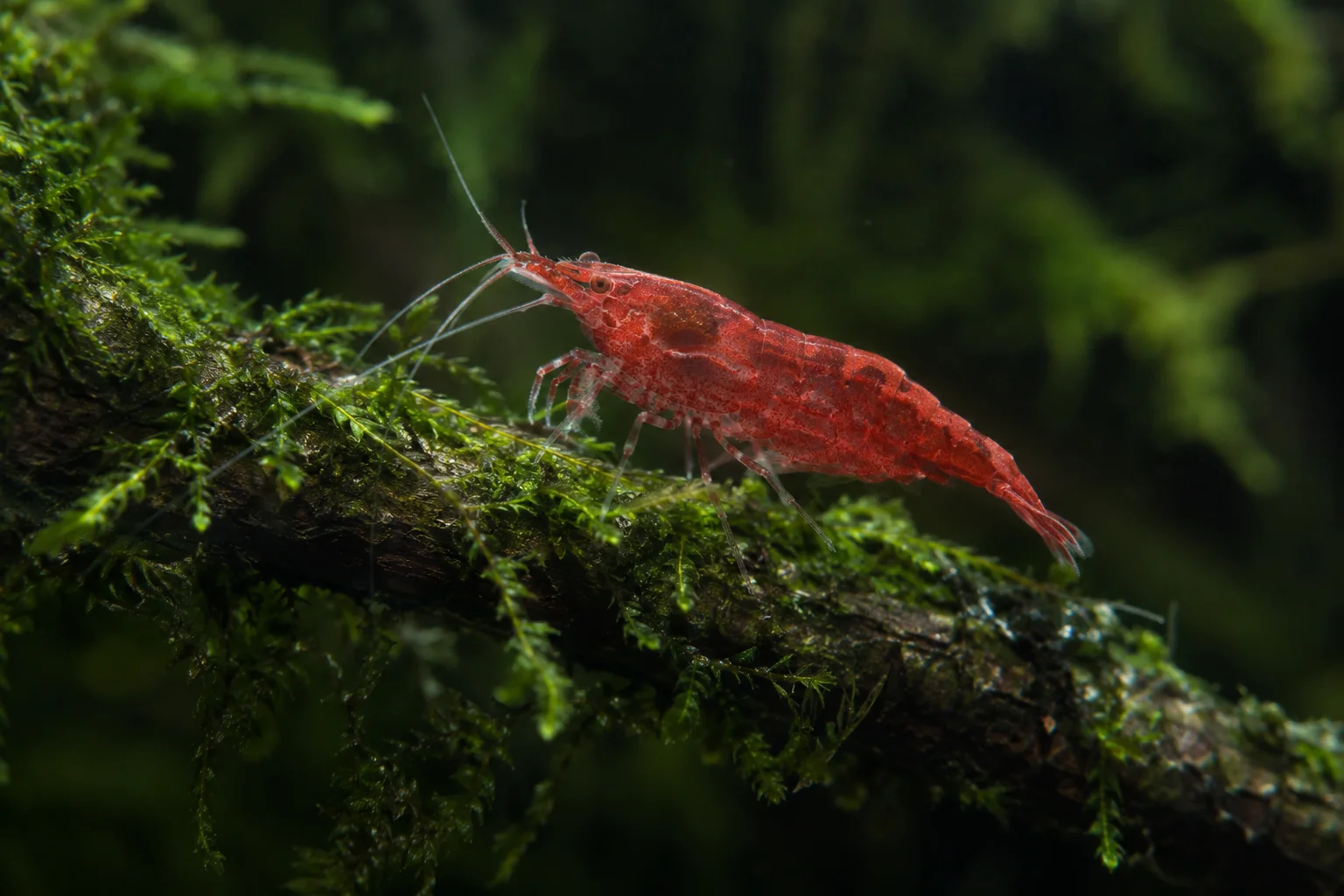
The golden rule is simple: if a fish can fit a shrimp in its mouth, it will eventually try. Adult cherry shrimp reach about 0.8–1.2 inches (2–3 cm), while newborn shrimplets are barely 0.1 inch (2–3 mm). That is why the question is rarely "will this fish eat my shrimp?" and more often "will this fish eat my baby shrimp?". For almost every fish, the honest answer to the second question is yes, at least sometimes.
Use these criteria when looking for fish that don’t eat shrimp, or at least not adult ones:
- Mouth size: small-mouthed fish under about 1.5 in (4 cm) are the safest
- Temperament: peaceful, non-predatory species that eat micro foods
- Swimming zone: mid and upper water fish disturb shrimp less than bottom hunters
- Water match: cherry shrimp like 68–78 °F (20–26 °C), pH 6.5–8.0 and moderate hardness, so tank mates must thrive in the same conditions
- Your goal: a breeding shrimp colony tolerates far fewer fish than a tank where shrimp are just part of the cleanup crew
Add shrimp first and let the colony settle for a few weeks before adding fish. Dense moss, floating plants and leaf litter give shrimplets places to hide and greatly improve survival.
02
The safest tank mates: no risk to shrimp
A few companions pose essentially no threat to shrimp of any size. Otocinclus are tiny algae-eating catfish with sucker mouths; they graze the same biofilm as shrimp but do not hunt. Nerite snails and mystery snails are peaceful grazers and share the cleanup work. Amano shrimp mix well with cherry shrimp: they may push smaller shrimp away from food but do not prey on them.
Different color strains of Neocaridina (red, blue, yellow) will interbreed, and after a few generations most offspring revert to dull brown. If you want to mix shrimp, combine one Neocaridina color with amanos or with Caridina species, which do not hybridize with Neocaridina, but remember that crystal shrimp need much softer water.
03
Nano fish that are safe with adult shrimp
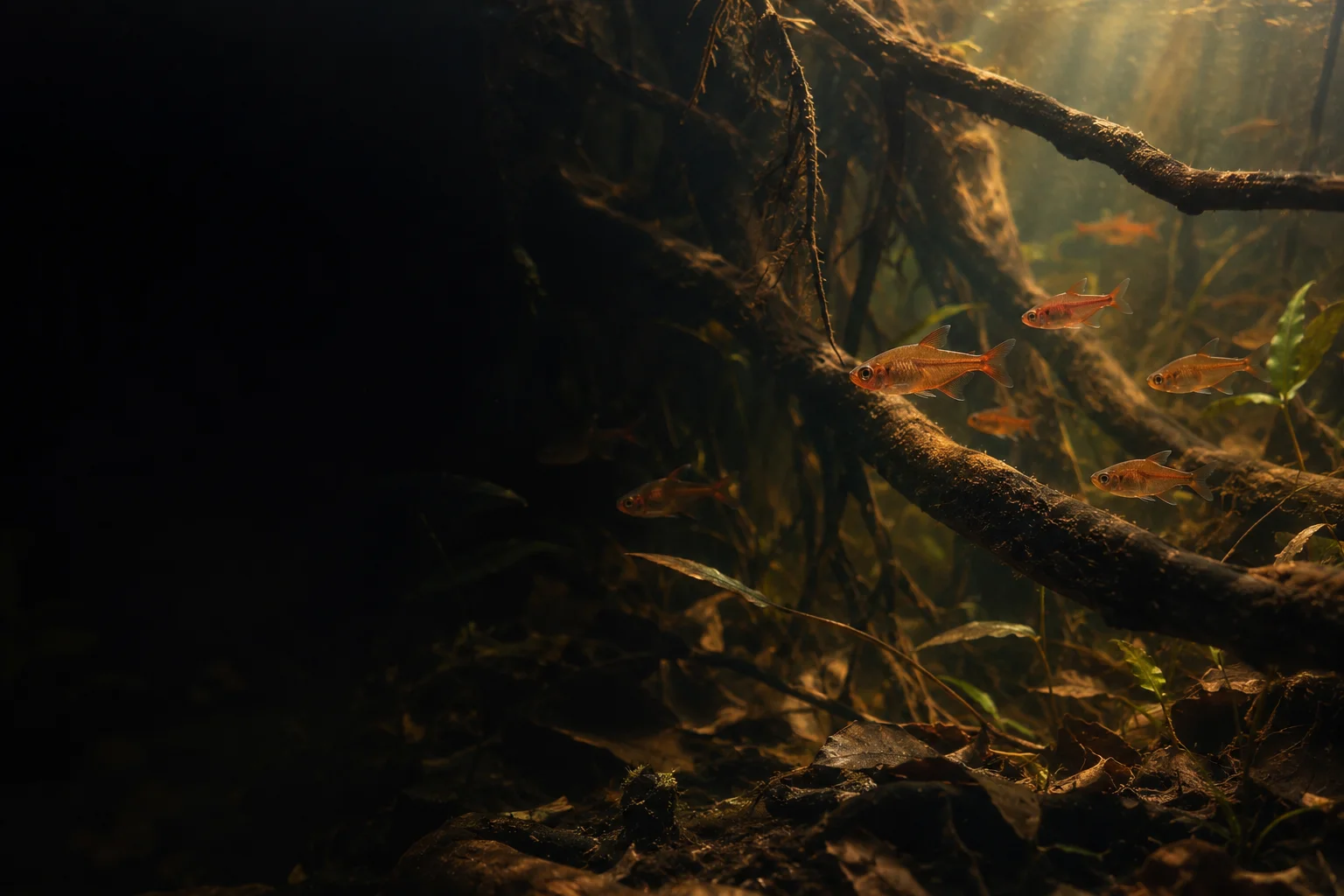
The next tier is small, peaceful fish that leave adult shrimp alone but will pick off some shrimplets. In a densely planted tank, enough babies usually survive for the colony to grow, just more slowly. These are the most popular choices for a planted community with shrimp.
Ember tetras and celestial pearl danios are tiny, colorful and stay in the middle of the tank. Pygmy corydoras, a small species of corydoras, are gentle bottom dwellers suited to 10 gallons. Harlequin rasboras are a little larger but still usually safe with adults. Kuhli loaches in tanks of 20 gallons or more ignore adult shrimp, though they hunt newborns in the substrate at night.
Many keepers also succeed with chili rasboras, small rasboras and neon tetras. Neons are larger than embers and eat more shrimplets, so they suit tanks where shrimp are not meant to breed heavily.
04
Shrimp tank mates compared
This table lists every option discussed on this page, including fish without their own guide on our site. "Adults" means grown cherry shrimp of about 1 inch (2.5 cm).
| Tank mate | Adult size | Adult shrimp | Shrimplets | Verdict | Minimum tank |
|---|---|---|---|---|---|
| Otocinclus | 1.4–2 in (3.5–5 cm) | Safe | Safe | Excellent | 20 gal (75 L) |
| Nerite / mystery snail | 1–2 in (2.5–5 cm) | Safe | Safe | Excellent | 5 gal (19 L) |
| Amano shrimp | 1.2–2 in (3–5 cm) | Safe | Mostly safe | Excellent | 10 gal (38 L) |
| Ember tetra | 0.8 in (2 cm) | Safe | Some eaten | Very good | 10 gal (38 L) |
| Celestial pearl danio | 0.8–1 in (2–2.5 cm) | Safe | Some eaten | Very good | 10 gal (38 L) |
| Chili rasbora | 0.6–0.8 in (1.5–2 cm) | Safe | Few eaten | Very good | 5–10 gal (19–38 L) |
| Pygmy corydoras | 0.8–1 in (2–2.5 cm) | Safe | Some eaten | Very good | 10 gal (38 L) |
| Harlequin rasbora | 1.6–2 in (4–5 cm) | Usually safe | Eaten | Good | 10–20 gal (38–75 L) |
| Kuhli loach | 3–4 in (8–10 cm) | Usually safe | Eaten at night | Good | 20 gal (75 L) |
| Neon tetra | 1.2–1.5 in (3–4 cm) | Usually safe | Eaten | Fair | 10–20 gal (38–75 L) |
| Bristlenose pleco | 4–5 in (10–13 cm) | Usually safe | Some eaten | Fair | 20 gal (75 L) |
| Guppy | 1.2–2.4 in (3–6 cm) | Usually safe | Eaten | Fair | 10 gal (38 L) |
| Betta | 2.4–2.8 in (6–7 cm) | Depends on the fish | Eaten | Risky | 5–10 gal (19–38 L) |
| Dwarf gourami | 2.5–3.5 in (6–9 cm) | Often hunted | Eaten | Avoid | 10–20 gal (38–75 L) |
| German blue ram, apistogramma | 2–3 in (5–8 cm) | Hunted | Eaten | Avoid | 20 gal (75 L) |
| Angelfish, discus, goldfish, loaches | 4 in (10 cm) and up | Eaten | Eaten | Avoid | Large tanks |
Otocinclus care guide: tank, diet, water and tank mates
The safest fish with shrimp: a peaceful grazer that shares biofilm and never hunts.
Shrimp & snailsAmano shrimp care guide: size, diet, tank mates and algae control
A larger algae-eating shrimp that lives peacefully with cherry shrimp and does not interbreed with them.
Shrimp & snailsNerite snail care guide: algae eating, eggs, lifespan and tank setup
A plant-safe algae eater that ignores shrimp and cannot overpopulate the tank.
Shrimp & snailsMystery snail care guide: tank size, water, food and eggs
A large, peaceful scavenger that shares cleanup duty and poses no threat to shrimp.
Fish speciesEmber tetra care guide: tank, water, school and tank mates
A tiny orange tetra that leaves adult shrimp alone and only takes a few shrimplets.
Fish speciesCelestial pearl danio (galaxy rasbora) care: tank size, water and tank mates
A shy, colorful nano fish for planted shrimp tanks from 10 gallons.
Fish speciesCorydoras catfish care guide: tank, water, diet and popular species
Pygmy cories are gentle bottom dwellers that fit shrimp tanks; larger species suit bigger setups.
Fish speciesHarlequin rasbora care guide: tank size, water, diet and tank mates
A peaceful schooling fish that is usually safe with adult shrimp in a planted community.
Fish speciesKuhli loach care guide: size, tank, water and tank mates
A shy, eel-like loach that ignores adults but may eat newborn shrimp at night.
05
Risky tank mates: bettas, guppies and plecos
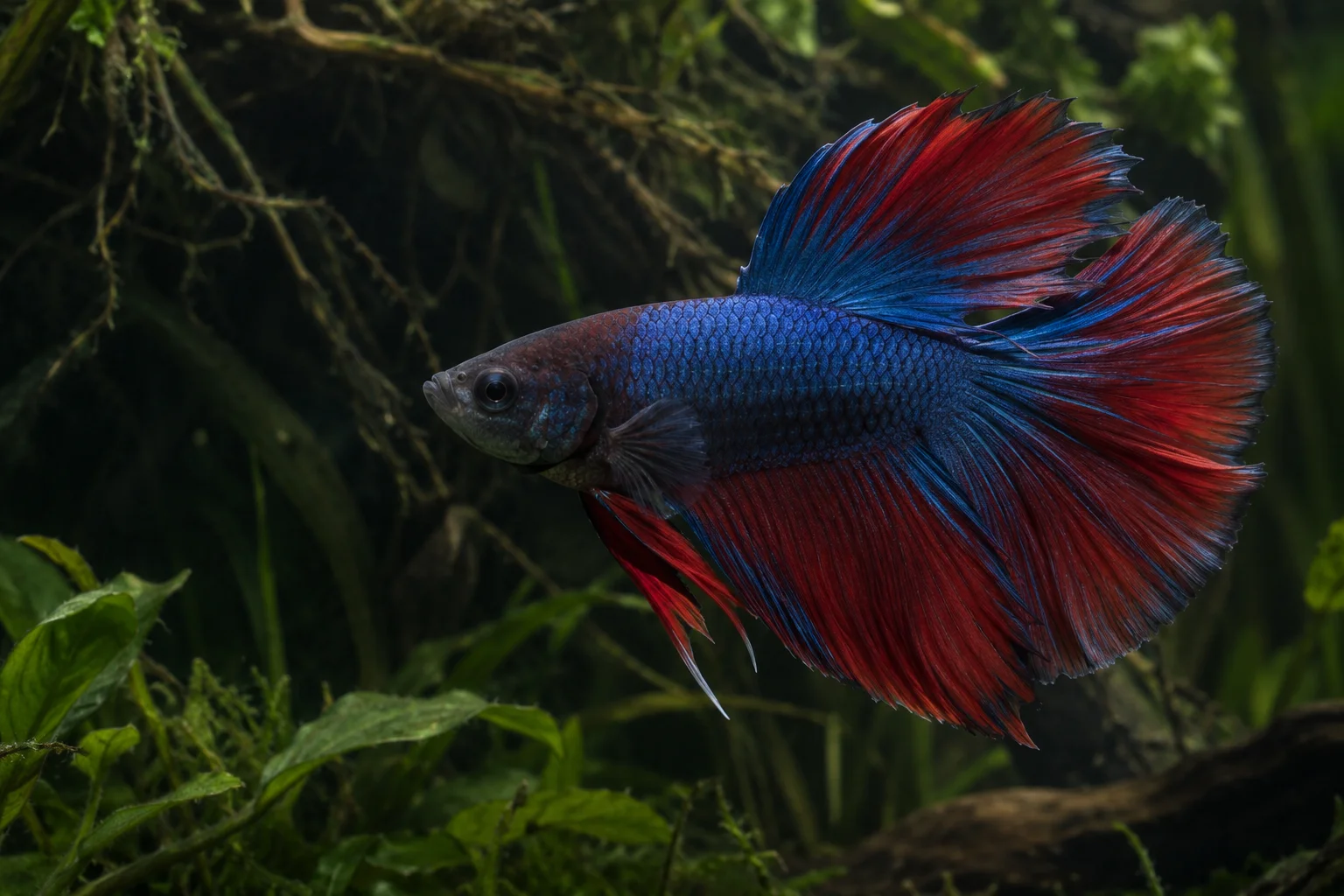
A betta is the classic gamble. Some males ignore shrimp completely; others hunt them down within a day. If you try it, start with cheap shrimp and plenty of cover, and read our betta tank mates guide for safer options. Amano shrimp, being larger, have better odds than cherry shrimp.
Guppies and other livebearers rarely attack adult shrimp but are constantly hungry and eat any shrimplet they find. A bristlenose pleco is peaceful, but it vacuums surfaces where young shrimp sit and may take a shrimp weakened by a molt.
06
Fish to avoid with shrimp
Some fish should never share a tank with dwarf shrimp, because shrimp are part of their natural diet or they are simply large enough to swallow them. Even a peaceful fish becomes a predator when a shrimp fits in its mouth.
- Cichlids of all sizes: German blue rams, apistogrammas, angelfish, discus, kribensis and larger species actively hunt shrimp
- Gouramis: dwarf and pearl gouramis commonly hunt shrimp, honey gouramis are a gamble
- Loaches: clown, yoyo and other botia loaches eat shrimp and snails
- Goldfish and large barbs: tiger barbs and goldfish eat anything that fits in their mouth
- Pufferfish and crayfish: specialist invertebrate eaters
- Large catfish and predators: oscars, larger plecos with big mouths, any fish over about 4 in (10 cm) with an open mouth
07
Stocking examples with shrimp
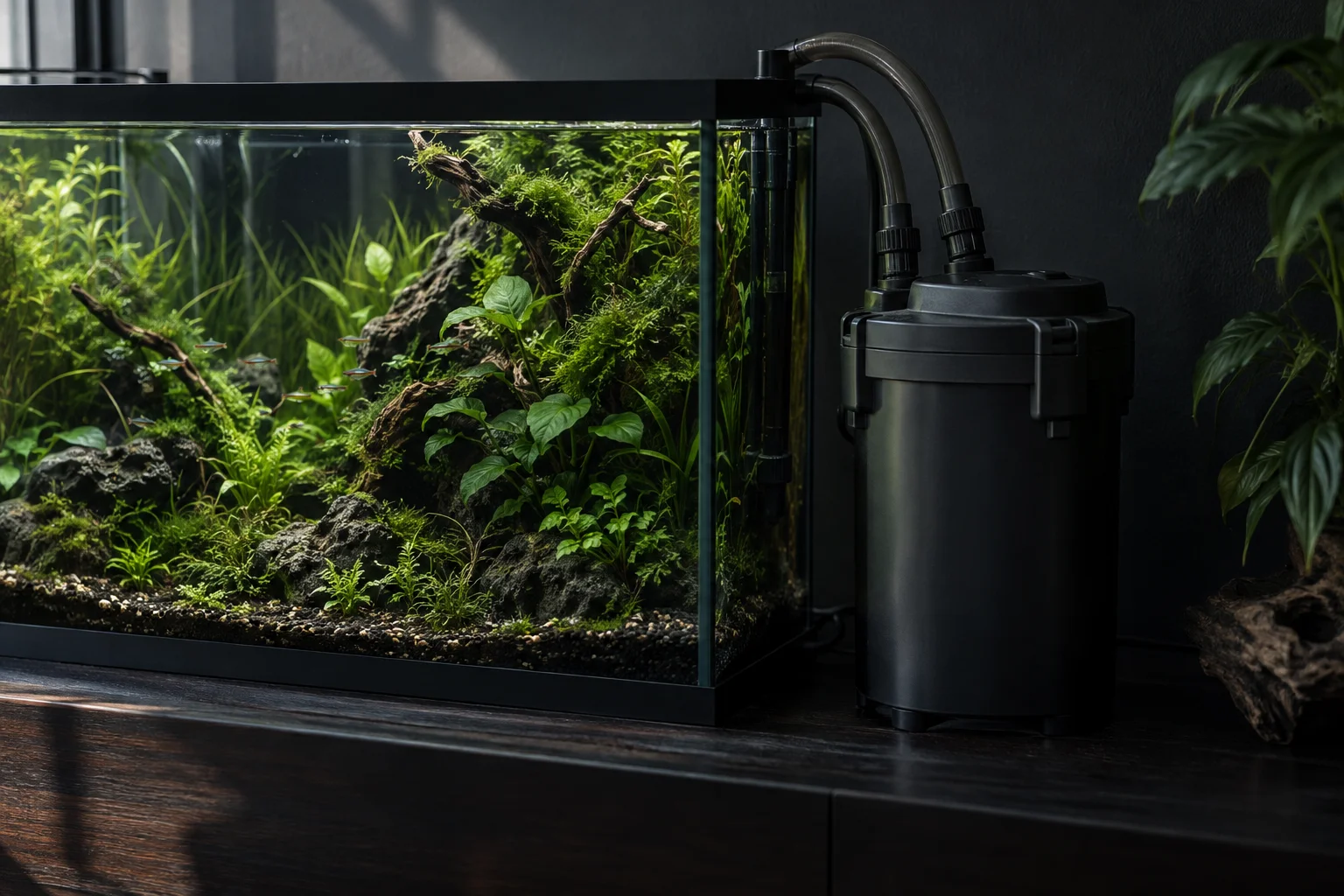
These sample communities assume a cycled, planted tank with moss and cover. Add the shrimp first, then the fish a few weeks later. A gentle sponge filter is the best filter choice for all three, since it cannot suck in shrimplets and grows biofilm they graze on. Treat tap water with a shrimp-safe water conditioner, and keep an eye on water parameters, especially GH and temperature.
- 10-gallon shrimp-first tank: 15–20 cherry shrimp, 8 celestial pearl danios or 8 ember tetras, 2 nerite snails
- 20-gallon planted community: 20 cherry shrimp, 6 otocinclus, 6 pygmy corydoras, 3 amano shrimp, 2 nerite snails
- 55-gallon community: 30 or more cherry shrimp, 12 harlequin rasboras, 8 corydoras, 6 kuhli loaches, 6 amano shrimp, 1 bristlenose pleco (expect fewer surviving shrimplets)
08
Tips for keeping shrimp with fish
Cover is the best protection. Java moss, christmas moss, java fern and floating plants create a dense zone where shrimplets hide while fish swim above. Feed the fish well and at regular times so they are not hunting out of hunger, and drop shrimp food near the cover to keep shrimp from roaming in open water.
If your main goal is to breed shrimp, keep fish to a minimum or skip them altogether. Our guide on how to breed cherry shrimp explains how to grow a colony fast, and our list of nano fish helps you pick tiny species for small tanks.
Frequently asked questions
Frequently asked questions
What fish can live with shrimp?
Otocinclus are the safest fish with shrimp, followed by small, peaceful nano fish such as ember tetras, celestial pearl danios, chili rasboras and pygmy corydoras. These fish leave adult shrimp alone but may eat some babies. Nerite snails, mystery snails and amano shrimp are also excellent companions that pose no risk.
Are there fish that don't eat baby shrimp at all?
Very few. Otocinclus are the only common community fish that reliably ignore shrimplets. Almost every other fish will eat a newborn shrimp if it finds one. Dense moss and plants let enough babies survive for a colony to keep growing, even with small nano fish in the tank.
Can I keep shrimp with a betta?
Sometimes. It depends entirely on the individual betta: some ignore shrimp, others hunt them immediately. Amano shrimp have better odds than cherry shrimp because of their size. Use a planted tank of at least 10 gallons with lots of cover, start with a few inexpensive shrimp and be ready to separate them.
Can cherry shrimp live with guppies?
Adult cherry shrimp usually survive with guppies, but guppies eat shrimplets readily, so the shrimp colony will grow slowly or not at all. If you want both, use a heavily planted tank with thick moss and feed the guppies well. For a breeding colony, choose ember tetras or otocinclus instead.
How many fish can I add to a shrimp tank?
In a 10-gallon tank, a school of 6–8 tiny nano fish plus a couple of snails is a sensible maximum if you want shrimp to breed. Larger tanks allow bigger schools, but more fish always means fewer surviving shrimplets. Prioritize cover and keep the fish well fed.
Sources and references
Written and reviewed by the handsoffmyhobby editorial team according to our editorial policy.