Fact sheet
- Common names
- Neon tetra, neon
- Family
- Characidae (tetras)
- Origin
- Upper Amazon basin: Peru, Colombia and western Brazil
- Adult size
- 1.2–1.5 in (3–4 cm)
- Lifespan
- About 5 years, sometimes longer
- Minimum tank
- 10 gallons (38 L), 20 gallons (75 L) recommended
- Temperature
- 72–78 °F (22–26 °C)
- pH
- 6.0–7.5
- Hardness
- GH 1–10 °dH, KH 1–6 °dH
- Diet
- Omnivore, micro-predator
- Group size
- 8–12 or more
- Care level
- Easy in a mature, stable tank
01
Neon tetra care at a glance
The neon tetra has been one of the best-selling aquarium fish in the US for decades. Its electric blue stripe and red rear half make even a small school look striking, and it gets along with almost any peaceful community fish. That popularity hides one catch: neons ship poorly and dislike unstable water, so many die in the first weeks after purchase.
Most of those losses are avoidable. Neons do best in a tank that has been fully cycled for several weeks, with plants, dim corners and steady parameters. Add them in one group, after a slow acclimation, and they usually settle within a few days.
- Tank: 10 gallons minimum, 20 gallons long or larger for a full school
- School size: at least 8, ideally 10–12 or more
- Heater: set to about 75 °F (24 °C)
- Filter: gentle to moderate flow, rated for the tank volume
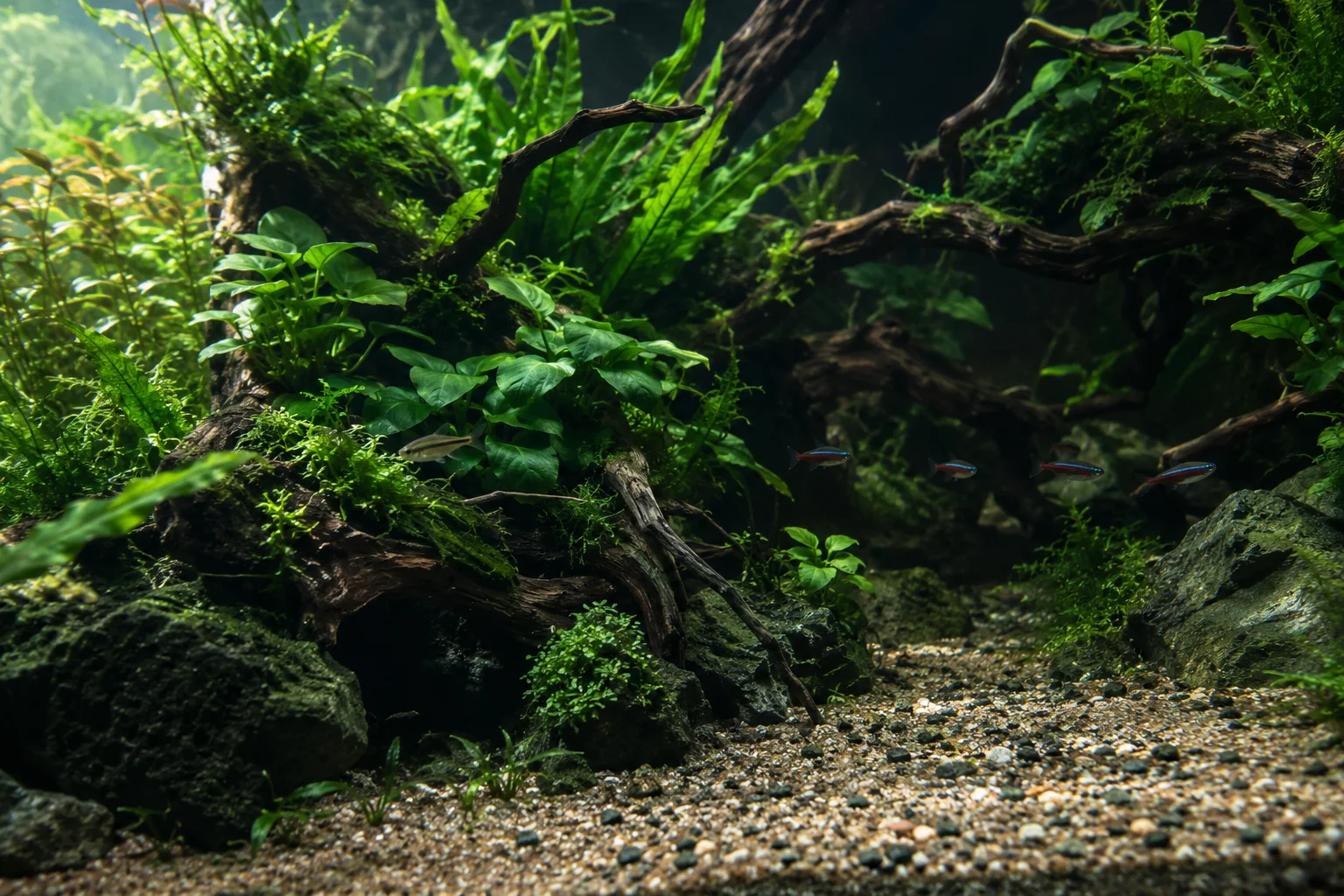
- Decor: live plants, driftwood, a darker substrate and some floating cover
02
Origin and natural habitat
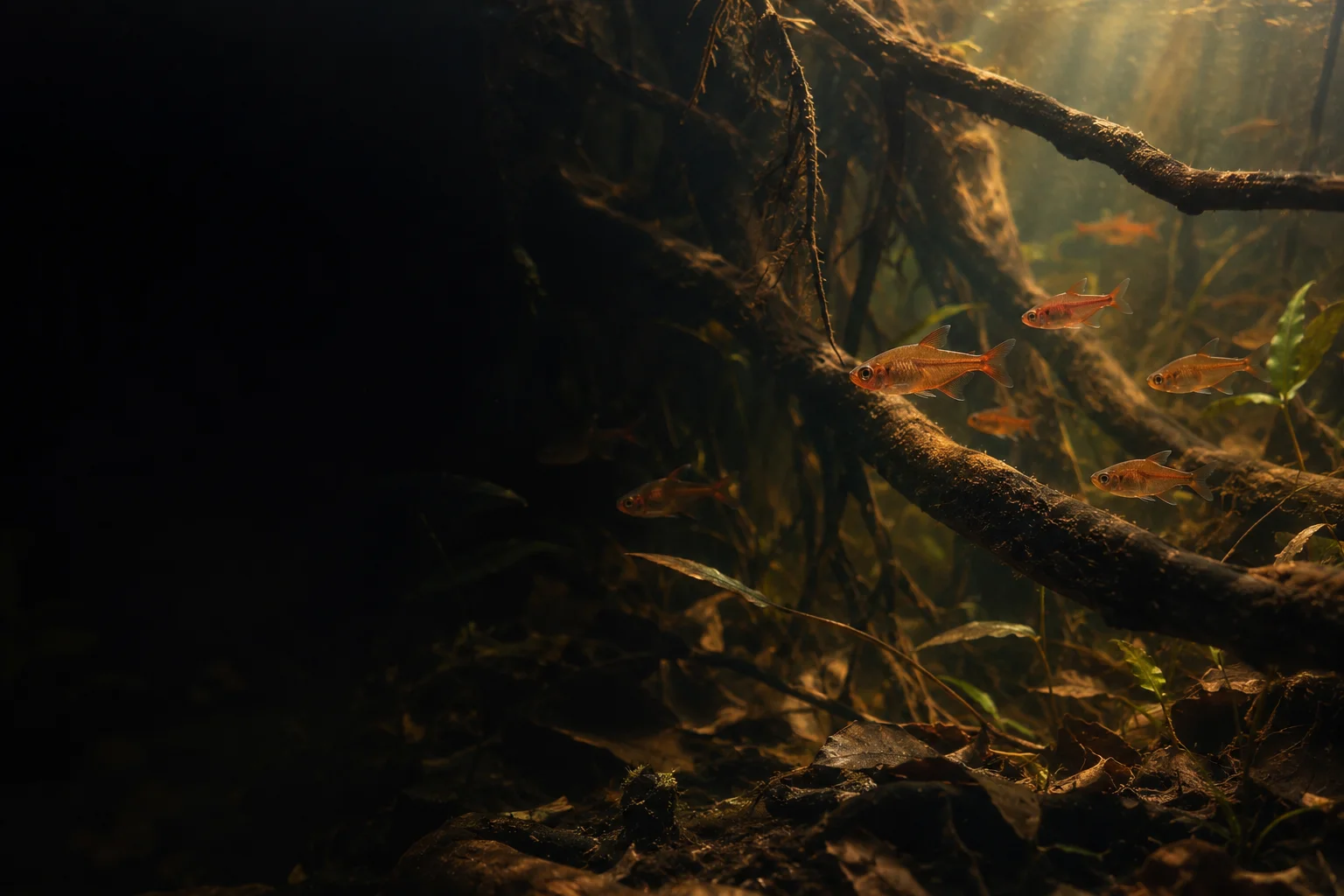
Wild Paracheirodon innesi live in the blackwater and clearwater streams of the upper Amazon, mainly in Peru, Colombia and western Brazil. These waters are soft, acidic and stained brown by tannins from fallen leaves, with a canopy that keeps light low. The fish’s iridescent stripe helps the school stay together in that dim water.
Nearly all neons sold today are farm-raised, mostly in Southeast Asia, in water much harder and less acidic than the Amazon. That is good news: farmed neons adapt well to typical treated tap water. It also means you do not need to imitate blackwater conditions to keep them healthy, only to keep conditions stable.
03
Adult size and lifespan
Adult neon tetras reach about 1.2–1.5 inches (3–4 cm) in total length. Females are slightly larger and rounder in the belly, which makes the blue stripe look bent; in males the stripe runs straighter. The difference is easiest to see when the fish are mature and well fed.
Expect around 5 years with good care, and some fish live longer. Many neons die young because of poor shipping, sudden parameter swings or disease brought in with new fish, not because the species is short-lived.
04
Neon tetra tank size
A 10-gallon (38 L) tank can hold a small school of 8–10 neons in a lightly stocked setup, and our list of the best fish for a 10-gallon tank shows how to fill the rest. A 20-gallon long (75 L) is a better target: the extra length gives the school room to swim as a group, and larger water volumes stay more stable. See our picks for the best 20-gallon aquarium if you are starting from scratch.
Neons swim mostly in the middle of the tank. Give them open water in front and dense planting behind or on the sides. Under bright lights over a bare, white substrate they tend to stay pale and nervous; with plants and a darker bottom they show much stronger color.
05
Water parameters
Farmed neon tetras tolerate a fairly wide range, but they react badly to sudden changes. Treat tap water with a water conditioner, match temperature during water changes, and avoid chasing a lower pH with chemicals. If your water is very hard, our guide on how to lower pH in an aquarium explains gentle, stable methods.
Test ammonia, nitrite and nitrate weekly while the tank is young. Our page on aquarium water parameters explains what each reading means.
| Parameter | Target range |
|---|---|
| Temperature | 72–78 °F (22–26 °C) |
| pH | 6.0–7.5 |
| GH (general hardness) | 1–10 °dH (20–180 ppm) |
| KH (carbonate hardness) | 1–6 °dH (20–110 ppm) |
| Ammonia / nitrite | 0 ppm |
| Nitrate | Below 20 ppm |
06
Diet and feeding
In the wild, neons pick tiny insects, larvae, worms and small crustaceans from the water column. In the tank they accept almost any food that fits in a very small mouth. Use a quality micro-pellet or crushed flake as the staple, then add frozen or live foods two or three times a week: baby brine shrimp, daphnia, cyclops and finely chopped bloodworms.
Feed once or twice a day, only what the school finishes in about two minutes. Neons rarely pick food from the bottom, so leftovers rot quickly and push up ammonia. Our guide on how often to feed aquarium fish covers portion sizes and fasting days.
07
Neon tetra school size, behavior and tank mates
Neons are shoaling fish, and the neon tetra school size makes a real difference to their health. In groups of fewer than 6 they hide, lose color and stress easily. With 10 or more, they swim confidently and form the tight school that makes them so attractive. Larger groups also spread out any minor squabbles.
Choose neon tetra tank mates that are peaceful and too small to swallow them. Good options include corydoras, otocinclus, harlequin rasboras, ember tetras, dwarf gouramis and small peaceful livebearers. Shrimp and snails are safe from neons. For more combinations, browse our list of peaceful community fish.
- Good tank mates: corydoras, otocinclus, rasboras, small tetras, kuhli loaches, bristlenose plecos, nerite snails
- Use caution: adult angelfish (they eat neons as they grow), bettas (usually fine, depends on the individual)
- Avoid: oscars, large cichlids, goldfish (cold water), tiger barbs and other fin nippers
08
Breeding neon tetras
Neons are egg scatterers and are harder to breed at home than livebearers. A separate breeding tank of 5–10 gallons with very soft, acidic water (pH around 5.5–6.5, GH below 4 °dH), very dim light, a sponge filter and a mat of fine-leaved plants or spawning mops gives the best chance.
Condition a pair or small group with live and frozen foods, then move them into the breeding tank in the evening. Spawning usually happens at dawn. Remove the adults right after, since they eat the eggs. The eggs are light-sensitive and hatch in about a day; the fry become free-swimming a few days later and need infusoria or powdered fry food, then baby brine shrimp.
09
Neon tetra disease and other common problems
Neon tetra disease is caused by a microsporidian parasite, Pleistophora hyphessobryconis. Affected fish lose color in patches, develop white or pale areas in the muscle, swim restlessly and may show a curved spine. There is no reliable cure. The standard approach is to remove affected fish quickly so healthy ones cannot eat infected remains, and to quarantine new arrivals. Read our full guide to neon tetra disease for symptoms and look-alike conditions.
Most other problems relate to stress and water quality. Test the water first whenever neons look off, and contact an aquatic veterinarian for serious or spreading cases.
| Problem | Typical signs | Where to start |
|---|---|---|
| Neon tetra disease | Faded patches, pale muscle, bent spine | Remove affected fish, quarantine newcomers |
| Columnaris ("false neon disease") | Grayish patches, frayed fins, mouth lesions | Water quality, medicate per label |
| Ich | White salt-like spots, flashing | See our guide to ich in fish |
| Ammonia stress | Gasping, clamped fins, lost color | Test, water change, see ammonia poisoning |
Quarantine new neons for 2–4 weeks in a separate tank before adding them to an established community. It is the single best defense against neon tetra disease.
10
Recommended gear
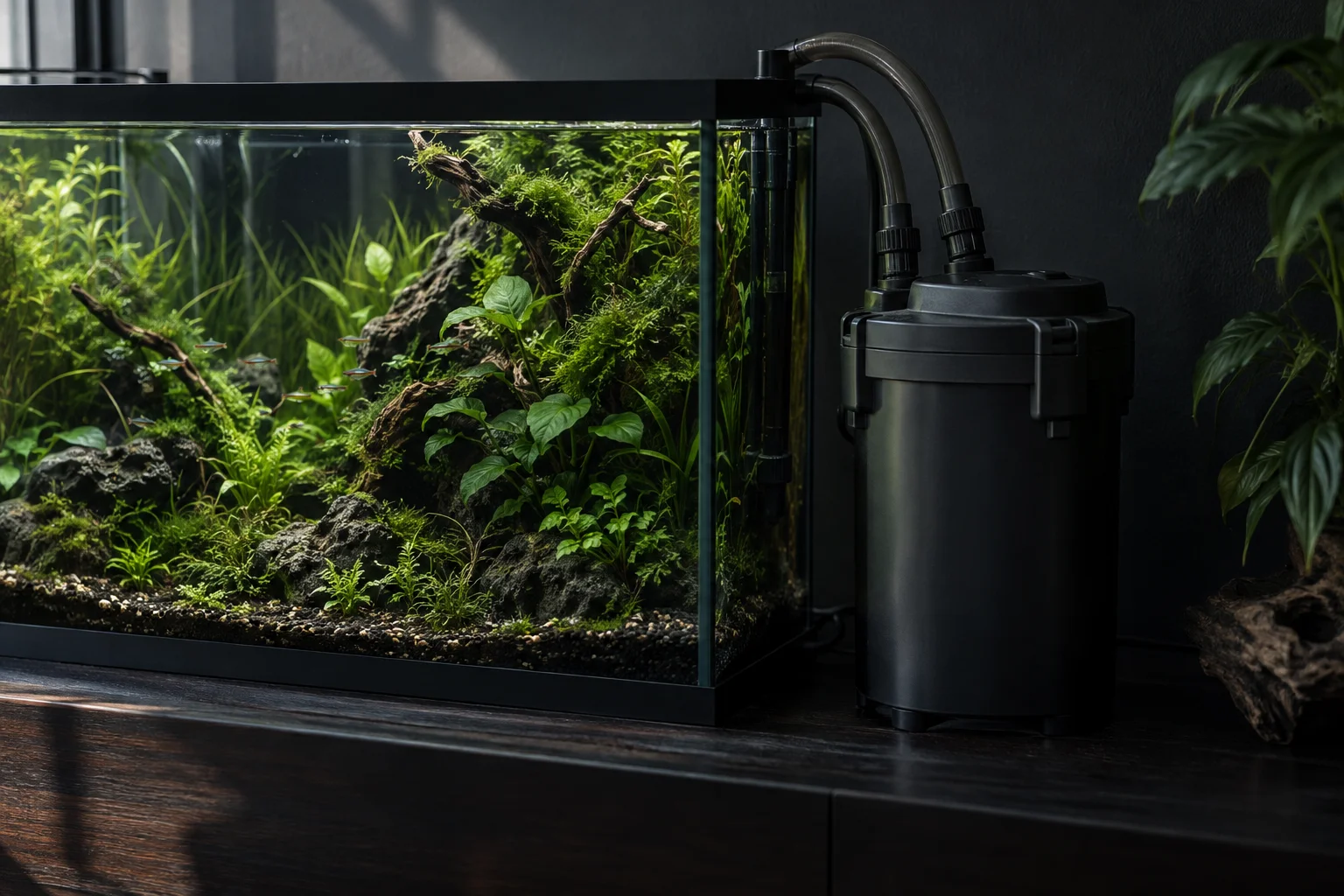
Neon tetras do not need special equipment, but they do need stable conditions. An adjustable heater keeps the temperature steady; see our guide to the best aquarium heater. A sponge or hang-on-back filter with moderate flow suits them well, and our best aquarium filter roundup covers both.
Add a liquid aquarium test kit to catch ammonia or nitrite spikes early, a lid, and plenty of plants. Easy plants such as java fern, anubias and floating species soften the light and help the school feel secure.
Frequently asked questions
Frequently asked questions
How many neon tetras should be kept together?
Keep at least 8 neon tetras, and 10–12 or more if your tank allows it. Neons are shoaling fish, and small groups stay stressed, pale and hidden. A larger school swims more naturally, shows better color and is less likely to suffer from stress-related disease.
What is the minimum tank size for neon tetras?
A 10-gallon (38 L) tank is the practical minimum for a small school of neons in a lightly stocked setup. A 20-gallon long (75 L) is better, because the extra length lets the school swim together and the larger volume keeps temperature and water quality more stable.
Why do my neon tetras keep dying?
The most common causes are adding neons to a tank that is not fully cycled, sudden changes in temperature or pH, stress from shipping, and disease brought in with new fish. Test ammonia and nitrite first, acclimate new fish slowly, and quarantine them before adding them to an established tank.
What are good neon tetra tank mates?
Peaceful, small fish make the best neon tetra tank mates: corydoras, otocinclus, harlequin rasboras, ember tetras, kuhli loaches and small livebearers. Shrimp and snails are also safe. Avoid any fish large enough to swallow a neon, such as adult angelfish or big cichlids, and avoid fin nippers like tiger barbs.
Can neon tetra disease be cured?
No reliable cure exists for true neon tetra disease, which is caused by a microsporidian parasite. Remove affected fish promptly so others cannot eat infected tissue, keep water quality high and quarantine new arrivals. Similar symptoms can come from columnaris, which is bacterial and treatable, so ask an aquatic vet if you are unsure.
Sources and references
Written and reviewed by the handsoffmyhobby editorial team according to our editorial policy.