01
How guppies breed: the basics
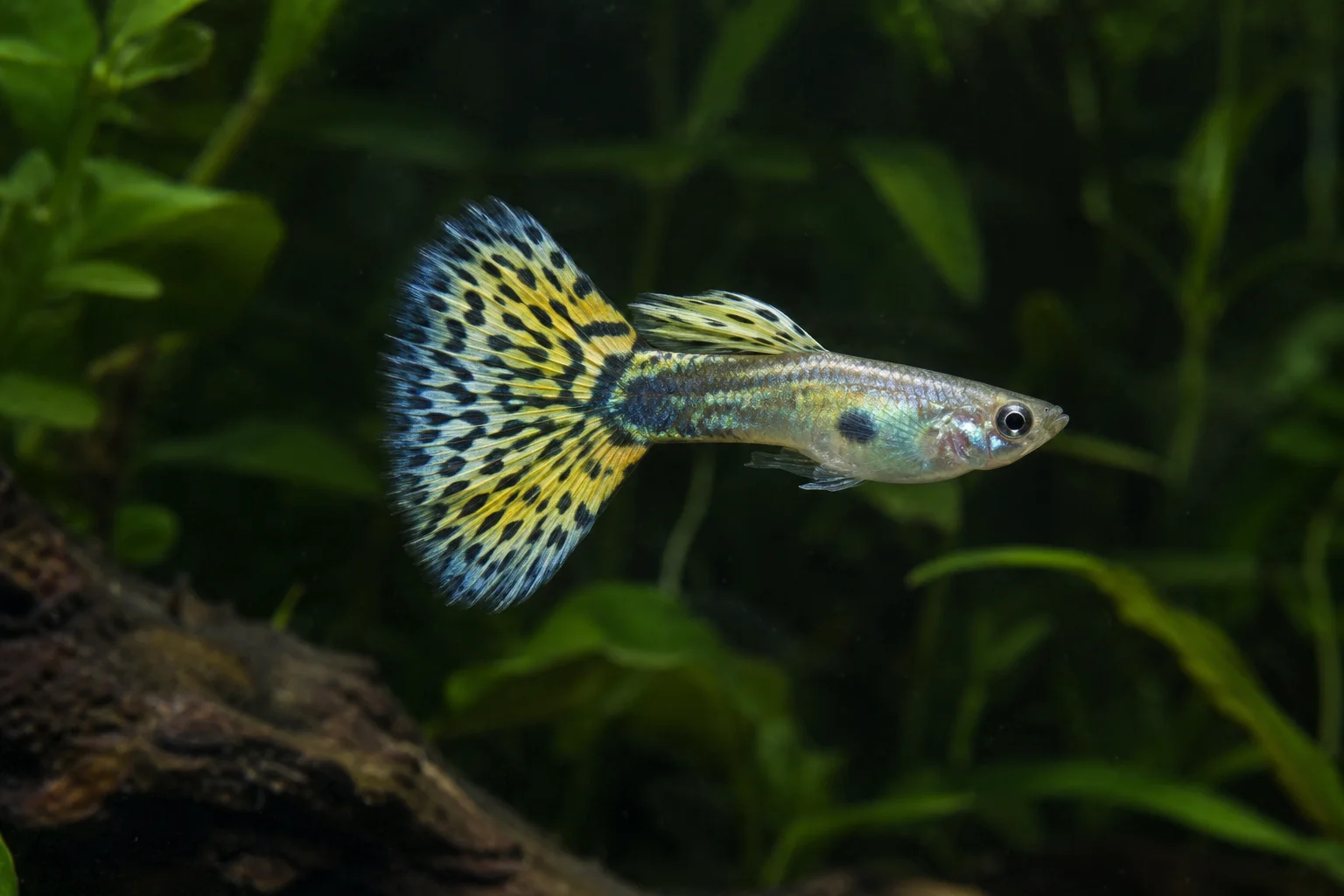
Guppies (Poecilia reticulata) are livebearers. Instead of laying eggs, the female carries the developing young inside her body and gives birth to fully formed fry that can swim and eat right away. The male uses a modified anal fin, the gonopodium, to fertilize the female internally.
Two details explain why guppy tanks fill up so fast. First, a female can store sperm and give birth several times from a single mating, often every four weeks or so. Second, young guppies mature quickly: males can start mating at around two months old. If you are new to the species, read our guppy care guide first, since healthy parents in good water are the foundation of every successful brood.
02
Choosing your breeding stock
Start with active, well-colored fish with clean fins and no signs of disease. If you want a particular strain (cobra, tuxedo, half-black, Endler-type patterns and so on), buy from a breeder who keeps lines separate. Pet-store guppies are usually mixed and will produce varied, sometimes duller offspring.
Keep 1 male for every 2–3 females. Males chase females constantly, and spreading that attention over several females reduces stress, fin damage and miscarriages. For a selected line, use virgin females: since females store sperm, a female that already lived with other males may carry their genes for several broods.
03
Setting up the breeding tank
A 10-gallon (38 L) tank works for a small trio, but a 20-gallon (75 L) setup gives a breeding colony much more stability and room for growing fry. Our list of the best fish for a 20-gallon tank shows how guppies fit into a larger community.
The tank must be fully cycled before you add fish. Fry are very sensitive to ammonia and nitrite, and even small spikes can wipe out a brood.
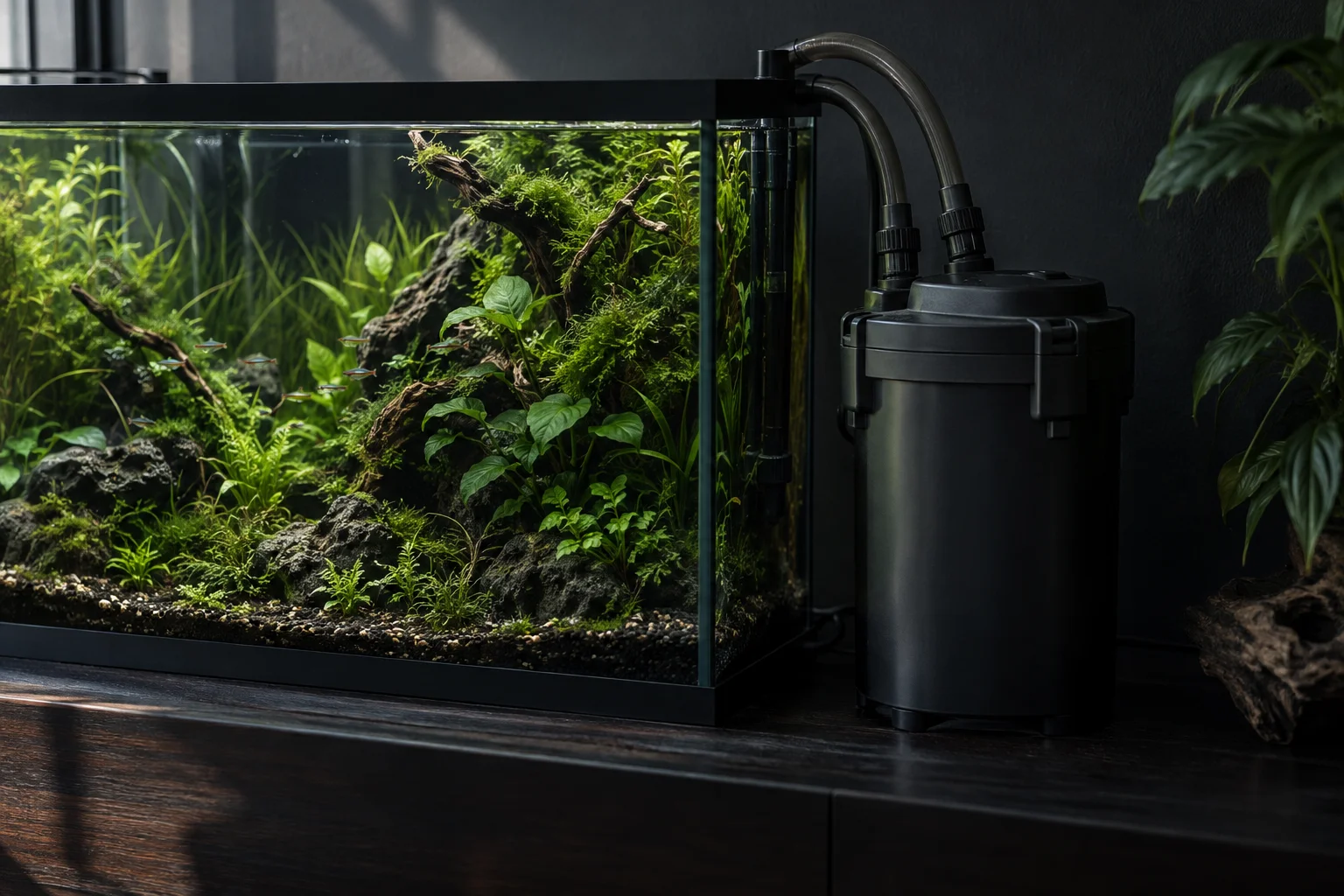
- Filter: a sponge filter is the classic choice because it cannot suck in fry and grows plenty of biofilm for them to graze
- Heater: a reliable, adjustable aquarium heater set to 76–80 °F (24–27 °C); warmer water speeds up gestation and growth
- Water: pH 7.0–8.0, moderately hard water (GH 8–18 °dH), weekly water changes of about 25%
- Cover: java moss, hornwort and floating plants give newborn fry places to hide
- Lighting: a normal 8–10 hour day; constant light stresses adults and fry alike
04
How to tell if a guppy is pregnant
In a mixed tank, assume every adult female is pregnant most of the time. Still, a few signs tell you when birth is close:
| Sign | What you see | Timing |
|---|---|---|
| Gravid spot | Dark patch behind the belly near the anal fin, growing darker and larger | Visible through most of the pregnancy |
| Body shape | Belly swells and becomes boxy or squared off when seen from the side | Last week |
| Fry eyes | Tiny dark dots visible through the gravid spot in pale females | Last few days |
| Behavior | Hiding, staying near the heater or plants, refusing food, rapid breathing | Last 24–48 hours |
Gestation usually lasts 21–30 days. It runs shorter in warm water and longer in cool water, which is why stable temperature matters.
05
Saving the fry: breeder box, separate tank or planted tank
Adult guppies, including the mother, will eat newborn fry. You have three common options, each with trade-offs:
- Dense planting in the main tank: the most natural method. Thick java moss or floating plants let a good share of fry survive, with no stress for the female. Expect fewer survivors, which is often what you want anyway.
- Breeding box or net: hung inside the tank, it separates the fry from the adults. Move the female in only when birth is very close, because confinement stresses her and can trigger a premature birth. Release her as soon as she has finished.
- Separate fry tank: a 5–10 gallon (19–38 L) tank with a sponge filter and heater, filled with water from the main tank. Move the fry with a small cup. This gives the best survival and growth.
06
Feeding and raising guppy fry
Guppy fry are big enough to eat from day one. They grow fastest with small meals 3–5 times a day, since their tiny stomachs empty quickly. Good foods include finely crushed flakes, powdered fry food, newly hatched baby brine shrimp and microworms. Our guide on how often to feed aquarium fish explains how to adjust frequency as they grow.
Frequent feeding means more waste, so small, frequent water changes (10–20% every few days) keep a fry tank clean. Siphon leftovers carefully and check the hose for fry before emptying the bucket.
| Age | Milestone | What to do |
|---|---|---|
| Day 0–7 | Hide near the bottom and plants | Feed 4–5 small meals a day |
| Week 2–3 | Swim openly, color starts in some strains | Keep up frequent feeding and water changes |
| Week 4–6 | Males show a pointed gonopodium | Separate males and females to avoid early breeding |
| Month 2–3 | Colors and fins develop | Select the best fish to keep or breed |
| Month 3–4 | Near adult size | Move to the community tank or rehome |
07
Selective breeding and population control
If you want to improve or maintain a strain, keep the best-colored males and the best-shaped females from each generation, and breed them in a separate tank. Avoid breeding close relatives for too many generations without adding new fish from the same line, or vigor and fertility can decline.
If you only want a pleasant community tank, plan for the population. A few females can produce hundreds of fry in a year. Options include keeping an all-male tank (males are the most colorful anyway), keeping fewer females, letting tank mates and dense plants naturally limit survivors, or arranging to rehome extra fish through a local fish store or club. Our page on guppy tank mates lists peaceful species that share their water needs.
Never release surplus guppies into ponds, rivers or ditches. Released guppies can become invasive and spread disease to wild fish.
08
Common guppy breeding problems
Most problems come down to water quality, stress and nutrition. If adults show clamped fins, white spots or ragged fins, deal with that first and pause breeding until the tank is stable.
- Stillborn or premature fry: usually stress, a sudden temperature drop or a female moved into a breeder box too early
- No fry appearing: they are being eaten; add cover or separate the female
- Thin, stunted fry: not enough meals or poor water quality
- Bent spines or deformities: often linked to heavy inbreeding or very poor conditions in the first weeks
- Females dying after birth: too much harassment from males; add females or remove some males
Frequently asked questions
Frequently asked questions
How long are guppies pregnant?
Guppy pregnancy usually lasts 21–30 days, with about four weeks being typical. Warmer water around 78–80 °F (25.5–27 °C) shortens it, while cooler water lengthens it. Because females store sperm, they can give birth again roughly every month without another mating, so a female may have several broods from a single encounter with a male.
How many babies do guppies have?
A typical guppy brood is about 10–50 fry. Young or small females may drop only a handful, while large, well-fed mature females can occasionally have 100 or more. The number of fry that survive depends far more on cover, tank mates and feeding than on the brood size itself.
Do guppies eat their babies?
Yes. Adult guppies, including the mother, eat newborn fry they can catch. To save more fry, give them thick cover such as java moss or floating plants, use a breeder box only during the birth, or move the fry to a separate tank. In a well-planted tank, some fry usually survive without any intervention.
When can you put guppy fry with adults?
Wait until the fry are too large to fit in the adults' mouths, usually at around 4–6 weeks old and about 0.5 in (1.2 cm) long. Larger tank mates may need more time. Separate young males from females at this stage if you want to control which fish breed.
How do you breed guppies for color?
Start with a pure strain from a dedicated breeder and use virgin females. Pair the best-colored male with two or three females, raise the fry separately, and keep only the offspring that show the traits you want. Repeat each generation, and add fish from the same strain from time to time to keep the line vigorous.
Sources and references
Written and reviewed by the handsoffmyhobby editorial team according to our editorial policy.