01
Why fish tank temperature matters
Fish cannot regulate their body temperature. When the water is too cold, digestion slows, immunity drops and tropical fish become lethargic and prone to diseases such as ich. When it is too warm, metabolism speeds up, fish need more oxygen at the very moment the water holds less of it, and lifespan shortens.
Temperature also affects the rest of your water chemistry. Warmer water makes ammonia more toxic at a given pH and holds less dissolved oxygen, which is why heat waves often coincide with fish gasping at the surface. Read our aquarium water parameters cheat sheet to see how temperature fits with pH, GH and KH.
02
Aquarium temperature chart by fish type
These ranges are widely accepted starting points for captive-bred fish. In a mixed community, choose a temperature that sits inside the range of every species, usually 76–78 °F (24.5–25.5 °C) for a classic tropical tank.
| Fish or group | Temperature (°F) | Temperature (°C) | Heater needed? |
|---|---|---|---|
| Tropical community (tetras, rasboras, livebearers) | 75–80 °F | 24–27 °C | Yes |
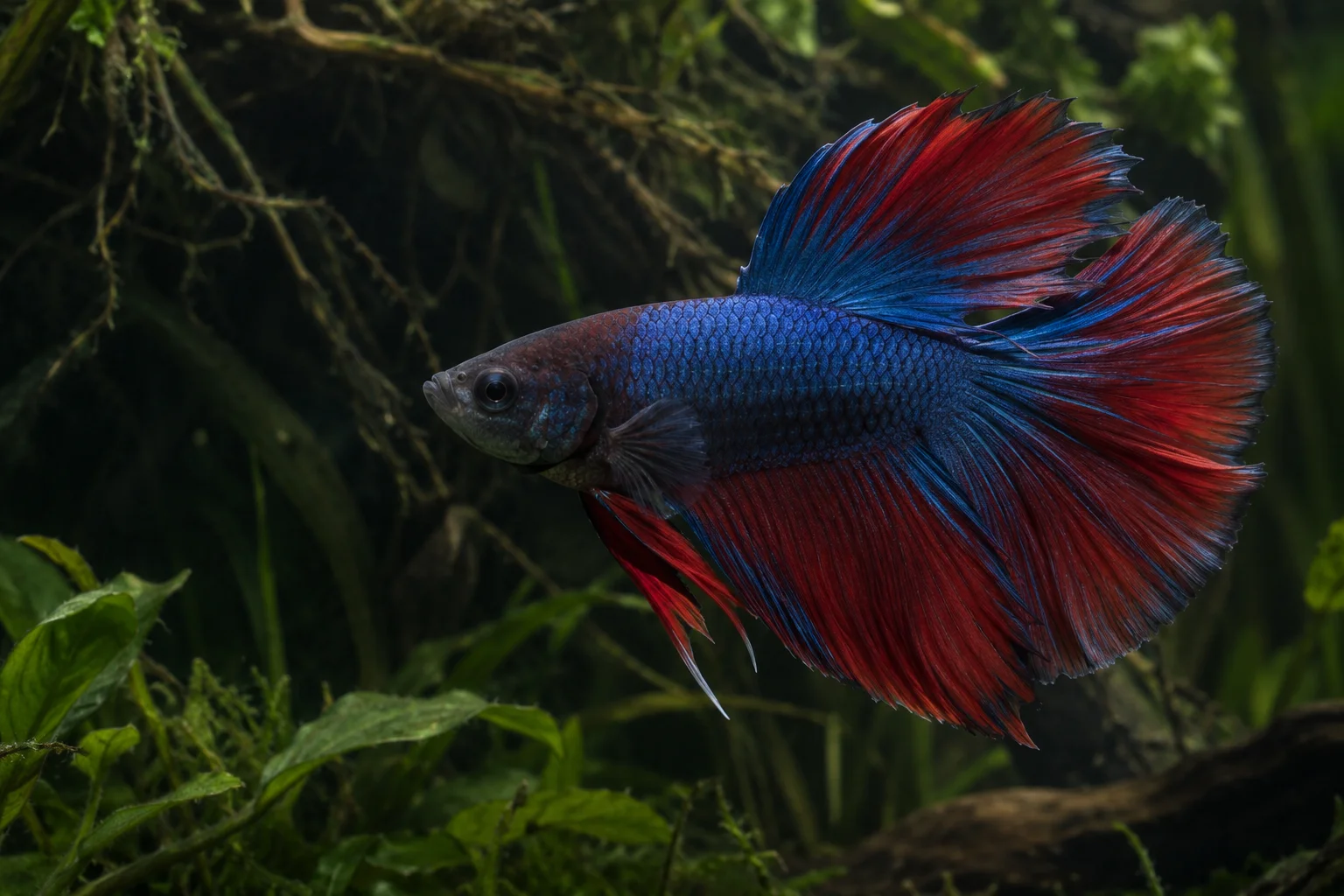
| Betta fish | 76–82 °F | 24–28 °C | Yes |
| Neon tetra | 72–78 °F | 22–26 °C | Yes |
| Angelfish | 76–82 °F | 24–28 °C | Yes |
| Discus | 82–86 °F | 28–30 °C | Yes |
| German blue ram | 78–85 °F | 26–29 °C | Yes |
| Corydoras | 72–78 °F | 22–26 °C | Usually |
| Guppies and platies | 72–80 °F | 22–27 °C | Usually |
| Goldfish | 65–72 °F | 18–22 °C | No |
| White cloud mountain minnow | 64–72 °F | 18–22 °C | No |
| Cherry shrimp | 68–78 °F | 20–26 °C | Depends on room |
Goldfish tolerate warmer water in summer, but keeping them permanently at tropical temperatures speeds up their metabolism and is not recommended. Do not mix goldfish with tropical fish to find a "middle" temperature.
03
Tropical fish tank temp: choosing and sizing a heater
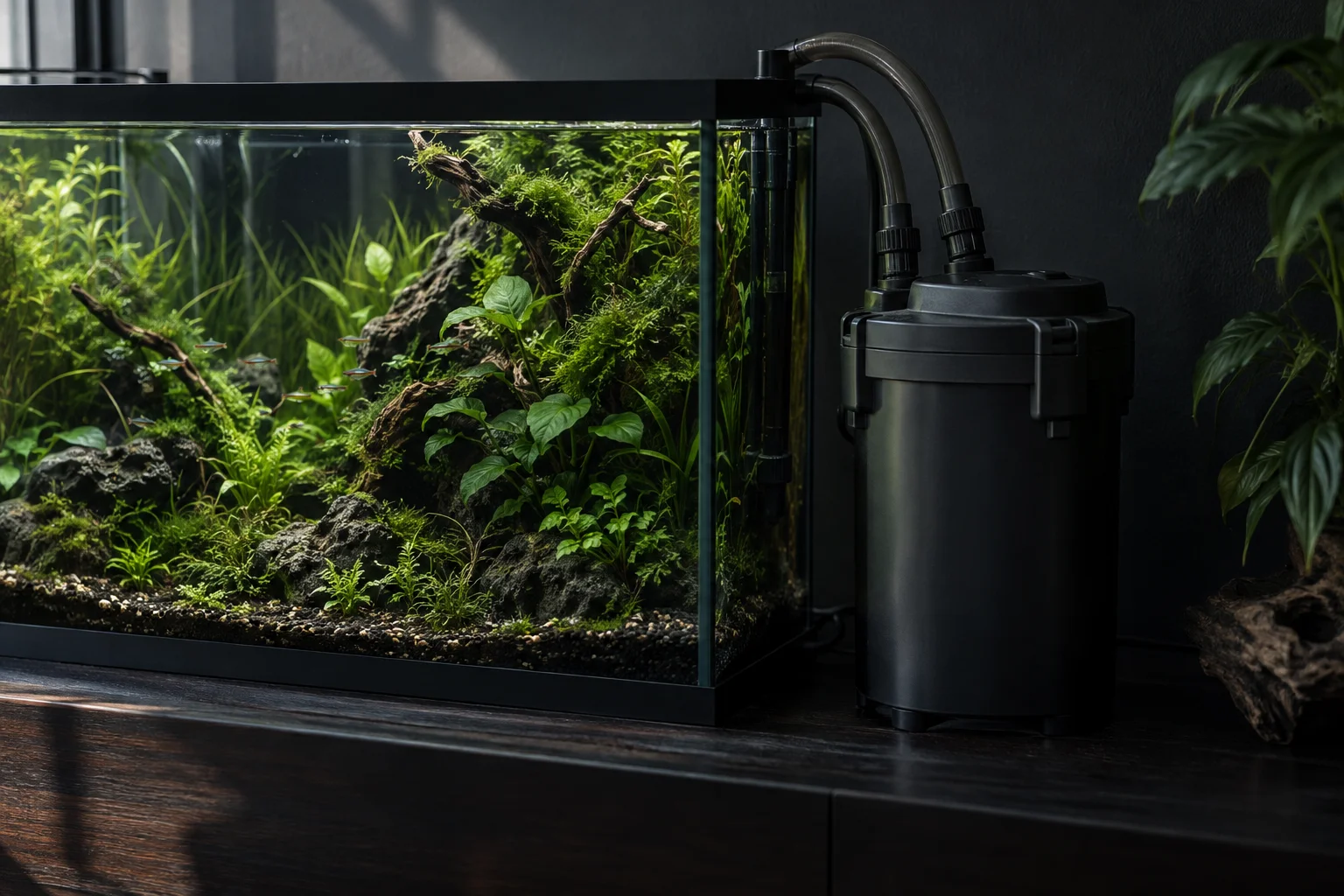
Any tank with tropical fish needs a heater unless your room stays above the target day and night, which is rare in US homes, especially overnight and in winter. An adjustable heater with a built-in thermostat is the standard choice. Our best aquarium heater guide compares reliable models with accurate thermostats and safety shut-off.
A common rule is about 3–5 watts per gallon (roughly 1 W per liter). Use the higher end in cold rooms or tanks without a lid. In tanks of 55 gallons and up, two smaller heaters at each end spread heat more evenly and provide a backup if one fails.
| Tank size | Suggested heater |
|---|---|
| 5 gallons (19 L) | 25 W |
| 10 gallons (38 L) | 50 W |
| 20 gallons (76 L) | 75–100 W |
| 29–40 gallons (110–150 L) | 100–150 W |
| 55 gallons (208 L) | 200–250 W, or 2 × 100–150 W |
| 75 gallons (284 L) | 2 × 150 W |
04
How to set and monitor the temperature
Heater dials are often off by a few degrees, so always confirm the real water temperature with a separate thermometer. A digital probe or a glass thermometer placed away from the heater is more reliable than a stick-on strip. See our best aquarium thermometer picks.
- Install the heater near the filter outflow or intake so the current spreads the heat.
- Wait about 15–30 minutes after filling before plugging it in, so the glass adjusts to the water temperature.
- Set the dial to your target and check the thermometer after 24 hours.
- Adjust in small steps of about 1 °F (0.5 °C) and recheck the next day.
- Check the thermometer daily, ideally at the same time, and note it when you test the water.
- Unplug the heater during water changes if the water level drops below its minimum line.
05
Stable temperature beats the perfect number
A tank that sits at 77 °F one day and 72 °F the next stresses fish far more than one steady at 75 °F. Aim for daily swings under about 2 °F (1 °C). The usual culprits are a heater that is too small, a tank near a window or heating vent, lights that warm a small tank, and cold water added during a water change.
The same logic applies when moving fish. Temperature differences between the store bag and your tank are one of the reasons to acclimate fish slowly rather than tipping them straight in.
06
How to cool a fish tank in a heat wave
When room temperature climbs, a tank can reach 86 °F (30 °C) or more. Most tropical fish tolerate brief peaks, but the drop in oxygen is the real danger. Act gradually, aiming for a decrease of no more than about 2 °F (1 °C) per hour.
- Turn off the aquarium lights and close curtains on that side of the room.
- Open or remove the lid (watch for jumpers) and point a small fan across the surface to boost evaporation.
- Increase surface agitation or add an air stone to raise oxygen. An aquarium air pump is a cheap emergency tool.
- Float a sealed bottle of frozen water in the tank, removing it when the temperature drops, instead of adding ice cubes directly.
- Avoid large cold water changes, which swap one shock for another.
- Feed lightly: digestion uses oxygen and uneaten food fouls warm water fast.
- In tanks prone to overheating, a dedicated aquarium fan or chiller is the long-term fix.
07
Common temperature mistakes
Most temperature problems are equipment and placement problems, which makes them easy to prevent.
- Trusting the heater dial without a thermometer.
- Using an undersized heater that runs constantly and still cannot hold temperature in winter.
- Keeping goldfish with tropical fish, forcing one group outside its range.
- Placing the tank next to a radiator, air vent or sunny window.
- Raising temperature to treat disease without adding aeration, or without checking that every species tolerates it.
- Replacing a failed heater with a much larger one set to a high temperature: if its thermostat sticks, it can cook the tank.
08
Warning signs and when to act
Fish that sit still near the bottom, clamp their fins and refuse food may be too cold. Fish gasping at the surface, breathing rapidly or crowding around the filter outflow may be too warm or short of oxygen. Check the thermometer first, then ammonia and nitrite.
If the heater has failed, replace it and raise the temperature slowly over several hours. If the reading is above 90 °F (32 °C), start cooling immediately and add aeration. If fish keep showing distress once temperature and water quality are normal, the cause may be disease; contact an aquatic veterinarian for persistent symptoms.
Frequently asked questions
Frequently asked questions
What is the ideal fish tank temperature?
For most tropical community fish, 76–80 °F (24–27 °C) is ideal, with 77–78 °F a good middle ground. Bettas like it a bit warmer, discus much warmer at 82–86 °F, and goldfish prefer cooler water around 65–72 °F. Check the needs of every species you keep and choose a temperature inside all of their ranges.
Is 80 °F too hot for a fish tank?
No, 80 °F (27 °C) is within the comfortable range of most tropical fish, including bettas, angelfish and many tetras. It is warm for goldfish, white cloud minnows and some shrimp. Above about 86 °F (30 °C), oxygen becomes the main concern for most species, so add aeration and start cooling gradually.
Do I need a heater for my aquarium?
You need one for tropical fish unless your room reliably stays at the target temperature day and night, which is uncommon. Goldfish, white cloud minnows and many shrimp can live without a heater in a normally heated home. An unheated tropical tank usually cools at night and swings in temperature, which stresses fish.
How fast can I change the aquarium temperature?
Change it slowly. A shift of about 2 °F (1 °C) per day is safe when adjusting the set point. When fixing an emergency such as overheating, aim for no more than about 2 °F per hour. Sudden changes of several degrees are a common trigger for stress and disease outbreaks.
What temperature is too cold for tropical fish?
Below about 72 °F (22 °C), many tropical fish start to slow down, eat less and become more vulnerable to disease. Some species tolerate cooler water, but long periods under 70 °F (21 °C) are harmful for most tropical community fish. If your tank drops this low, check the heater and its wattage.
Written and reviewed by the handsoffmyhobby editorial team according to our editorial policy.