01
How to recognize swim bladder disease
The swim bladder is a gas-filled organ that lets a fish hover at any depth without effort. When it is squeezed by a full gut, inflamed by infection or damaged, the fish loses that control. Swim bladder disease (also called swim bladder disorder) is the name hobbyists give to the resulting buoyancy problem, whatever its real cause.
Fancy goldfish with short, round bodies (orandas, ryukins, pearlscales, ranchus) are by far the most affected, because their compressed body leaves the organ little room. Betta swim bladder problems are the second most common case, usually linked to overfeeding and to heavy-bodied strains. Any fish can be affected, though, including tetras, gouramis and cichlids.
| What you see | Likely meaning |
|---|---|
| Floating at the surface, belly up or tilted, but still eating | Positive buoyancy, often gas or constipation |
| Lying on the bottom, struggling to rise | Negative buoyancy, weakness, infection or very cold water |
| Swimming head-down or tail-down | Pressure on one part of the bladder, constipation or deformity |
| Swollen belly right after meals | Overfeeding, dry food swelling in the gut |
| Swollen belly with raised scales (pinecone look) | Dropsy, a more serious internal problem |
| Symptoms plus clamped fins, red streaks or white feces | Infection or parasites, needs targeted treatment |
02
Common causes of swim bladder problems
Finding the cause matters more than any single remedy, because each one calls for a different fix. Most cases fall into a handful of categories, and the first two account for the large majority in home aquariums.
- Overfeeding and constipation: a packed gut presses on the swim bladder. Dry flakes and pellets that swell after being swallowed make it worse, especially in goldfish that gulp food at the surface.
- Gulping air while feeding: floating foods encourage fish to swallow air with each bite, which can leave them temporarily buoyant.
- Poor water quality: ammonia, nitrite or very high nitrate stress the whole body and weaken the fish. Check for ammonia poisoning whenever several fish act strangely at once.
- Temperature that is too low: digestion slows in cold water, food sits in the gut longer and constipation follows. This is common with unheated betta bowls.
- Bacterial infection or parasites: inflammation of the bladder itself, often with other signs such as lethargy, loss of appetite, red patches or stringy white feces.
- Body shape, injury or genetics: deep-bodied fancy goldfish and some betta strains carry a built-in risk, and a fall, fight or rough net can damage the organ.
03
How to treat swim bladder disease step by step
Start with the gentle, low-risk steps below. Many fish recover within a few days once the gut is empty and the water is clean, without any medication.
- Test the water for ammonia, nitrite, nitrate, pH and temperature with a reliable liquid kit. If ammonia or nitrite is above 0, do a 30–50% water change with temperature-matched, conditioned water.
- Stop feeding for 2–3 days. Healthy adult fish handle a short fast easily, and it gives the gut time to clear.
- Keep the temperature stable and on the warm side of the species' range: about 76–80 °F (24–27 °C) for tropical fish like bettas, and a steady 68–72 °F (20–22 °C) for fancy goldfish. Avoid sudden jumps.
- Lower the water level or move the fish to a shallow hospital tank if it struggles to reach the surface or keeps being pushed by the current. Reduce strong filter flow.
- Restart feeding with small portions of soft, fiber-rich food: thawed daphnia or brine shrimp for bettas and tropical fish, and for goldfish a cooked, skinned green pea cut into tiny pieces. Pre-soak any dry food for a few minutes before feeding.
- Watch for 5–7 days. If the fish improves, go back to normal feeding in smaller portions. If not, or if new symptoms appear, move to targeted treatment.
Epsom salt (magnesium sulfate) is a common home remedy for constipation and swelling. It is not the same as regular aquarium salt. If you try it, use a short bath in a separate container and follow a vet’s or product’s instructions for the amount.
04
When medication makes sense
Medication is only useful when there is evidence of infection: symptoms that persist after fasting and clean water, together with lethargy, appetite loss, red patches, fin damage or stringy feces. In the US, broad-spectrum antibacterials such as Seachem KanaPlex (kanamycin) or API Fin & Body Cure are widely sold for internal bacterial infections, and Seachem Metroplex is often used when an internal parasite is suspected. Always follow the label, remove carbon from the filter during treatment and never mix products.
Do not medicate blindly "just in case". Antibiotics stress the fish and the biological filter, and they do nothing for a constipated or deformed fish. If you are unsure what you are treating, a vet who works with fish can examine it or test a sample, which is far more reliable than guessing.
05
Goldfish and betta swim bladder: special cases
Goldfish swim bladder issues are so common in fancy varieties that prevention has to be built into daily care. Feed sinking pellets or gel food instead of floating flakes, soak dry food, add blanched vegetables to the diet and keep the water very clean, since goldfish produce a lot of waste. Our goldfish care guide and the article on what goldfish eat cover the right diet in detail.
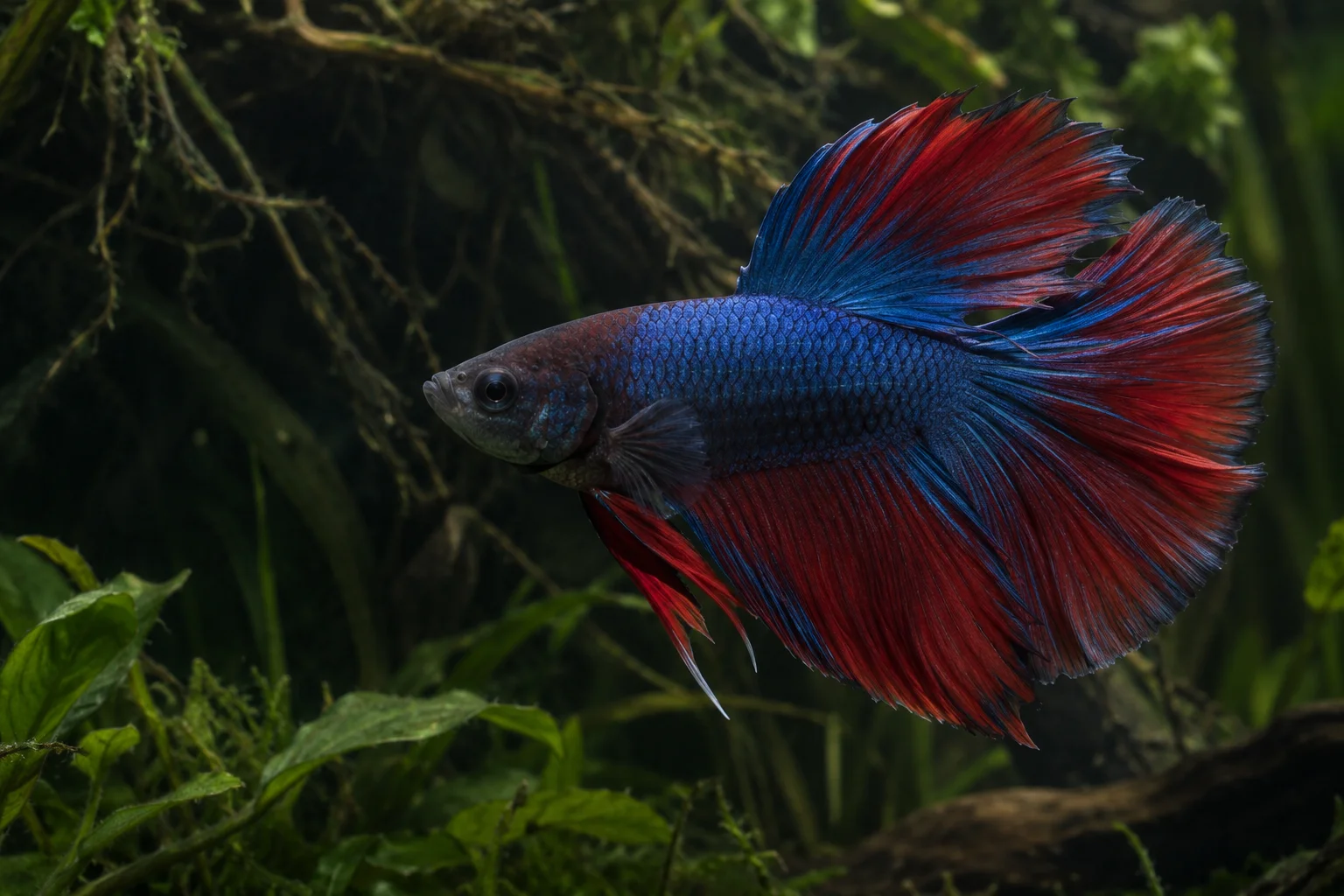
Betta swim bladder problems are usually caused by too many pellets and cold water. A betta’s stomach is roughly the size of its eye, so 2–3 small pellets per meal is plenty. Make sure the tank is heated with an adjustable aquarium heater and read our full betta fish care guide for tank setup. Long-finned males with chronic buoyancy issues often do better in shallow water with resting leaves near the surface.
06
How to prevent swim bladder issues
Prevention is mostly about feeding and water stability. Feed small amounts once or twice a day, only what is eaten within a minute or two, and include one fasting day a week for adult fish. Our guide on how often to feed aquarium fish gives portions by fish type.
Test the water weekly with a dependable aquarium test kit, keep up with partial water changes and treat new tap water with a water conditioner. Keeping fish in the correct temperature range, as described in our fish tank temperature guide, keeps digestion working normally.
07
When to see a vet or consider euthanasia
Contact an aquatic vet if the fish has not improved after a week of fasting, clean water and diet changes, if it stops eating, if the belly swells with raised scales, or if several fish show symptoms. A vet can X-ray or examine the fish and prescribe the right medication where antibiotics require one.
Some fish live for years with a permanent buoyancy problem if they can still eat and rest comfortably, especially in a shallow tank. When a fish can no longer feed, is constantly stuck upside down or is clearly suffering, humane euthanasia is the kindest option. Ask a vet or an experienced fish store about a humane method rather than improvising.
Raised scales, bulging eyes and a hugely swollen body are signs of dropsy, not simple swim bladder disorder. Isolate the fish and seek veterinary advice quickly.
Frequently asked questions
Frequently asked questions
Can swim bladder disease cure itself?
Often, yes. When the cause is overfeeding or constipation, a fish usually recovers within 2–7 days once you stop feeding for a couple of days, keep the water clean and warm, and restart with small portions of soft food. Cases caused by infection, injury or body deformity rarely resolve on their own and may need medication or veterinary help.
How do you treat goldfish swim bladder problems?
Test the water and fix any ammonia or nitrite first. Fast the goldfish for 2–3 days, keep the temperature steady around 68–72 °F (20–22 °C), then feed small pieces of a cooked, skinned pea or soaked sinking pellets. Long term, avoid floating flakes, soak dry food and keep fancy goldfish in a spacious, well-filtered tank.
Can a betta fish recover from swim bladder disease?
Most bettas recover well when the cause is overfeeding or cold water. Fast the betta for 2–3 days, make sure the tank is heated to 78–80 °F (25.5–27 °C), lower the water level if it struggles to reach the surface, then feed just 2–3 pellets per meal. Persistent cases with other symptoms should be checked for infection.
Is swim bladder disease contagious?
The buoyancy problem itself is not contagious, because it is usually caused by diet, temperature or body shape. If an underlying bacterial infection or parasite is to blame, though, other fish can be at risk. When several fish show symptoms at once, check water quality immediately and consider a hospital tank for the sick ones.
How long can a fish live with swim bladder disease?
A fish with a temporary, diet-related case is usually back to normal within a week. Fish with a permanent buoyancy problem can live for months or years if they can still reach food, rest comfortably and keep a good appetite. If the fish cannot eat or is visibly distressed, talk to a vet about humane options.
Sources and references
Written and reviewed by the handsoffmyhobby editorial team according to our editorial policy.