Fact sheet
- Common names
- German blue ram, ram cichlid, butterfly cichlid, blue ram
- Family
- Cichlidae (dwarf cichlid)
- Origin
- Orinoco basin llanos, Venezuela and Colombia
- Adult size
- 2–2.75 in (5–7 cm), females slightly smaller
- Lifespan
- 2–4 years
- Minimum tank
- 20 gallons (75 L) for a pair, 30 gallons (115 L) for a community
- Temperature
- 80–86 °F (27–30 °C)
- pH
- 5.5–7.0
- Hardness
- GH 1–10 °dH, KH 0–4 °dH
- Diet
- Omnivore leaning carnivore, sifts the substrate
- Temperament
- Peaceful, territorial when breeding
- Care level
- Intermediate, needs stable, clean water
01
German blue ram care at a glance
The German blue ram, or blue ram cichlid, is a small South American cichlid with electric blue spangles, a yellow-orange face, red eyes and a black dorsal spot. The "German" in the name refers to the line-bred, high-color strains developed by European breeders, not to the origin of the species. Several color forms exist, including gold, electric blue and balloon rams; their care is the same, although balloon forms are often weaker.
Rams have a reputation for dying young in the aquarium. In most cases the cause is not the fish itself but the tank: a setup that is not fully cycled, water that is too cool, or nitrate and ammonia that creep up between water changes. Add them only to a mature, properly cycled tank that has been running for at least two to three months, and they are one of the most rewarding fish in the hobby.
- Tank: 20 gallons (75 L) minimum for a pair, long footprint preferred
- Heater: reliable and adjustable, set to about 82 °F (28 °C)
- Filter: good biological filtration with gentle to moderate flow
- Substrate: fine sand, since rams sift through it for food
- Decor: driftwood, smooth flat stones, plants and leaf litter for cover
02
Origin and natural habitat
Wild Mikrogeophagus ramirezi come from the llanos, the vast seasonal savanna of the Orinoco basin in Venezuela and Colombia. They live in shallow, slow-moving or still waters: lagoons, flooded grassland and small streams with sandy or muddy bottoms, plenty of plants and fallen leaves.
These waters are very warm, often above 86 °F (30 °C) in the dry season, and very soft and acidic. That explains the two needs most keepers underestimate: higher temperatures than a typical community tank, and low hardness. You will still see the older names Papiliochromis ramirezi and Microgeophagus ramirezi on labels and in older books; they refer to the same fish.
03
Adult size and lifespan
German blue rams reach about 2–2.75 inches (5–7 cm). Males are larger, with a longer, more pointed second and third dorsal ray and less pink on the belly. Females are slightly rounder and usually show a pink to red belly patch, which becomes intense when they are ready to spawn, and their black dorsal spot is often filled with blue spangles.
Lifespan is short for a cichlid: 2–4 years is normal. The high temperatures they need speed up their metabolism, and many fish sold in stores are already several months old. Clean water and a varied diet are the best ways to reach the upper end of that range.
04
Tank size and setup
A single pair can live in a 20-gallon (75 L) tank, ideally a 20 long with a footprint of about 30 x 12 inches (76 x 30 cm). Rams claim a patch of bottom, so floor space matters more than height. For a pair plus a school of dither fish and a few bottom dwellers, 30 gallons (115 L) or more is easier to keep stable. Our list of the best 20-gallon aquariums covers suitable tanks.
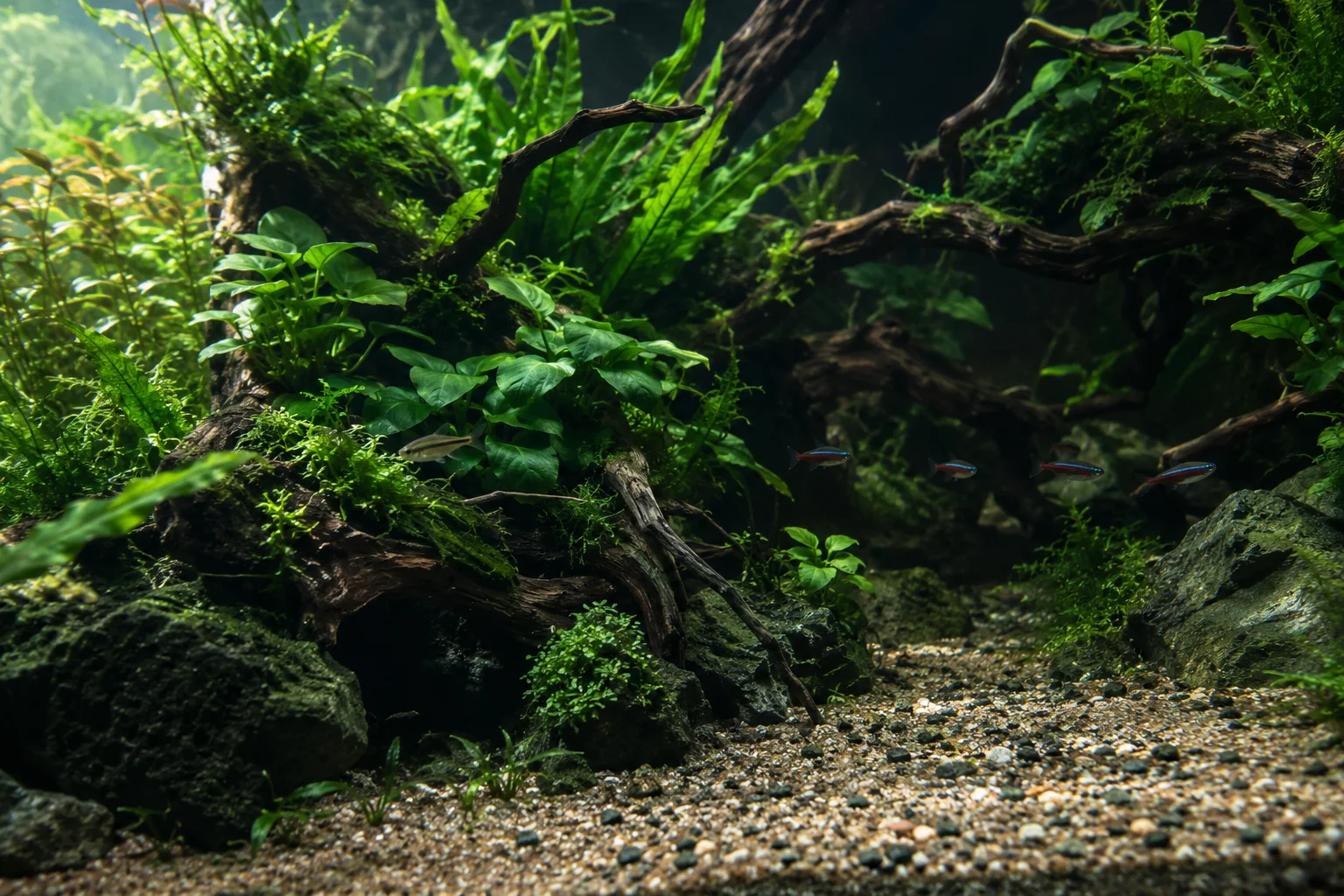
Use fine sand rather than coarse gravel, add driftwood and a few flat, smooth stones (potential spawning sites), and plant the back and sides. Open sandy areas in front give the pair space to forage. Leaf litter and a few Indian almond leaves tint the water and give the fish a feeling of security. Keep lighting moderate or use floating plants to diffuse it.
Avoid putting more than one pair in a small tank. In 40 gallons (150 L) and up, two pairs can coexist if the layout breaks lines of sight.
05
Water parameters
Stability is the key. Tank-raised German blue rams adapt to a pH up to about 7.0–7.5, but they do best in soft, slightly acidic water and suffer quickly when nitrate rises. Test weekly with a liquid kit (see our best aquarium test kit picks) and read our guide to aquarium water parameters for how each value affects your fish.
If your tap water is hard and alkaline, mixing it with RO water is the most reliable way to lower hardness. Our guide on how to lower pH in an aquarium explains the safe methods. Change water in small, regular amounts rather than large, irregular ones, and match the temperature of the new water closely.
| Parameter | Target range |
|---|---|
| Temperature | 80–86 °F (27–30 °C) |
| pH | 5.5–7.0 |
| GH (general hardness) | 1–10 °dH (20–180 ppm) |
| KH (carbonate hardness) | 0–4 °dH (0–70 ppm) |
| Ammonia / nitrite | 0 ppm |
| Nitrate | Below 20 ppm, ideally under 10 ppm |
Most German blue ram losses happen in the first weeks. Never add rams to a new tank, acclimate them slowly, and keep the temperature at least 80 °F (27 °C).
06
Diet and feeding
In the wild, rams sift mouthfuls of sand to pick out small invertebrates, larvae and plant matter. In the aquarium, offer a quality sinking micro-pellet or granule as a base, plus frozen foods several times a week: bloodworms, brine shrimp, daphnia, mysis and cyclops.
Feed small amounts twice a day. Newly imported rams can be shy feeders; frozen or live foods usually tempt them, and fast midwater fish should not steal everything before the food reaches the bottom. Remove leftovers, because uneaten food quickly pushes up ammonia and nitrate in a warm tank.
07
Behavior and tank mates
Rams are among the most peaceful cichlids. They spend their time near the bottom, sifting sand and patrolling a small territory. Pairs become territorial when they spawn and may chase other bottom dwellers away from their site, but they rarely cause real damage. A school of calm dither fish swimming in the middle layer makes rams bolder and more visible.
The main constraint is temperature: many popular fish do not like 82 °F (28 °C) long term. Cardinal tetras, rummy-nose tetras and discus are classic warm-water partners. For broader ideas, see our guide to cichlid tank mates.
- Good tank mates: cardinal tetras, rummy-nose tetras, hatchetfish, pencilfish, sterbai corydoras, otocinclus, bristlenose plecos
- With care: discus (same warm, soft water, needs a much larger tank), small rasboras
- Avoid: aggressive or large cichlids, fin nippers like tiger barbs, goldfish and cool-water fish, other bottom-hugging dwarf cichlids in small tanks
08
Breeding German blue rams
Rams form monogamous pairs. The easiest way to get one is to buy a small group of young fish and let a pair form naturally. A ready pair cleans a flat stone, a piece of slate or a pit in the sand, and the female lays roughly 100–300 eggs, which the male fertilizes. Both parents fan and guard the eggs.
At around 82–86 °F (28–30 °C), eggs hatch in about 2–3 days and the fry become free-swimming about 5 days later. Feed them infusoria or commercial fry food first, then baby brine shrimp. Young pairs often eat their first clutches; this usually stops after a few attempts. Fertile eggs need soft, acidic water, so breeding is far more successful with low hardness.
09
Common German blue ram diseases
German blue rams are sensitive to water quality, and stress from poor conditions opens the door to infections. Whenever a ram stops eating, hides or clamps its fins, test ammonia, nitrite, nitrate and temperature first.
Quarantine new arrivals for a few weeks if you can. For serious or spreading problems, contact an aquatic veterinarian and always follow the label of any medication.
| Problem | Typical signs | Where to start |
|---|---|---|
| Ich | White salt-like spots, scratching | Stable warm water and medication, see ich in fish |
| Ammonia or nitrite stress | Gasping, dark color, lethargy | Test and change water, see ammonia poisoning |
| Gill flukes | Fast breathing, flared gills, rubbing | Confirm and treat, see gill flukes |
| Bacterial infections | Cloudy eyes, red patches, ragged fins | Improve water quality, then medicate per label |
| Internal parasites | White stringy feces, weight loss | Quarantine and ask a vet for a suitable treatment |
10
Recommended gear
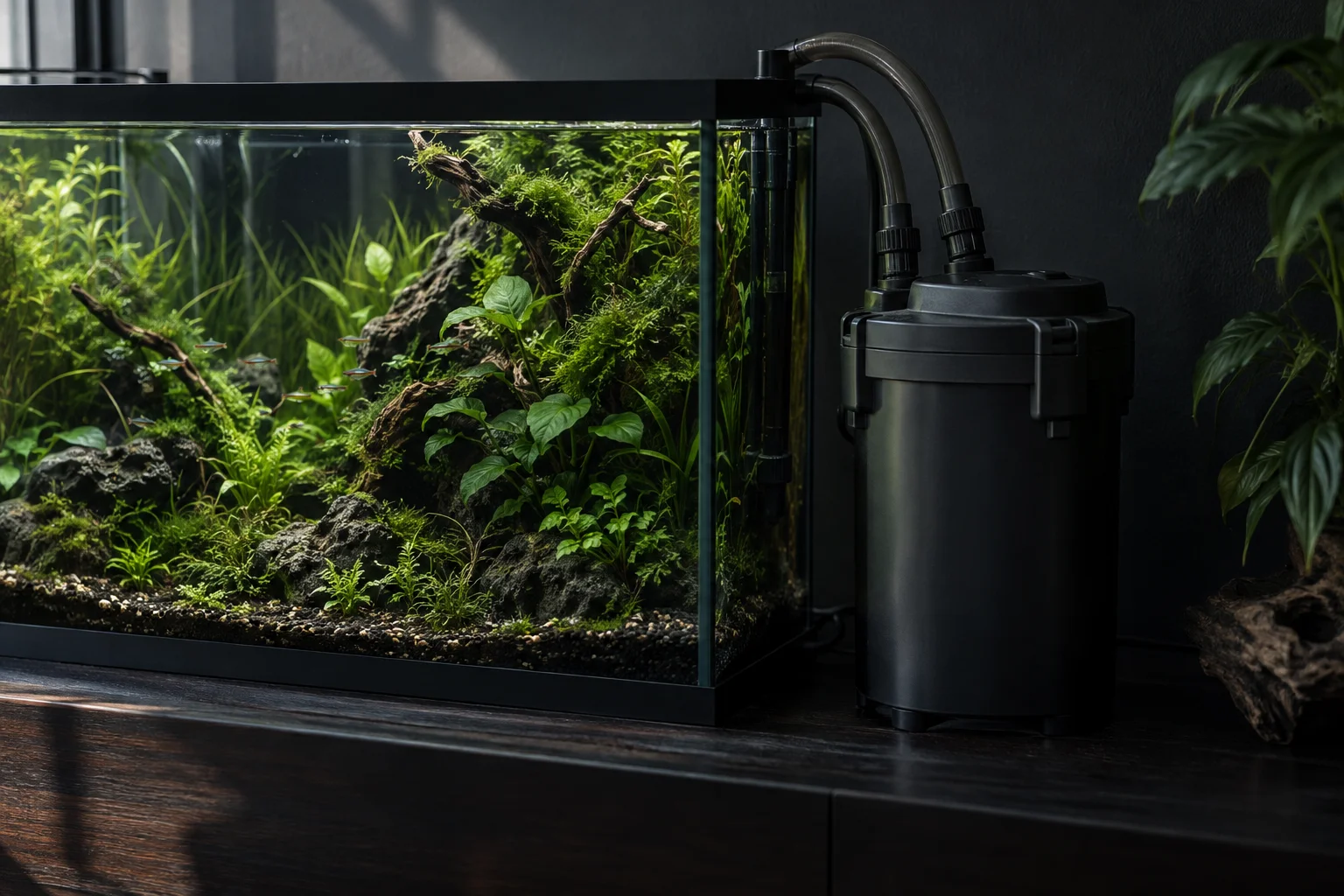
Three pieces of equipment make the biggest difference for rams. First, a dependable heater that holds 82 °F (28 °C) without swinging: a 100 W model suits most 20–30 gallon tanks, and our best aquarium heater guide compares reliable options. Second, solid biological filtration with moderate flow, for example a sponge filter or a canister in a larger tank; see our best sponge filter picks. Third, a liquid test kit.
Add a fine sand substrate (our best aquarium substrate guide lists sand options), a water conditioner that removes chlorine and chloramine, and an accurate thermometer to double-check the heater.
Frequently asked questions
Frequently asked questions
Is German blue ram care difficult?
German blue rams are not hard to feed or handle, but they are less forgiving than most community fish. They need a mature, cycled tank, warm water around 80–86 °F (27–30 °C), low nitrate and stable parameters. Keepers with a few months of experience and a regular water change routine usually succeed; they are not a good first fish for a brand-new tank.
What size tank does a German blue ram need?
A pair needs at least 20 gallons (75 L), ideally a long tank with a lot of floor space. If you want to add a school of tetras and a few bottom dwellers, 30 gallons (115 L) or more is a better choice. Larger volumes also keep temperature and water chemistry more stable, which rams appreciate.
What are the best German blue ram tank mates?
Choose calm fish that tolerate warm water: cardinal tetras, rummy-nose tetras, hatchetfish, pencilfish, sterbai corydoras, otocinclus and bristlenose plecos. Discus also share their requirements in a large tank. Avoid aggressive cichlids, fin nippers and cool-water species such as goldfish or white cloud minnows.
Can you keep a single German blue ram?
Yes. A single ram can live a normal life in a community tank and is often calmer than a pair. Pairs are more interesting to watch and will breed, but they also become territorial. Avoid keeping two males in a small tank, as they will spar constantly.
Why do German blue rams die so easily?
Most early deaths come from tanks that are too new, water that is too cool, rising nitrate or poor-quality stock from mass breeding. Buy healthy, active fish that are eating, acclimate them slowly to a mature tank kept at 80 °F (27 °C) or warmer, and change water weekly to keep nitrate low.
Sources and references
Written and reviewed by the handsoffmyhobby editorial team according to our editorial policy.