01
What makes peaceful community fish
"Peaceful" is not a fixed label printed on a fish. It depends on size, mouth size, group size and the tank around it. A neon tetra is peaceful with corydoras and dangerous to nobody, but it becomes food for an adult angelfish. A harlequin rasbora is calm in a group of ten and can turn skittish in a group of three. Choosing non-aggressive fish is really about choosing combinations that work.
Use these criteria when you build a community fish list for your tank:
- Similar size: no fish should be small enough to fit in a tank mate’s mouth once both are adult.
- No fin nippers next to slow, long-finned fish such as bettas, guppies or gouramis.
- Proper groups: schooling fish kept in groups of 8–12 stay calmer and nip less than small groups.
- Shared water: overlapping temperature, pH and hardness, so no species lives at the edge of its range.
- Different levels: mix top, middle and bottom dwellers so fish do not compete for the same space.
- One territorial fish at most: a single gourami or dwarf cichlid pair, not several rivals.
02
Community fish list compared
This table covers every species mentioned in this guide, including several good community fish that do not have their own handsoffmyhobby page yet. Minimum tank sizes assume a peaceful community, not a species-only tank. White cloud mountain minnows and zebra danios prefer cooler water than most tropical fish, so they only fit communities kept in the low-to-mid 70s °F.
| Fish | Adult size | Min. tank | Group | Temperature |
|---|---|---|---|---|
| Neon tetra | 1.2–1.5 in (3–4 cm) | 10 gal (40 L) | 10+ | 72–79 °F (22–26 °C) |
| Cardinal tetra | 2 in (5 cm) | 20 gal (75 L) | 12+ | 77–84 °F (25–29 °C) |
| Rummy-nose tetra | 2 in (5 cm) | 20 gal (75 L) | 10+ | 75–82 °F (24–28 °C) |
| Ember tetra | 0.8 in (2 cm) | 10 gal (40 L) | 10+ | 73–82 °F (23–28 °C) |
| Harlequin rasbora | 1.8 in (4.5 cm) | 10 gal (40 L) | 8+ | 72–80 °F (22–27 °C) |
| Celestial pearl danio | 0.8–1 in (2–2.5 cm) | 10 gal (40 L) | 8+ | 72–78 °F (22–26 °C) |
| Corydoras (small species) | 1–2.5 in (2.5–6 cm) | 10–20 gal (40–75 L) | 6+ | 72–79 °F (22–26 °C) |
| Kuhli loach | 3–4 in (8–10 cm) | 20 gal (75 L) | 5+ | 75–82 °F (24–28 °C) |
| Otocinclus | 1.5–2 in (4–5 cm) | 20 gal (75 L) | 5+ | 72–79 °F (22–26 °C) |
| Bristlenose pleco | 4–5 in (10–13 cm) | 30 gal (110 L) | 1 | 72–80 °F (22–27 °C) |
| Guppy (males) | 1.2–1.4 in (3–3.5 cm) | 10 gal (40 L) | 3+ | 72–82 °F (22–28 °C) |
| Platy | 2–2.4 in (5–6 cm) | 20 gal (75 L) | 3+ | 70–80 °F (21–27 °C) |
| Cherry barb | 2 in (5 cm) | 20 gal (75 L) | 6+ | 73–81 °F (23–27 °C) |
| Honey gourami | 2 in (5 cm) | 10 gal (40 L) | 1–3 | 72–82 °F (22–28 °C) |
| Pearl gourami | 4–4.7 in (10–12 cm) | 30 gal (110 L) | 1 male, 2 females | 77–82 °F (25–28 °C) |
| White cloud mountain minnow | 1.5 in (4 cm) | 10 gal (40 L) | 8+ | 64–72 °F (18–22 °C) |
| Zebra danio | 2 in (5 cm) | 20 gal (75 L) | 8+ | 65–77 °F (18–25 °C) |
Neon tetra care guide: tank, water, school size and tank mates
The classic community schooler. Small, calm and colorful, best in groups of 10 or more in a mature tank.
Fish speciesCardinal tetra care guide: tank, water, tank mates and neon comparison
A brighter, slightly larger alternative to the neon for warm, soft-water community tanks.
Fish speciesRummy nose tetra care guide: tank size, water, diet and tank mates
Tight schooling behavior and a red nose that doubles as a water-quality indicator.
Fish speciesEmber tetra care guide: tank, water, school and tank mates
One of the gentlest fish in the hobby, safe even with shrimp. Ideal for small community tanks.
Fish speciesHarlequin rasbora care guide: tank size, water, diet and tank mates
Hardy and forgiving, a great first schooling fish for a beginner community.
Fish speciesCelestial pearl danio (galaxy rasbora) care: tank size, water and tank mates
Shy micro fish for densely planted nano communities with other tiny, calm species.
Fish speciesCorydoras catfish care guide: tank, water, diet and popular species
The bottom-layer favorite. Peaceful, social and active, in groups of 6 or more of one species.
Fish speciesKuhli loach care guide: size, tank, water and tank mates
Harmless, eel-shaped loach that hides by day and forages over sand at dusk.
Fish speciesOtocinclus care guide: tank, diet, water and tank mates
Tiny algae grazer that never bothers tank mates. Needs a mature, planted tank.
Fish speciesBristlenose pleco care guide: size, tank, diet, lifespan and breeding
The peaceful pleco that stays small. One per tank is enough for algae control.
Fish speciesGuppy care guide: tank, water, tank mates and breeding
Lively livebearer for the upper water. Males only if you want to avoid constant fry.
Fish speciesPearl gourami care guide: tank size, water, tank mates and breeding
A calm, elegant centerpiece for medium and large community tanks.
03
How to build a peaceful community tank
Think in layers. Livebearers such as guppies and platies use the upper water, tetras and rasboras school in the middle, and corydoras, kuhli loaches and a bristlenose pleco work the bottom. One calm centerpiece fish, such as a honey or pearl gourami, completes the picture. Our guide to schooling fish explains why group size matters so much for behavior.
Before adding anything, cycle the tank and then add fish in small batches, starting with the hardiest species. Acclimate each group slowly and, if you can, quarantine new arrivals for a few weeks. Many "peaceful" fish only become stressed and nippy when water quality slips, so a reliable aquarium filter and weekly water changes are part of keeping the peace.
04
Sample peaceful communities by tank size
10 gallons (38 L): 10 ember tetras, 6 pygmy corydoras and a few cherry shrimp. Small, gentle and easy to balance. More ideas on the best fish for a 10 gallon tank page.
20 gallons (76 L): 10 harlequin rasboras, 6 panda corydoras, 1 honey gourami and 2 nerite snails, or swap the rasboras for neon tetras once the tank is mature. See best fish for a 20 gallon tank for two more layouts.
55 gallons (208 L): 15 cardinal or rummy-nose tetras, 10 cherry barbs, 3 pearl gouramis (1 male, 2 females), 8 corydoras, 6 kuhli loaches and 1 bristlenose pleco. The best fish for a 55 gallon tank guide adds angelfish and dwarf cichlid options.
Beginner? Start from our best beginner fish list: almost every species on it is also a good peaceful community fish.
05
Non-aggressive fish? These ones are often mislabeled
Some fish are sold in the "community" section but cause problems in many mixed tanks. They are not bad fish, they just need the right setup or tank mates.
- Tiger barbs: notorious fin nippers. Keep them in a large group of their own, away from slow, long-finned fish.
- Serpae and black skirt tetras: nippy, especially in small groups, and risky with bettas or angelfish.
- Red-tailed and rainbow sharks: territorial near the bottom and increasingly aggressive with age.
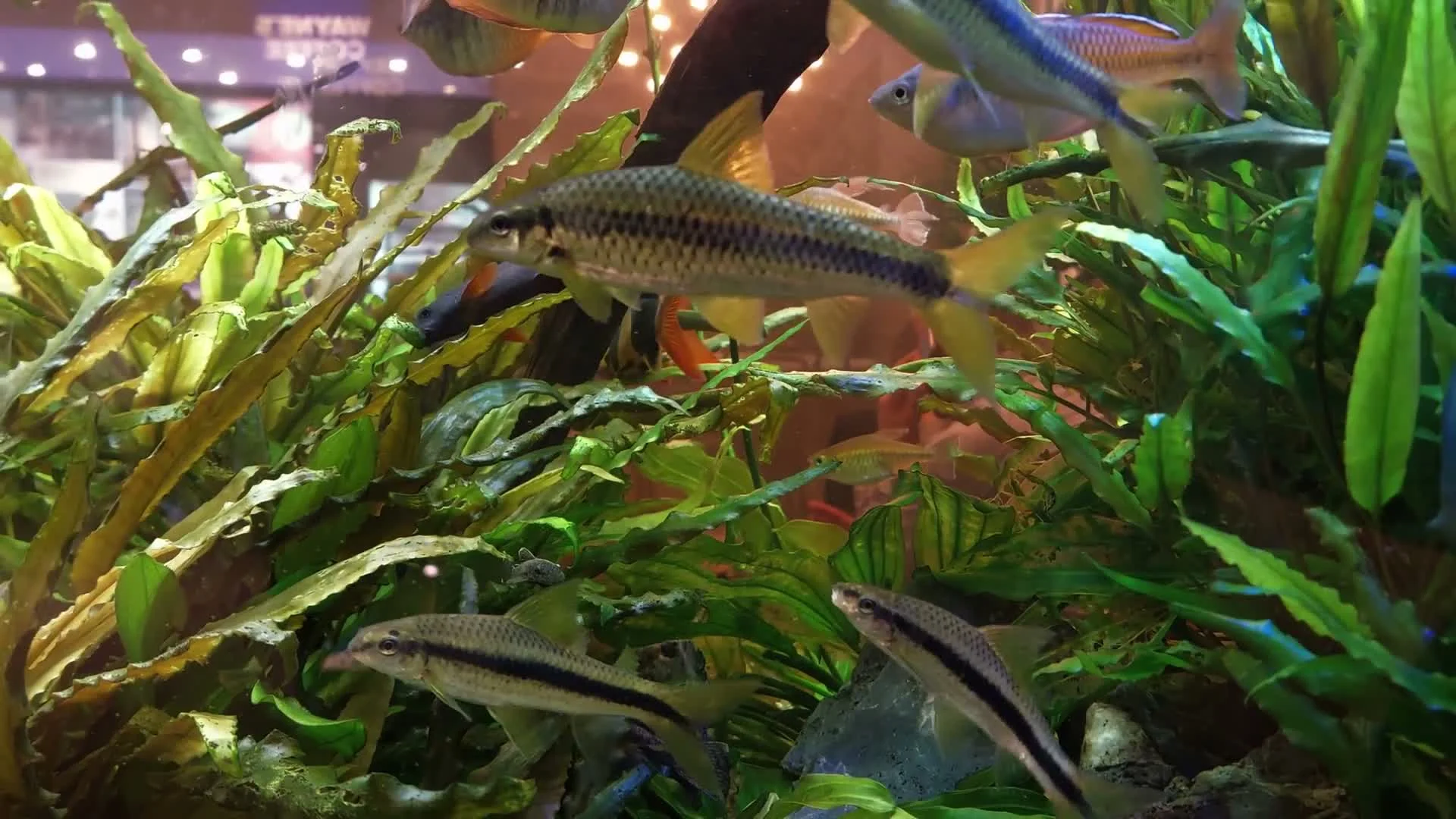
- Chinese algae eaters: calm when young, pushy and large as adults.
- Angelfish: peaceful with fish their size, but adults eat neons and other small tetras. See angelfish tank mates.
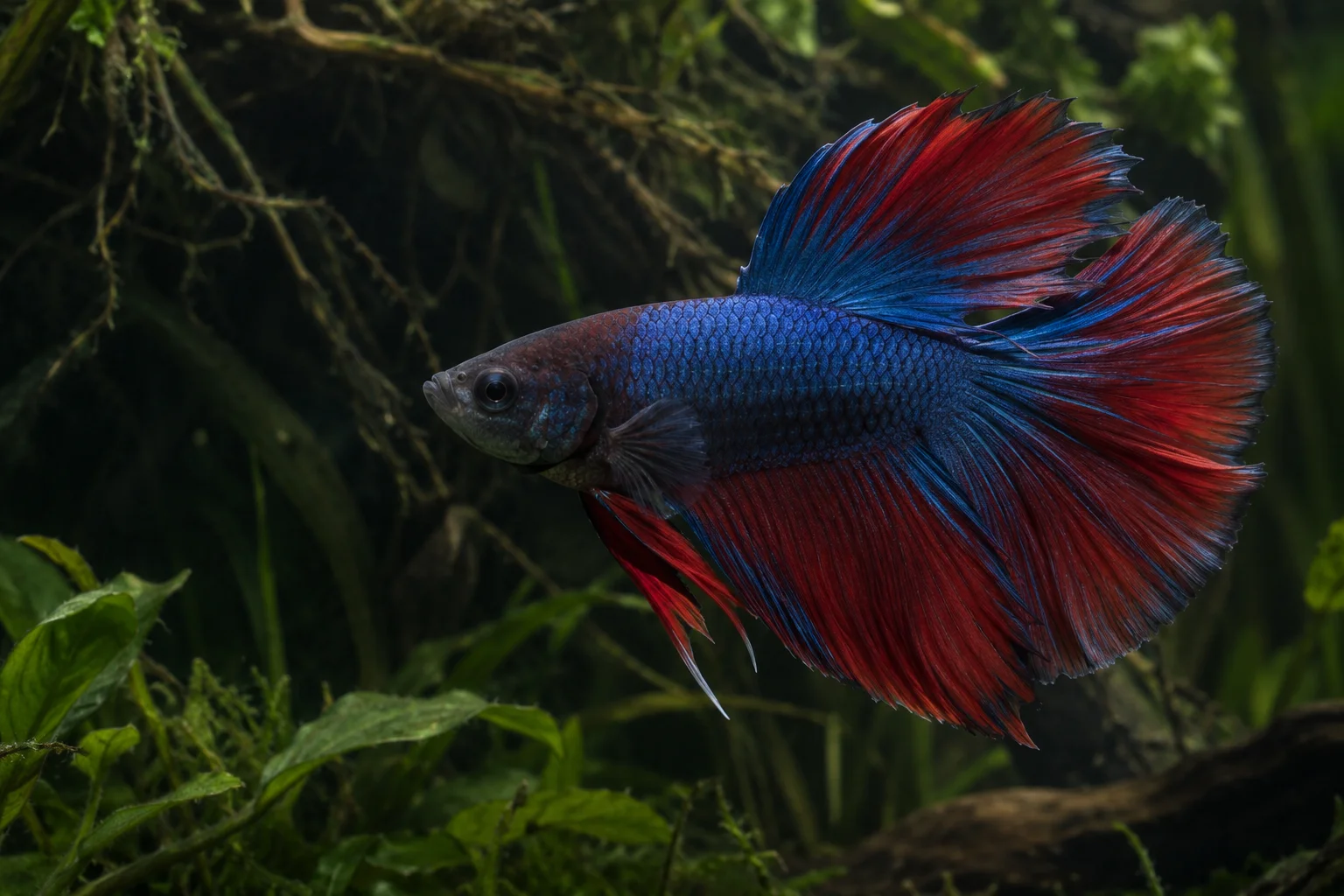
- Male bettas and dwarf gouramis: one per tank. Two males fight, and bettas suffer with nippers; our betta tank mates guide lists safe options.
- Convict cichlids and most African cichlids: territorial, especially when breeding, and not for a mixed community.
Frequently asked questions
Frequently asked questions
What is the most peaceful community fish?
Ember tetras, otocinclus, corydoras and kuhli loaches are among the gentlest fish in the hobby. They do not nip, do not claim territory and ignore even shrimp. For a slightly larger, still very calm fish, harlequin rasboras and honey gouramis are excellent. Peacefulness also depends on keeping them in proper groups and in stable water.
How many peaceful community fish can I keep together?
It depends on tank size and adult size. A 10-gallon tank holds roughly 10–16 very small fish, a 20-gallon 15–25 small fish, and a 55-gallon 40–60 small and mid-sized fish. Count each species as a group, keep schoolers at 8 or more, and watch nitrate between water changes: a steady rise means you are near the limit.
Which community fish list is best for beginners?
Start with hardy, forgiving species: harlequin rasboras, panda or bronze corydoras, platies, male guppies, cherry barbs and a bristlenose pleco in larger tanks. Add more sensitive fish such as neon tetras, cardinals and otocinclus once the tank has been stable for a couple of months.
Can peaceful fish become aggressive?
Yes. Overcrowding, too-small groups, a lack of hiding places, competition at feeding time and poor water quality can all make normally calm fish chase or nip. Breeding pairs also defend territory. Most problems disappear when you fix the cause, for example by enlarging a school or adding plants and caves.
Can bettas live in a peaceful community tank?
Many can, in 10 gallons or more with calm tank mates such as kuhli loaches, small corydoras, ember tetras or snails. Avoid fin nippers, fancy guppies and other labyrinth fish. Each betta has its own temperament, so watch closely for the first weeks and be ready to separate it if it attacks.
Sources and references
Written and reviewed by the handsoffmyhobby editorial team according to our editorial policy.