01
Before you buy: what a first aquarium really involves
A freshwater aquarium is a small living system, not a piece of decor. The fish depend on bacteria that turn their waste into less toxic compounds, and those bacteria need weeks to grow. Most beginner losses happen because fish are added to a brand-new tank, too many at once, or because a tank was too small to stay stable. This aquarium beginner guide is built to avoid those three traps.
Plan for about 30 minutes a week of maintenance once the tank is running, plus a few minutes a day to feed and check the fish. Expect a waiting period of 4–8 weeks between setting up the tank and adding most of your fish. If that sounds like a lot, it is the reason the tank will still be healthy a year from now.
Freshwater tropical community tanks are the best start. Saltwater, discus and large cichlids can wait until you have kept a stable tank for a year.
02
Budget: what a first fish tank costs
The tank itself is often the cheapest part. Equipment, a stand that can hold the weight and running costs add up, so set a realistic budget before you shop. All-in-one kits are a good deal for beginners if they include a decent filter and a lid, but many include a weak heater or none at all, so check the box contents.
| Item | 10 gallon setup | 20 gallon setup | Notes |
|---|---|---|---|
| Tank, lid and light (or kit) | $40–120 | $80–200 | Kits are cheapest; check the filter and heater included |
| Stand | $0–80 | $60–150 | Must hold about 10 lb per gallon when full |
| Filter | $15–40 | $25–60 | Often included in kits |
| Heater | $20–35 | $25–40 | Adjustable, about 3–5 watts per gallon |
| Substrate, decor and plants | $30–60 | $50–100 | Live plants help water quality |
| Conditioner, test kit, bucket, siphon | $50–70 | $50–70 | One-time purchases, conditioner lasts months |
| Fish (first batches) | $20–50 | $40–100 | Added gradually over weeks |
| Electricity and supplies per month | $3–8 | $5–10 | Mostly the heater, depends on room temperature |
How to cycle a fish tank: the complete nitrogen cycle guide
The most important step of this guide, explained in detail with a day-by-day fishless cycle.
Fish speciesBest beginner fish: 11 hardy, easy fish to keep in your first tank
Hardy, peaceful species that forgive the small mistakes every new aquarist makes.
Setup & stockingBest fish for a 10 gallon tank: species, numbers and stocking ideas
Sample communities and exact counts if your first tank is a 10 gallon.
PlantsBest aquarium plants for beginners: 15 easy live plants
Easy plants that grow under stock lights and help keep the water clean.
Gear reviewsBest aquarium filter: 7 top picks for every tank size
How to pick the filter type and size that suits your first tank.
Gear reviewsBest water conditioner for aquariums: 6 dechlorinators compared
The one product you will use at every water change, compared.
03
Choose the right tank size
Bigger is easier. A larger volume of water dilutes waste and changes temperature slowly, so one mistake does not become a disaster overnight. For a first aquarium, a 20 gallon (75 L) long or standard tank is the sweet spot: affordable, light enough for most furniture-grade stands, and big enough for a real community. A 10 gallon (38 L) tank is a fine minimum if space is tight; compare options in our best 10 gallon aquarium and best 20 gallon aquarium reviews.
Avoid bowls and tanks under 5 gallons (19 L) as a first setup. They look simple but swing too fast in temperature and ammonia. Prefer a long, rectangular footprint over a tall or curved one: more surface area means better gas exchange and more swimming room. Always use a lid, since many fish jump.
04
Pick the right location
A filled aquarium weighs roughly 10 pounds per gallon (about 1.2 kg per litre) once you count glass, gravel and decor. A 20 gallon tank is over 200 lb (90 kg), so it needs a dedicated aquarium stand or very solid furniture, placed on a level floor. Once the tank is full, you cannot move it without draining it.
- Away from windows: direct sun causes algae blooms and overheating.
- Away from radiators, heating vents, air conditioners and exterior doors that cause temperature swings.
- Close to a power outlet, with a drip loop on every cable so water cannot run into the socket. A power strip with a surge protector or GFCI outlet is strongly recommended.
- Easy access for maintenance: you need room above the tank to work and a short path for buckets.
- A calm spot with a little traffic is fine; avoid placing it right next to speakers or slamming doors.
05
Aquarium checklist: the equipment you need
This aquarium checklist covers everything a freshwater tropical tank needs on day one. Size each item for your tank volume, and choose quality on the filter and heater, which are the two pieces of equipment that keep fish alive.
- Tank and lid, plus a level stand rated for the full weight.
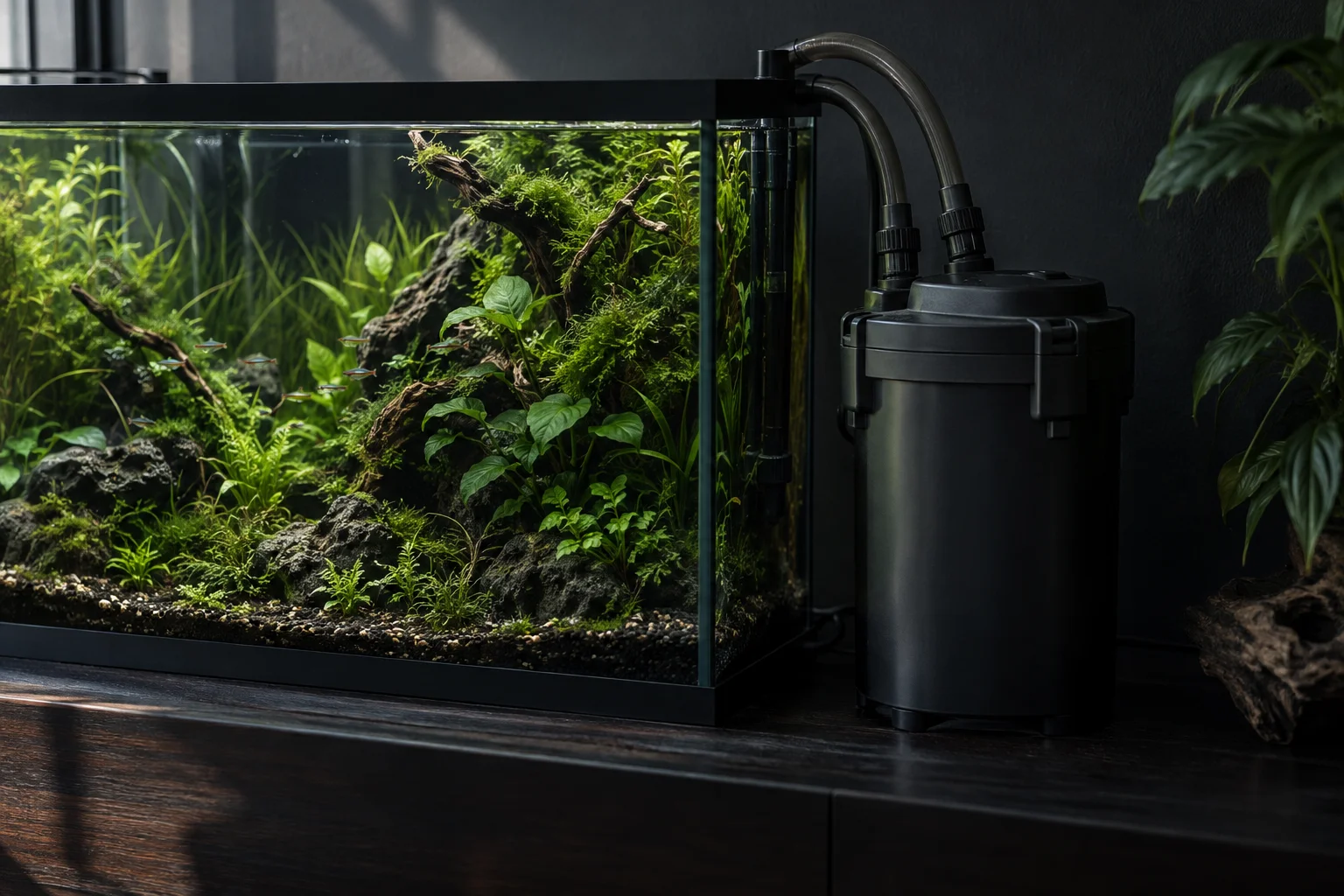
- Filter rated for at least your tank size, ideally turning over the volume 4–6 times per hour. See the best aquarium filter guide; sponge filters suit small or shrimp tanks.
- Heater with an adjustable thermostat, about 3–5 watts per gallon. Our best aquarium heater review compares reliable models.
- Thermometer, separate from the heater, to catch a stuck thermostat.
- LED light on a timer, 6–8 hours per day to start.
- Substrate: 1.5–2 inches (4–5 cm) of gravel or sand, or a plant substrate if you want a planted tank.
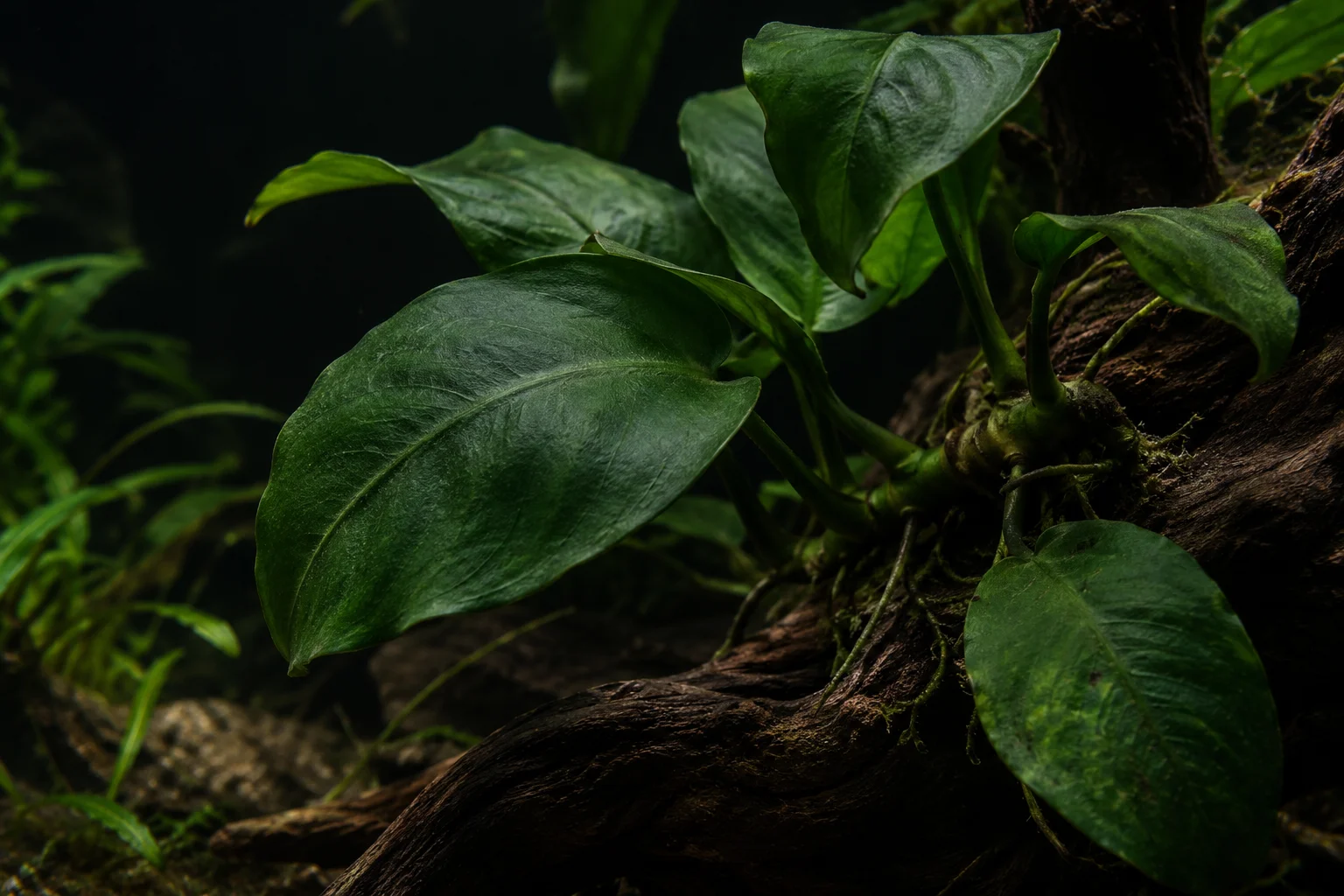
- Decor and plants: rocks, wood and easy live plants that give fish cover.
- Water conditioner that removes chlorine and chloramine; compare them in our best water conditioner review.
- Liquid test kit for ammonia, nitrite, nitrate and pH. Strips are less accurate; see the best aquarium test kit.
- Gravel vacuum and a dedicated bucket never used with soap. A gravel vacuum makes weekly water changes quick.
- Fish net, algae scraper and quality flake or pellet food.
06
How to set up a fish tank step by step
Set aside an afternoon. None of these steps involve fish yet: the goal today is a filled, running, heated tank that can start to cycle.
- Rinse the tank with plain water only, never soap or household cleaners, and check the seams for damage.
- Place the stand, check that it is level in both directions, then set the tank on it (on the mat if the manufacturer requires one).
- Rinse gravel or sand in a bucket until the water runs almost clear. Nutrient-rich plant substrates usually should not be rinsed: follow the label.
- Add the substrate, sloping it slightly higher at the back, then place rocks and wood. Make sure stones are stable and cannot fall against the glass.
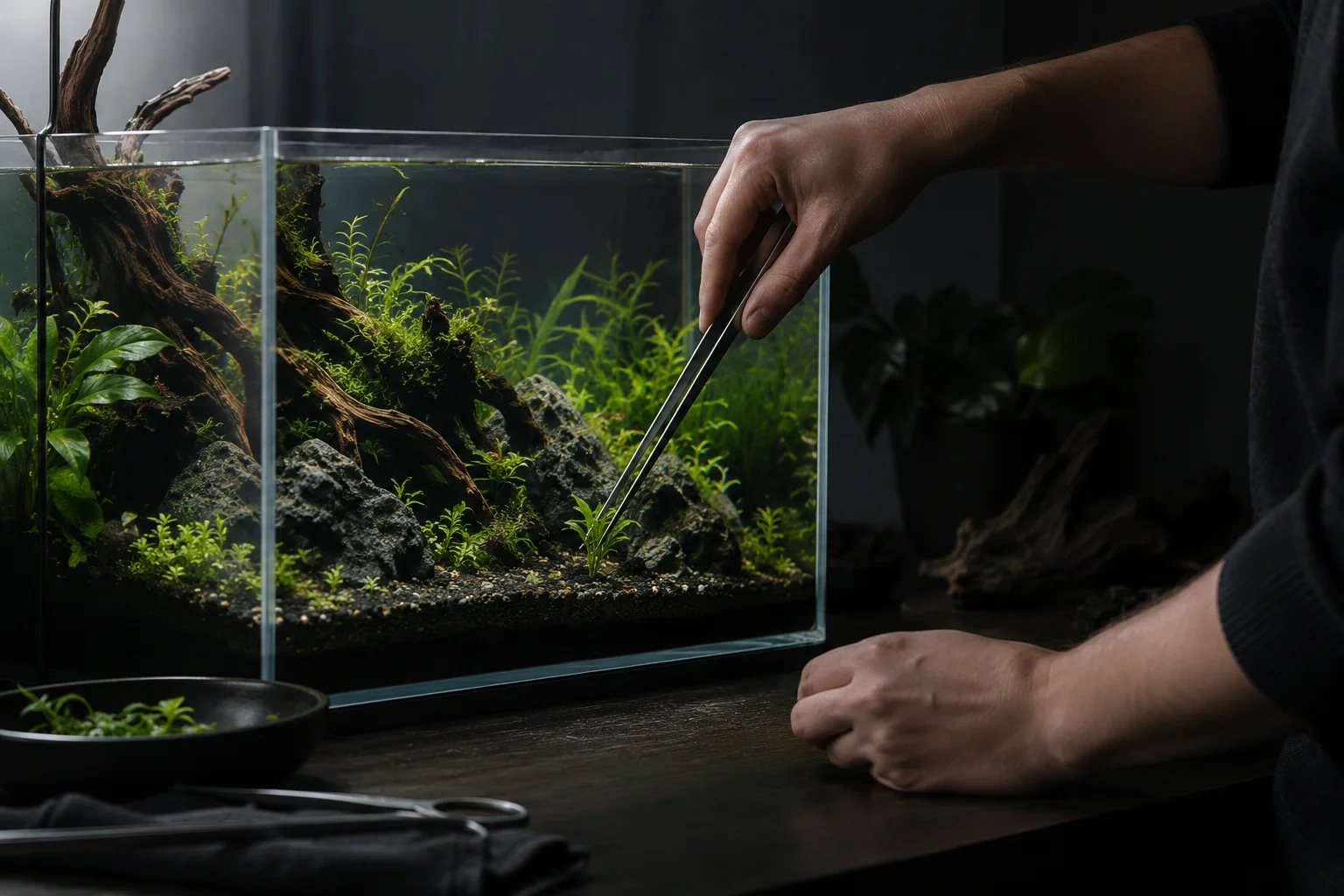
- Fill the tank one third with water, pouring onto a plate or bag to avoid craters, then plant your live plants while you can still reach the bottom.
- Fill to just below the rim and dose water conditioner for the full volume.
- Install the filter and start it. Place the heater near the filter outflow so warmth spreads evenly, and wait about 30 minutes before plugging it in so the glass adjusts to the water temperature.
- Set the heater to 76–78 °F (24–26 °C), add the thermometer at the opposite end, and put the light on a timer.
- Check the next day: temperature stable, no leaks, filter flowing. Then start the cycle.
07
Cycle the tank before adding fish
Cycling builds the colony of beneficial bacteria that converts toxic ammonia into nitrite, then into much less harmful nitrate. Skipping it causes new tank syndrome, the number one cause of fish death in a first aquarium. A fishless cycle is the kindest method: add a source of ammonia, such as bottled pure ammonia or a little fish food, and test every few days.
Your tank is cycled when it can turn a dose of about 2 ppm ammonia into 0 ppm ammonia and 0 ppm nitrite within 24 hours, with nitrate rising. This usually takes 4–8 weeks; bottled bacteria and a handful of mature filter media from a healthy tank can shorten it. Our complete guide on how to cycle a fish tank gives a day-by-day plan, and the aquarium water parameters page explains every number on your test kit.
Cloudy white water in the first weeks is usually a harmless bacterial bloom. Do not add fish to fix it, and do not panic-clean the filter. Most of the time it clears on its own.
08
Choose and add your first fish
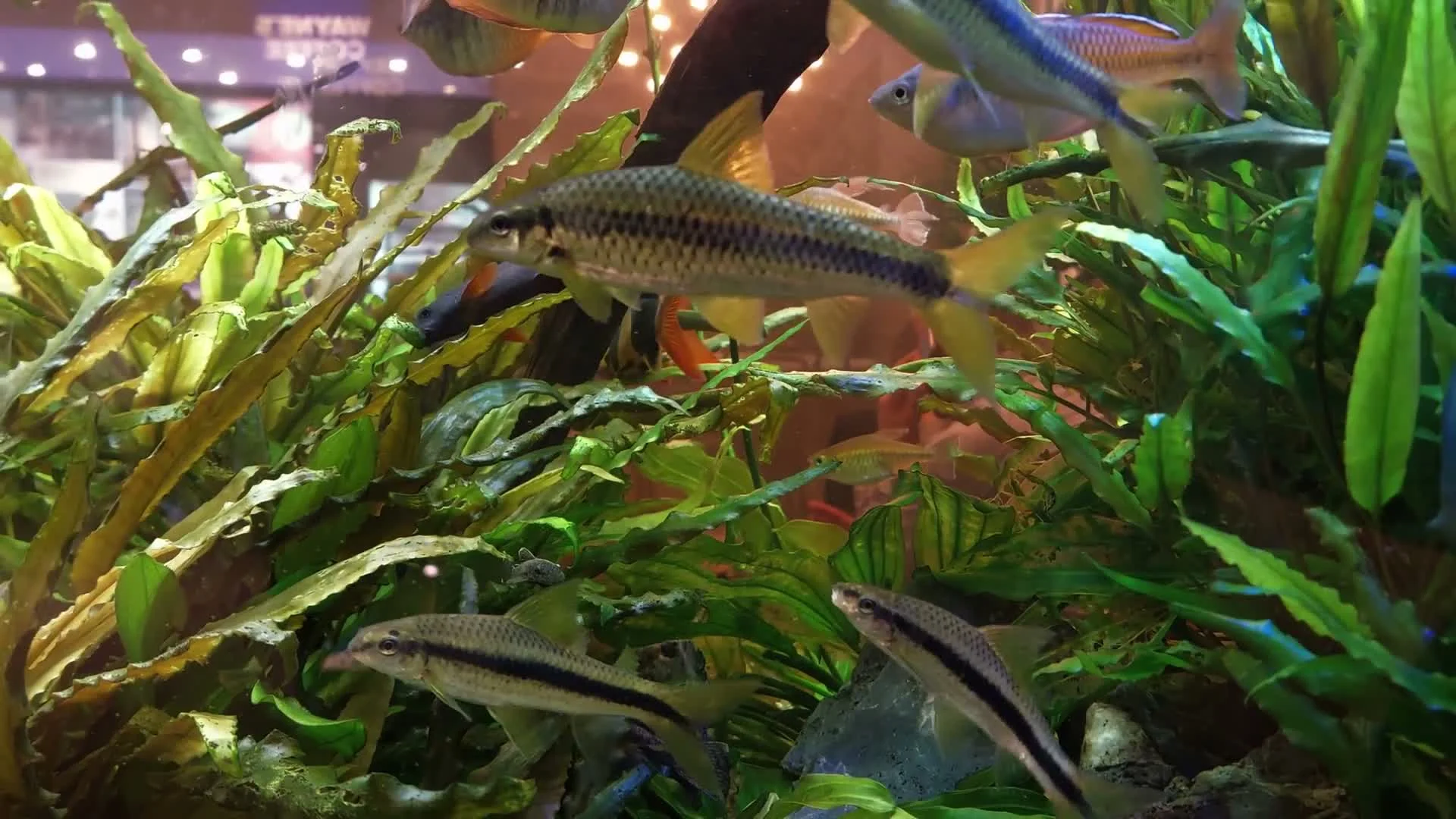
Your first fish should be hardy, peaceful and small enough for your tank as adults. Good starting points are harlequin rasboras, zebra danios in tanks with enough length, male guppies or platies, pygmy or panda corydoras, and in a 5–10 gallon tank a single betta. Our list of the best beginner fish compares them, and the peaceful community fish page shows which species mix well. If your tank is 10 gallons, start with our best fish for a 10 gallon tank plans.
Stock in stages. Add one small group, wait 2–3 weeks while testing the water, then add the next group. Float the bag to match temperature and introduce the fish slowly, as explained in how to acclimate fish. Never pour store water into your tank. Research adult size and temperament before buying, and ask the store for the scientific name if a label is vague.
09
Your first month routine
The first month with fish is when a new tank is most fragile. The bacteria colony is still adjusting to the real waste load, so test often and keep feeding light. Feed only what the fish finish in about one to two minutes, once or twice a day; overfeeding is the most common way beginners pollute a tank. See how often to feed aquarium fish for details.
| When | Task | Why |
|---|---|---|
| Daily | Feed lightly, count fish, check temperature and filter flow | Spot problems before they spread |
| Every 2–3 days (weeks 1–2) | Test ammonia and nitrite | Catch a mini cycle after adding fish |
| Weekly | Change 20–30% of the water with conditioned, temperature-matched water and vacuum the substrate | Removes nitrate and debris |
| Weekly | Test nitrate and pH, wipe algae off the front glass | Track water quality trends |
| Monthly | Rinse filter sponges in removed tank water, trim plants | Keeps flow up without killing bacteria |
Never replace all the filter media at once or rinse it under the tap. Chlorine and a full media swap wipe out the bacteria you spent weeks growing.
10
Common beginner mistakes to avoid
Almost every new aquarist makes at least one of these. Knowing them in advance is the easiest way to keep your first fish alive. When a weekly water change comes around, follow our aquarium water change guide, and for deeper cleans read how to clean a fish tank.
- Adding fish on setup day, or all the fish at once.
- Choosing a tank that is too small, or fish that will outgrow it.
- Overfeeding, then fighting cloudy water and algae.
- Using untreated tap water during water changes.
- Cleaning the filter under the tap or replacing cartridges every month.
- Chasing a perfect pH with chemicals instead of keeping conditions stable.
- Mixing incompatible fish because they looked good together in the store.
11
When to get help
Act quickly if fish gasp at the surface, clamp their fins, stop eating or show spots or torn fins. First test the water: ammonia or nitrite above 0 ppm calls for an immediate 30–50% water change and a review of feeding and filtration, as explained in our guide to ammonia poisoning in fish. Persistent haze is covered on the cloudy fish tank water page, and diseases are listed in our troubleshooting section. If several fish are sick despite good water, contact an aquatic veterinarian or an experienced local fish store before medicating.
Frequently asked questions
Frequently asked questions
What is the best aquarium size for a beginner?
A 20 gallon (75 L) tank is the best size for most beginners. It is stable, affordable, fits on a sturdy stand and holds a real community of small fish. A 10 gallon (38 L) tank works if space is limited, but it is less forgiving. Avoid bowls and tanks under 5 gallons as a first aquarium.
How long after setting up a tank can I add fish?
Wait until the tank is cycled, usually 4–8 weeks. The tank is ready when it converts about 2 ppm of ammonia to 0 ppm ammonia and 0 ppm nitrite within 24 hours, with nitrate showing. Bottled bacteria or mature filter media can shorten the wait, but always confirm with a liquid test kit.
How do I set up a fish tank for the first time?
Rinse the tank, set it on a level stand, add rinsed substrate, hardscape and plants, then fill with water and dose a conditioner. Start the filter, wait about 30 minutes before plugging in the heater, set it to 76–78 °F, and cycle the tank for several weeks before adding a first small group of hardy fish.
Is a fish tank kit good for beginners?
A kit is a good start if it includes a lid, a filter rated for the volume and an LED light. Many kits skip the heater or include a fixed, low-quality one, and few include a liquid test kit or conditioner. Budget for those separately and upgrade the heater if needed.
How often should I clean a beginner aquarium?
Change 20–30% of the water once a week and vacuum the substrate at the same time. Rinse filter sponges in removed tank water about once a month, only when flow drops. Wipe the glass as needed. Avoid big deep cleans: stability matters more than a spotless tank.
What are the easiest fish for a first aquarium?
Hardy, peaceful fish such as harlequin rasboras, male guppies, platies, zebra danios (in longer tanks), corydoras and a single betta in a smaller tank are good first choices. Add them in small groups a few weeks apart, after the tank is cycled, and check adult sizes before buying.
Sources and references
Written and reviewed by the handsoffmyhobby editorial team according to our editorial policy.