Fact sheet
- Common names
- Dwarf gourami, powder blue gourami, flame gourami
- Family
- Osphronemidae (labyrinth fish)
- Origin
- India, Bangladesh, Pakistan (Ganges and Brahmaputra basins)
- Adult size
- 2.5–3.5 in (6–9 cm); females slightly smaller
- Lifespan
- 3–4 years
- Minimum tank
- 10 gallons (38 L) for one male, 20 gallons (76 L) for a trio
- Temperature
- 74–80 °F (23–27 °C)
- pH
- 6.0–7.5
- Hardness
- GH 4–12 °dH, KH 2–8 °dH
- Diet
- Omnivore (algae, small insects and larvae in the wild)
- Temperament
- Peaceful but shy; males territorial toward each other
- Care level
- Easy to moderate (health of store stock is the main risk)
01
Dwarf gourami care at a glance
The dwarf gourami is a small labyrinth fish from South Asia, sold in almost every US fish store in several color forms: the classic red and blue striped male, the solid powder blue, the bright red flame, and the neon blue. Males carry all that color; females are silver-gray with faint stripes and are rarely offered for sale.
Like bettas, dwarf gouramis breathe atmospheric air through a labyrinth organ, so they rise to the surface regularly to gulp air. They are calm, curious fish that explore plants with their long, thread-like pelvic fins, which work as touch and taste organs. Done well, dwarf gourami care gives you a showpiece fish for a peaceful community tank without the size or aggression of larger gouramis. Before you buy one, make sure the tank is fully cycled.
- Tank: 10 gallons minimum for one male, 20 gallons or more for a group or community
- Heater: adjustable, set around 77 °F (25 °C)
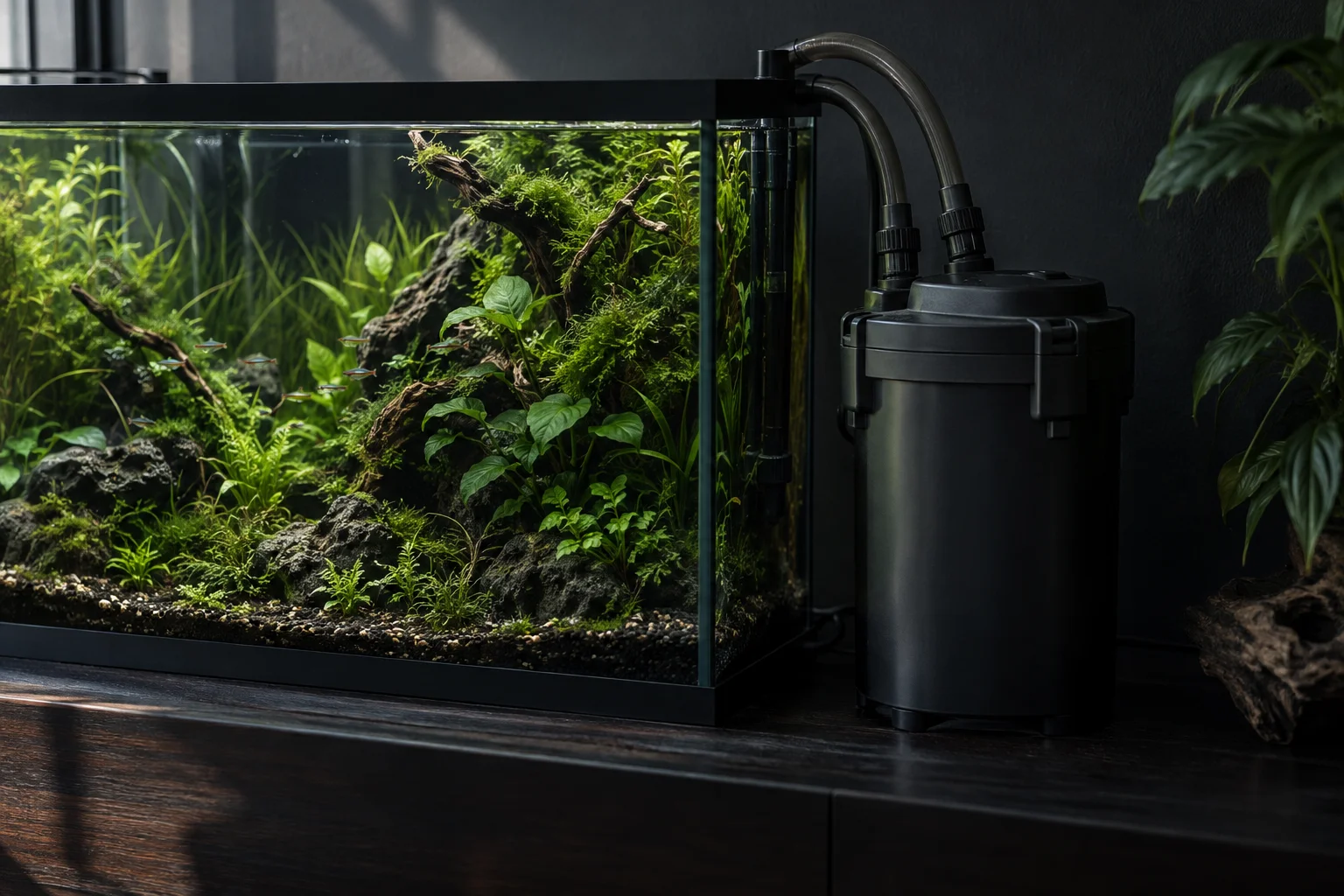
- Filter: gentle surface flow; a sponge filter or a low-flow hang-on-back works well
- Plants: dense planting plus floating plants to diffuse the light
- Lid: keeps the warm, humid air above the water that labyrinth fish rely on
02
Origin and natural habitat
Wild Trichogaster lalius live in the lowlands of India, Bangladesh and Pakistan, mainly in the Ganges and Brahmaputra river systems. They inhabit slow streams, ponds, rice paddies, irrigation ditches and lake margins: warm, often shallow water with thick vegetation and little current.
Those habitats explain most of their needs in the aquarium. Dwarf gouramis feel exposed in bare, brightly lit tanks with strong flow, and they show their best color among plants and under floating cover. The species was long known as Colisa lalia, a name you will still see on store labels and in older books.
03
Adult size and lifespan
Adult males usually reach 2.5–3.5 inches (6–9 cm), with females a little smaller and rounder. Most fish sold in stores are young males around 1.5–2 inches (4–5 cm) that still have some growing to do.
A healthy dwarf gourami lives about 3–4 years, occasionally longer. Many die much sooner, and the reason is usually not care but health problems carried from farms, covered in the disease section below.
04
Dwarf gourami tank size
A single male can live in a planted 10-gallon (38 L) tank. For a male with two females, or a dwarf gourami as the centerpiece of a community with a school of small fish, plan on 20 gallons (76 L) or more. If you are choosing a tank now, our best 20-gallon aquarium guide compares kits that suit this species well.
Do not keep two males in a tank under about 30 gallons. Males claim a territory around their chosen nest site and chase rivals constantly, and the weaker male stops eating and hides. In larger, very densely planted tanks, two males can sometimes share if their territories are out of sight of each other, but it is never guaranteed.
05
Water parameters
Dwarf gouramis tolerate most US tap water once it is treated with a water conditioner to remove chlorine and chloramine. They prefer slightly soft, slightly acidic to neutral water, but stability matters far more than hitting a perfect pH. Check the basics with a reliable aquarium test kit, and see our guide to aquarium water parameters for how to read the results.
| Parameter | Target range |
|---|---|
| Temperature | 74–80 °F (23–27 °C) |
| pH | 6.0–7.5 |
| GH (general hardness) | 4–12 °dH (70–200 ppm) |
| KH (carbonate hardness) | 2–8 °dH (35–140 ppm) |
| Ammonia / nitrite | 0 ppm |
| Nitrate | Below 20 ppm |
06
Diet and feeding
In the wild, dwarf gouramis graze on algae and biofilm and pick off small insects, larvae and zooplankton. In the aquarium they accept almost everything. Build the diet around a quality small pellet or flake, then add frozen or live foods such as bloodworms, brine shrimp, daphnia and mosquito larvae two or three times a week. A vegetable-based flake or spirulina food now and then rounds things out.
Feed small amounts once or twice a day, only what is eaten within a couple of minutes. Gouramis are slower and more cautious than tetras and barbs, so watch that faster tank mates do not take everything first. Our guide on how often to feed aquarium fish explains how to adjust portions.
07
Behavior and dwarf gourami tank mates
Dwarf gouramis are peaceful toward other species but can be timid, especially when first added. They stay mostly in the upper and middle levels of the tank. Males become more assertive when building a bubble nest and may chase fish that come close to it, which is normal and usually harmless in a well-planted tank.
Good dwarf gourami tank mates are small, calm fish that occupy other levels and do not nip fins. Schools of harlequin rasboras, neon tetras or ember tetras work well, along with bottom dwellers such as corydoras and kuhli loaches.
- Usually compatible: small tetras and rasboras, corydoras, otocinclus, kuhli loaches, bristlenose plecos, nerite snails
- Risky: cherry shrimp (adults usually safe, shrimplets get eaten), other gourami species in small tanks
- Avoid: a second male dwarf gourami in small tanks, bettas (similar look and habits trigger fights), fin nippers like tiger barbs, large or aggressive cichlids
08
Breeding dwarf gouramis
Dwarf gouramis are bubble-nest builders. A conditioned male blows a nest of bubbles mixed with bits of plant at the surface, usually among floating plants. He then displays to a ripe female, and the pair spawns under the nest in an embrace. The male collects the sinking eggs and places them in the nest.
A spawn can contain several hundred eggs. Remove the female after spawning, because the male guards the nest aggressively. The eggs hatch in about 24–36 hours, and the fry become free-swimming roughly 3 days later; remove the male at that point. The fry are tiny and need infusoria or similar first foods for the first week, then baby brine shrimp. A breeding tank with low water (4–6 in, or 10–15 cm), a tight lid to keep the air warm and humid, and lots of floating plants gives the best results.
09
Dwarf gourami disease and common health problems
The biggest issue with this species is dwarf gourami iridovirus (DGIV), a viral disease widely reported in farmed stock. Infected fish lose color, become lethargic, stop eating and may develop sores or a swollen belly. There is no cure, and affected fish usually die. Our dedicated page on dwarf gourami disease explains signs, what to do with a sick fish and how to protect the rest of the tank.
You cannot see the virus in the store, but you can lower the risk: buy from a shop with good turnover and clean tanks, avoid any tank with dead or lethargic gouramis, and quarantine new fish for 2–4 weeks. Bacterial infections such as columnaris and fin problems are also common in stressed fish, and like all tropical fish they can catch ich. Keep water quality high and contact an aquatic veterinarian for persistent or worsening problems.
| Problem | Typical signs | Where to start |
|---|---|---|
| Dwarf gourami iridovirus | Color loss, lethargy, sores, swollen belly | Isolate the fish, see dwarf gourami disease |
| Bacterial infections | Ulcers, white patches, frayed fins | Water quality first, then fin rot treatment |
| Ich | White salt-like spots, scratching | Follow our ich treatment guide |
| Stress and hiding | Pale color, refusing food | Check tank mates, flow and cover |
10
Recommended gear
Dwarf gouramis need the same basics as any small tropical fish. A reliable heater with an accurate thermostat is the first item; our best aquarium heater guide covers dependable models for 10–20 gallon tanks. For filtration, keep the flow gentle at the surface so the fish can reach the air and nests are not torn apart. A sponge filter is ideal in a small tank, while a hang-on-back with an adjustable flow suits a 20-gallon community.
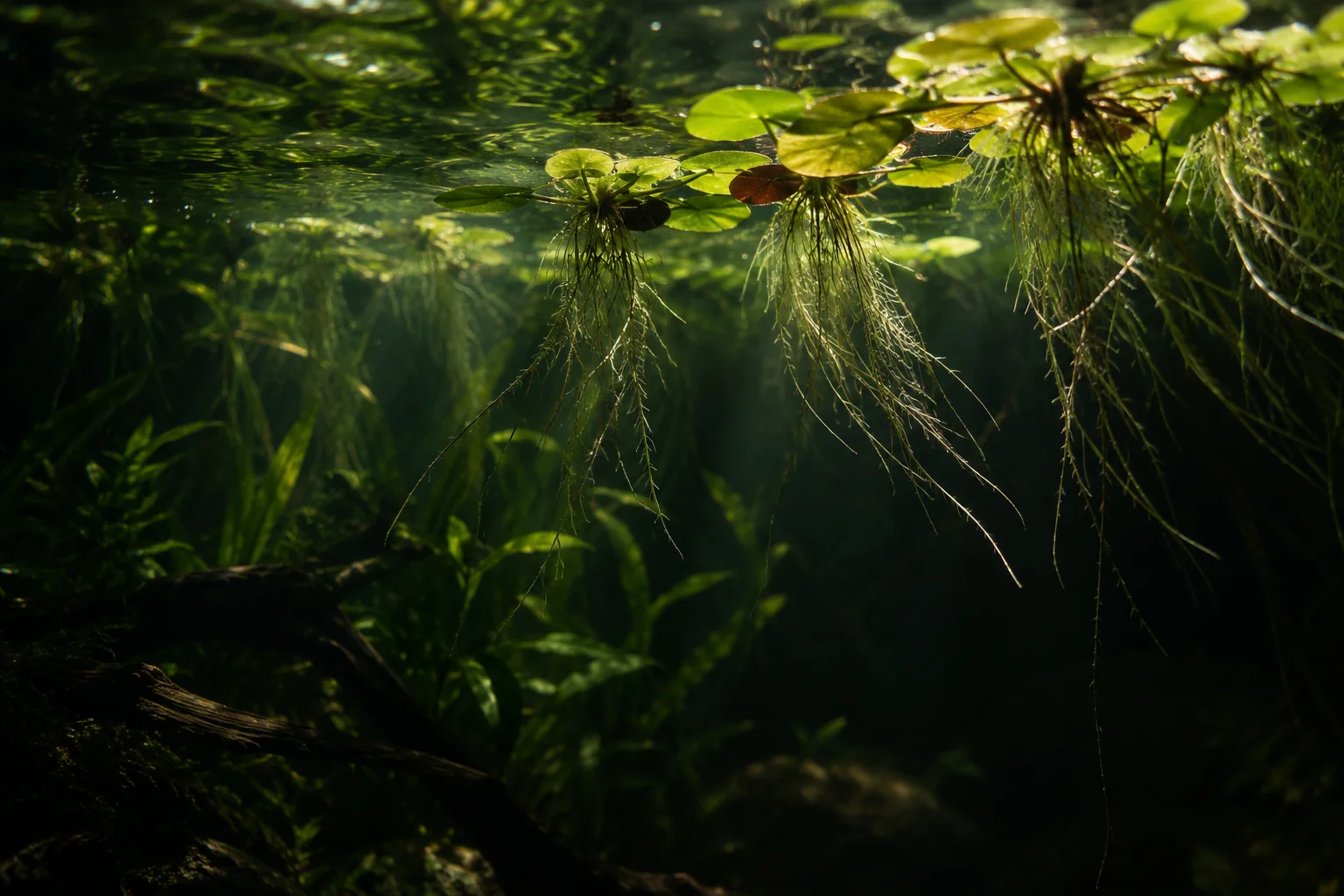
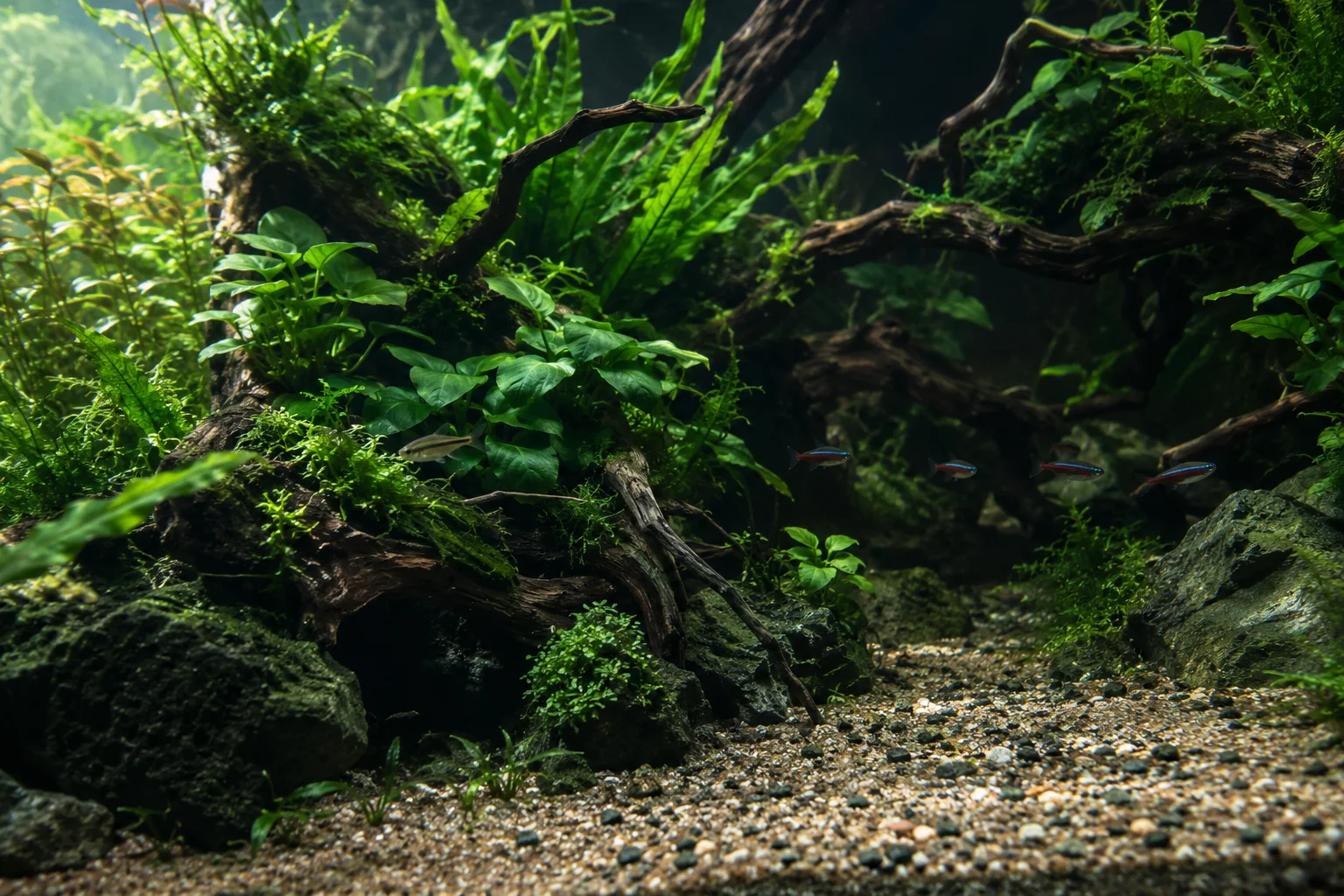
Live plants make a visible difference with this species. Stem plants, java fern, anubias and a layer of floating plants such as salvinia or frogbit give cover, nest material and a softer light that brings out the male’s colors.
Frequently asked questions
Frequently asked questions
How big does a dwarf gourami get?
Adult males usually reach 2.5–3.5 inches (6–9 cm). Females stay slightly smaller. Fish sold in stores are often juveniles around 1.5–2 inches that will grow over the next few months, so plan the tank for the adult size.
What are the best dwarf gourami tank mates?
Choose small, peaceful fish that do not nip fins: schools of rasboras or small tetras, corydoras, kuhli loaches, otocinclus and bristlenose plecos. Avoid bettas, a second male dwarf gourami in small tanks, fin nippers such as tiger barbs, and large or aggressive cichlids.
Can I keep two male dwarf gouramis together?
Not in a small tank. Males defend a territory and chase each other relentlessly, which stresses the weaker fish until it stops eating. In a heavily planted tank of 30 gallons or more, two males sometimes coexist, but one male with two females is the safer setup.
Why do dwarf gouramis die so often?
Many store-bought dwarf gouramis carry dwarf gourami iridovirus, an untreatable viral infection that can appear weeks after purchase. Stress from transport, poor water quality and aggressive tank mates adds to the problem. Buying healthy-looking fish from a good store and quarantining them reduces losses.
Do dwarf gouramis need a filter?
Yes. Even though they breathe surface air, ammonia from waste still harms them, and the filter hosts the bacteria that remove it. Pick a gentle model, such as a sponge filter or a hang-on-back with reduced flow, so the surface stays calm.
Sources and references
Written and reviewed by the handsoffmyhobby editorial team according to our editorial policy.