Fact sheet
- Common names
- Mystery snail, spike-topped apple snail
- Family
- Ampullariidae (apple snails)
- Origin
- Amazon basin (Brazil, Bolivia, Peru)
- Adult size
- Up to about 2 in (5 cm) shell diameter
- Lifespan
- 1–2 years, sometimes longer in cooler water
- Minimum tank
- 5 gallons (19 L) per snail, 10 gallons (38 L) for a pair
- Temperature
- 68–82 °F (20–28 °C), ideally 72–78 °F (22–26 °C)
- pH
- 7.0–8.0
- Hardness
- GH 8–18 °dH, KH 4–10 °dH
- Diet
- Omnivore scavenger: biofilm, soft algae, vegetables, sinking foods
- Temperament
- Peaceful, does not harm fish, shrimp or healthy plants
- Care level
- Easy
01
Mystery snail overview
The mystery snail is a small apple snail, almost always Pomacea diffusa in the US trade (older books and many stores still call it Pomacea bridgesii). It is sold in a range of shell colors: gold, ivory, blue, purple, magenta, black and jade. Gold mystery snails are the most common, and the color names refer to the shell and body, not to separate species.
Unlike most aquarium snails, mystery snails are large enough to watch as individuals. They glide across the glass, raise a breathing tube (the siphon) to the surface, extend long tentacles and sometimes float for a while before sinking again. They are good scavengers and help with soft film algae, but they are not a complete algae solution, and they produce more waste than their size suggests.
Mystery snail care is easy once two things are in place: a fully cycled tank and water hard enough for shell growth. Most problems people report, from cracked shells to sudden deaths, come back to soft water, ammonia spikes or hunger.
02
Origin and natural habitat
Pomacea diffusa comes from the Amazon basin, mainly Brazil, Bolivia and Peru, where it lives in slow rivers, swamps, ditches and flooded margins. These waters are warm and can drop in level during the dry season, which is why apple snails have both a gill and a lung: they breathe underwater but also take air at the surface through the siphon.
Unlike some of its relatives, such as Pomacea canaliculata and Pomacea maculata, the mystery snail is not known as a crop pest. Even so, any apple snail released into the wild can harm native ecosystems. In the US, federal rules restrict moving most apple snail species across state lines; P. diffusa is the species generally accepted in the pet trade, but some states add their own rules. In the European Union, import, trade and breeding of every Pomacea species have been banned since 2013. Never release snails or dump eggs outdoors.
03
Adult size and lifespan
Most mystery snails reach about 1.5–2 inches (4–5 cm) in shell diameter. Stores usually sell them at around 0.5–1 inch (1–2.5 cm), and they grow quickly in the first months when food and calcium are plentiful. Growth lines on the shell show these spurts; a thin, white or wavy band often marks a period of poor water or low minerals.
Expect a lifespan of 1–2 years. Warm water speeds up their metabolism, so snails kept near 82 °F (28 °C) eat more, grow faster and usually die younger than those kept around 72–75 °F (22–24 °C).
04
Mystery snail tank size
A single mystery snail can live in a 5-gallon (19 L) tank, but 10 gallons (38 L) is a more comfortable size for a pair or for a snail sharing space with fish. Their bioload is high for an invertebrate, so think of each adult as roughly equal to a small fish when you plan stocking.
Leave 1–2 inches (3–5 cm) between the waterline and the lid. Mystery snails need to reach the surface to breathe, and females climb out of the water to lay eggs. A lid is still important: they can wander out of an open tank and dry out overnight. Cover filter intakes with a sponge, since curious snails can get a foot or antenna stuck, and a sponge filter avoids the issue completely.
Mystery snails sometimes float at the surface for hours. This is usually trapped air and normal. A snail that floats for days, hangs limply out of its shell or smells bad is likely dead and must be removed quickly.
05
Water parameters
Shell health depends on minerals. In soft or acidic water the shell erodes, starting at the oldest whorls near the tip, and the snail spends energy repairing it. Aim for a pH above 7.0 and a GH of at least 8 °dH (about 140 ppm). If your tap water is soft, crushed coral in the filter, a piece of cuttlebone or a mineral supplement raises hardness gradually; our guide on how to raise pH in an aquarium explains the safe ways to do it.
Like all invertebrates, mystery snails are very sensitive to copper, which is found in some fish medications, algaecides and plant fertilizers. Test regularly with a reliable aquarium test kit and use our water parameters guide to read the results.
| Parameter | Target range |
|---|---|
| Temperature | 68–82 °F (20–28 °C), ideal 72–78 °F (22–26 °C) |
| pH | 7.0–8.0 |
| GH (general hardness) | 8–18 °dH (140–320 ppm) |
| KH (carbonate hardness) | 4–10 °dH (70–180 ppm) |
| Ammonia / nitrite | 0 ppm |
| Nitrate | Below 20 ppm |
| Copper | None |
06
Diet and feeding
Mystery snails are scavengers. They graze biofilm and soft film algae on glass and decor, pick at leftover fish food and eat decaying plant matter. In a clean, well-fed community tank that is rarely enough, so plan to feed them directly two or three times a week, or daily for a single snail in a tank with no leftovers.
Good foods include algae wafers, sinking pellets, blanched zucchini, spinach, kale and cucumber, and occasional protein such as frozen bloodworms. Remove uneaten vegetables after 24 hours. Healthy P. diffusa rarely eat healthy plants, but a hungry snail will nibble soft or melting leaves, so steady feeding protects your plants.
- Staples: algae wafers, sinking pellets, blanched vegetables
- Calcium: cuttlebone, crushed coral, calcium-rich greens such as kale
- Extras: frozen bloodworms or brine shrimp once a week
- Avoid: anything salted or seasoned, and foods or medications containing copper
07
Behavior and tank mates
Mystery snails are peaceful and safe with fish, shrimp and other snails. They are active by day and night, often sleep with their shell partly closed and may climb to the waterline or sit still for a day. That is normal behavior, not illness.
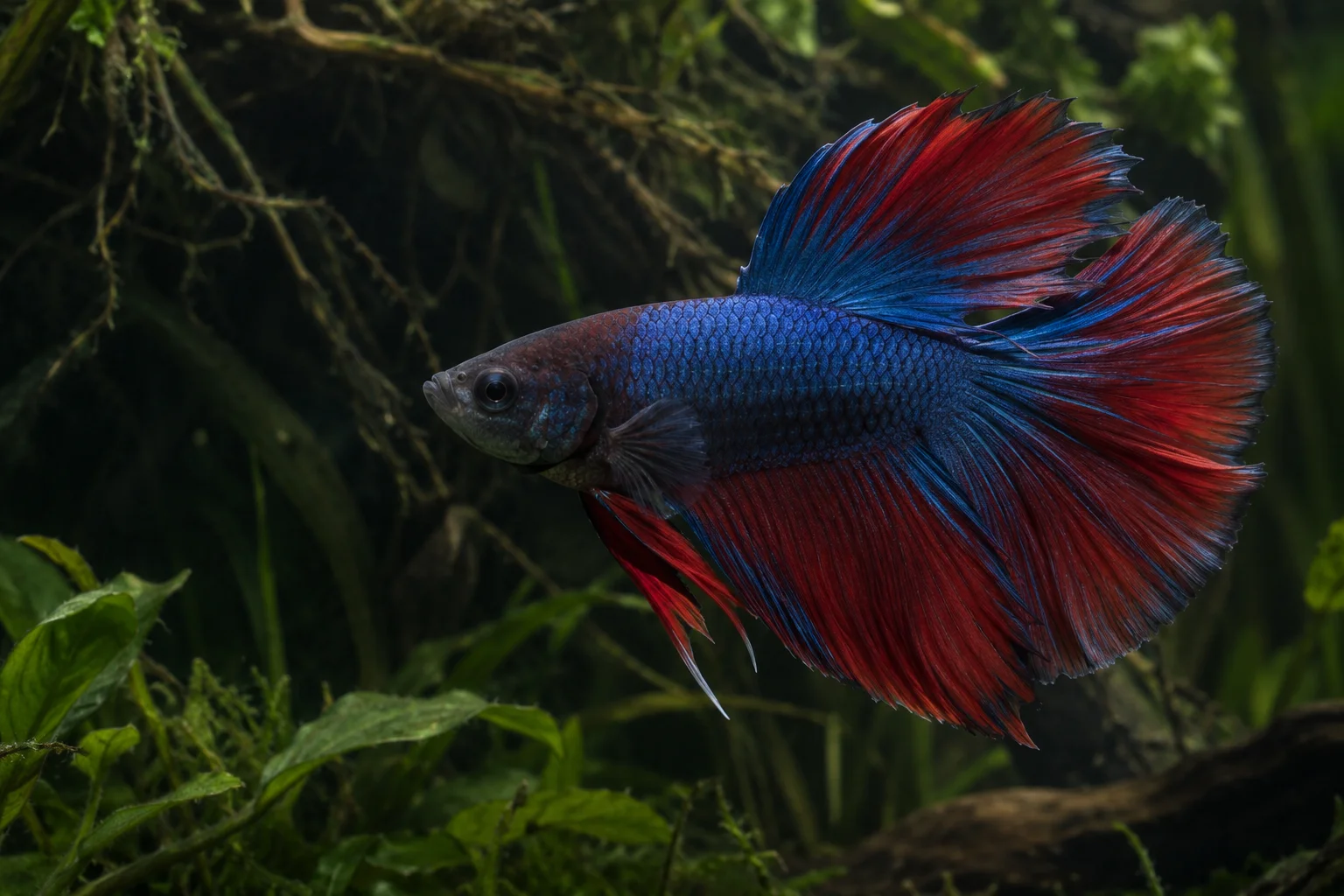
The risk comes from fish that eat or harass snails. Loaches such as clown and yoyo loaches, pufferfish, large cichlids, crayfish and big goldfish will pick at tentacles or crack open small snails. A betta usually ignores them, though some individuals nip tentacles; see our betta tank mates guide for safer options. Mystery snails also work in shrimp tanks and alongside nerite snails.
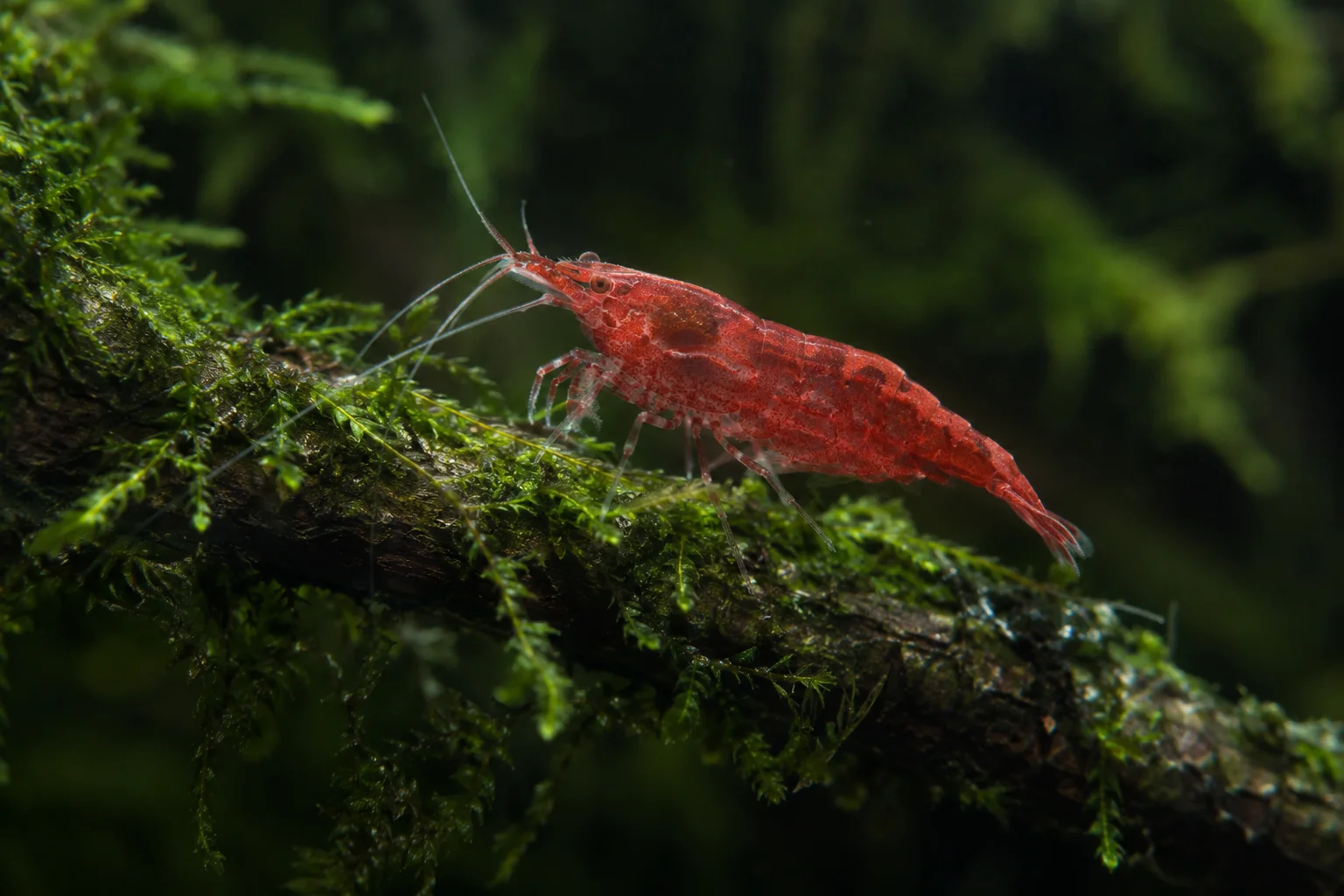
- Good companions: small tetras, rasboras, corydoras, otocinclus, guppies, cherry and amano shrimp, nerite snails
- Watch closely: bettas, gouramis, angelfish
- Avoid: loaches, puffers, large cichlids, crayfish, assassin snails with small mystery snails
08
Mystery snail eggs and breeding
Unlike many snails, mystery snails have separate sexes, and you cannot reliably tell males from females by the shell. A female can store sperm for months, so a single snail from the store may still lay fertile eggs.
Mystery snail eggs are laid at night above the waterline, on the glass, the lid or a lid gap, as a firm clutch about 1–2 inches (3–5 cm) long. Fresh clutches are pale pink to cream and darken as they develop. With warm temperatures and high humidity, they hatch in about 2–4 weeks, and the tiny snails drop into the water. One clutch can hold dozens to a few hundred eggs.
To raise them, leave the clutch in place and keep the lid on to hold humidity. Never spray it with water. If you do not want babies, remove the clutch as soon as you see it and dispose of it in household waste, not outdoors.
09
Common health problems
Most mystery snail problems are shell or water problems. Check GH, pH, ammonia and nitrite first. A dead snail decomposes fast and can cause a dangerous ammonia spike, so learn the signs of ammonia poisoning and remove dead snails at once.
| Problem | Typical signs | Where to start |
|---|---|---|
| Shell erosion | White, pitted or thinning spire | Raise GH and pH gradually, add calcium |
| Cracked or chipped shell | Holes or breaks after a fall or fight | Calcium-rich food, stable water; small cracks often repair |
| Inactive, closed shell | No movement for 1–3 days | Test water; often rest, check smell before assuming death |
| Copper poisoning | Retracted body, foam, sudden deaths | Large water changes, activated carbon, remove the source |
| Death | Strong smell, body hanging out, loose operculum | Remove at once and test for ammonia |
10
Recommended gear
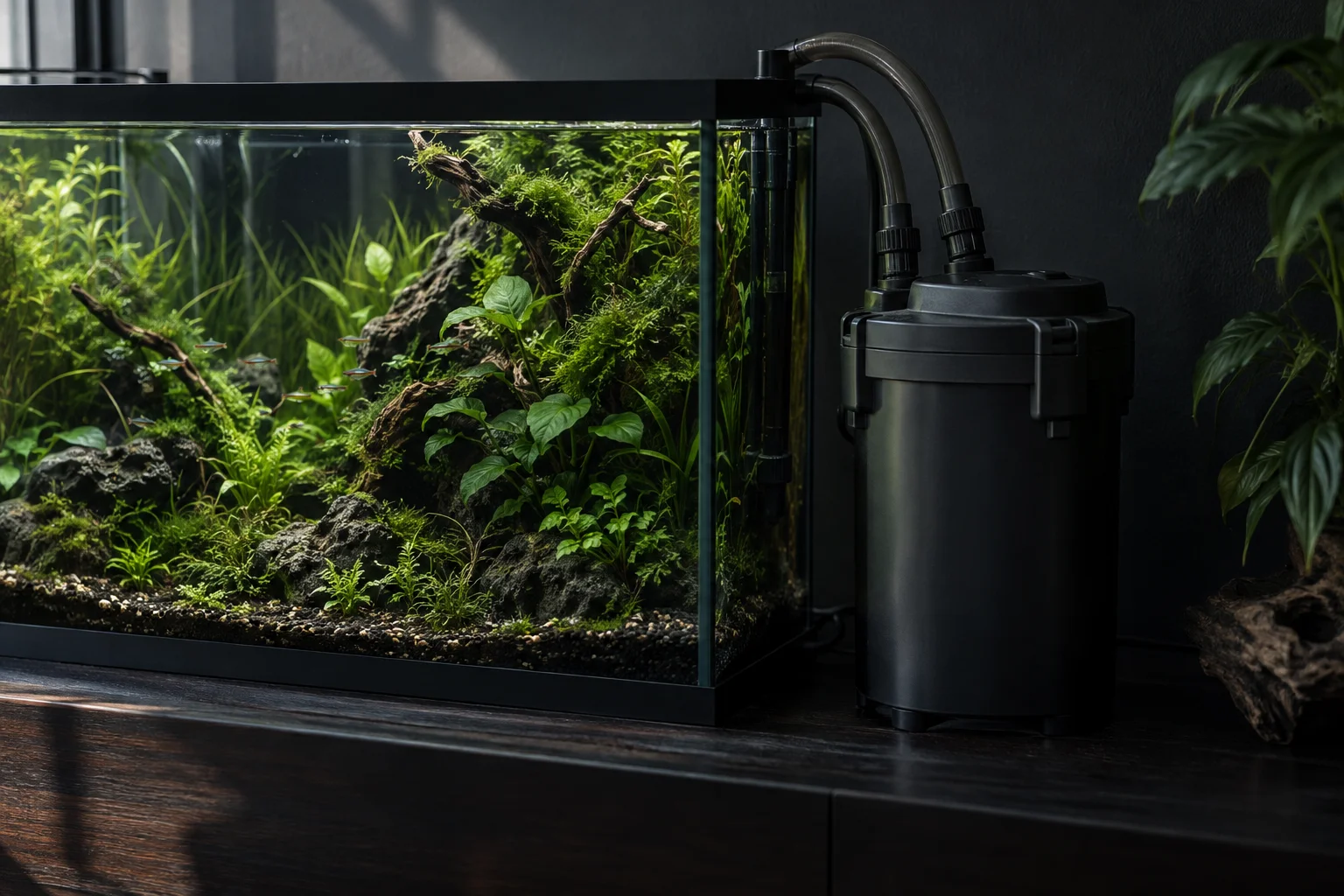
Mystery snails need little equipment beyond a stable tropical tank. A reliable heater keeps them in the 72–78 °F range: compare thermostats in our best aquarium heater guide. A gentle filter with a protected intake, a tight lid with a small air gap, a water conditioner and a liquid test kit cover the rest.
If algae control is your main goal, mystery snails are only part of the answer. Our comparison of the best snails for algae shows which species handle diatoms, green spot algae and leftover food best.
Frequently asked questions
Frequently asked questions
How do you take care of a mystery snail?
Keep it in a cycled tank of at least 5 gallons with a lid and a small air gap, at 68–82 °F, pH 7.0–8.0 and GH of 8 °dH or more. Feed algae wafers, blanched vegetables and a calcium source a few times a week, avoid copper and remove uneaten food. Check shells for erosion and test water if the snail stays inactive.
Why is my mystery snail not moving?
Mystery snails often rest for a day or more, sometimes floating or sitting closed at the bottom. Test ammonia, nitrite and pH first. To check whether a snail is alive, lift it out briefly: a living snail usually closes its operculum, while a dead one hangs loosely and smells strongly. Remove dead snails quickly to avoid an ammonia spike.
What do mystery snail eggs look like?
Mystery snail eggs form a firm, pale pink or cream clutch about 1–2 inches long, laid above the waterline on the glass or lid, usually at night. The clutch darkens as it develops and hatches in roughly 2–4 weeks if humidity stays high. Remove it early if you do not want baby snails.
Do mystery snails eat plants?
Healthy, well-fed mystery snails (Pomacea diffusa) rarely damage healthy plants. They eat soft algae, biofilm, leftovers and decaying leaves. A hungry snail may nibble delicate or melting plants, so feed vegetables or wafers regularly. Larger plant-eating apple snails such as Pomacea canaliculata are a different species and should be avoided in planted tanks.
How many mystery snails can I keep in a 10-gallon tank?
One or two mystery snails is a sensible limit in a 10-gallon tank, especially if it also holds fish. They produce a lot of waste for their size, so more snails mean more filtration and more frequent water changes. Keeping several also makes regular egg clutches very likely.
Sources and references
Written and reviewed by the handsoffmyhobby editorial team according to our editorial policy.