01
55 gallon aquarium stocking: what changes at this size
A standard 55-gallon tank measures about 48 x 13 x 21 inches (122 x 33 x 53 cm) and holds roughly 208 liters. The 4-foot length is the real advantage: schooling fish can swim in a straight line, and two territorial fish can stay out of each other’s way. The narrow 13-inch depth is the main limit, which is why fish that grow long and heavy still do not belong here. If you are still buying a tank, our best 55 gallon aquarium review compares the main kits and glass options.
Use the same logic as in smaller tanks, just with more room for each layer:
- Centerpiece: one pair of mid-sized cichlids or a small gourami group, not several competing territorial species.
- Schools: one or two species of 12–20 fish each, sized so the centerpiece fish cannot swallow them as adults.
- Bottom crew: 8–10 corydoras or 6–8 kuhli loaches, plus a single bristlenose pleco.
- Water: choose fish with overlapping temperature, pH and hardness, especially if you keep rams or discus.
- Growth: plan around adult size. Most problem fish in a 55 are bought at 2 inches and reach 8–12 inches.
02
Best fish for a 55 gallon tank compared
The table lists every species discussed here, including good options without their own handsoffmyhobby page yet. Temperatures are each species' comfortable range; when you mix fish, aim for the overlap. Discus are included for reference, but they are better kept in a dedicated tank than in a mixed community.
| Fish | Adult size | Group | Temperature | Role |
|---|---|---|---|---|
| Angelfish | 6 in (15 cm) long, up to 8 in (20 cm) tall | 1 pair | 76–84 °F (24–29 °C) | Centerpiece |
| German blue ram | 2–3 in (5–7 cm) | 1 pair | 80–86 °F (27–30 °C) | Centerpiece, warm tanks |
| Electric blue acara | 5–6 in (12–15 cm) | 1 pair | 75–82 °F (24–28 °C) | Centerpiece |
| Pearl gourami | 4–4.7 in (10–12 cm) | 1 male, 2 females | 77–82 °F (25–28 °C) | Centerpiece |
| Rummy-nose tetra | 2 in (5 cm) | 12–15 | 75–82 °F (24–28 °C) | Main school |
| Cardinal tetra | 2 in (5 cm) | 15–20 | 77–84 °F (25–29 °C) | Main school |
| Harlequin rasbora | 1.8 in (4.5 cm) | 12–15 | 72–80 °F (22–27 °C) | Main school |
| Cherry barb | 2 in (5 cm) | 8–10 | 73–81 °F (23–27 °C) | Second school |
| Sterbai or bronze corydoras | 2.5–3 in (6–7 cm) | 8–10 | 72–82 °F (22–28 °C) | Bottom group |
| Kuhli loach | 3–4 in (8–10 cm) | 6–8 | 75–82 °F (24–28 °C) | Bottom, nocturnal |
| Bristlenose pleco | 4–5 in (10–13 cm) | 1 | 72–80 °F (22–27 °C) | Algae grazer |
| Otocinclus | 1.5–2 in (4–5 cm) | 6–8 | 72–79 °F (22–26 °C) | Algae grazer |
| Discus | 6–8 in (15–20 cm) | 5–6, species tank | 82–86 °F (28–30 °C) | Dedicated tank only |
Angelfish care guide: tank size, water, diet and tank mates
The classic 55-gallon centerpiece. The tank’s 21-inch height suits their tall fins; keep a single pair with medium-sized schoolers.
Fish speciesRummy nose tetra care guide: tank size, water, diet and tank mates
A tight, active school of 12–15 looks spectacular along a 4-foot tank and holds its own next to angelfish.
Fish speciesCardinal tetra care guide: tank, water, tank mates and neon comparison
Large schools of 15–20 are where cardinals really shine. They like the same warm, soft water as angels and rams.
Fish speciesGerman blue ram care guide: tank, water, tank mates and breeding
A colorful dwarf cichlid pair for a warm, mature tank. Needs stable, clean water and fine substrate.
Fish speciesElectric blue acara care guide: tank size, water, diet and tank mates
A larger but peaceful cichlid. One pair works in a 55 with medium-sized tank mates instead of tiny tetras.
Fish speciesPearl gourami care guide: tank size, water, tank mates and breeding
Calm, elegant labyrinth fish. One male with two females is a classic choice for a planted 55.
Fish speciesHarlequin rasbora care guide: tank size, water, diet and tank mates
A hardy schooling option for a mixed community. Groups of 12–15 fill the middle of the tank nicely.
Fish speciesCorydoras catfish care guide: tank, water, diet and popular species
Pick sterbai, bronze or similar mid-sized species and keep 8–10 of one kind over sand.
Fish speciesKuhli loach care guide: size, tank, water and tank mates
A group of 6–8 adds activity to the substrate at dusk without competing with the centerpiece fish.
Fish speciesBristlenose pleco care guide: size, tank, diet, lifespan and breeding
The right pleco for a 55: it stays around 4–5 inches and grazes algae. Keep one, with driftwood.
03
Three sample 55 gallon community tanks
Each plan assumes a cycled tank, a filter rated for at least 55–75 gallons (a canister is ideal at this size) and a weekly water change of 25–30%. Build the stock over 6–8 weeks, starting with the schools and the bottom crew, and acclimate every new group carefully. Quarantine newcomers when you can: a single sick fish can bring ich into an established community.
1. Amazon angelfish community: 2 angelfish (a bonded pair, or two of the same group), 12–15 rummy-nose tetras, 8 sterbai corydoras and 1 bristlenose pleco. Use tall plants and driftwood to break up sight lines. Our angelfish tank mates guide explains why tiny tetras such as embers are a risk once angels are adult.
2. Gourami and rasbora planted tank: 3 pearl gouramis (1 male, 2 females), 12–15 harlequin rasboras, 8–10 cherry barbs, 6–8 kuhli loaches and 1 bristlenose pleco. Calm, colorful and forgiving, with a floating plant cover the gouramis appreciate.
3. Warm South American dwarf cichlid tank: 1 pair of German blue rams, 15–20 cardinal tetras, 8 sterbai corydoras and 1 bristlenose pleco, kept at about 80–82 °F (27–28 °C) in soft, slightly acidic water. For a hardier alternative, swap the rams for a pair of electric blue acaras and keep the rummy-nose tetras from plan 1 instead of the cardinals.
Do not mix two pairs of cichlids, or angelfish with German blue rams and acaras, in a 55. Breeding pairs claim most of the bottom and fight over it.
04
Large freshwater fish that still outgrow a 55
Large freshwater fish are the most common mistake at this size, because a 55 sounds big. Many of them are sold at 2–3 inches and will be cramped long before they reach adult size.
- Oscars: 10–12 inches and very messy. A single oscar needs about 75 gallons, more with tank mates.
- Common plecos and sailfin plecos: 12–18 inches. Choose a bristlenose instead.
- Clown loaches: slow growers that reach 8–12 inches and need a group of 5 or more.
- Silver dollars and bala sharks: fast, skittish schooling fish that need long tanks of 75–125 gallons or more.
- Tiger barbs in an angelfish or gourami tank: they will nip long fins, however big the school.
- African mbuna cichlids: they can live in a 55 as a species tank with hard water, but never with community fish. Our cichlid tank mates page explains how to group them.
- Discus in a mixed tank: possible for experienced keepers, but they need warmer water and very frequent changes. See discus tank mates before you try.
05
Equipment for a 55 gallon community
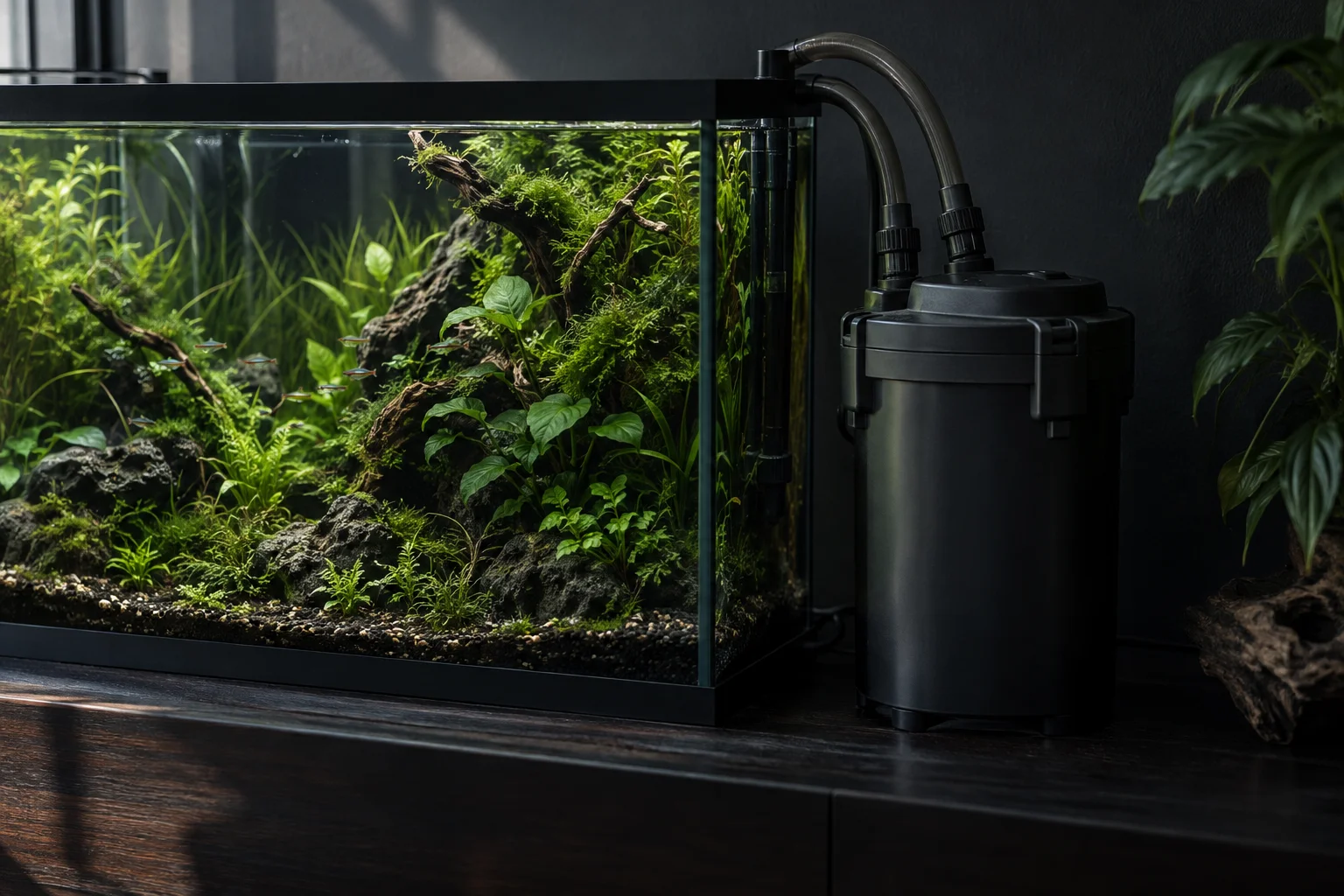
Filtration is the backbone of a stocked 55. A canister rated for 75 gallons or more, or two hang-on-back filters, gives enough biological capacity and lets you spread the flow along the tank. Compare models in our best canister filter review. For heating, a single 200 W heater or two 100 W heaters at each end keep the temperature even; see the best aquarium heater picks.
As always, cycle the tank before any fish go in, then keep nitrate below about 20–40 ppm with regular water changes. A python-style siphon or a gravel vacuum with a long hose makes weekly maintenance on a 55 much less of a chore.
Frequently asked questions
Frequently asked questions
How many fish can go in a 55 gallon tank?
A 55-gallon community typically holds 40–60 small and mid-sized fish, for example 30–35 schooling fish of about 2 inches, 8–10 corydoras, a centerpiece pair and a bristlenose pleco. Larger centerpieces such as angelfish or acaras reduce that number. The real limit is waste and territory, so let your nitrate readings, not a formula, tell you when to stop.
Can angelfish live with neon tetras in a 55 gallon?
It is risky. Adult angelfish often eat neons and other fish small enough to fit in their mouths, especially at night. Groups raised together from small sizes sometimes coexist, but there is no guarantee. Rummy-nose tetras, larger rasboras or slightly bigger tetras are safer choices for an angelfish community.
What is a good centerpiece fish for a 55 gallon community tank?
A pair of angelfish is the classic choice, with the tank’s height suiting their fins. A pair of German blue rams works in warm, soft water, and a male with two pearl gouramis suits a calm planted tank. Pick one centerpiece type only, so the territorial fish are not fighting for the same space.
Can I keep large freshwater fish in a 55 gallon?
Only a few, and only if they stay under about 6 inches and are not hyperactive, such as a pair of electric blue acaras. Popular large freshwater fish like oscars, common plecos, clown loaches, silver dollars and bala sharks need 75–125 gallons or more as adults. Buying them for a 55 means rehoming them later.
Do I need a canister filter for a 55 gallon tank?
It is not mandatory, but it is the easiest option for a heavily stocked community. A canister rated for 75 gallons or more holds lots of biological media and can be hidden in the stand. Two hang-on-back filters work well too. Whatever you choose, aim for more capacity than the tank’s nominal volume.
Sources and references
Written and reviewed by the handsoffmyhobby editorial team according to our editorial policy.