Fact sheet
- Family
- Poeciliidae (livebearers)
- Origin
- Northeastern South America and nearby Caribbean islands
- Adult size
- Males 1.2–1.4 in (3–3.5 cm); females 1.6–2.4 in (4–6 cm)
- Lifespan
- 2–3 years
- Minimum tank
- 10 gallons (38 L); 20 gallons (75 L) for a breeding colony
- Temperature
- 72–82 °F (22–28 °C)
- pH
- 7.0–8.0
- Hardness
- GH 8–18 °dH, KH 4–10 °dH
- Diet
- Omnivore (micro-predator and algae grazer)
- Temperament
- Peaceful, active, social
- Breeding
- Livebearer, broods every 4 weeks or so
01
Guppy care basics
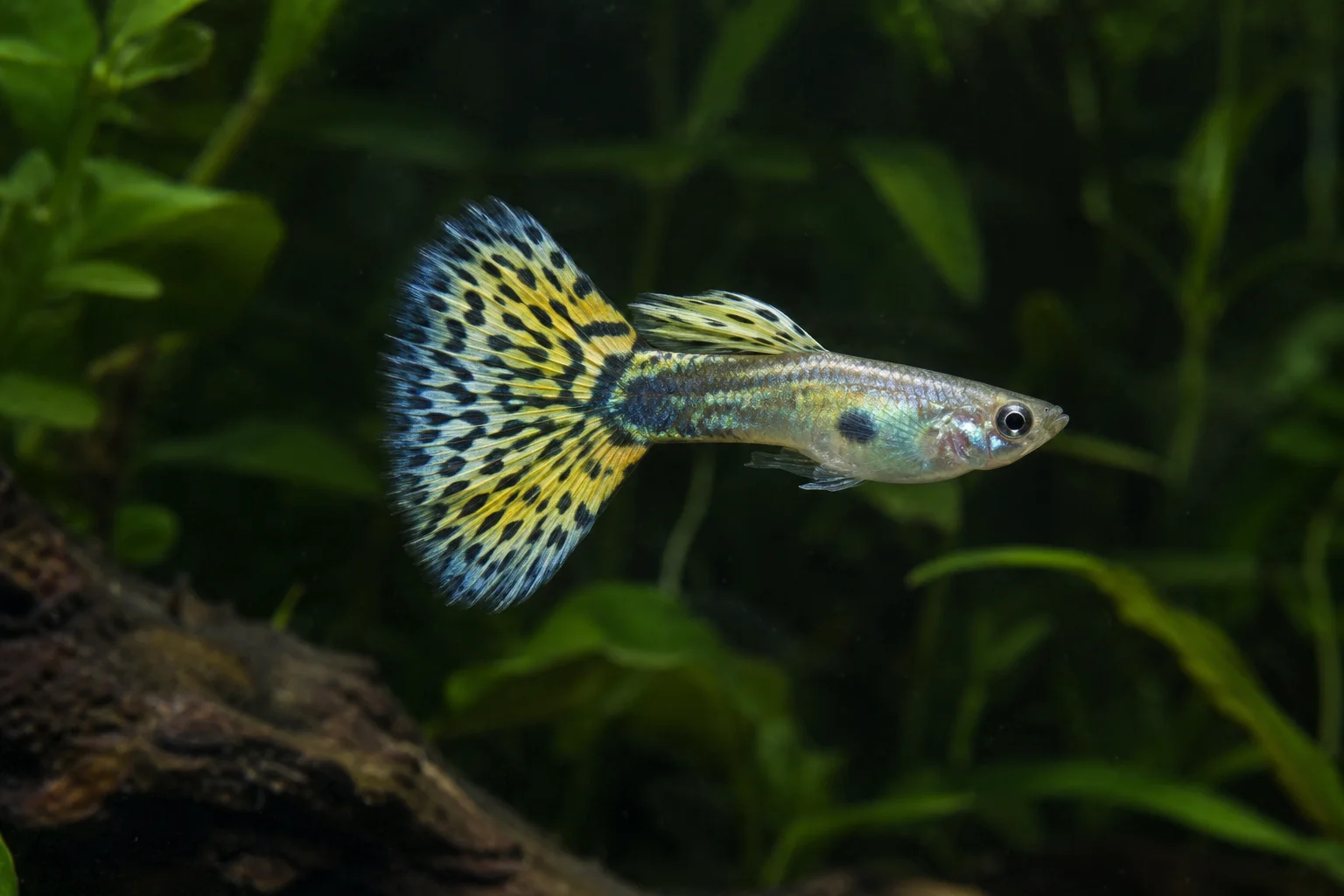
The guppy is a small livebearer famous for the endless color and fin patterns of its males. It is one of the classic beginner fish: hardy once settled, easy to feed and always on the move. The main challenges are buying healthy stock, keeping the water clean and managing the fry that will appear sooner or later.
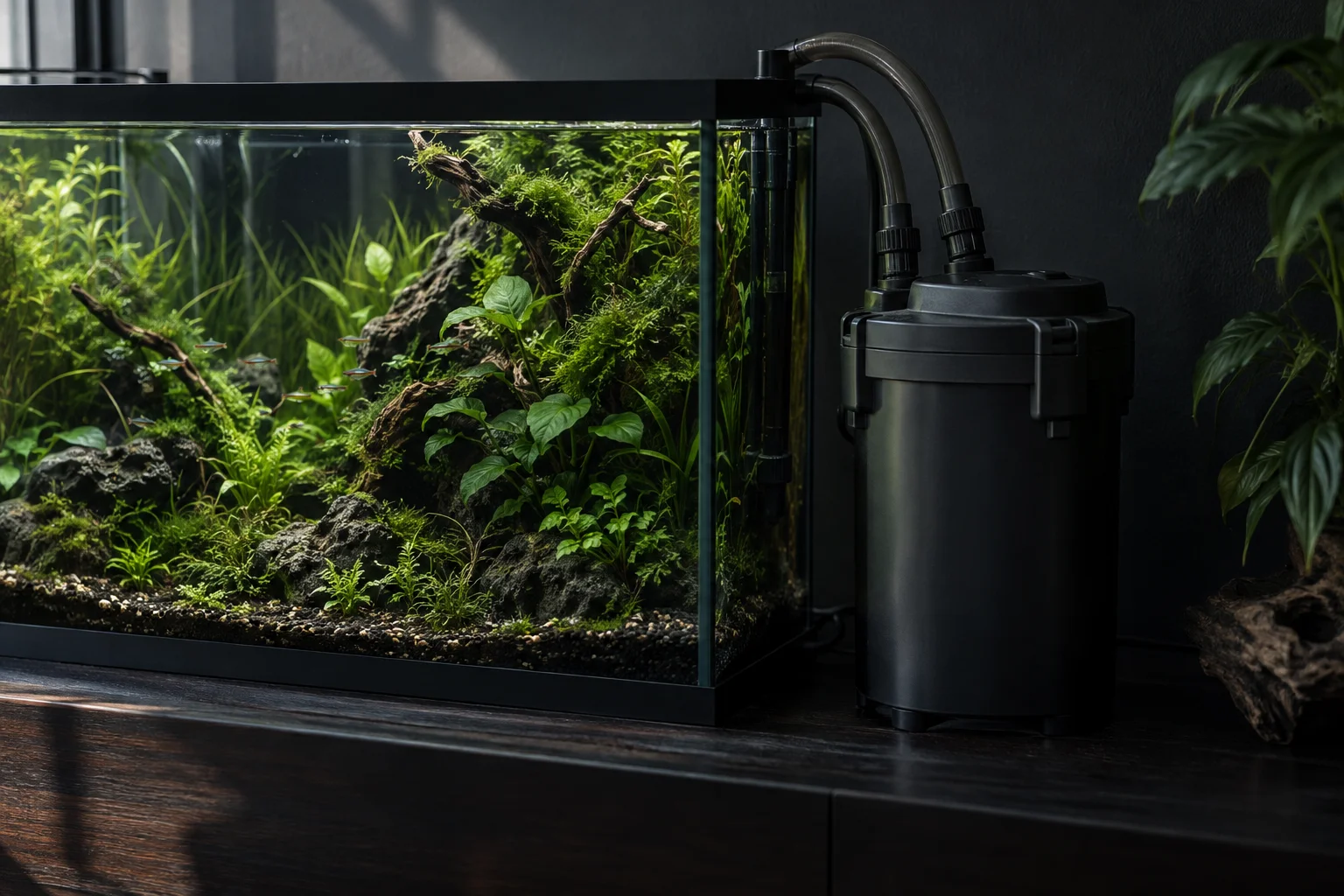
Like any tropical fish, guppies need a heater and a filter, and the tank should be fully cycled before they arrive. Pet-store fancy guppies are heavily line-bred, which can make them less robust than their wild ancestors, so stable conditions matter even more.
- Tank: 10 gallons for a trio or small group, 20 gallons for a mixed colony
- Heater: adjustable, set to about 76–78 °F (24–26 °C)
- Filter: gentle flow; a sponge filter is safe for fry
- Plants: dense and floating plants give fry and harassed females cover
- Lid: guppies occasionally jump
02
Origin and natural habitat
Wild Poecilia reticulata come from northeastern South America, including Venezuela, Guyana and northern Brazil, plus islands such as Trinidad and Tobago and Barbados. They live in streams, ponds, ditches and even brackish edges, often in warm, hard, slightly alkaline water. Because they eat mosquito larvae, guppies have been introduced to many tropical regions, where they now live wild.
Wild guppies are much smaller and less flashy than the fancy strains in stores. Decades of selective breeding produced cobra, tuxedo, mosaic, grass, delta and many other varieties.
03
Adult size and guppy lifespan
Males reach about 1.2–1.4 inches (3–3.5 cm) of body length, plus their large tail. Females are larger and heavier, usually 1.6–2.4 inches (4–6 cm), with smaller tails and a dark gravid spot near the vent when pregnant.
The typical guppy lifespan is about 2–3 years. Fancy males with very long fins often live a little less. Stable temperature, clean water and avoiding constant breeding stress in females help them reach the upper end of that range.
04
Tank size and setup
A 10-gallon (38 L) tank is the practical minimum for a small group, such as one male and two or three females or a group of males only. Because guppies multiply quickly, many keepers start with 20 gallons (75 L). For ideas on combining them with other small species, see our list of the best fish for a 10-gallon tank.
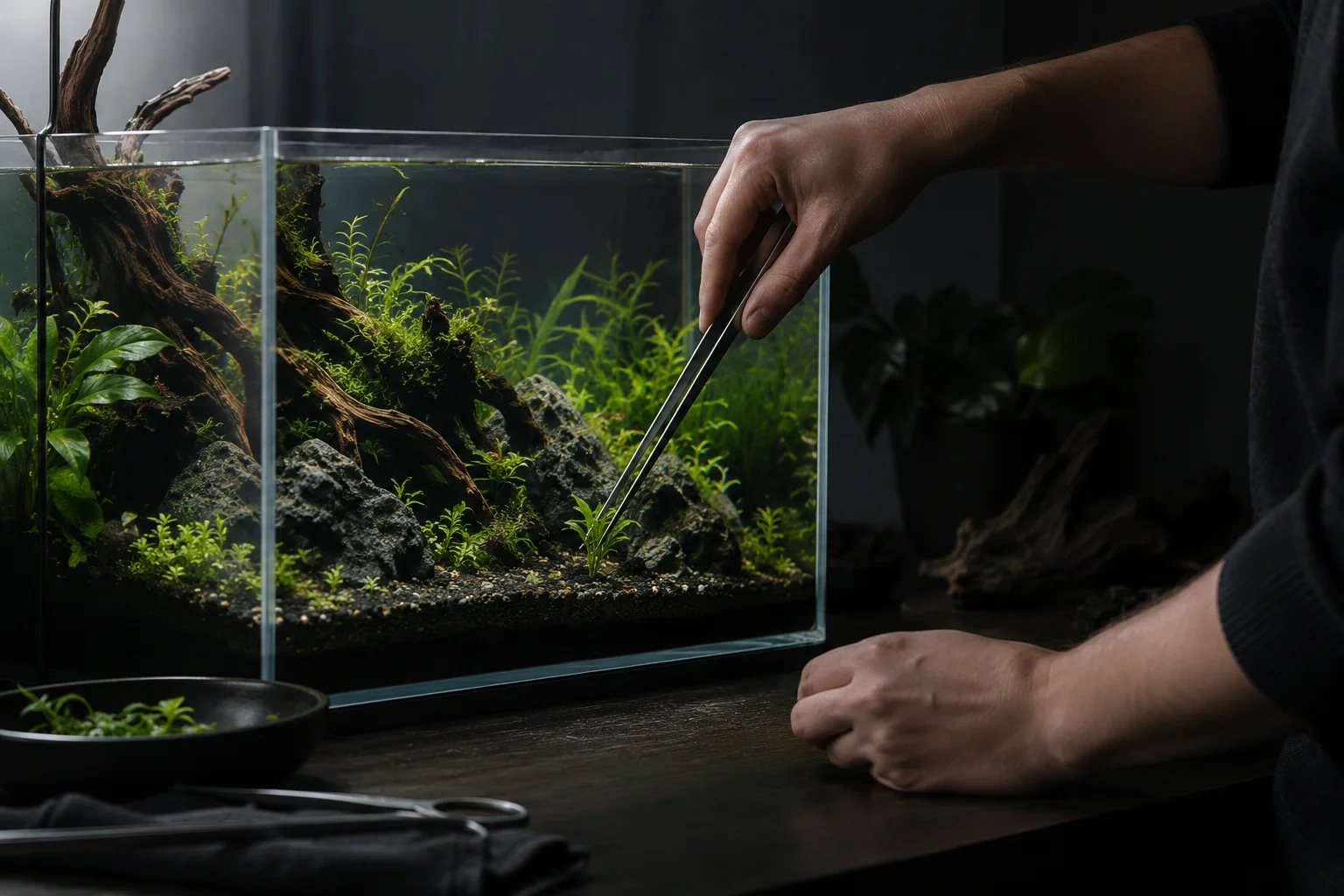
Guppies swim in the upper and middle water layers. Leave open swimming space at the front and plant the back and sides densely. Fine-leaved plants and floating plants such as hornwort, water sprite or frogbit give newborn fry a place to hide.
05
Water parameters
Guppies prefer moderately hard, slightly alkaline water, which suits much of the tap water in the US. Very soft, acidic water is a common cause of poor health in this species. Treat new water with a water conditioner and check our guide to aquarium water parameters if your readings fall outside the ranges below.
| Parameter | Target range |
|---|---|
| Temperature | 72–82 °F (22–28 °C) |
| pH | 7.0–8.0 |
| GH (general hardness) | 8–18 °dH (140–320 ppm) |
| KH (carbonate hardness) | 4–10 °dH (70–180 ppm) |
| Ammonia / nitrite | 0 ppm |
| Nitrate | Below 20 ppm |
06
Diet and feeding
In the wild, guppies eat insect larvae, small crustaceans, algae and plant matter. In the tank, a quality micro-flake or small pellet makes a good staple. Add frozen or live foods such as baby brine shrimp, daphnia and bloodworm pieces a few times a week, and a spirulina-based food for the plant part of their diet.
Feed small amounts once or twice a day, only what they eat in about a minute. Guppies always look hungry, and overfeeding quickly fouls the water in small tanks. Pregnant females and growing fry benefit from slightly more frequent, smaller meals.
07
Behavior and guppy tank mates
Guppies are peaceful and social. Males display constantly and chase females, so a ratio of one male to two or three females spreads the attention and reduces stress. An all-male tank is a good option if you want color without fry; males rarely injure each other.
Good guppy tank mates are small, peaceful fish that share similar water: platies, endlers, corydoras, bristlenose plecos and otocinclus, plus snails and adult shrimp (shrimp babies may be eaten, and guppies will eat each other’s fry too). Avoid fin nippers such as tiger barbs, bettas, which may attack males' fins, and large fish like angelfish that see guppies as food. Our full guppy tank mates guide includes stocking examples.
- Good matches: platies, endlers, corydoras, bristlenose pleco, otocinclus, nerite and mystery snails
- Use caution: cherry shrimp (fry eaten), tetras that prefer soft water
- Avoid: bettas, tiger barbs and other fin nippers, angelfish, large cichlids
08
How to breed guppies
Breeding guppies takes almost no effort: put males and females together and fry will appear. Females give birth to live, free-swimming young after a gestation of roughly 4 weeks, usually anywhere from a few to several dozen fry per brood. A female can store sperm and produce several broods from a single mating, so a new female may give birth even without a male in your tank.
Adults eat fry, so survival depends on cover or separation. Dense plants and floating plants save many babies; a separate grow-out tank saves more. Breeding boxes work for a short time but stress some females. Feed fry crushed flakes, powdered fry food or baby brine shrimp several times a day. For a full walkthrough, read how to breed guppies.
Guppies can be sexually mature at 2–3 months. If you do not want a population boom, keep males only, or plan homes for the young before they mature.
09
Common guppy diseases
Guppies sold in large numbers can carry parasites and bacterial infections, so quarantine new fish for two to four weeks when you can. Most problems in an established tank point back to water quality, temperature swings or very soft water.
Contact an aquatic veterinarian for persistent or spreading problems, and always follow the label of any treatment.
| Problem | Typical signs | Where to start |
|---|---|---|
| Ich | White salt-like spots, flashing | See ich in fish |
| Fin rot | Ragged, shrinking tail fins | Water quality, then fin rot treatment |
| Columnaris | White, cottony patches, fast progression | Quick action, medicate per label |
| Camallanus worms | Red threads protruding from the vent | Treat the whole tank with a dewormer per label |
| Shimmying | Fish wobbles in place | Check temperature, hardness and water quality |
10
Recommended gear
A sponge filter is ideal for guppy tanks because it provides biological filtration without sucking in fry; see our best sponge filter picks. Pair it with a reliable adjustable heater, sized at roughly 3–5 watts per gallon; our best aquarium heater guide compares models with accurate thermostats.
Add a liquid test kit, a lid and plenty of plants. These basics cover almost everything a guppy colony needs.
Frequently asked questions
Frequently asked questions
Is guppy care easy for beginners?
Yes, guppies are among the easiest tropical fish, as long as the tank is cycled, heated and filtered. Keep the water at 72–82 °F with moderately hard, slightly alkaline chemistry, change about 25% weekly and feed small meals. The main thing beginners underestimate is how quickly guppies breed.
How many guppies should be kept together?
Keep at least three guppies, ideally more. In mixed groups, use one male for every two or three females so no female is chased constantly. In a 10-gallon tank, a group of five or six adults is a reasonable start, keeping in mind that fry will add to the population.
What is the lifespan of a guppy?
Guppies typically live 2–3 years. Long-finned fancy males may live slightly less. Stable temperature, clean water, a varied diet and reducing breeding stress on females all help guppies reach the upper end of their natural lifespan.
What are the best guppy tank mates?
Peaceful fish of similar size and water needs work best: platies, endlers, corydoras, otocinclus and bristlenose plecos, plus snails. Adult shrimp can live with guppies, though shrimplets may be eaten. Avoid bettas, fin nippers like tiger barbs and larger fish such as angelfish.
How long are guppies pregnant?
Gestation usually lasts about 4 weeks, varying with temperature and the individual female. A dark gravid spot and a squared-off belly show that birth is near. Females can store sperm and give birth several times from one mating.
Sources and references
Written and reviewed by the handsoffmyhobby editorial team according to our editorial policy.