01
What makes a fish good for a small tank
Searching for the best fish for a small tank usually starts with size, but adult length is only one of four criteria. A fish that stays small can still be a poor nano tank fish if it swims fast, needs a large school or produces a lot of waste. Use these rules before you buy anything labeled "small aquarium fish" at the store.
Remember that small volumes are less forgiving. Ammonia, temperature and pH change faster in 5 gallons than in 55, so a small tank is not automatically easier for beginners. If this is your first aquarium, read our beginner aquarium guide and cycle the tank before adding any fish.
- Adult size: under about 1.5 inches (4 cm) for 10 gallons and under, under 2 inches (5 cm) for 15–20 gallons.
- Activity level: slow or mid-water hoverers fit; fast, long-distance swimmers like zebra danios need tank length.
- Group needs: schooling fish need 6–10 of their own kind, so the whole group has to fit, not just one fish.
- Bioload: goldfish and plecos produce far more waste than their size suggests and overload small filters.
- Temperament: territorial or fin-nipping species become a problem when there is no room to escape.
02
Small aquarium fish compared
The table compares every fish for nano tanks discussed on this page, including a few without their own guide yet. Minimum tank sizes are conservative and assume a cycled, filtered and heated tank. Group size is the smallest number that lets a species behave naturally.
| Species | Adult size | Minimum tank | Group | Temperature |
|---|---|---|---|---|
| Betta (Betta splendens) | 2.4–2.8 in (6–7 cm) | 5 gal (19 L) | 1 male | 76–82 °F (24–28 °C) |
| Chili rasbora (Boraras brigittae) | 0.6–0.8 in (1.5–2 cm) | 10 gal (38 L) | 8+ | 75–82 °F (24–28 °C) |
| Ember tetra (Hyphessobrycon amandae) | 0.8 in (2 cm) | 10 gal (38 L) | 8+ | 73–82 °F (23–28 °C) |
| Celestial pearl danio (Danio margaritatus) | 0.8–1 in (2–2.5 cm) | 10 gal (38 L) | 6+ | 72–78 °F (22–26 °C) |
| Pygmy corydoras (Corydoras pygmaeus) | 0.8–1 in (2–2.5 cm) | 10 gal (38 L) | 6+ | 72–79 °F (22–26 °C) |
| Endler’s livebearer (Poecilia wingei) | 0.8–1.2 in (2–3 cm) | 10 gal (38 L) | 3–5 males | 72–82 °F (22–28 °C) |
| Sparkling gourami (Trichopsis pumila) | 1.4–1.6 in (3.5–4 cm) | 10 gal (38 L) | Trio | 76–82 °F (24–28 °C) |
| Scarlet badis (Dario dario) | 0.8 in (2 cm) | 10 gal (38 L) | 1 male + 2 females | 72–79 °F (22–26 °C) |
| Guppy (Poecilia reticulata) | 1.2–2.4 in (3–6 cm) | 10 gal (38 L) | 3–5 males | 72–82 °F (22–28 °C) |
| Harlequin rasbora (Trigonostigma heteromorpha) | 1.6–2 in (4–5 cm) | 15–20 gal (57–75 L) | 8+ | 73–82 °F (23–28 °C) |
| Neon tetra (Paracheirodon innesi) | 1.2–1.6 in (3–4 cm) | 15–20 gal (57–75 L) | 8+ | 70–79 °F (21–26 °C) |
| Otocinclus (Otocinclus spp.) | 1.6–2 in (4–5 cm) | 15–20 gal (57–75 L) | 4+ | 72–79 °F (22–26 °C) |
| Cherry shrimp (Neocaridina davidi) | 0.8–1.2 in (2–3 cm) | 5 gal (19 L) | 10+ colony | 68–79 °F (20–26 °C) |
| Nerite snail (Neritina and related genera) | 0.8–1 in (2–2.5 cm) | 5 gal (19 L) | 1–2 | 72–82 °F (22–28 °C) |
Betta fish care guide: tank size, water, diet and tank mates
The classic single fish for a 5 gallon tank: colorful, interactive and happy alone, as long as the water is heated and filtered.
Fish speciesEmber tetra care guide: tank, water, school and tank mates
A bright orange tetra under 1 inch (2 cm) that schools calmly in a planted 10 gallon tank.
Fish speciesCelestial pearl danio (galaxy rasbora) care: tank size, water and tank mates
Spotted, shy and tiny. Perfect for a heavily planted nano tank kept slightly cooler than most tropicals.
Fish speciesHarlequin rasbora care guide: tank size, water, diet and tank mates
A hardy schooling fish for 15–20 gallon tanks, and one of the easiest first schools for beginners.
Fish speciesCorydoras catfish care guide: tank, water, diet and popular species
Pygmy and dwarf corydoras species are the bottom dwellers that suit small tanks; the common bronze cory needs more room.
Shrimp & snailsCherry shrimp care guide: tank, water, food and breeding
Colorful, peaceful and busy all day. A colony is one of the best ways to stock a 5 gallon tank.
Shrimp & snailsNerite snail care guide: algae eating, eggs, lifespan and tank setup
An algae-eating snail that does not overrun the tank, since it cannot reproduce in fresh water.
Fish speciesNano fish: 10 tiny freshwater fish for small tanks
Our full list of nano fish species, including rarer options for experienced keepers.
03
Best single fish: the betta
For a 5 gallon tank, a single male betta fish is the most rewarding choice. It is colorful, recognizes its owner, does not need a school and is calm enough for a small volume. What it does need is a heater set around 78 °F (25.5 °C) and a gentle filter, because long fins struggle in strong current. A sponge filter is ideal; see our picks for the best sponge filter.
Keep one male per tank. Females can live in groups only in much larger, heavily planted tanks, and even then aggression is common, so a betta sorority is not a small-tank project. A nerite snail is the safest companion in 5 gallons; for 10 gallons and up, our betta tank mates guide lists the options.
04
Best tiny schooling fish for nano tanks
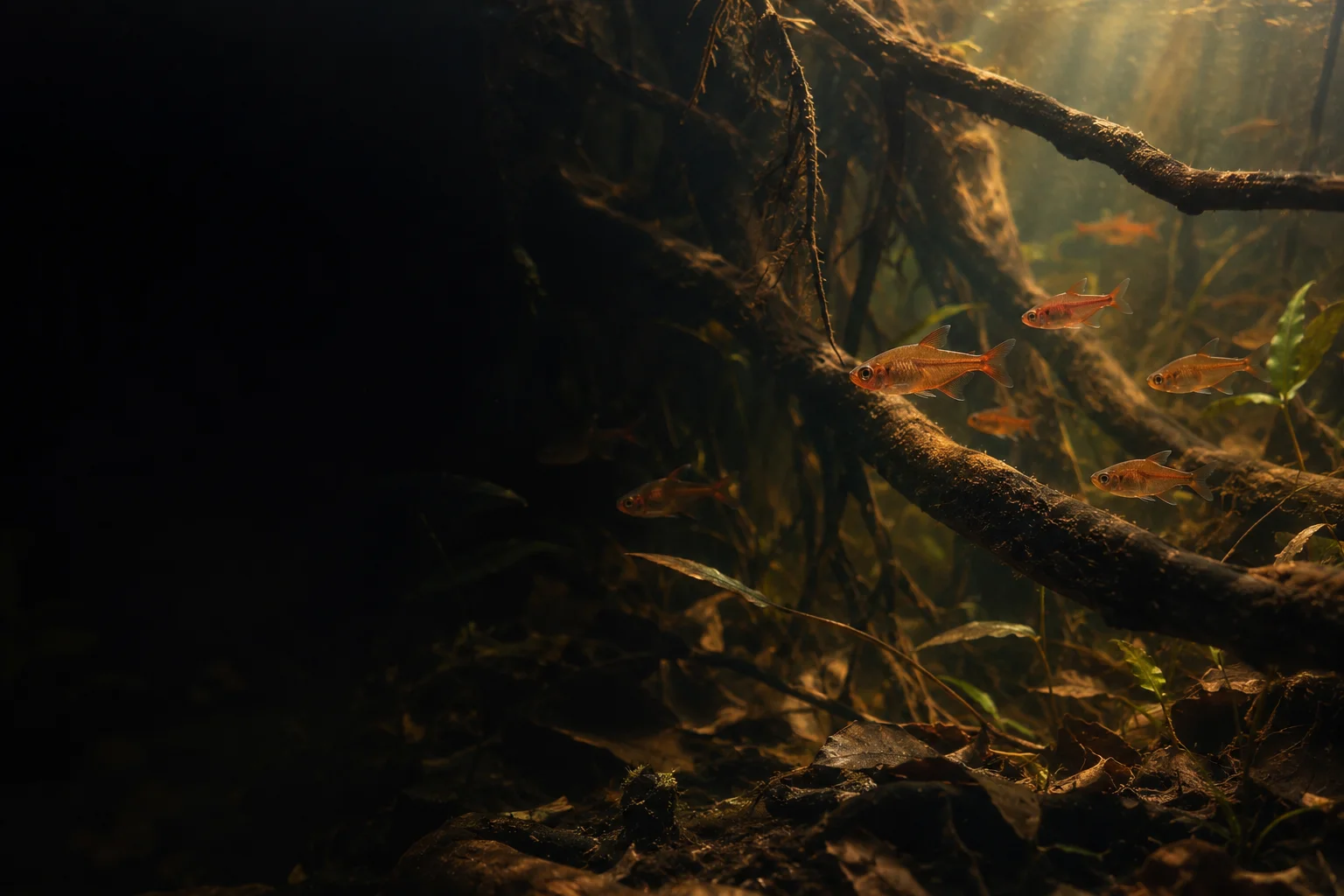
A school of very small fish makes a 10 gallon tank look larger and more natural. The ember tetra is the easiest to find and very peaceful. Chili rasboras are even smaller and show their red best in a dark, planted tank. The celestial pearl danio is spectacular but shy; it needs dense plants and does better at the cooler end of the tropical range, around 72–76 °F (22–24 °C).
Once you reach 15–20 gallons, your choice widens. The harlequin rasbora is hardy and forgiving, and the neon tetra looks best in a group of 10 or more, which is why we do not recommend it under 15 gallons. Whatever you pick, buy the whole school within a few weeks so the group bonds, and only after the tank is fully cycled.
Livebearers are a special case. Male guppies and Endler’s livebearers are colorful and hardy, but a mixed-sex group breeds constantly and will overstock a small tank within months. Keep males only. Our guppy guide explains how to tell them apart.
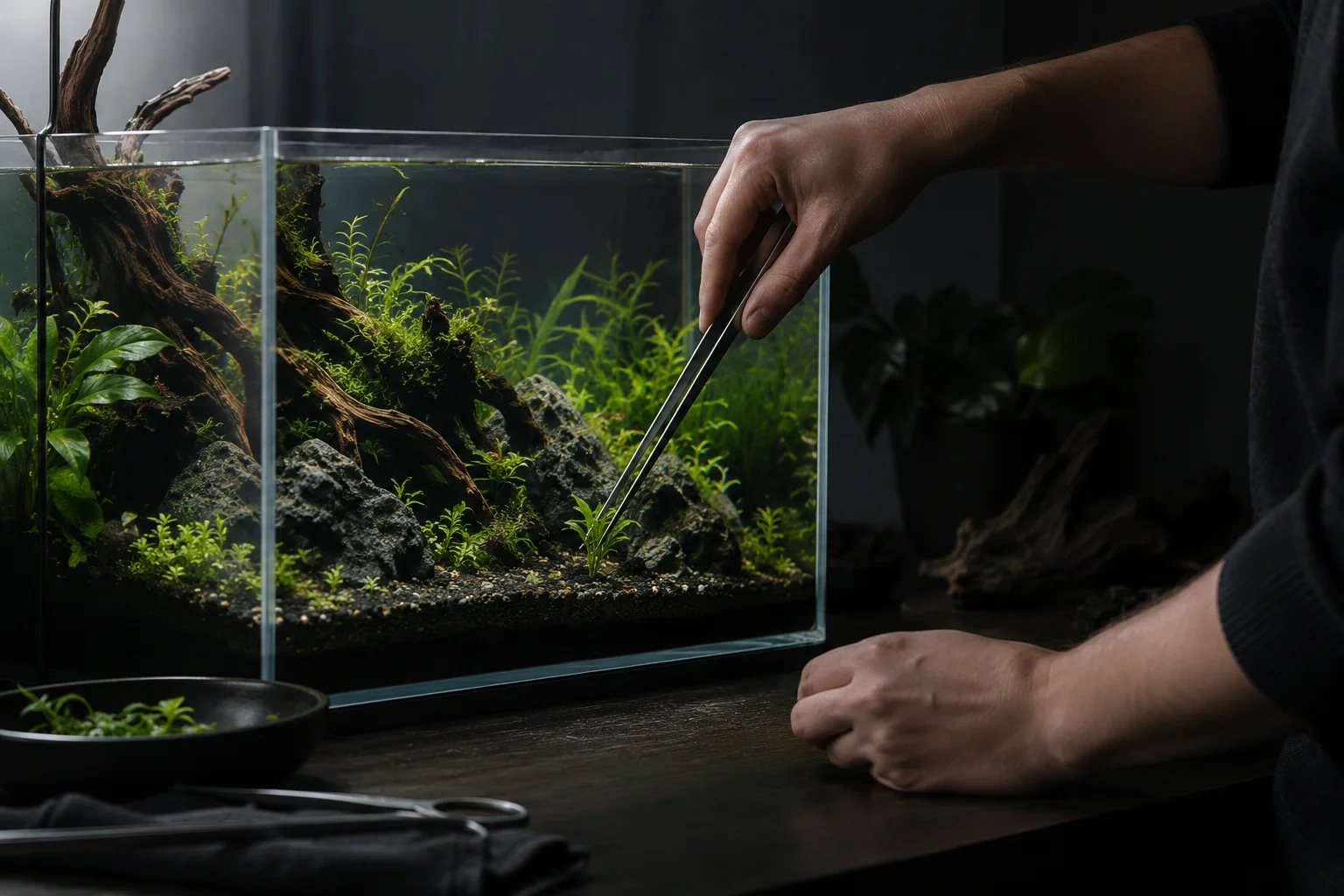
Plants are the best upgrade for any nano tank. Fast growers absorb nitrate and give shy fish cover. Start with easy species from our list of the best aquarium plants for beginners.
05
Bottom dwellers, algae eaters and invertebrates
Most popular cleanup fish are too big for small tanks. Common plecos grow past 12 inches (30 cm), and even the bronze corydoras prefers a group in 20 gallons or more. In a 10 gallon tank, choose dwarf species from the corydoras family, such as Corydoras pygmaeus or C. habrosus, on soft sand so their barbels stay intact.
Otocinclus are excellent soft-algae grazers but need a mature tank with established biofilm, at least 15 gallons and a group of four or more. Many arrive starved, so feed them algae wafers or blanched zucchini while they settle in.
For the smallest tanks, invertebrates are often the better answer. A cherry shrimp colony thrives in 5 gallons and breeds without help. A nerite snail cleans glass and decor without overpopulating the tank. If algae is your main concern, compare options in our guide to the best snails for algae.
06
Small tank stocking examples
These sample communities assume a cycled, heated tank with a filter rated for its size, live plants and weekly water changes of 20–30%. Add fish in two or three batches, a few weeks apart, so the bacteria can keep up. For tank-specific plans, see our pages on fish for a 5 gallon tank, the best fish for a 10 gallon tank and the best fish for a 20 gallon tank.
- 5 gallons (19 L), betta tank: 1 male betta + 1 nerite snail.
- 5 gallons (19 L), shrimp tank: 10 cherry shrimp to start + 1 nerite snail, heavily planted.
- 10 gallons (38 L), nano school: 8 ember tetras or 8 chili rasboras + 6 pygmy corydoras.
- 10 gallons (38 L), betta community: 1 male betta + 6 pygmy corydoras + 1 nerite snail.
- 10 gallons (38 L), livebearers: 4 male Endler’s or guppies + cherry shrimp (some shrimplets will be eaten).
- 20 gallons (75 L), community: 10 harlequin rasboras + 6 pygmy corydoras + 3 otocinclus.
- 20 gallons (75 L), planted nano: 10 celestial pearl danios + 3 sparkling gouramis + cherry shrimp.
07
Equipment for a small tank
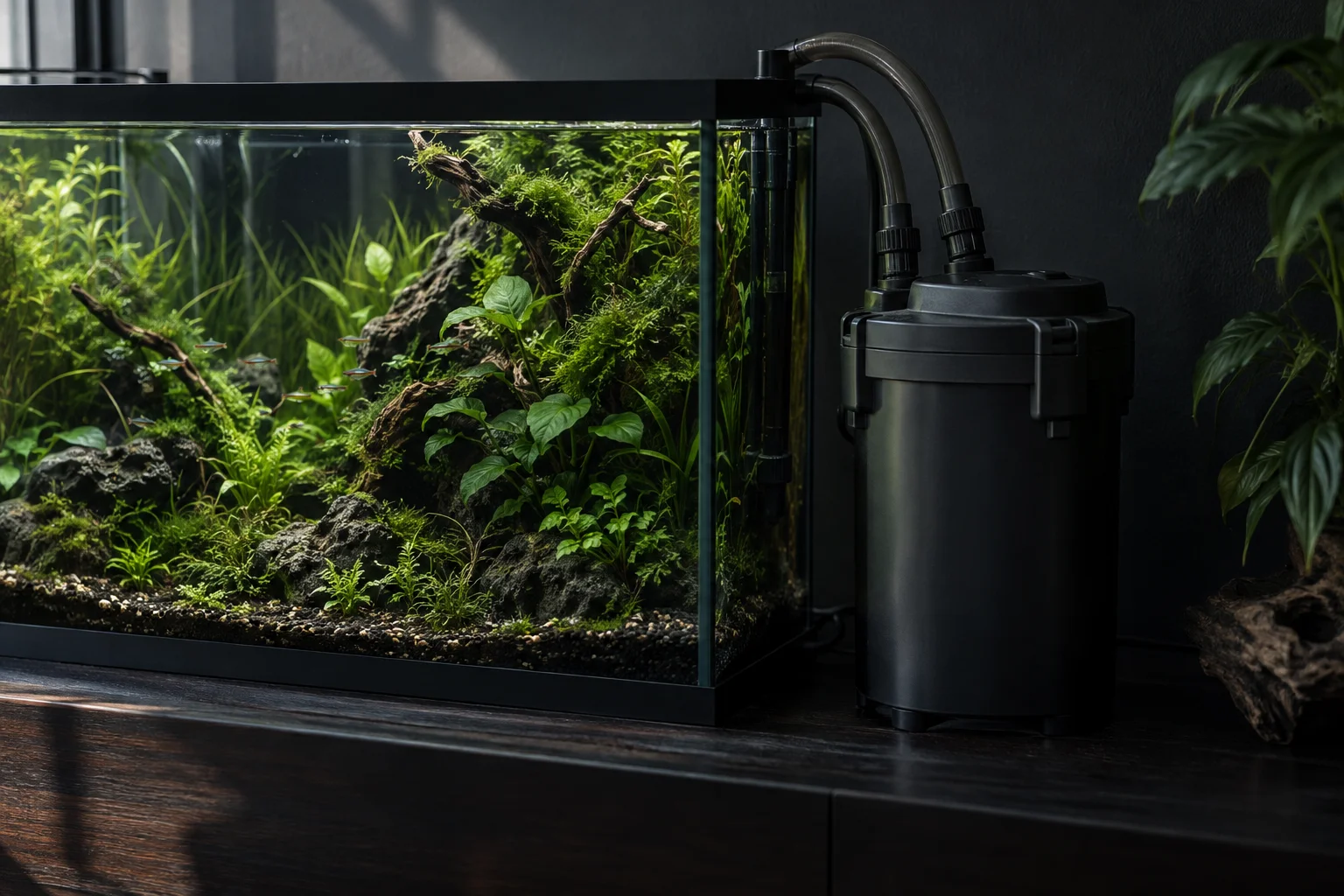
Small tanks need the same equipment as large ones, just scaled down. Choose a heater sized for the volume with an adjustable thermostat (see the best aquarium heater guide), a filter with gentle flow, a lid, and a reliable liquid test kit. A water conditioner that neutralizes chlorine and chloramine is essential at every water change. If you have not bought the tank yet, a 10 gallon kit is the most flexible size; compare models in our best 10 gallon aquarium review.
08
Fish to avoid in a small tank
Some of the most common fish sold to new owners of small tanks are the worst fit. They may be small in the store, but they either grow large, swim fast or produce too much waste.
- Goldfish: grow to 6–12 inches (15–30 cm) and need 30 gallons or more, even fancy varieties.
- Common pleco: reaches 12–18 inches (30–45 cm). Even a bristlenose pleco needs about 20 gallons or more.
- Angelfish: tall bodies and up to 6 inches (15 cm) tall; they need 30 gallons or more.
- Zebra danios and white clouds kept warm: very active swimmers that need tank length, not just volume.
- Tiger barbs: fin nippers that need a large group to spread aggression.
- Mollies and swordtails: larger livebearers that breed fast and outgrow 10 gallons.
- Bala sharks, clown loaches, oscars: sold small, but grow to a foot (30 cm) or more.
Never add fish the same day you set up a small tank. Without established bacteria, ammonia rises within days and causes new tank syndrome, which kills more nano tank fish than any disease.
Frequently asked questions
Frequently asked questions
What is the best fish for a small tank?
For 5 gallons (19 L), a single male betta is the best fish: hardy, colorful and comfortable alone. For 10 gallons (38 L), a school of 8 ember tetras or chili rasboras with 6 pygmy corydoras gives the most natural look. Both setups need a heater, a gentle filter and a fully cycled tank before the fish go in.
How many fish can I put in a 10 gallon tank?
Forget the old inch-per-gallon rule, which ignores body shape and waste. A realistic 10 gallon community is one school of 8 nano fish under 1 inch (2.5 cm) plus 6 pygmy corydoras, or one betta with a small bottom group. Heavy planting and weekly water changes help, but stocking more than this leaves no margin for error.
Can fish live in a tank smaller than 5 gallons?
We do not recommend it. Below 5 gallons (19 L) temperature and ammonia swing too quickly, and it is hard to fit a heater and filter safely. Even bettas, often sold for bowls, live longer and healthier in 5 gallons or more. Tanks under 5 gallons are better suited to a few cherry shrimp or a plant-only setup.
Are small tanks good for beginners?
Not really. A 5 gallon tank is cheap and compact, but its small water volume reacts fast to overfeeding, a dead fish or a heater failure. A 15–20 gallon tank is more stable and forgiving. If you prefer a small tank, choose hardy species, feed sparingly and test the water weekly during the first months.
What fish for a nano tank eat algae?
Few fish small enough for a nano tank are good algae eaters. Nerite snails and cherry or Amano shrimp do the job better in 5–10 gallons. Otocinclus are excellent grazers but need at least 15 gallons, a mature tank and a group of four or more. Plecos, including the bristlenose, are too large for most small tanks.
Sources and references
Written and reviewed by the handsoffmyhobby editorial team according to our editorial policy.