01
What fish can live with a betta?
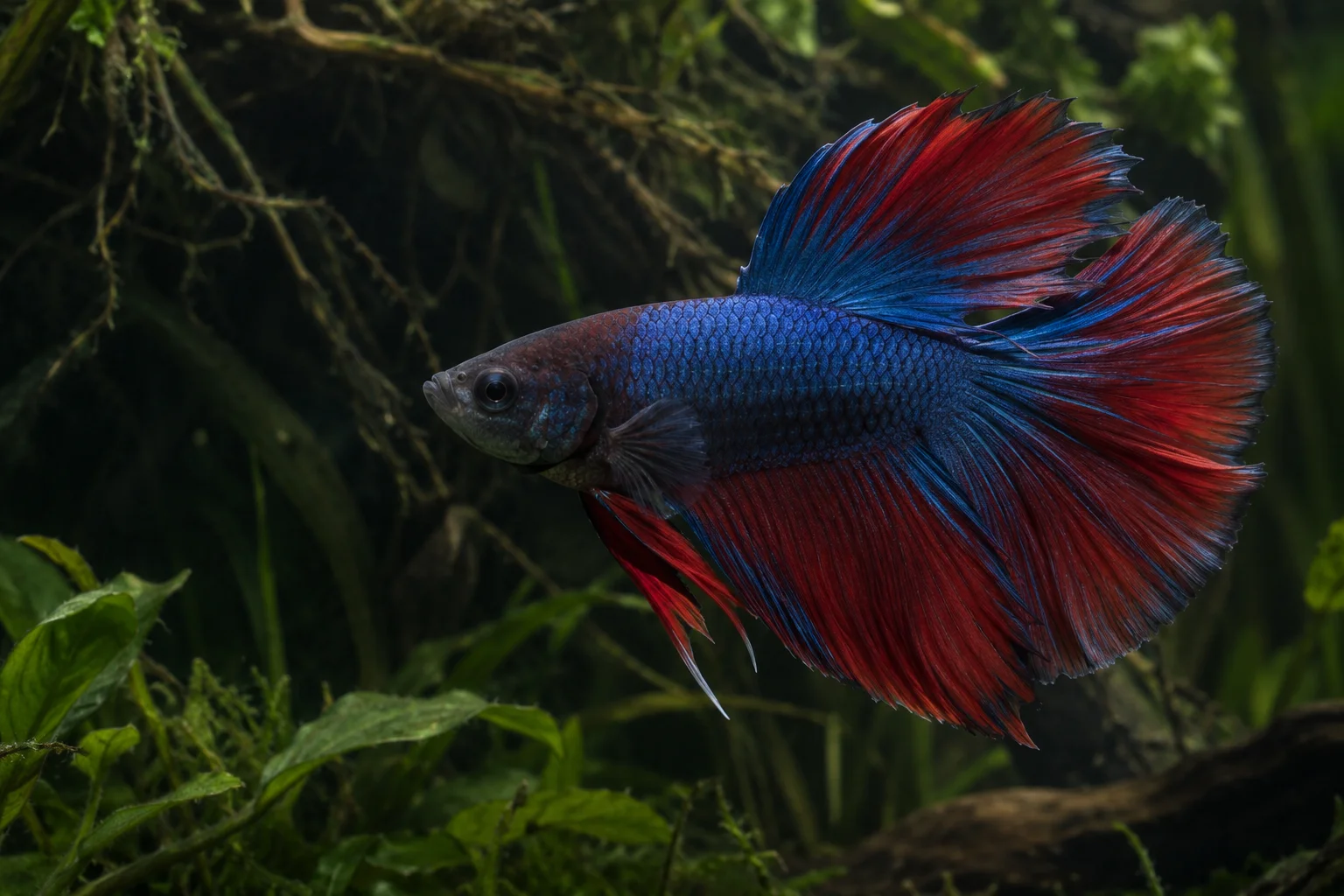
A betta fish is a slow, long-finned labyrinth fish that spends much of its time near the surface. Males defend a territory, and flowing fins or bright colors can look like a rival. Good betta tank mates are the opposite: short-finned, calm, mostly bottom dwelling or small and schooling in mid-water, and happy at 76–82 °F (24–28 °C).
Personality matters as much as species. Some males ignore every companion; others chase anything that moves. Watch your betta alone for a couple of weeks first. A betta that flares at its reflection all day is a poor candidate for a community, and a calm one is a good one. Female bettas are usually more tolerant, but not reliably so.
- Tank: 10 gallons (38 L) minimum for fish companions, 20 gallons (76 L) gives far more margin
- Plants and cover: tall plants, floating plants and caves break lines of sight
- Gentle flow: a sponge filter or baffled outlet suits both the betta and small schooling fish
- Same water: soft to moderately hard, pH 6.5–7.5, stable heat from a reliable aquarium heater
- One male betta per tank, always
02
Betta compatibility table: good, with caution, avoid
This table covers the species most often suggested as companions for a betta. Ratings assume a single male in a heated, planted tank of at least 10 gallons, unless the minimum tank says otherwise.
| Species | Rating | Minimum tank | Why |
|---|---|---|---|
| Nerite snail | Good | 5 gal (19 L) | Hard shell, eats algae, eggs do not hatch in freshwater |
| Mystery snail | Good | 10 gal (38 L) | Peaceful and large; occasionally a betta picks at its antennae |
| Pygmy corydoras | Good | 10 gal (38 L) | Tiny, peaceful, stays low; needs a group of 6+ and soft sand |
| Other corydoras (panda, bronze) | Good | 20 gal (76 L) | Bottom dwellers that ignore the betta; groups of 6+ |
| Kuhli loach | Good | 20 gal (76 L) | Nocturnal and hidden; keep 5+ with sand and caves |
| Ember tetra | Good | 10 gal (38 L) | Small, peaceful and warm-water; group of 8+ |
| Harlequin rasbora | Good | 20 gal (76 L) | Calm schooler, similar origin and temperature |
| Chili rasbora | Good | 10 gal (38 L) | Very small and quiet; best in a dense nano planted tank |
| Amano shrimp | Good | 10 gal (38 L) | Large for a shrimp, fast and an excellent algae eater |
| Otocinclus | With caution | 20 gal (76 L) | Peaceful, but needs a mature tank with algae and a group of 5+ |
| Bristlenose pleco | With caution | 20 gal (76 L) | Peaceful, but a heavy waste producer for small tanks |
| Cherry shrimp | With caution | 10 gal (38 L) | Adults usually survive with dense moss; many babies get eaten |
| Neon tetra | With caution | 20 gal (76 L) | Peaceful, but prefers slightly cooler water and may draw chases |
| Cardinal tetra | With caution | 20 gal (76 L) | Likes the same warmth; red and blue color may trigger aggression |
| Celestial pearl danio | With caution | 10 gal (38 L) | Prefers cooler water around 72–76 °F; very shy |
| Platy | With caution | 20 gal (76 L) | Generally peaceful, but active, colorful and a big eater |
| Guppy | Avoid | - | Long, colorful tails trigger attacks, and guppies sometimes nip back |
| Other bettas (male or female) | Avoid | - | Males fight; a female with a male is only for supervised breeding |
| Dwarf gourami and other gouramis | Avoid | - | Fellow labyrinth fish competing for the surface and territory |
| Tiger barb, serpae tetra, black skirt tetra | Avoid | - | Known fin nippers |
| Zebra danio | Avoid | - | Fast, boisterous, prefers cooler water and stresses a slow betta |
| Angelfish and other cichlids | Avoid | - | Territorial, larger, and some nip fins |
| Goldfish | Avoid | - | Coldwater fish with a huge waste load |
Nerite snail care guide: algae eating, eggs, lifespan and tank setup
The safest companion of all: too hard-shelled to bother, cleans algae, and cannot overrun the tank because eggs do not hatch in freshwater.
Shrimp & snailsMystery snail care guide: tank size, water, food and eggs
A larger, more visible snail for 10 gallons and up; it ignores the betta and most bettas ignore it.
Fish speciesCorydoras catfish care guide: tank, water, diet and popular species
Pygmy and other dwarf corydoras work the substrate in small groups and never compete for the surface.
Fish speciesKuhli loach care guide: size, tank, water and tank mates
Shy, nocturnal and bottom dwelling, so it almost never crosses paths with a betta in a 20-gallon tank.
Fish speciesEmber tetra care guide: tank, water, school and tank mates
A tiny, peaceful, warm-water tetra that schools in mid-water and leaves long fins alone.
Fish speciesHarlequin rasbora care guide: tank size, water, diet and tank mates
Calm schooling fish from the same Southeast Asian habitats, comfortable at betta temperatures.
Shrimp & snailsAmano shrimp care guide: size, diet, tank mates and algae control
Large enough to avoid most attacks and a tireless algae eater, best in a planted 10 gallons or more.
Fish speciesOtocinclus care guide: tank, diet, water and tank mates
Tiny algae grazer for mature, planted tanks of 20 gallons with a stable biofilm to feed on.
03
The best betta tank mates in detail
Snails are the first step for any betta. A nerite snail cleans algae from glass and decor and its eggs do not hatch in freshwater, so it cannot overrun the tank. A mystery snail is bigger and more visible. If you want the cleaning crew to do real work, our guide to the best snails for algae compares them.
Bottom dwellers are the most reliable fish companions because they live where the betta rarely goes. Pygmy and other dwarf corydoras need soft sand and a group of six or more. Kuhli loaches spend the day hidden in sand or caves and come out at dusk.
Small schooling fish add movement in mid-water. Ember tetras and harlequin rasboras are peaceful, short-finned and comfortable at betta temperatures. Keep a proper school: a group of eight looks calmer and draws less attention than three fish darting around.
Shrimp are possible, with realistic expectations. Amano shrimp are big enough to be ignored by most bettas. Cherry shrimp adults usually survive in a heavily planted tank with moss, but the betta will hunt many of the babies.
04
Betta tank mates to avoid, and why
The fish to avoid fall into four groups. Long-finned or showy fish, above all guppies and fancy male endlers, look like rivals and get chased or shredded. Fin nippers such as tiger barbs, serpae tetras and black skirt tetras do the opposite: they shred the betta’s fins, which can lead to fin rot.
Other labyrinth fish, including dwarf gouramis and other gouramis, compete for the same surface space and the same territory. Larger or territorial fish, from angelfish to most cichlids, outclass a betta in size and aggression. Goldfish are a different case: they need cold water and produce far more waste than a betta tank can handle.
A divided tank with two male bettas is not a solution to stocking. Constant flaring through the divider is stressful, and determined males have jumped dividers.
05
Stocking examples for a betta community
These plans assume a cycled, heated and planted tank. Add the companions first, let them settle for a week or two, then add the betta last so it does not claim the whole tank before the others arrive.
- 5 gallons (19 L): 1 male betta + 1 nerite snail. No fish companions.
- 10 gallons (38 L): 1 male betta + 6 pygmy corydoras or 8 ember tetras (not both) + 1–2 nerite snails or 2–3 Amano shrimp.
- 20 gallons long (76 L): 1 male betta + 8 harlequin rasboras + 6 pygmy corydoras + 1–2 nerite snails.
- 20 gallons long, alternative: 1 male betta + 10 ember tetras + 5 kuhli loaches + 1 mystery snail.
06
How to introduce tank mates safely
Quarantine new fish for two to four weeks if you can, especially wild-caught loaches and tetras that can carry ich. Acclimate them slowly with our step-by-step acclimation method, feed the betta just before adding them, and rearrange a few plants so that no one starts with an established territory.
Watch closely for the first few days. Short flaring is normal. Repeated chasing, torn fins on the companions or a betta that stops eating and hides are signs the combination is not working. Move the companions or the betta before injuries occur, and do not hope it will pass.
Feeding needs some care too. Bettas are greedy at the surface, while corydoras and loaches eat at the bottom. Use sinking pellets or wafers for the bottom dwellers, and follow our guide on how often to feed aquarium fish to avoid overfeeding a mixed tank.
Frequently asked questions
Frequently asked questions
What fish can live with a betta in a 5 gallon tank?
None, realistically. A 5 gallon (19 L) tank is a good home for one betta, but it is too small for a school of fish or a group of corydoras. You can add a single nerite snail, which eats algae and adds almost no waste. For fish companions, move up to at least 10 gallons (38 L).
Can a betta live with guppies?
It is not recommended. Male guppies have long, bright tails that bettas often attack, and guppies in turn sometimes nip slow betta fins. Some keepers make it work in large, densely planted tanks, but the risk of injury is high. Choose short-finned, calm fish such as ember tetras or pygmy corydoras instead.
Can two female bettas live together?
Female groups, called sororities, are possible but difficult. They need a large, heavily planted tank, usually 20 gallons or more, a group of at least five females to spread aggression and a backup tank for any fish that gets bullied. Two females alone often fight. It is not a setup for beginners.
Will my betta eat shrimp?
Probably some. Bettas are carnivores and will hunt baby shrimp, and some individuals hunt adults too. Amano shrimp are large enough to be ignored by most bettas. Cherry shrimp adults usually survive in a tank full of moss and plants, but colonies grow much more slowly with a betta in the tank.
What are the best betta tank mates for a 10 gallon tank?
In 10 gallons (38 L), choose one group of small companions plus a cleanup crew: six pygmy corydoras or eight ember tetras, and one or two nerite snails or a few Amano shrimp. Keep the tank densely planted and add the betta last. Larger schools and loaches need 20 gallons.
Sources and references
Written and reviewed by the handsoffmyhobby editorial team according to our editorial policy.