01
Why add floating aquarium plants?
Floating plants sit at the water surface, where light and atmospheric CO2 are most available. That is why they grow faster than almost any submerged plant without injected CO2, and why they absorb ammonia and nitrate so efficiently. In practice, a healthy mat of floaters is one of the cheapest ways to lower nitrates between water changes and to starve the free-floating algae behind green water.
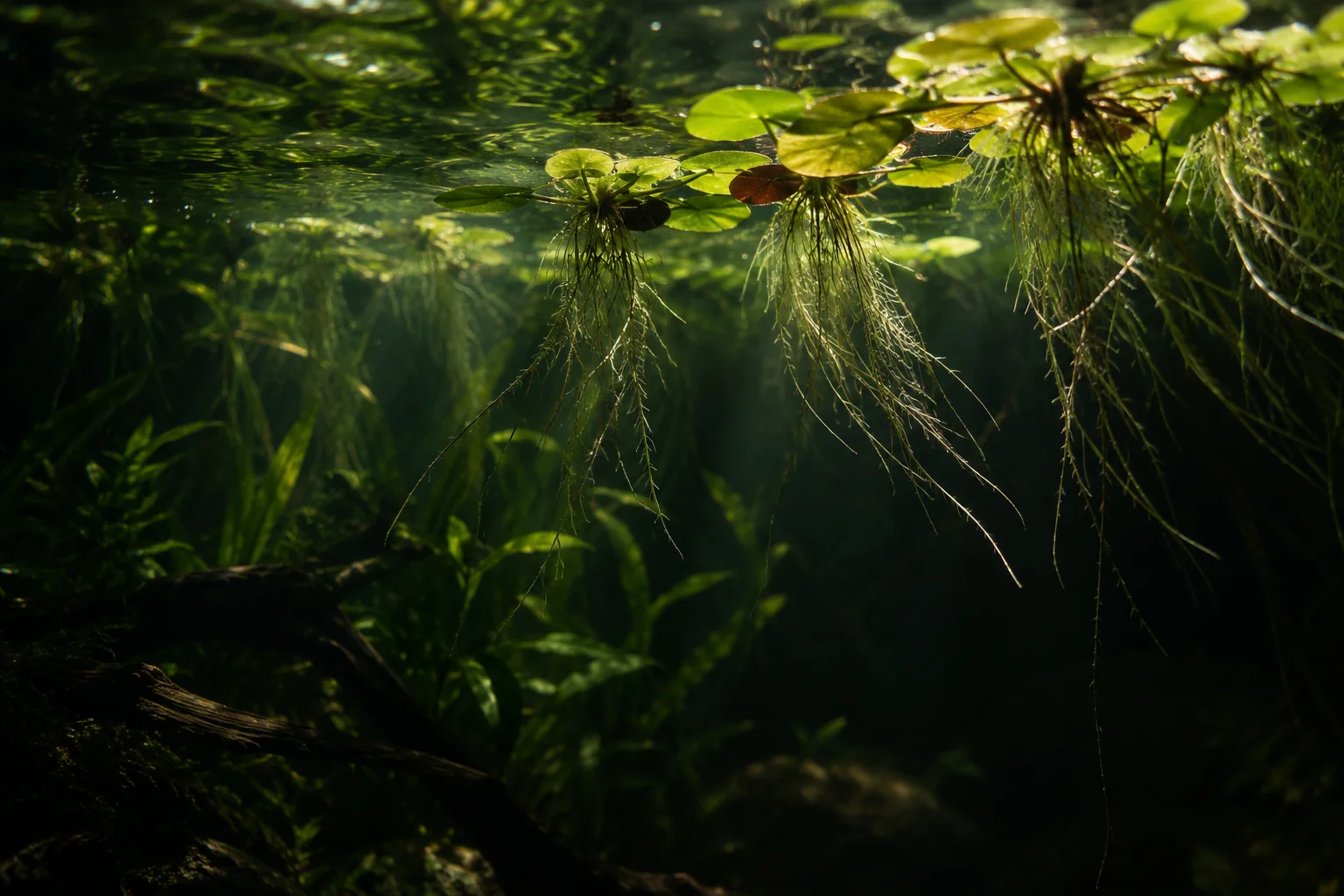
They also change the behavior of your fish. Surface cover dims the light, gives shy species somewhere to hide and gives fry a refuge from adults. Bettas, gouramis and many killifish use floating leaves to rest near the surface and to build bubble nests. The long roots of frogbit or water lettuce become grazing ground for shrimp and a hiding place for guppy fry.
- Nutrient export: fast growth pulls nitrate and phosphate from the water
- Algae control: shade and nutrient competition reduce green water and hair algae
- Cover: dimmer light and hiding places for shy fish, fry and shrimp
- Easy: no substrate, no planting tools, no CO2 system
- Cheap to start: a handful multiplies within weeks
02
How we chose these floaters
The plants below were selected for wide availability in US stores and online plant shops, tolerance of normal tropical tank conditions, and a manageable growth rate. We also flag the practical drawbacks that sellers rarely mention: plants that are near impossible to remove once established, plants that dislike lids and condensation, and species that are restricted by law in some states.
03
The best floating plants compared
Growth rates assume a tropical tank with moderate light and some nutrients. In a lightly stocked tank with no fertilizer, every floater will grow more slowly.
| Plant | Leaf size | Growth | Light | Best for | Watch out for |
|---|---|---|---|---|---|
| Amazon frogbit (Limnobium laevigatum) | 0.5–1 in (1–3 cm) | Fast | Low to high | Bettas, community tanks | Leaves rot if kept wet under a tight lid |
| Salvinia (Salvinia minima, S. natans) | 0.4–0.8 in (1–2 cm) | Fast | Medium | Small tanks, nano tanks | Giant salvinia (S. molesta) is a federal noxious weed |
| Red root floater (Phyllanthus fluitans) | 0.4–0.8 in (1–2 cm) | Moderate | Medium to high | Color accent, aquascapes | Turns green in low light, dislikes condensation |
| Dwarf water lettuce (Pistia stratiotes) | 1–3 in (3–8 cm) | Moderate to fast | Medium to high | Large open-top tanks | Needs space between surface and lamp |
| Duckweed (Lemna minor) | 0.1–0.2 in (2–5 mm) | Very fast | Any | Goldfish food, nutrient export | Almost impossible to remove completely |
| Water sprite (Ceratopteris thalictroides) | Large fronds | Fast | Medium | Community tanks, fry cover | Can shade the whole tank quickly |
| Hornwort (Ceratophyllum demersum) | Needle-like stems | Fast | Low to medium | Fry tanks, goldfish tanks | Sheds needles when moved or stressed |
| Riccia (Riccia fluitans) | Fine mat | Moderate | Medium to high | Breeding tanks, shrimp | Breaks into fragments that clog filters |
| Mosquito fern (Azolla spp.) | 0.4–0.8 in (1–2 cm) | Fast | Medium to high | Open tanks, ponds | Invasive outdoors, never release it |
| Water hyacinth (Eichhornia crassipes) | Very large | Fast | High | Outdoor ponds only | Too big for tanks, restricted in many states |
Betta fish care guide: tank size, water, diet and tank mates
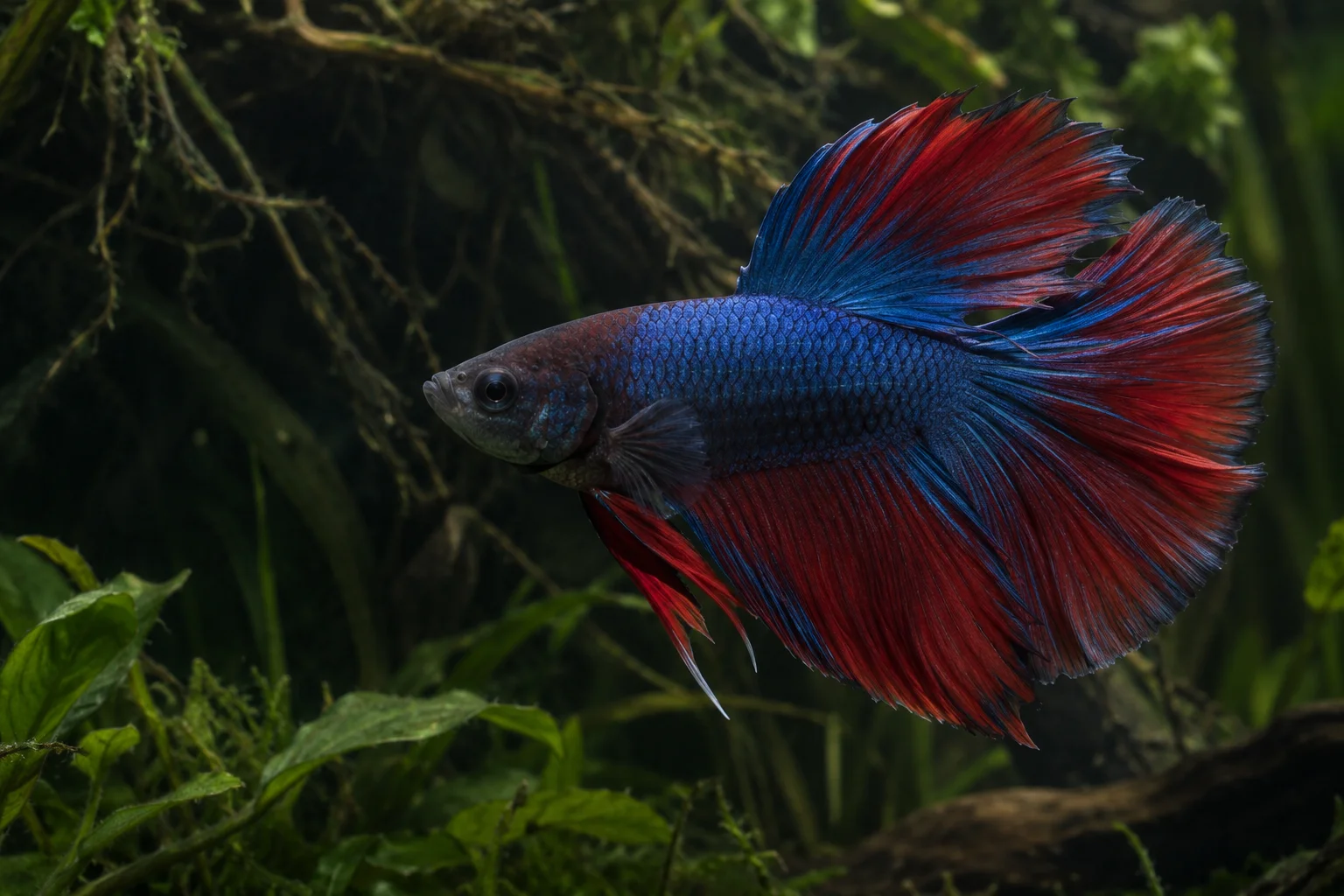
Bettas rest under leaves and anchor bubble nests to floaters. Frogbit and salvinia are the classic betta tank pairing.
Fish speciesDwarf gourami care guide: tank size, water, tank mates and disease
Another labyrinth fish that builds bubble nests and feels safer under a partial floating canopy.
Shrimp & snailsCherry shrimp care guide: tank, water, food and breeding
Floater roots collect biofilm that shrimp graze, and the shade brings out their color.
AquascapingWalstad method: complete guide to the dirted, low-tech planted tank
Low-tech soil tanks rely on floaters as nutrient sponges. Learn how they fit into a Walstad setup.
PlantsLow light aquarium plants: 15 species that grow without CO2
Floaters shade the tank below, so pair them with plants that thrive in low light.
PlantsBest aquarium plants for beginners: 15 easy live plants
The wider list of easy plants if you want to combine floaters with rooted and attached species.
04
Floating plants for betta tanks
The best floating plants for betta tanks have soft, flat leaves and moderate root length. Amazon frogbit is the usual first choice: bettas rest under the pads and males anchor bubble nests between them. Salvinia and red root floaters work well in smaller tanks, and a few strands of hornwort or a piece of water sprite add vertical cover. Keep part of the surface open, because a betta is a labyrinth fish and must reach the surface to breathe air. Our betta tank mates guide covers which companions also appreciate a shaded surface.
05
How to keep floating plants healthy
Most problems with floaters come from the surface environment, not from the water. Floaters hate being pushed under, splashed or trapped in a film of water on their leaves.
- Calm the surface: aim the filter outflow sideways or downwards, or use a floating ring (airline tubing joined into a loop) to keep the plants out of the current.
- Ventilate the lid: a gap or a raised lid reduces condensation, which rots frogbit and red root floaters.
- Leave space under the lamp: very close LEDs can scorch large floaters such as water lettuce.
- Feed them: floaters show deficiencies first (pale or yellow leaves, short roots). A comprehensive liquid fertilizer at label dose usually fixes it; see our aquarium fertilizer guide.
- Thin weekly or every other week: scoop out about a third of the mat during your water change and keep the healthiest plants.
- Keep a third of the surface open for gas exchange and for surface-breathing fish.
Very long roots usually mean the plant is searching for nutrients. A light fertilizer dose often shortens them within a few weeks, which keeps the midwater clear.
06
Sample setups by tank size
Start small: two or three portions of each floater are enough, because they double quickly under good conditions.
- 5–10 gallon (19–38 L) betta tank: a handful of Amazon frogbit or salvinia held in one corner with a floating ring, plus a strand of hornwort.
- 20 gallon (75 L) community tank: frogbit and red root floaters at one end over celestial pearl danios or tetras, with the other half of the surface open for light.
- 55 gallon (208 L) open-top tank: dwarf water lettuce and water sprite at the back, frogbit in a floating ring, and enough open surface for the rooted plants below.
07
Floating plants to avoid or use with care
Duckweed is a good food plant for goldfish but a nuisance in most other tanks: tiny fronds stick to nets, hands and decor, and it returns after every attempt to remove it. Water hyacinth is a pond plant that outgrows any aquarium. Giant salvinia (Salvinia molesta) is listed as a federal noxious weed in the US, and some states also restrict water hyacinth, water lettuce or frogbit; check your state list before buying and never release aquarium plants into the wild.
Finally, remember that dense floaters reduce the light reaching the plants below. If your stem plants start to stretch or lose color, thin the floaters or consider a stronger light; our best aquarium light review covers fixtures that suit planted tanks.
Frequently asked questions
Frequently asked questions
What are the best floating plants for betta fish?
Amazon frogbit is the most popular choice, followed by salvinia, red root floaters and hornwort. They have soft leaves that bettas can rest under and that males use to anchor bubble nests. Keep part of the surface open so your betta can reach air easily, and confine the plants with a floating ring if your filter pushes them around.
Do floating plants need fertilizer?
In a well-stocked tank, fish waste often provides enough nitrogen, but many tanks lack potassium, iron and other trace elements. Yellowing leaves, tiny new growth or very long roots suggest a deficiency. A comprehensive liquid fertilizer dosed at or below the label rate once a week is usually enough for floaters.
Why are my floating plants dying?
The most common causes are condensation from a tight lid, strong surface current that pushes leaves under water, heat or scorching from a lamp that is too close, and nutrient deficiency. Raise or ventilate the lid, calm the outflow, and add a balanced fertilizer. Remove rotting leaves quickly so they do not foul the water.
Can floating plants block too much light?
Yes. A full mat can starve rooted and stem plants below and leave a planted tank looking sparse. Keep floaters to a third or half of the surface, thin them every week or two, and use a floating ring to hold them in one area if you also grow light-hungry plants.
Do floating plants help with algae?
They often help. Floaters grow quickly, absorb nitrate and phosphate and shade the water, which leaves less food and light for algae, especially green water. They are not a cure on their own: overfeeding, too long a photoperiod and infrequent water changes still need fixing.
Sources and references
Written and reviewed by the handsoffmyhobby editorial team according to our editorial policy.