Fact sheet
- Common names
- Ember tetra, Amanda’s tetra
- Family
- Characidae (tetras)
- Origin
- Araguaia River basin, central Brazil
- Adult size
- About 0.8 in (2 cm)
- Lifespan
- 2–4 years
- Minimum tank
- 10 gallons (38 L)
- Temperature
- 72–82 °F (22–28 °C)
- pH
- 5.5–7.5
- Hardness
- GH 1–12 °dH, KH 0–6 °dH
- Diet
- Omnivore, micro-predator
- Group size
- 8–12 or more
- Care level
- Easy
01
Ember tetra care at a glance
Ember tetras are among the smallest tetras in the hobby, and also among the easiest. A healthy school glows orange to red against green plants, stays peaceful toward everything in the tank and adapts to a wide range of tap water. That combination has made them a staple of nano fish setups and planted aquascapes.
Their small size is both the appeal and the main limit. Embers need tiny food, gentle filter intakes and calm tank mates. Add them to a fully cycled tank, ideally one with live plants and a few weeks of maturity, and they usually color up within days.
- Tank: 10 gallons minimum, planted and with a lid
- School size: 8–12, more in larger tanks
- Heater: set to about 76–78 °F (24–25.5 °C)
- Filter: gentle flow, sponge filter or covered intake
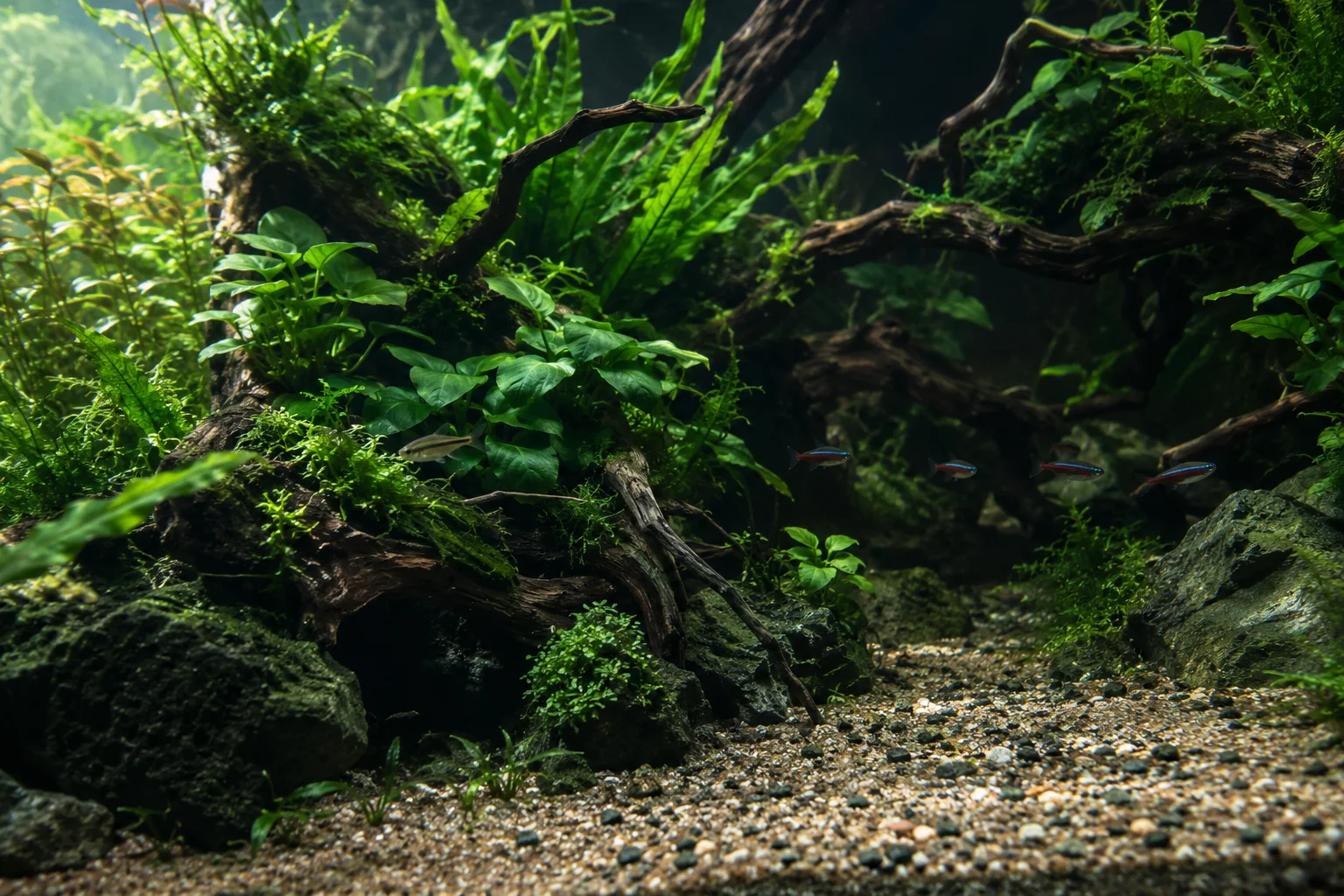
- Decor: dense planting, moss, driftwood, dark substrate, floating plants
02
Origin and natural habitat
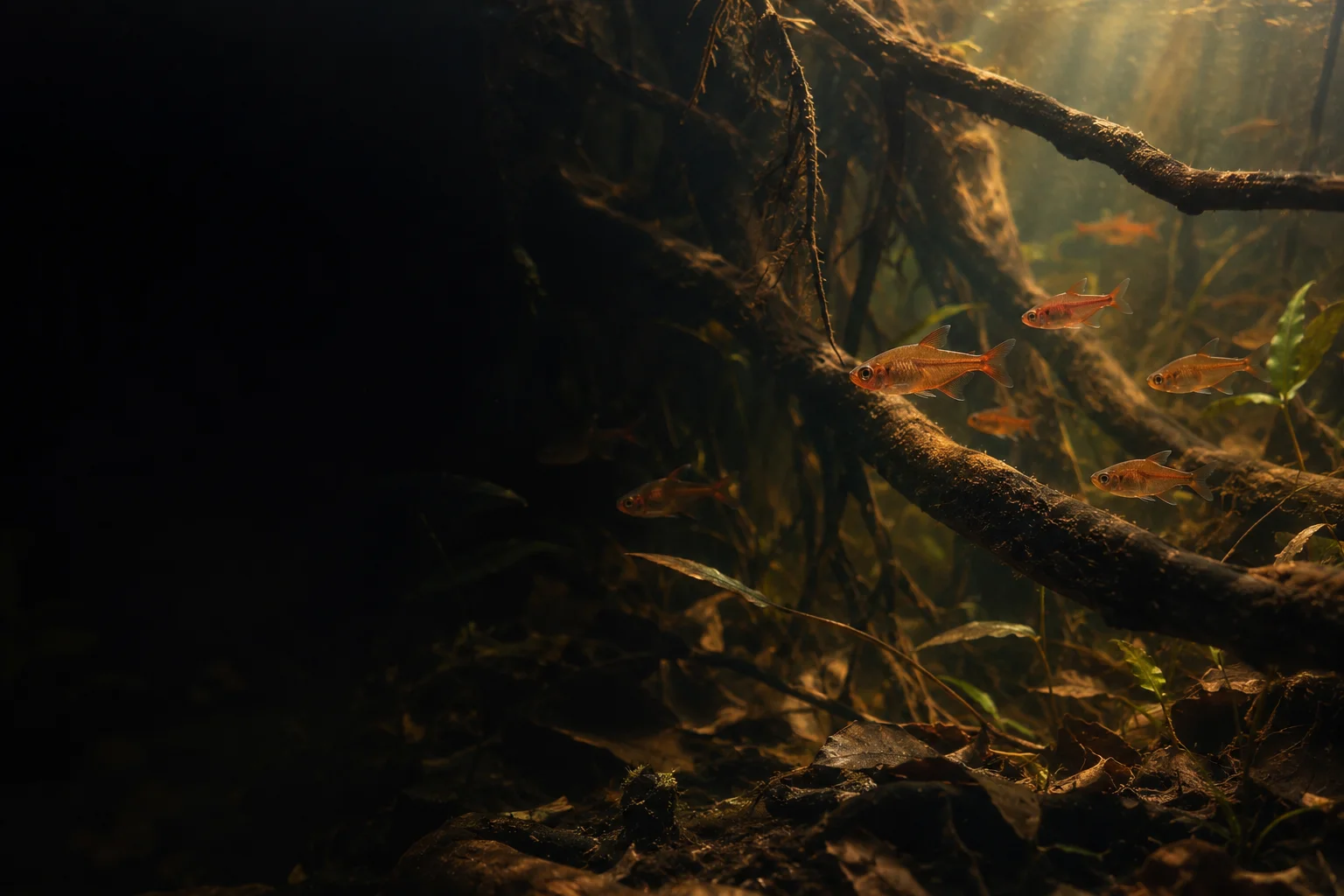
Hyphessobrycon amandae comes from the Araguaia River basin in central Brazil, where it lives in slow tributaries, backwaters and lagoons with dense vegetation. The water there is warm, soft and slightly acidic, often stained by tannins.
The species was described in 1987 and named after Amanda Bleher, mother of the explorer and fish collector Heiko Bleher. Most ember tetras sold today are captive-bred, which is one reason they adapt so easily to aquarium water.
03
Adult size and lifespan
Adult ember tetras reach about 0.8 inch (2 cm) in total length. Males are usually slimmer and more intensely colored, especially when displaying; females are rounder and a little paler. Expect 2–4 years of life with good care.
Because they are so small, embers can be eaten by fish that look harmless in the store. Any tank mate with a mouth large enough to swallow a 2 cm fish is a risk once it grows.
04
Ember tetra tank size
A 10-gallon (38 L) tank is a comfortable minimum for a school of 8–12 embers, and it is one of the best fish for a 10-gallon tank. Some keepers house a small group in 5–7.5 gallons, but water quality is harder to keep stable and the school has little room. If you are starting out, see our picks for the best 10-gallon aquarium.
Embers spend most of their time in the middle and upper water column. Give them open swimming space in front, dense plants behind, and some floating cover to soften the light. They often look washed out in bare tanks under bright light, and color up quickly once they feel secure.
05
Water parameters
Embers are adaptable. Captive-bred fish do well in most treated tap water, though they show their best color in soft, slightly acidic, tannin-tinted water. As with any small fish, stability matters more than exact numbers. Use a water conditioner with every water change and check our guide to aquarium water parameters if you are unsure about your readings.
| Parameter | Target range |
|---|---|
| Temperature | 72–82 °F (22–28 °C) |
| pH | 5.5–7.5 |
| GH (general hardness) | 1–12 °dH (20–215 ppm) |
| KH (carbonate hardness) | 0–6 °dH (0–110 ppm) |
| Ammonia / nitrite | 0 ppm |
| Nitrate | Below 20 ppm |
06
Diet and feeding
In the wild, embers feed on tiny insects, larvae, zooplankton and small crustaceans. In the aquarium, the main rule is size: the food has to fit their very small mouths. Good staples are micro-pellets, nano granules and finely crushed flakes. Add frozen or live foods several times a week, such as baby brine shrimp, daphnia, cyclops and microworms.
Feed small amounts once or twice a day, only what the school finishes in about two minutes. Embers rarely pick food off the bottom, so leftovers end up feeding bacteria and algae instead of fish. Our guide on how often to feed aquarium fish explains portion control in more detail.
07
Ember tetra school and tank mates
Ember tetras are a shoaling fish. In a group of 8–12 or more, they stay out in the open and show natural behavior, with males sparring briefly and displaying to each other without real harm. In small groups they hide and stay pale. A larger ember tetra school also spreads out that harmless male sparring.
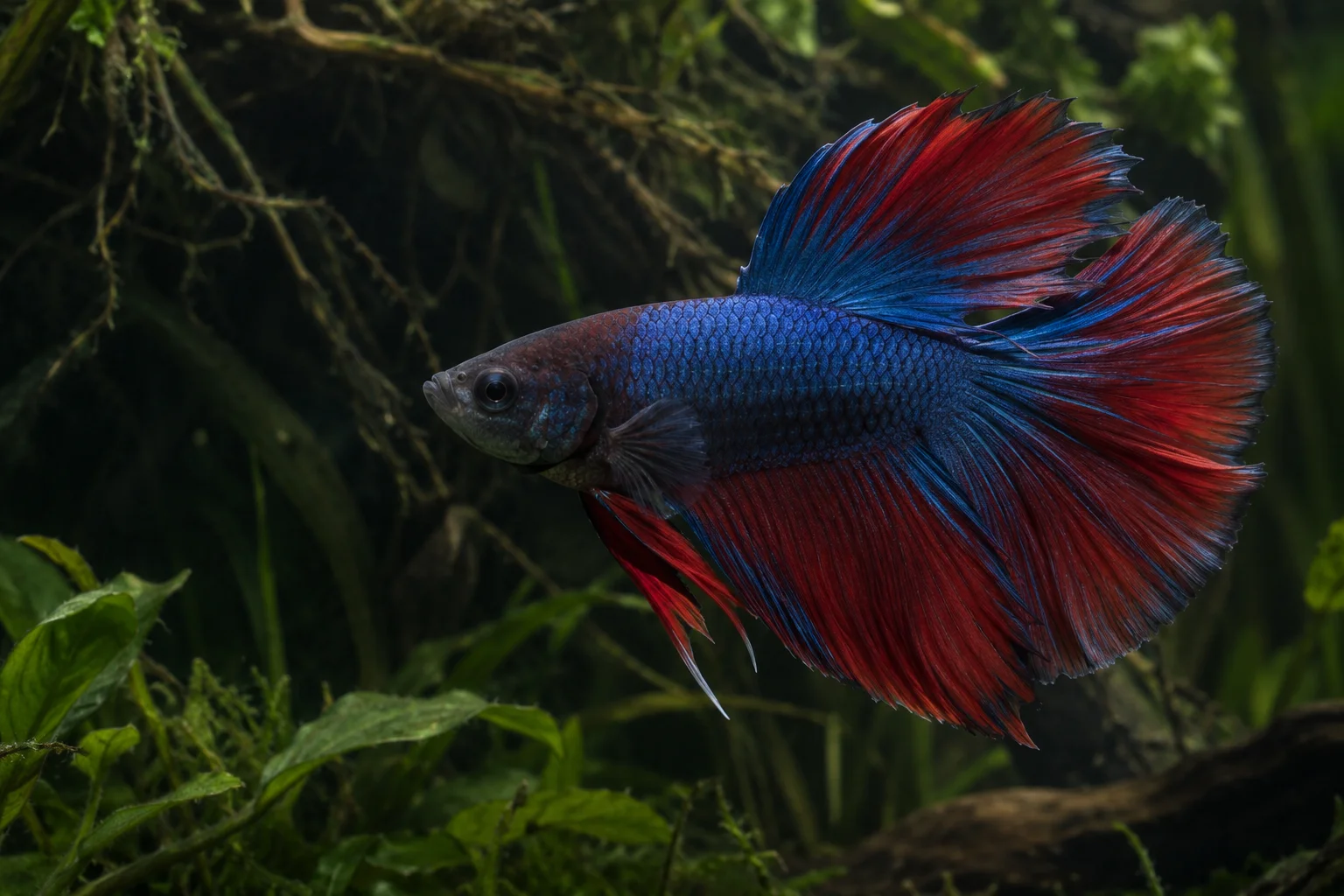
Good ember tetra tank mates are small and peaceful. They are among the more reliable choices in our betta tank mates guide, and they combine well with celestial pearl danios, otocinclus, pygmy corydoras, small rasboras and nerite snails.
- Good tank mates: chili and harlequin rasboras, celestial pearl danios, pygmy and small corydoras, otocinclus, neon tetras, nerite and mystery snails
- Use caution: bettas (usually fine in planted 10+ gallon tanks), dwarf cichlids in small tanks
- Avoid: angelfish, large gouramis, cichlids and any fish big enough to eat a 2 cm tetra
08
Are ember tetras safe with shrimp?
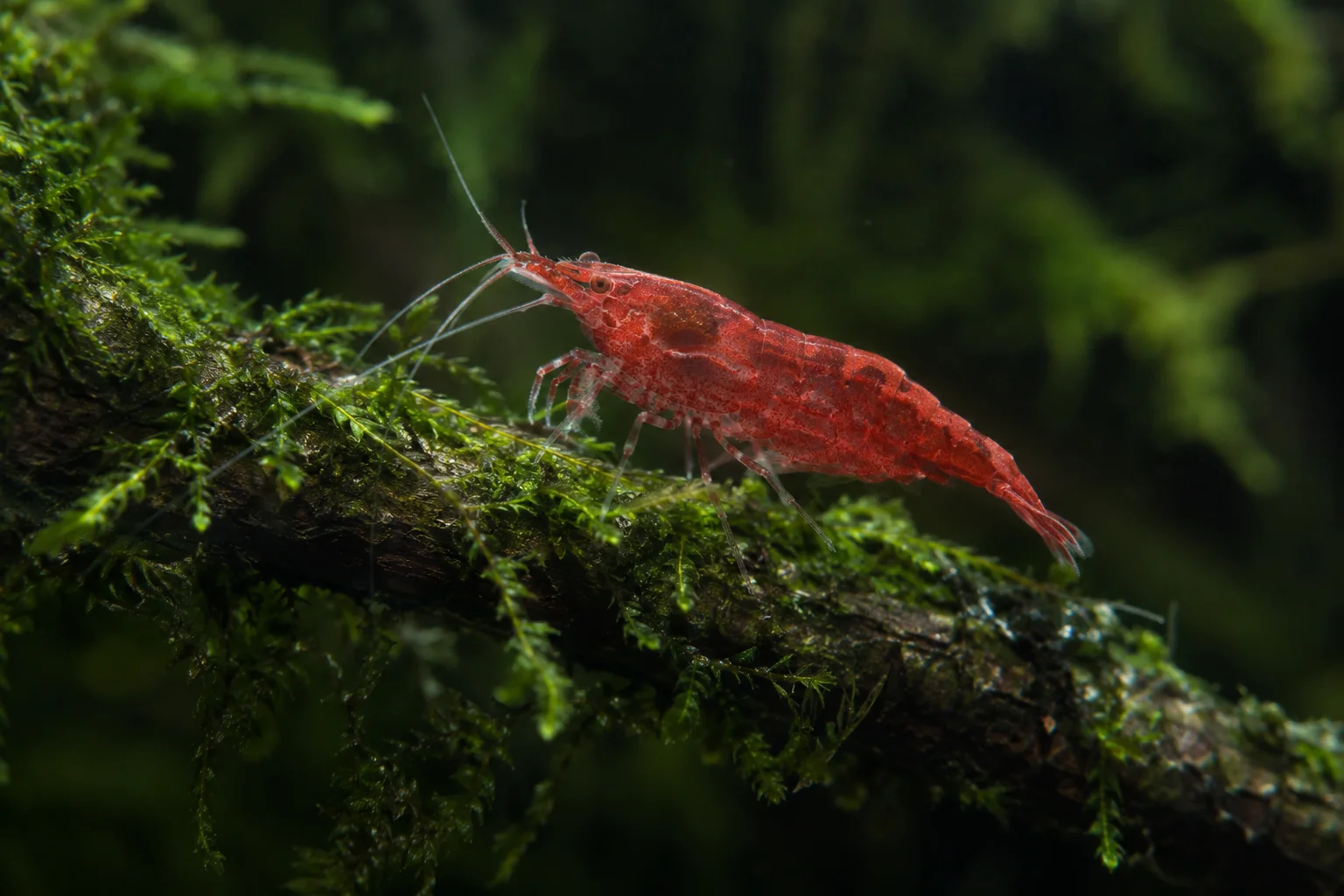
Mostly, yes. Adult cherry shrimp and amano shrimp are too big for embers to eat. Newly hatched shrimplets are a different story: embers will pick off some of them. In a heavily planted tank with dense moss, enough babies usually survive for the colony to grow, but the population will grow more slowly than in a shrimp-only tank.
If you want maximum shrimp breeding, keep shrimp alone. For a balanced community, see our list of shrimp tank mates.
09
Breeding ember tetras
Ember tetras are egg scatterers and one of the easier tetras to breed. In a mature, densely planted tank with plenty of moss, some fry often appear without any effort. Adults do eat eggs and fry, so a separate breeding setup gives much better results.
Use a small tank of a few gallons with soft, slightly acidic water, a sponge filter, dim light and a mat of java moss or spawning mops. Condition a few males and females with live and frozen foods, add them to the breeding tank and remove them after a day or two. Eggs hatch after about a day, and the fry become free-swimming a few days later. Start them on infusoria or a liquid fry food, then move to baby brine shrimp.
10
Common diseases
Embers are hardy, and most health problems come from water quality or stress. Small fish are affected faster by ammonia and nitrite spikes, so test regularly in young or heavily stocked tanks. Quarantine new arrivals when possible.
If symptoms worsen or spread to several fish, contact an aquatic veterinarian before trying multiple treatments.
| Problem | Typical signs | Where to start |
|---|---|---|
| Ich | White salt-like spots, flashing | See our guide to ich in fish |
| Ammonia or nitrite stress | Gasping, clamped fins, pale color | Test water, water change, see ammonia poisoning |
| Columnaris | White or gray patches, frayed fins | Water quality, medicate per label |
| Starvation | Thin bellies, slow growth | Smaller food, more frequent tiny meals |
11
Recommended gear
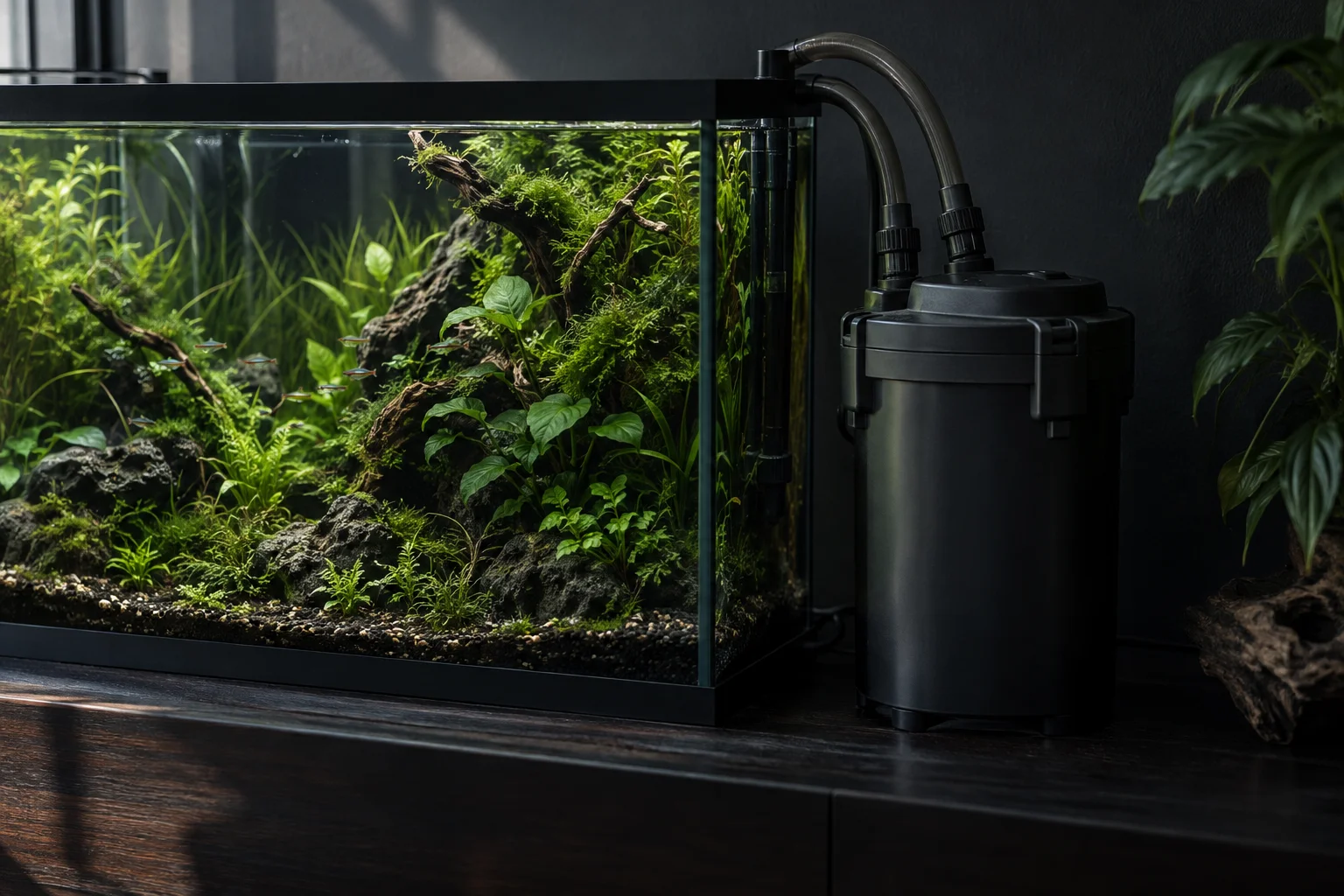
Embers are small enough to get pulled into strong filter intakes, so a sponge filter is the classic choice; compare models in our best sponge filter guide. A small adjustable heater keeps the temperature stable, see the best aquarium heater for low-wattage picks.
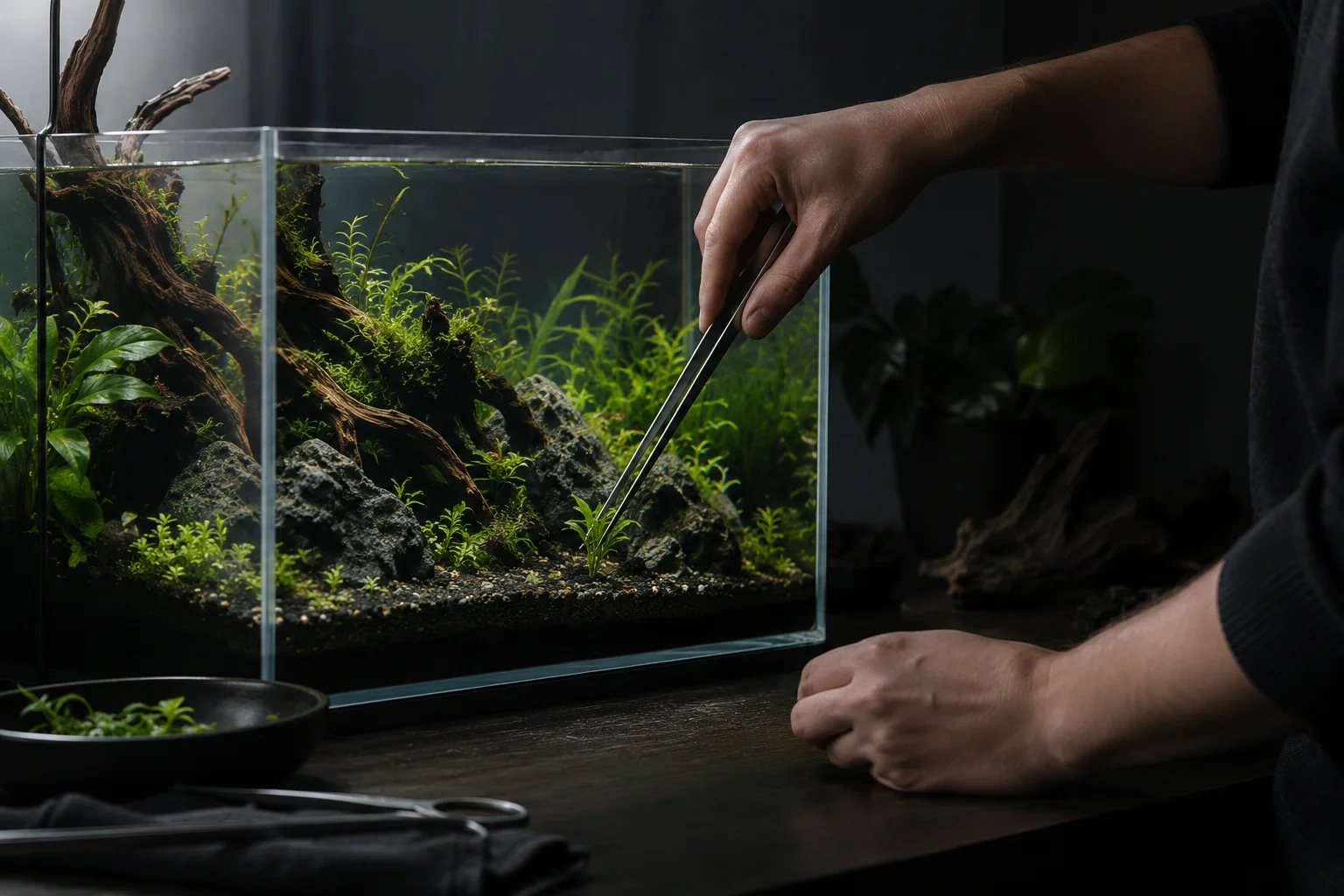
Live plants make a big difference to their color and confidence. Easy species such as java fern, anubias, mosses and floating plants need only modest light and give embers the cover they like.
Frequently asked questions
Frequently asked questions
How many ember tetras should be kept together?
Keep at least 8 ember tetras, and 10–12 or more if your tank allows. They are shoaling fish and feel safe only in a group. In larger schools they swim openly, show stronger color and the harmless sparring between males is spread across more fish.
What size tank do ember tetras need?
A 10-gallon (38 L) tank is a good minimum for a school of 8–12 embers. Some keepers use 5–7.5 gallon nano tanks, but small volumes are less stable and give the group little swimming room. Larger, planted tanks show off their schooling and color best.
Can ember tetras live with a betta?
Usually, yes. Ember tetras are small, fast, peaceful and do not nip fins, which makes them one of the better betta tank mates. Use a planted tank of at least 10 gallons, add the embers first if possible, and watch the betta for chasing. Individual bettas vary, so keep a backup plan.
Will ember tetras eat shrimp?
Ember tetras do not bother adult cherry or amano shrimp, but they will eat some newborn shrimplets. In a densely planted tank with moss, enough babies usually survive for the colony to keep growing. For maximum shrimp breeding, a species-only shrimp tank works best.
How long do ember tetras live?
Ember tetras typically live 2–4 years in the aquarium. Stable water, a varied diet of small foods, a proper school size and peaceful tank mates all help them reach the upper end of that range.
Sources and references
Written and reviewed by the handsoffmyhobby editorial team according to our editorial policy.