01
How to choose the best fish for a 10 gallon tank
Ten gallons is a real step up from 5: twice the water to dilute waste, room for a school, and enough floor for a small group of bottom dwellers. It is still a small tank, though. The fish must stay under about 2 inches (5 cm), swim calmly, and get along with each other in a 20 inch (50 cm) long box.
Start with a fully cycled tank and add fish in two or three stages, a few weeks apart, so the bacteria can keep up. Our beginner aquarium guide walks through the whole setup if this is your first tank.
- Pick one main school (8 to 10 fish of one species)
- Add at most one bottom group or one small centerpiece fish
- Match all species to the same temperature and pH range
- Use invertebrates (shrimp, snails) to fill the gaps instead of more fish
02
10 gallon tank fish compared
This table lists every species discussed here. Chili rasboras, Endler’s livebearers, honey gouramis and sparkling gouramis do not have their own guide yet. Group sizes assume the species is the main fish in the tank.
| Species | Adult size | Temperature | pH | Group in 10 gal | Role |
|---|---|---|---|---|---|
| Ember tetra (Hyphessobrycon amandae) | About 0.8 in (2 cm) | 72–82 °F (22–28 °C) | 5.5–7.5 | 8 to 10 | Mid-water school |
| Celestial pearl danio (Danio margaritatus) | 0.8–1 in (2–2.5 cm) | 72–78 °F (22–26 °C) | 6.5–7.5 | 8 to 10 | Mid-water school |
| Chili rasbora (Boraras brigittae) | 0.6–0.8 in (1.5–2 cm) | 75–82 °F (24–28 °C) | 5.0–7.0 | 10 to 12 | Mid-water school |
| Harlequin rasbora (Trigonostigma heteromorpha) | 1.6–2 in (4–5 cm) | 72–81 °F (22–27 °C) | 6.0–7.5 | 8 | Mid-water school |
| Pygmy corydoras (Corydoras pygmaeus) | 0.8–1 in (2–2.5 cm) | 72–79 °F (22–26 °C) | 6.0–7.5 | 6 to 8 | Bottom group |
| Guppy (Poecilia reticulata), males | 1.2–1.4 in (3–3.5 cm) | 72–82 °F (22–28 °C) | 7.0–8.0 | 4 to 6 males | Colorful livebearers |
| Endler’s livebearer (Poecilia wingei) | 1–1.4 in (2.5–3.5 cm) | 75–82 °F (24–28 °C) | 7.0–8.0 | 5 to 6 males | Colorful livebearers |
| Betta (Betta splendens) | 2.4–2.8 in (6–7 cm) | 76–82 °F (24–28 °C) | 6.5–7.5 | 1 | Centerpiece |
| Honey gourami (Trichogaster chuna) | 1.6–2 in (4–5 cm) | 72–82 °F (22–28 °C) | 6.0–7.5 | 1, or 1 male + 1 female | Centerpiece |
| Sparkling gourami (Trichopsis pumila) | 1.4–1.6 in (3.5–4 cm) | 76–82 °F (24–28 °C) | 6.0–7.5 | 3 to 4 | Top-water group |
| Cherry shrimp (Neocaridina davidi) | About 1.2 in (3 cm) | 68–78 °F (20–26 °C) | 6.5–8.0 | Colony | Cleanup crew |
| Nerite snail (Neritina spp.) | About 1 in (2.5 cm) | 72–80 °F (22–27 °C) | 7.0–8.0 | 1 to 2 | Algae grazer |
Ember tetra care guide: tank, water, school and tank mates
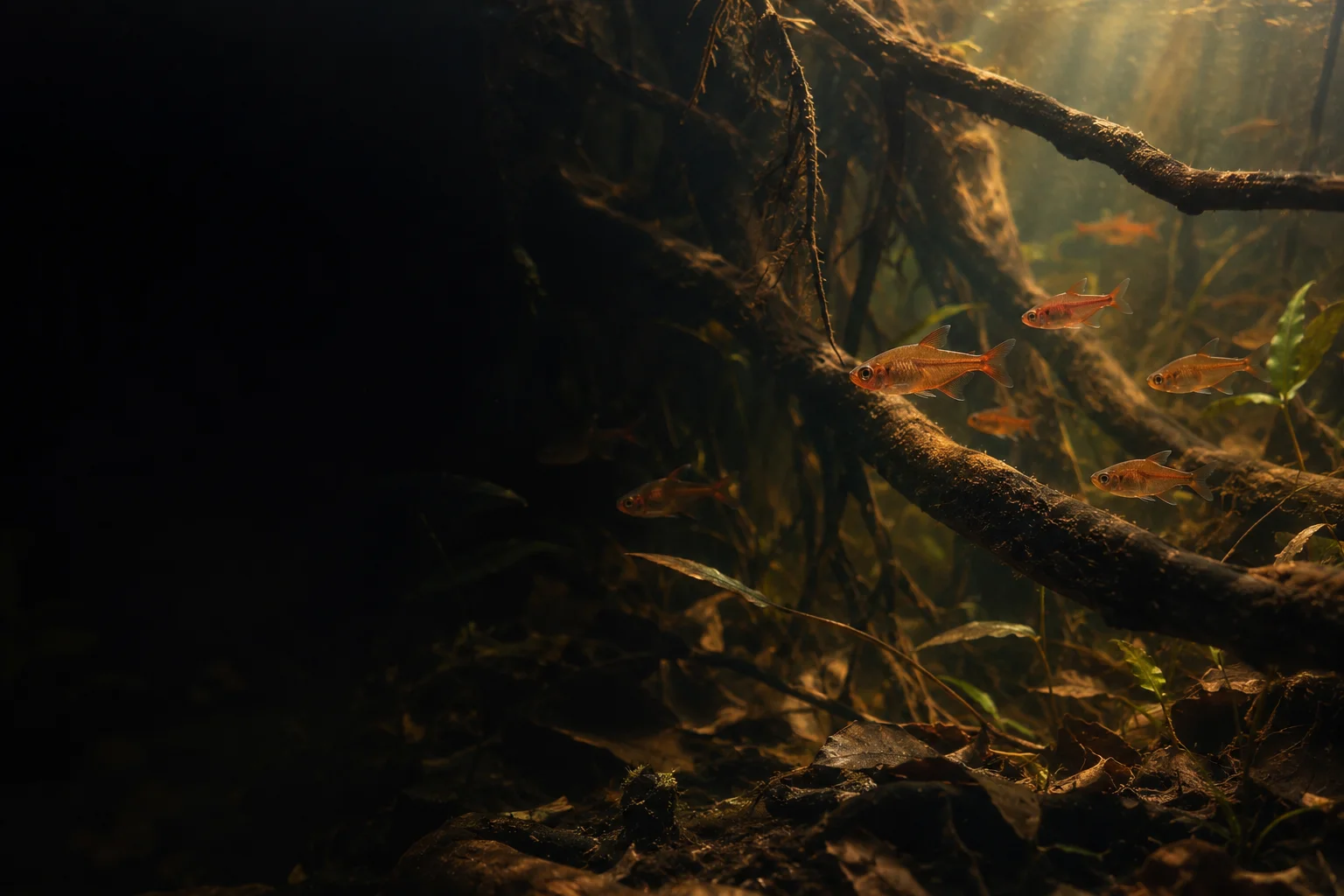
Bright orange, peaceful and hardy. A school of 8 to 10 is one of the best centerpieces for a planted 10 gallon tank.
Fish speciesCelestial pearl danio (galaxy rasbora) care: tank size, water and tank mates
Spotted nano fish for a densely planted tank with gentle flow. Keep 8 or more, with more females than males.
Fish speciesGuppy care guide: tank, water, tank mates and breeding
Colorful and easy in hard water. In 10 gallons, keep a group of males only to avoid overpopulation.
Fish speciesCorydoras catfish care guide: tank, water, diet and popular species
Choose pygmy or other dwarf cories for 10 gallons: a group of 6 to 8 on sand fills the bottom layer.
Fish speciesHarlequin rasbora care guide: tank size, water, diet and tank mates
A slightly larger schooling fish. A group of 8 fits a 10 gallon, though 15–20 gallons suits them better.
Fish speciesBetta fish care guide: tank size, water, diet and tank mates
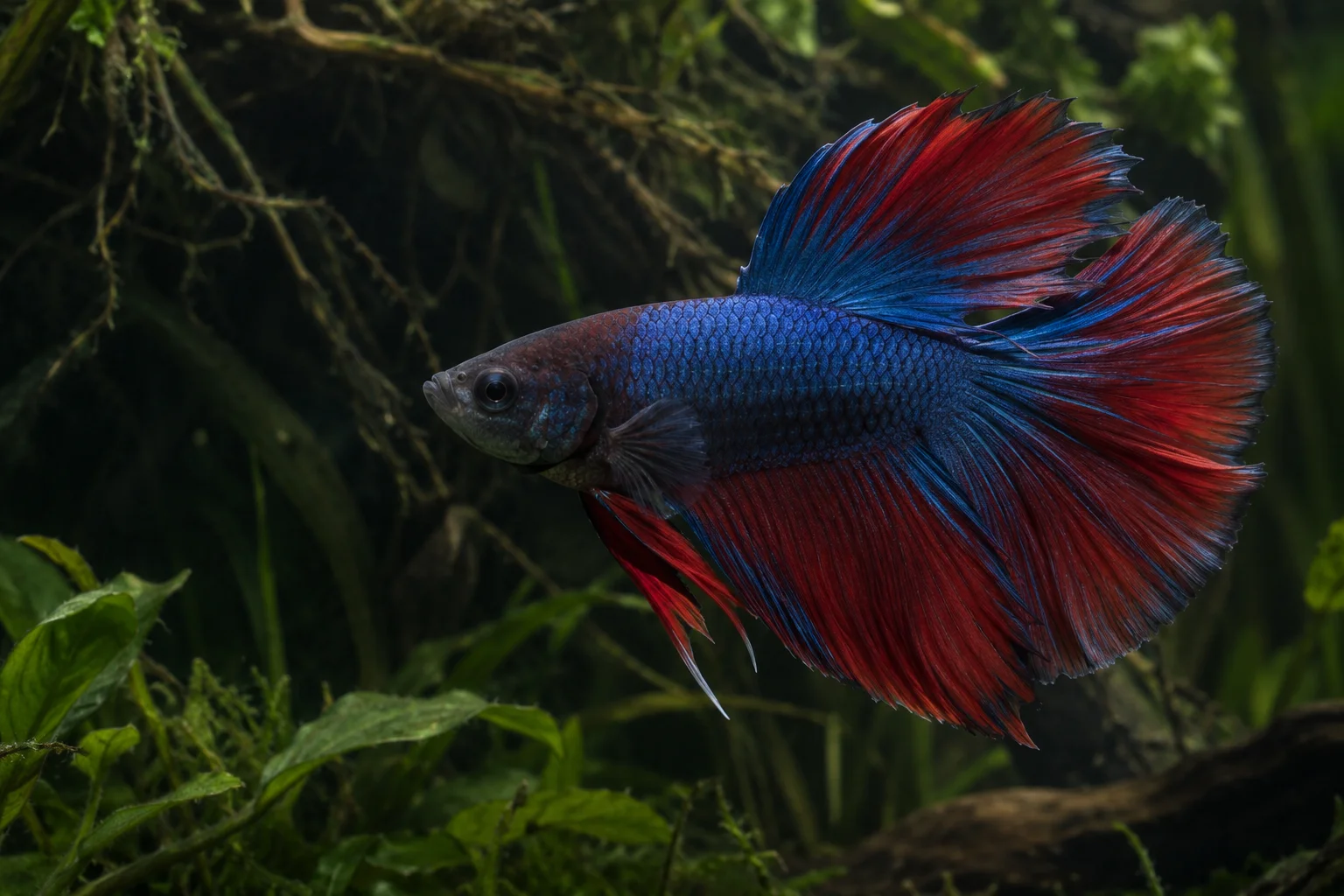
A single betta with a few peaceful companions is a classic 10 gallon setup.
Shrimp & snailsCherry shrimp care guide: tank, water, food and breeding
Peaceful cleaners that breed in small tanks and pair well with most nano fish.
03
How many fish in a 10 gallon tank?
The old one inch of fish per gallon rule says 10 inches of fish, but it ignores body mass, activity and waste. A 2 inch betta produces far more waste than two 1 inch ember tetras. A more reliable approach for a planted 10 gallon is one school of 8 to 10 nano fish, plus either 6 to 8 pygmy cories or a centerpiece fish, plus invertebrates. That is roughly 12 to 18 small fish.
Your test kit has the final word. If nitrate climbs above 20 ppm a week after a water change, or ammonia ever shows up, you are over capacity: feed less, add plants or remove fish. Our guide on how to lower nitrates explains the options.
04
10 gallon stocking ideas
Each plan below assumes a cycled, heated (about 77 °F or 25 °C), planted tank with a gentle filter and a 25% weekly water change. Add the school first and the bottom dwellers or shrimp three to four weeks later.
- Classic nano community: 10 ember tetras + 6 pygmy corydoras + 1 nerite snail
- Planted jewel box: 10 celestial pearl danios + a cherry shrimp colony + 2 nerite snails
- Betta community: 1 male betta + 6 pygmy corydoras + 1 nerite snail (only with a calm betta)
- Hard water livebearers: 6 male guppies or Endlers + 1 nerite snail + cherry shrimp
- Gourami tank: 1 honey gourami + 10 chili rasboras + cherry shrimp
Do not combine more than one school and one bottom group in 10 gallons, even if each fish looks tiny in the store. Overstocking is the most common cause of disease and cloudy water in small tanks.
05
Pairing a betta with tank mates in 10 gallons
A 10 gallon tank is where a betta can finally have company. Pygmy corydoras, ember tetras, nerite snails and Amano shrimp are the usual choices, because they are calm, small and not brightly finned. Avoid guppies (the betta may attack their fins) and fin nippers. Every betta has its own temperament, so watch closely after adding companions and keep a backup plan; our betta tank mates guide covers this in detail.
06
Fish that do not belong in a 10 gallon tank
These fish are often sold for small tanks, but they outgrow a 10 gallon or need more swimming room:
- Goldfish, including fancy types: large, messy and better in 30 gallons or more
- Angelfish, bristlenose plecos and other cichlids: too large or territorial as adults
- Zebra danios and white cloud minnows: very fast swimmers that need a longer tank
- Neon tetras: possible, but a stable 20 gallon suits them much better; see our neon tetra guide
- Kuhli loaches and otocinclus: need a larger, mature tank and a bigger group
- Dwarf gouramis: often listed for 10 gallons, but males can be territorial and the species is prone to disease; 20 gallons is safer
07
Equipment that makes 10 gallons easier
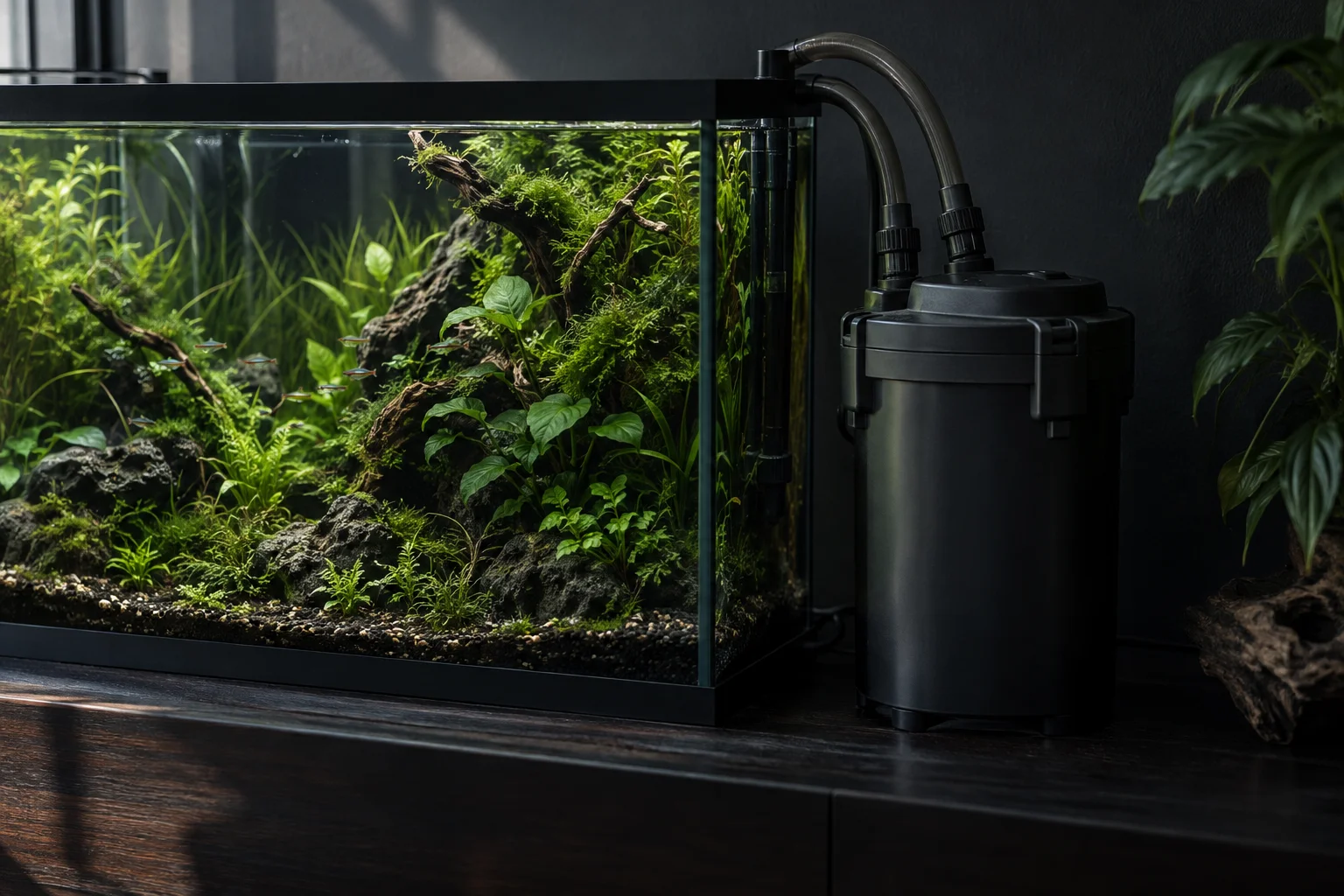
Most 10 gallon kits come with a basic hang-on-back filter and a light, but rarely a good heater. A 50 W adjustable heater is a typical size; compare models in our aquarium heater reviews. A sponge filter is a cheap, shrimp-safe add-on or replacement. If you are still choosing, our roundup of the best 10 gallon aquarium kits compares the popular starter tanks, and if 10 gallons feels tight, see the best fish for a 20 gallon tank.
Frequently asked questions
Frequently asked questions
How many fish can I put in a 10 gallon tank?
As a rule of thumb, one school of 8 to 10 nano fish, plus one bottom group of 6 to 8 pygmy cories or one centerpiece fish such as a betta or honey gourami. That is about 12 to 18 small fish. Add invertebrates freely, and let nitrate readings guide you: if it rises above 20 ppm within a week, you have too many fish.
What is the best fish for a beginner 10 gallon tank?
Male guppies in hard water, ember tetras or a single betta are the most forgiving choices. They accept standard flakes or pellets, tolerate small mistakes and stay small. Add a nerite snail for algae. Whatever you choose, cycle the tank first and buy the fish in small batches.
Can a betta live with other fish in a 10 gallon tank?
Often, yes. Calm, short-finned companions such as pygmy corydoras, ember tetras, nerite snails or Amano shrimp usually work in a planted 10 gallon. Avoid guppies, fin nippers and other labyrinth fish. Watch the betta for the first days and be ready to separate it if it chases or bites.
Can I put neon tetras in a 10 gallon tank?
A small group can live in 10 gallons, but neon tetras do better in a stable 20 gallon tank with a school of 8 to 12. In 10 gallons, ember tetras or chili rasboras give a similar effect with less risk, because they stay smaller and are less sensitive to water swings.
Can I keep goldfish in a 10 gallon tank?
No. Even fancy goldfish grow to 6 in (15 cm) or more and produce a lot of waste. They need around 30 gallons for the first fish and more for each additional one, plus strong filtration. A 10 gallon tank is suited to tropical nano fish instead.
Sources and references
Written and reviewed by the handsoffmyhobby editorial team according to our editorial policy.