01
When you should raise aquarium pH
Low pH is not always a problem. Tetras, rasboras, discus and many dwarf cichlids thrive at pH 6.0–7.0, and planted tanks with CO2 often sit at 6.5. What matters is whether your fish suit the water, and whether pH is stable.
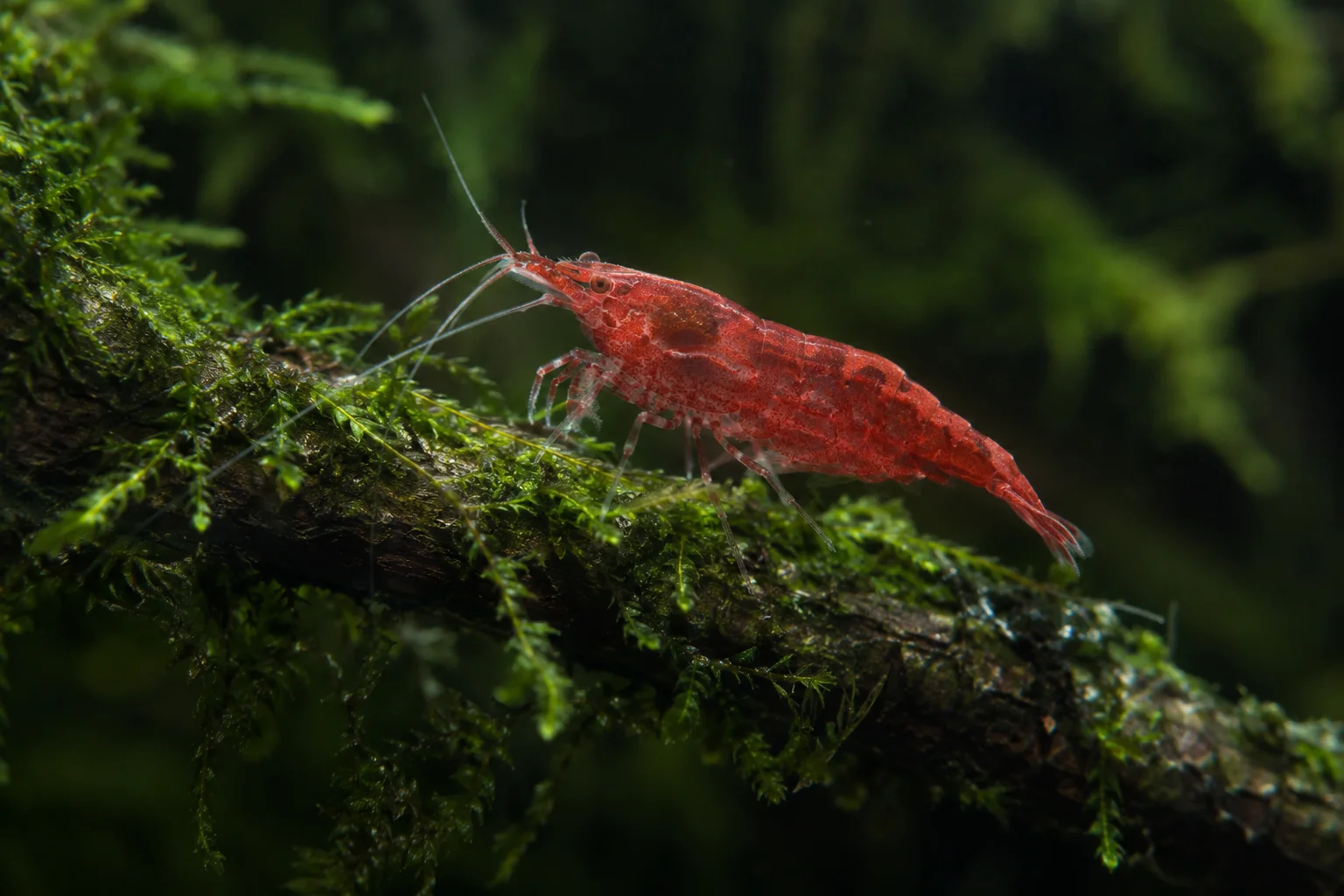
You should increase aquarium pH when you keep species that prefer hard, alkaline water, such as guppies, mollies, platies, goldfish or African cichlids (see our cichlid tank mates guide), when pH keeps falling week after week, or when KH tests at 0–2 °dH. That last case is the most urgent: with no buffer left, pH can collapse below 6 within days. Shrimp keepers also watch it closely, because cherry shrimp and snails need minerals and a pH around 7–8 to molt and build shells. Our aquarium water parameters guide lists target ranges.
02
Why aquarium pH drops
Every tank produces acid. Nitrifying bacteria release acid as they turn ammonia into nitrate, fish breathe out CO2, and decaying food and leaves add organic acids. KH neutralizes that acid, but it gets used up in the process. If you skip water changes, KH slowly falls to zero and pH follows, often abruptly. This "old tank syndrome" pattern is why a neglected tank can look fine for months, then lose fish overnight.
- Soft tap water, RO or rain water with little KH to begin with
- Infrequent water changes, letting acids and nitrate build up
- Heavy stocking and overfeeding, which speed up acid production
- Driftwood, peat, Indian almond leaves or active aquasoil
- High CO2: injected CO2, or poor surface agitation in a crowded tank
03
How pH and KH work together
KH (carbonate hardness, also called alkalinity) is the stock of carbonates and bicarbonates that soaks up acid. As long as KH stays around 3–8 °dH (54–143 ppm), pH stays steady, usually between 7.0 and 8.0. When KH drops below 2 °dH (36 ppm), there is almost nothing left to absorb acid and pH can swing or crash. That is why raising pH is really about raising KH: increase the buffer and pH follows on its own, then stays there.
| Method | Speed | Raises | Best for |
|---|---|---|---|
| Water change with harder tap water | Hours | pH, KH, GH | Any tank, first step after a crash |
| Crushed coral or aragonite in filter | Days to weeks | pH, KH, GH | Livebearers, goldfish, cichlids, snails |
| Baking soda (sodium bicarbonate) | Minutes | KH, pH up to about 8.2 | Quick KH rescue, soft water |
| Alkaline buffer products | Minutes to hours | KH, pH | Precise control, following the label |
| More surface agitation | Hours | pH only, slightly | Tanks with high CO2 |
| Limestone or Texas holey rock | Weeks | pH, KH, GH | African cichlid tanks |
04
How to raise pH in an aquarium step by step
Work through these steps in order. Most tanks need only the first three.
- Test pH, KH and GH in the tank and in your tap water with a liquid kit. Write the numbers down so you can track progress.
- If tap water has a higher pH and KH, do a 20–25% water change with conditioned, temperature-matched water. Repeat every 2–3 days rather than doing one huge change.
- Remove or reduce what lowers pH: take out peat and old almond leaves, and consider removing some driftwood if KH stays very low.
- Increase surface agitation: point the filter outlet at the surface or add an air stone, which lets excess CO2 escape.
- For a lasting buffer, put a mesh bag of crushed coral or aragonite in the filter. Start with about 1/2 cup per 10 gallons and adjust after two weeks of testing.
- If KH is near zero and you need a fast fix, dissolve baking soda in a cup of tank water and add it slowly. Roughly 1/4 teaspoon (about 1.3 g) per 10 gallons raises KH by about 1 °dH. Add no more than this per day.
- Re-test pH and KH the next day and every few days after. Stop once pH has risen to your target and KH is stable at 3 °dH or more.
- Prevent a repeat: keep a weekly water change routine and test KH every week or two.
Raise pH by no more than 0.2–0.3 units per day. In a tank with ammonia present, a quick rise also turns more ammonium into toxic free ammonia, so test ammonia before and after.
05
Natural ways to raise pH: crushed coral and minerals
Crushed coral is the simplest long-term option and the one most livebearer and cichlid keepers use. It dissolves slowly when pH falls, releasing calcium carbonate, so it acts like a self-adjusting buffer: the more acidic the water, the faster it works. It raises GH as well, which helps snails and shrimp. Aragonite sand used as substrate does the same in larger quantity, and seashells or cuttlebone have a milder effect.
Calcareous rock such as limestone, Texas holey rock or seiryu stone also releases carbonates. It suits African cichlid layouts but can push pH too high for soft-water fish, so test before adding a lot of it.
Aeration raises pH a little by driving off CO2. It will not fix a KH problem, but in a crowded tank with still water the change can be noticeable. An air stone run from a quiet aquarium air pump is enough.
06
Baking soda and pH-raising products
Baking soda (plain sodium bicarbonate, no additives) is cheap and effective, and it naturally tends to settle pH near 8.0–8.2 rather than overshooting. It raises KH only, not GH, and adds a little sodium, which most freshwater fish tolerate well at these doses. Dissolve it first, dose in small steps and test between doses.
Commercial buffers such as Seachem Alkaline Buffer or API Proper pH 7.0 are more convenient, and some are designed to hold a specific pH. Follow the label precisely. If you use RO water, choose a remineralizer such as Seachem Equilibrium for GH together with a KH buffer, since RO water has neither.
Treat the new water in a bucket rather than the tank. That way every water change brings the same pH and KH, and the tank never sees a sudden jump.
07
Common mistakes when raising pH
If your tank has not finished cycling, note that a pH below about 6.5 slows nitrifying bacteria sharply. Our guide on how to cycle a fish tank explains why a stable KH matters during the first weeks.
- Adding a pH Up product daily without testing KH
- Pouring baking soda straight into the tank or adding a big dose at once
- Ignoring a steady drop in pH, which is a warning that KH is running out
- Doing one huge water change in a neglected tank, shocking fish with a sudden pH and nitrate swing
- Adding limestone to a soft-water community tank
- Raising pH quickly in a tank that still has ammonia
08
When to escalate and what to buy
If fish gasp, breathe fast, look pale or lie on the bottom and the pH has crashed below 6, act the same day: do a 25% water change, then another the next day, and add buffer gradually. Check ammonia too, and see our page on ammonia poisoning in fish if it is present. If fish still decline once the water is stable, consult an aquatic veterinarian.
Keep pH steady with regular aquarium water changes and a test kit that includes KH; compare options in our best aquarium test kit guide. A good water conditioner makes frequent changes safe. And if you overshoot, our guide on how to lower pH explains how to bring it back down gently.
Frequently asked questions
Frequently asked questions
How do I raise pH in my aquarium naturally?
Put a mesh bag of crushed coral or aragonite in the filter, increase surface agitation, remove peat or extra driftwood, and do regular water changes if your tap water has a higher pH. Crushed coral is the most reliable natural method: it dissolves slowly, raises KH and GH, and keeps pH steady over months.
How much crushed coral do I need to raise pH?
A common starting point is about 1/2 cup per 10 gallons, placed in a mesh bag in the filter or mixed into the substrate. Test pH and KH weekly for two to three weeks, then add or remove some. The effect depends on how soft your water is, so there is no exact dose.
Is baking soda safe to raise aquarium pH?
Yes, plain baking soda is safe when used carefully. Roughly 1/4 teaspoon per 10 gallons raises KH by about 1 °dH. Dissolve it in tank water, add it slowly, and do not dose more than that per day. It raises KH but not GH, and tends to settle pH around 8.0–8.2.
Why does my aquarium pH keep dropping?
Usually because KH is being used up. Nitrifying bacteria, fish waste and decaying matter all produce acid, and the carbonate buffer neutralizes it until it runs out. Soft tap water, infrequent water changes, overfeeding and driftwood or peat make it faster. Regular water changes and crushed coral solve most cases.
What pH is too low for aquarium fish?
Most community fish are fine down to about 6.5, and soft-water species like tetras and discus are comfortable at 6.0. Below 6.0, nitrifying bacteria slow down and sensitive fish may suffer. For livebearers, goldfish and African cichlids, anything below 7.0 is too low over the long term.
Sources and references
Written and reviewed by the handsoffmyhobby editorial team according to our editorial policy.