01
How often to feed aquarium fish: the basic rule
For most community fish (tetras, rasboras, livebearers, gouramis, barbs), one or two small meals a day is ideal. Fish in the wild graze or hunt through the day, but in an aquarium their food is calorie-dense and there is no current carrying leftovers away. Two small meals are generally better than one big one, because fish eat more of the food before it sinks and rots.
Each meal should be what your fish eat in about 1–2 minutes. If food is still drifting to the bottom after that, you fed too much. A popular rule of thumb compares a fish’s stomach to the size of its eye, a useful mental image when you pinch flakes.
Many experienced keepers add one fasting day per week for adult fish. It gives the digestive system a break, helps prevent bloating and constipation, and reduces waste. It is not mandatory, but it rarely hurts healthy adults.
02
Why feeding the right amount matters
Everything that goes into the tank ends up as waste. Uneaten food breaks down into ammonia, which the filter bacteria convert to nitrite and nitrate. In a new or lightly filtered tank, regular overfeeding is enough to cause an ammonia spike, a classic trigger of new tank syndrome.
In an established tank, the effects are slower but just as real: rising nitrate (see how to lower nitrates), bacterial blooms and cloudy fish tank water, algae, explosions of pest snails and planaria, and digestive problems such as bloating. In goldfish and fancy bettas, overfeeding dry food is a common contributor to swim bladder disease.
03
Fish feeding schedule by type of fish
The basic rule covers most fish, but age, diet and activity patterns change the details.
| Fish | How often | Notes |
|---|---|---|
| Community fish (tetras, rasboras, guppies) | 1–2 times a day | Small flakes or micro pellets, 1–2 minutes per meal |
| Betta | 1–2 small meals a day | 2–4 pellets per meal for most adults; one fasting day a week |
| Goldfish | 1–2 times a day | Sinking pellets and vegetables; very prone to overfeeding |
| Corydoras, loaches | Once a day | Sinking pellets or wafers, ideally at lights out |
| Plecos and otocinclus | Once a day | Algae wafers, blanched vegetables, driftwood for plecos |
| Large cichlids (oscars) | Once a day for adults | Juveniles 2 times a day; larger, less frequent meals |
| Fry and juveniles | 3–5 times a day | Tiny amounts of crushed food or live baby brine shrimp |
| Shrimp and snails | Every 1–2 days | Small amounts; they graze on biofilm between meals |
Bettas and goldfish always act hungry. Begging at the glass is not a sign of hunger, it is learned behavior. Stick to the schedule.
04
Species with special needs
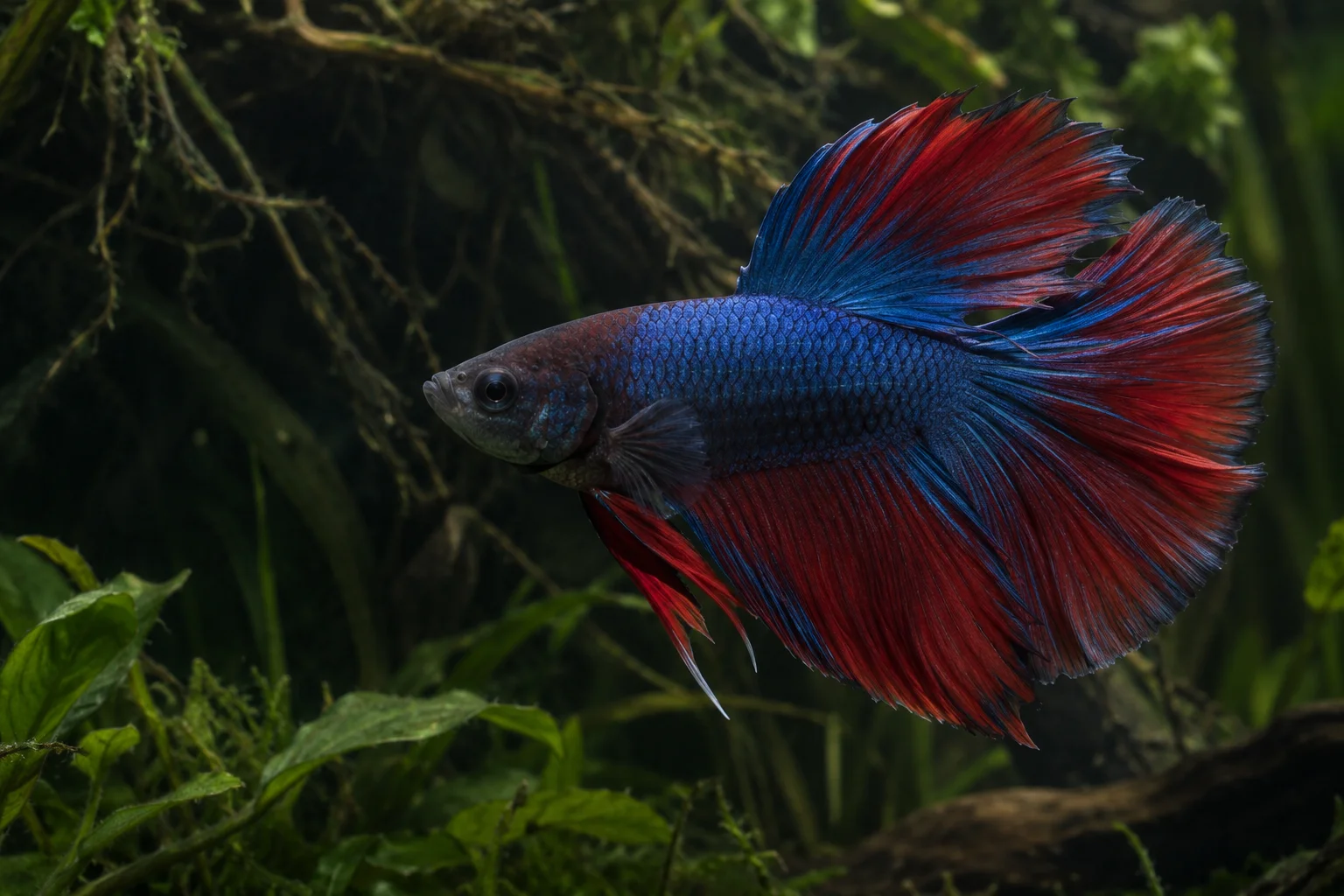
A betta fish has a small stomach and a tendency to bloat. A few high-quality pellets once or twice a day, plus occasional frozen bloodworms or brine shrimp, is plenty. Soak freeze-dried food briefly before feeding.
Goldfish produce a lot of waste and will eat as long as food is available. Feed small portions of sinking pellets, add blanched peas or leafy greens a few times a week, and keep the tank well filtered. Our article on what goldfish eat goes further.
Bottom dwellers such as corydoras and bristlenose plecos often miss out because faster fish eat everything first. Drop sinking wafers just after the lights go off. Algae grazers like otocinclus need algae wafers or blanched zucchini if natural algae runs low.
Livebearers like guppies do best with small, frequent meals and some plant matter, such as spirulina flakes.
05
How to feed fish step by step
A simple routine keeps every fish fed without polluting the water.
- Choose a fixed time or two each day, at least 30 minutes after the lights come on.
- Turn off or reduce strong surface flow for a minute if food gets blown into the filter intake.
- Offer a small pinch of food and watch. Add a little more only if everything disappears within a minute.
- Stop at about 1–2 minutes of eating time.
- Drop sinking food for bottom dwellers at the other end of the tank, or after lights out.
- Remove uneaten food after 5 minutes with a net or a turkey baster.
- Vary the diet: a quality staple flake or pellet, plus frozen or live foods 1–3 times a week and vegetable foods for omnivores.
06
Signs of overfeeding and underfeeding
Your tank tells you when the feeding is off. Overfeeding signs include food on the substrate after meals, cloudy water, a film on the surface, fast-growing algae, a sudden boom in small snails, nitrate that climbs between water changes and fish with swollen bellies or long trailing feces.
Underfeeding is much rarer in home aquariums. Watch for pinched, sunken bellies seen from above, fish nipping at each other or at plants, and bottom dwellers that look thin. Check that they actually reach the food before you increase the amount.
Regular testing makes overfeeding visible before it becomes a problem. Nitrate climbing above 20–40 ppm within a week of a water change is a strong hint.
07
Feeding fish on vacation
Healthy adult fish in a mature tank can go 2–4 days without food with no harm, and many tolerate a week. For a long weekend, simply feed normally the day before you leave.
For longer trips, an automatic feeder such as the Eheim Everyday Feeder is the most reliable option. Test it for a week before you leave and set it to give less than you normally would. Vacation feeder blocks and slow-release gels often dissolve unevenly and can foul the water, so most keepers avoid them. If a friend helps, pre-portion each meal in a pill organizer so nobody overfeeds.
Do a water change and a quick filter check a few days before leaving, not on the same day.
08
Common feeding mistakes and when to escalate
The usual mistakes are feeding whenever fish beg, sprinkling a big pinch for a whole community without watching who eats, relying on a single food for years, and adding food during an ammonia problem. Fry are the exception where small, frequent feeding matters.
If a fish refuses food for more than 3–4 days, check your water first with a reliable kit from our best aquarium test kit guide, then look for signs of disease. New fish often skip meals for a day or two after transfer, as explained in our guide on how to acclimate fish. Persistent refusal, bloating or stringy white feces call for advice from an experienced store or an aquatic veterinarian.
Frequently asked questions
Frequently asked questions
How many times a day should I feed my fish?
Once or twice a day for most adult aquarium fish. Two small meals are usually better than one large one, as long as each meal is eaten in about 1–2 minutes. Fry and young fish need 3–5 tiny meals a day, while adult bottom feeders and large cichlids often do well with one meal.
How much food should I give my fish?
Give only what your fish eat completely in about 1–2 minutes. Start with a small pinch and add a little more only if it all disappears quickly. If food reaches the bottom and stays there, cut the amount. The old rule of thumb, a portion about the size of the fish’s eye, helps you picture it.
Is it okay to skip a day of feeding fish?
Yes. Many keepers fast healthy adult fish one day a week to help digestion and reduce waste. Adults in a mature tank can go 2–4 days without food without harm. Do not fast fry, juveniles, sick or very thin fish, which need regular small meals.
Can you overfeed fish?
Yes, and it is the most common mistake in the hobby. Fish will often keep eating when food is offered, and uneaten food turns into ammonia and nitrate. Overfeeding leads to cloudy water, algae, pest snails, bloating and, in new tanks, dangerous ammonia spikes.
What is the best time of day to feed aquarium fish?
Any consistent time works, but wait at least 30 minutes after the lights come on so fish are fully active. A morning and an early evening meal suit most community fish. Feed nocturnal bottom dwellers such as corydoras and plecos just after lights out.
Sources and references
Written and reviewed by the handsoffmyhobby editorial team according to our editorial policy.