01
How long do betta fish live on average?
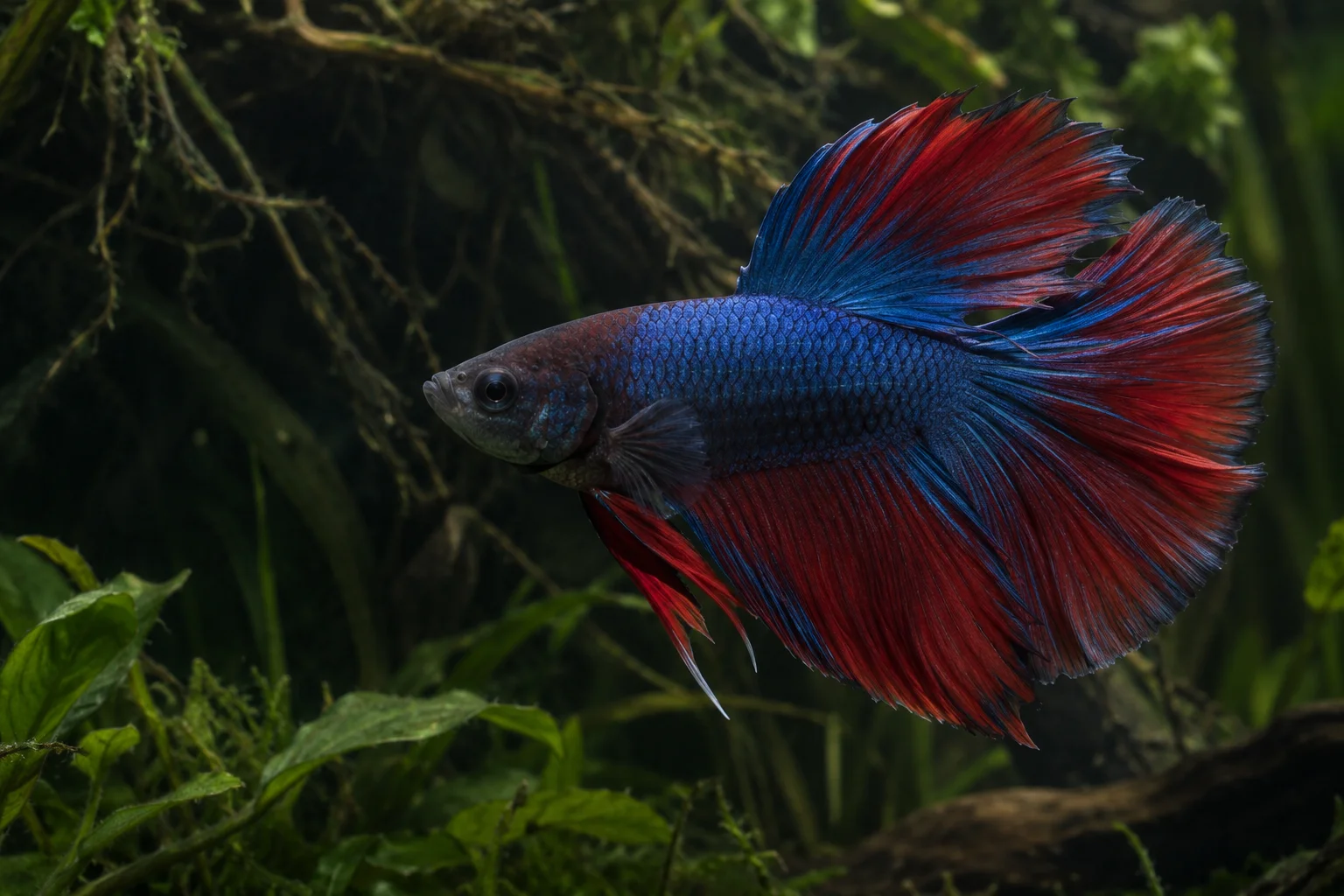
The honest answer to how long betta fish live is 3–5 years for a healthy fish in good conditions. That range is widely accepted among experienced keepers and breeders. A minority of bettas pass 6 years, but treat that as a bonus rather than a target.
One detail changes the math: the betta you bring home is not a baby. Males sold in pet stores are usually somewhere between 6 months and a year old, because they need time to develop full fins and color. So if a betta dies two and a half years after purchase, it may well have reached three or more, which is a normal life. If yours dies within a few months, the cause is almost always the environment, not old age.
Our full betta fish care guide covers setup in detail. Here we focus on what decides lifespan.
02
Betta lifespan in a tank, a bowl and the wild
Where a betta lives has more influence on its lifespan than any other single factor. The table below compares typical expectations. These are general ranges based on widely shared hobby knowledge, not results of a formal study.
| Conditions | Typical lifespan | Main limiting factor |
|---|---|---|
| Cycled, heated, filtered tank of 5–10 gallons (19–38 L) | 3–5 years, sometimes longer | Genetics and age at purchase |
| Unfiltered tank with regular water changes and a heater | 2–3 years | Ammonia swings between changes |
| Small unheated bowl or vase | Often under 1 year | Cold water, ammonia, chronic stress |
| Wild habitat (rice paddies, marshes) | Generally shorter than in good aquariums | Predators, drought, seasonal changes |
Bettas can breathe air through their labyrinth organ, so they survive bad conditions for a while. Surviving is not thriving: the damage from cold water and ammonia builds up quietly and shows up later as disease.
03
What shortens a betta’s life
Most early deaths come from a handful of avoidable problems. They tend to stack: cold water weakens the immune system, ammonia burns the gills, and a bacterial infection finishes the job.
- Cold water. Bettas are tropical fish. Below about 74 °F (23 °C) they become sluggish, digest poorly and catch infections more easily.
- Ammonia and nitrite. An uncycled tank or a bowl without filtration lets waste build up. Even low, constant levels stress the gills and fins.
- Overfeeding. Too much food causes bloating, constipation and swim bladder problems, and leftover food fouls the water.
- Tiny containers. Less water means faster temperature swings and faster pollution.
- Strong current. Long fins make swimming tiring. A powerful filter outflow keeps a betta exhausted.
- Wrong tank mates. Fin nippers and aggressive fish cause constant stress and wounds that can turn into fin rot.
- Poor genetics. Heavily line-bred fish with very long or heavy fins can be more fragile, though many still live a normal life.
04
How to help your betta live longer
None of the steps below are complicated. Together they cover nearly everything that separates a 1-year betta from a 5-year betta.
- Give it at least 5 gallons (19 L) of water, ideally 10 gallons (38 L), with a lid.
- Cycle the tank before adding the fish, or use a careful fish-in cycle with frequent testing.
- Keep the water at 76–82 °F (24–28 °C) with an adjustable heater. Our best aquarium heater guide lists reliable models for small tanks.
- Use gentle filtration, such as one of the models in our best sponge filter roundup.
- Change 20–30% of the water every week and treat new water with a water conditioner.
- Feed 2–3 quality pellets once or twice a day, add frozen foods a few times a week, and skip one day a week.
- Choose calm betta tank mates, or keep your betta alone if it is aggressive.
- Add plants and resting spots near the surface, like a floating leaf or broad plant leaves.
05
Signs your betta is getting old
Aging in bettas is gradual. Around the age of 2–3 years, many show some of these changes. They are normal on their own, but check the water parameters first to make sure you are not looking at an illness.
- Colors fade or look washed out
- Fins become thinner, slightly ragged or droop, without the red edges or rot of an infection
- Less patrolling and flaring, more time resting on leaves or the bottom
- Slower reaction to food, sometimes missing pellets
- A slightly curved spine or white haze over the eyes in very old fish
06
Caring for a senior betta
An older betta needs small adjustments, not a different setup. Lower the water level a little or add more resting spots so it can reach the surface easily. Reduce current further. Offer soft foods it can catch, like thawed frozen foods, and feed slightly less, since activity drops.
Keep water quality spotless, because an older fish recovers more slowly from stress. Some keepers add Indian almond leaves for their soft tannins; this is a comfort measure, not a cure. If your betta stops eating for several days, has trouble staying upright or shows sudden swelling, an aquatic veterinarian can tell you whether treatment makes sense.
Frequently asked questions
Frequently asked questions
How long do betta fish live in a bowl?
Often less than a year, and rarely more than two. Small bowls cannot hold a heater safely, cool down at night and build up ammonia within days. A betta can survive this for a while because it breathes air, but it is under constant stress. Moving the same fish to a heated, filtered 5-gallon tank usually improves its activity and color quickly.
What is the longest a betta fish can live?
Some bettas live 6–7 years, and there are hobby reports of even older fish, but these are exceptions. A realistic goal is 3–5 years from hatching. Lifespan depends on genetics, age at purchase and above all on stable warm temperatures and clean water throughout the fish’s life.
Do female bettas live longer than males?
There is no reliable evidence that one sex lives much longer than the other. Females have shorter, lighter fins, which can make them a little less prone to fin damage, but both sexes reach 3–5 years with the same care. Females kept in groups can be stressed by aggression, which may shorten their life.
Why did my betta die after only a few months?
The most common causes are an uncycled tank, cold water, overfeeding or a container that is too small. Many bettas are also weakened by shipping and store conditions before purchase. Test the water for ammonia and nitrite, check the heater and review your feeding before getting a new fish, so the next one starts in better conditions.
How can I tell how old my betta is?
You cannot know exactly. Pet-store males usually have full fins and color, which suggests they are at least 6 months old. Fish with short fins and pale color may be younger, often sold as baby bettas. Fading color, ragged fins and lower activity suggest a betta of 2 years or more.
Sources and references
Written and reviewed by the handsoffmyhobby editorial team according to our editorial policy.