Fact sheet
- Family
- Cyprinidae (carps and minnows)
- Origin
- Domesticated in China from wild East Asian carp
- Adult size
- Fancy 6–8 in (15–20 cm); comet and common 8–12 in (20–30 cm)
- Lifespan
- 10–15 years, sometimes over 20
- Tank size
- 30 gal (115 L) for one fancy, +10 gal (40 L) per extra fish
- Temperature
- 65–75 °F (18–24 °C)
- pH
- 7.0–8.0
- Hardness
- GH 6–18 °dH, KH 4–12 °dH
- Diet
- Omnivore
- Temperament
- Peaceful, social, best in groups of goldfish
- Care level
- Easy fish, demanding on space and filtration
01
Goldfish care basics
Goldfish have a reputation as disposable fair prizes that live a few weeks in a bowl. In reality, a healthy goldfish is a long-lived, intelligent fish that recognizes its keeper and can live 10–15 years. The gap between those two outcomes comes down to three things: enough water volume, strong filtration and regular water changes.
Goldfish are heavy eaters and produce far more waste than tropical fish of the same length. That waste breaks down into ammonia, which burns gills and weakens the immune system. Before you add goldfish, cycle the tank so a population of beneficial bacteria is ready to process it.
- Tank: 30 gallons for one fancy goldfish, larger for groups
- Filter: rated for at least the tank volume, ideally more
- Heater: usually unnecessary indoors, useful to stabilize fancy varieties in cold rooms
- Substrate: smooth sand or large river stones; avoid gravel small enough to swallow
- Maintenance: weekly water change and gravel vacuuming
02
Origin and varieties
The goldfish, Carassius auratus, is a domesticated fish. It was selectively bred in China from wild carp of the genus Carassius more than a thousand years ago, first for ponds, then for indoor bowls and vessels. Breeding later spread to Japan and the rest of the world.
Varieties fall into two practical groups. Single-tailed goldfish (common, comet, shubunkin) are slim, fast and grow large; they are pond fish at heart. Fancy goldfish (oranda, ryukin, fantail, ranchu, black moor, pearlscale and others) have rounder, shorter bodies and double tails. They swim more slowly and need calmer water, and their compressed body shape makes them more prone to buoyancy problems.
03
Adult size and lifespan
Fancy goldfish usually reach 6–8 inches (15–20 cm) including the tail. Comets and commons commonly reach 8–12 inches (20–30 cm), and pond fish can grow larger. Small tanks do not keep goldfish small; poor water and cramped conditions stunt growth while internal organs keep developing, which shortens life.
With good care, goldfish typically live 10–15 years, and well-kept pond fish can pass 20. That long lifespan is worth keeping in mind before buying: a goldfish is a long-term commitment, not a short-term decoration.
04
Goldfish tank size
A widely used rule for fancy goldfish is 30 gallons (115 L) for the first fish and 10 gallons (40 L) for each additional one, so a pair needs about 40 gallons (150 L). Single-tailed varieties grow larger and swim fast; they need 75 gallons (280 L) or more, and an outdoor pond is the best long-term home.
Footprint matters more than height. A long tank gives swimming room and more surface for gas exchange, which goldfish need because they use a lot of oxygen, especially in warm water. Never keep goldfish in a bowl: bowls are too small to filter and too small to dilute waste.
| Setup | Minimum volume | Notes |
|---|---|---|
| 1 fancy goldfish | 30 gal (115 L) | Bigger is easier to keep stable |
| 2 fancy goldfish | 40 gal (150 L) | Common starting group |
| 3–4 fancy goldfish | 50–60 gal (190–230 L) | Plan strong filtration |
| Comets, commons, shubunkins | 75 gal (280 L) or a pond | Fast swimmers, grow to 8–12 in |
05
Water parameters
Goldfish are coldwater fish, but "coldwater" does not mean cold. They do best at stable room temperature and handle moderately hard, slightly alkaline water, which suits most US tap water once you treat it with a water conditioner. Fancy goldfish appreciate the warmer half of the range.
| Parameter | Target range |
|---|---|
| Temperature | 65–75 °F (18–24 °C) |
| pH | 7.0–8.0 |
| GH (general hardness) | 6–18 °dH (100–300 ppm) |
| KH (carbonate hardness) | 4–12 °dH (70–210 ppm) |
| Ammonia / nitrite | 0 ppm |
| Nitrate | Below 20–40 ppm |
Goldfish tanks fill with nitrate fast. Test weekly with a liquid kit (see our best aquarium test kit guide) and let the nitrate reading tell you how big your water changes need to be.
06
Filtration and maintenance
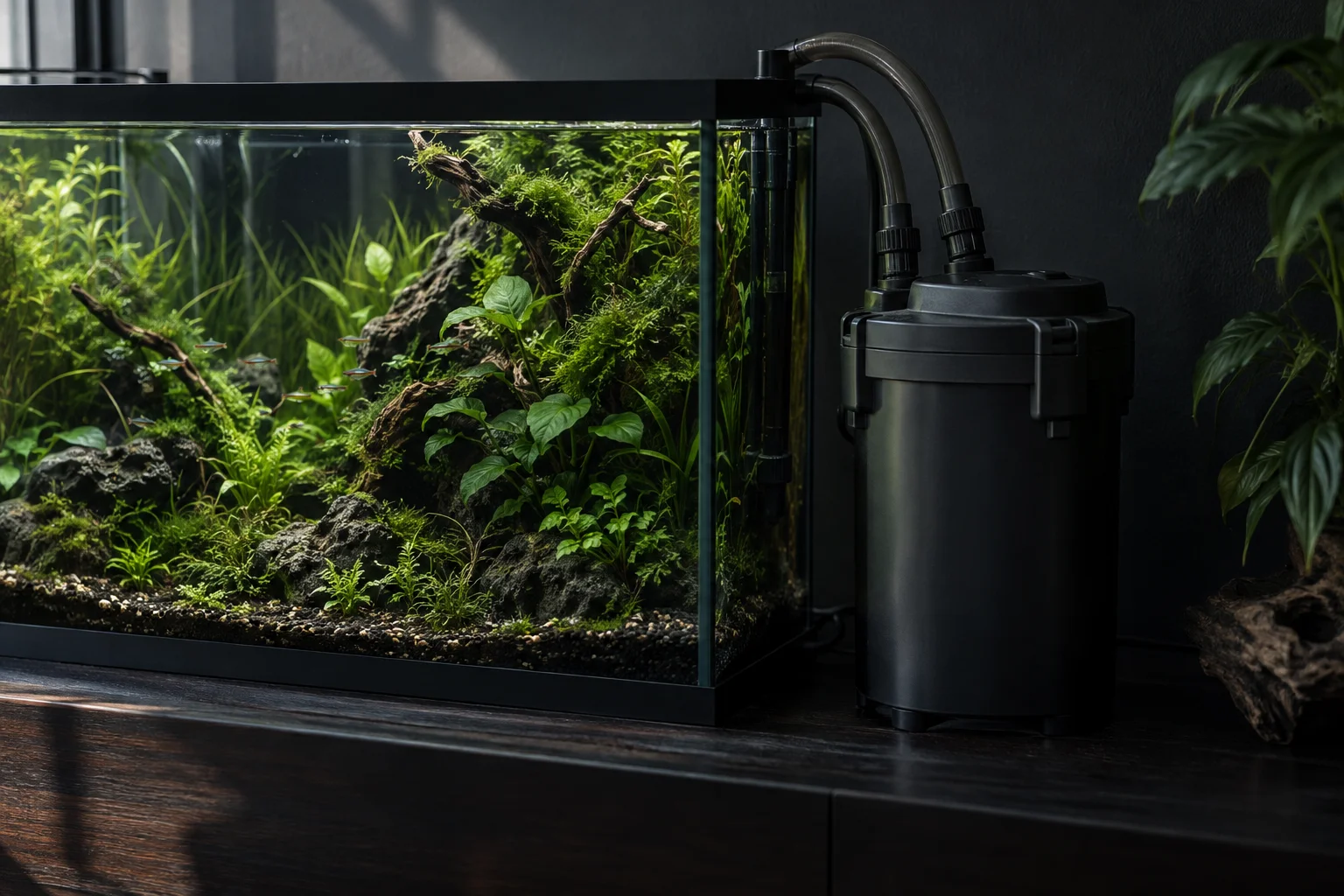
Because of their waste output, goldfish need more filtration than a tropical tank of the same size. Many keepers aim for a filter rated for two to three times the tank volume, with plenty of biological media. Large hang-on-back filters suit tanks up to about 40 gallons; above that, a canister filter is often easier. Compare options in our guides to the best aquarium filter and the best canister filter. For fancy varieties, keep the outflow gentle or spread it with a spray bar.
Plan a weekly water change of 25–50% and vacuum the substrate where waste collects. A good siphon makes this a ten-minute job; see our best gravel vacuum picks. Rinse filter sponges in removed tank water, never under the tap, so the bacteria survive.
07
What do goldfish eat?
Goldfish are omnivores that forage all day in the wild, eating plant matter, algae, insect larvae and small crustaceans. A balanced aquarium diet uses a quality sinking pellet or gel food as the staple, plus vegetables and occasional protein. Sinking food is especially useful for fancy goldfish, which can swallow air when they gulp floating flakes at the surface.
Feed once or twice a day, only what they finish in about one to two minutes. Add blanched, shelled peas, zucchini or spinach a few times a week, and frozen daphnia, brine shrimp or bloodworms as treats. For a full menu and feeding schedule, read what goldfish eat.
- Staple: sinking pellets or gel food made for goldfish
- Vegetables: shelled peas, zucchini, spinach, lettuce (blanched)
- Protein treats: daphnia, brine shrimp, bloodworms
- Avoid: bread, crackers and large amounts of floating flakes
08
Behavior and tank mates
Goldfish are social and peaceful, and they are happier in groups of their own kind. The best tank mates for a goldfish are other goldfish of the same body type: keep slow fancy goldfish together and fast comets together, so nobody is outcompeted for food.
Most tropical fish are poor matches because they need warmer water, and anything that fits in a goldfish’s mouth will eventually be eaten. Avoid common plecos, which can latch on to goldfish and damage their slime coat. Our goldfish tank mates guide covers the few options that do work and why.
Goldfish also dig and graze on plants. Hardy, tough-leaved plants such as anubias and java fern tied to rocks or wood have the best chance of surviving.
09
Breeding goldfish
Goldfish breed in spring, triggered by rising temperatures after a cooler winter period. Males develop small white breeding tubercles on their gill covers and the leading rays of their pectoral fins, and they chase females around the tank or pond, pushing at their flanks.
Females scatter hundreds of adhesive eggs over plants or spawning mops, and the adults will eat them, so eggs should be moved to a separate tank. They hatch in roughly 2–7 days depending on temperature. Fry first live on their yolk sac, then eat infusoria and baby brine shrimp. Young goldfish start out bronze and change color over several weeks or months.
10
Common goldfish diseases
Most goldfish illness starts with poor water quality. When a goldfish looks unwell, test ammonia, nitrite and nitrate before reaching for medication. A sudden ammonia spike can cause red streaks, gasping and lethargy; read ammonia poisoning in fish for an emergency plan.
Fancy goldfish are especially prone to buoyancy problems linked to diet and body shape; our page on swim bladder disease explains feeding changes that help. White spots that look like salt are usually ich; see ich in fish for treatment. Always follow the label for medications, and contact an aquatic vet for serious or persistent cases.
| Problem | Typical signs | First step |
|---|---|---|
| Ammonia burn | Red streaks, gasping, clamped fins | Large water change, test daily |
| Swim bladder disorder | Floating upside down or stuck at the bottom | Fast 1–2 days, switch to sinking food |
| Ich | White salt-like spots, flashing | Treat per label, keep water clean |
| Fin rot | Frayed or receding fins | Water quality first, then medication |
| Flukes | Scratching, rapid gill movement | Confirm and treat per label |
Frequently asked questions
Frequently asked questions
How do you care for goldfish as a beginner?
Give them a cycled tank of at least 30 gallons for one fancy goldfish, with a strong filter. Keep the water at 65–75 °F, treat tap water with a conditioner, change 25–50% every week and vacuum the substrate. Feed sinking pellets once or twice a day plus vegetables, and test ammonia and nitrate regularly.
What do goldfish eat?
Goldfish are omnivores. Feed a quality sinking pellet or gel food as the staple, add blanched vegetables like shelled peas, zucchini or spinach a few times a week, and offer daphnia, brine shrimp or bloodworms as treats. Give only what they finish in one to two minutes, once or twice a day.
What size tank does a goldfish need?
A fancy goldfish needs about 30 gallons (115 L), with 10 gallons (40 L) more for each additional fish. Comets, commons and shubunkins grow to 8–12 inches and need 75 gallons or more, or an outdoor pond. Bowls and small starter tanks are not suitable for any goldfish.
Do goldfish need a heater?
Usually not. Goldfish do well at 65–75 °F, which most heated homes provide. A heater can still help fancy goldfish in rooms that drop below about 65 °F or swing a lot between day and night, because stability is what matters most.
How long do goldfish live?
Well-kept goldfish usually live 10–15 years, and pond goldfish can exceed 20 years. Short lifespans almost always come from small bowls, poor filtration and infrequent water changes rather than from the fish itself.
Sources and references
Written and reviewed by the handsoffmyhobby editorial team according to our editorial policy.